

International security law and Maritime Law

Presentation
•
Education
•
University
•
Practice Problem
•
Medium

dinara dinara
Used 2+ times
FREE Resource
40 Slides • 41 Questions
1

2
Multiple Choice
What are the key differences between International Security Law and International Maritime Law?
International Security Law focuses on military issues
International Maritime Law deals with shipping regulations
International Security Law is only applicable during wartime
International Maritime Law is only applicable to coastal nations
3

4
Multiple Choice
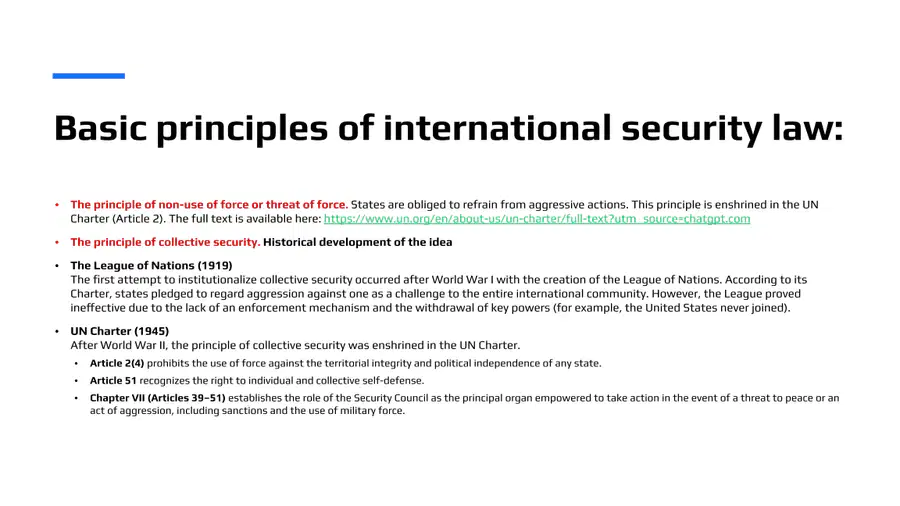
What is the primary instrument of the non-proliferation regime for weapons of mass destruction?
Nuclear Test Ban Treaty
Treaty on the Non-Proliferation of Nuclear Weapons (NPT)
Organisation for the Prohibition of Chemical Weapons (OPCW)
UN Charter
5
Multiple Choice
Which principle in international law asserts that states should not use force against the territorial integrity or political independence of any state?
Right to self-determination
Principle of non-intervention
Principle of non-use of force
Principle of universal jurisdiction
6
Multiple Choice
In the context of international law, the principle of "non-intervention" refers to:
The right of states to intervene in the affairs of other states for humanitarian purposes
The obligation of states not to interfere in the internal affairs of other states
The duty of states to provide aid to others in the event of natural disasters
The responsibility of states to protect their own sovereignty from foreign intervention
7
Multiple Choice
Which principle emphasizes the legal equality of states and non-interference in their domestic affairs?
Self-determination
Sovereignty
Collective security
Humanitarian intervention
8
9
Multiple Choice
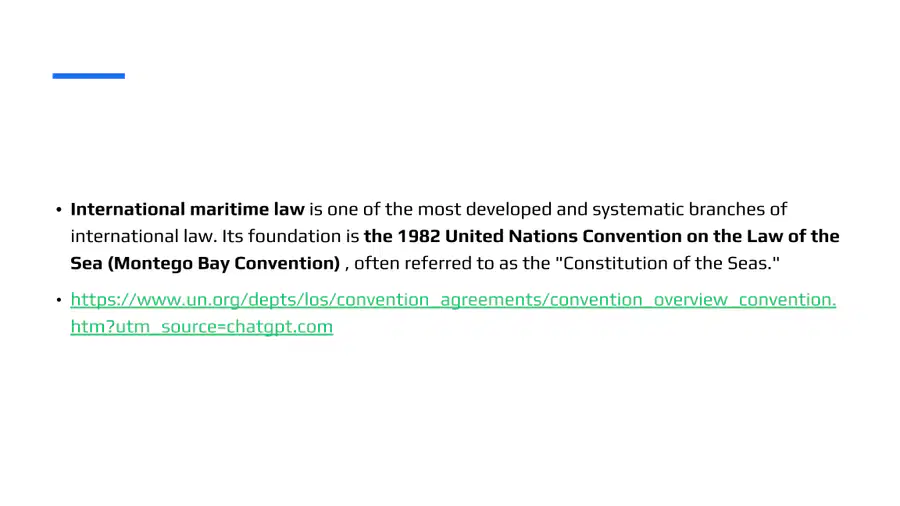
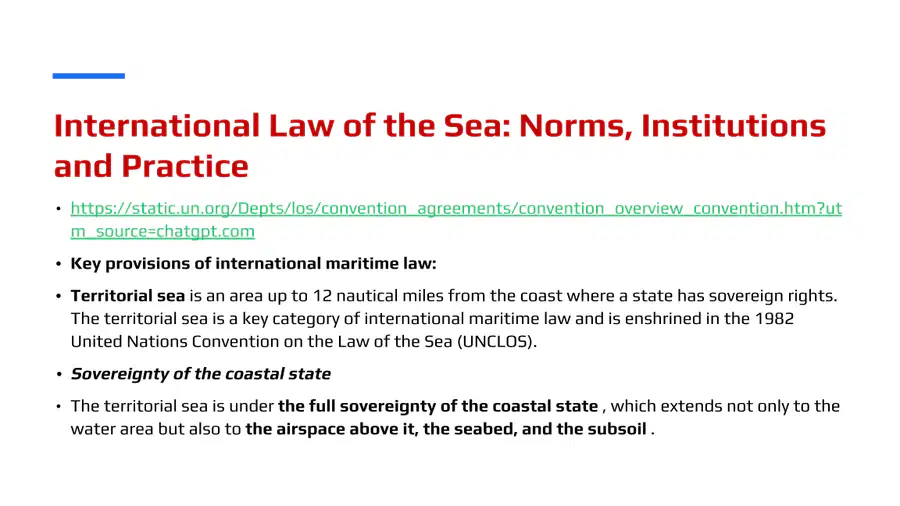
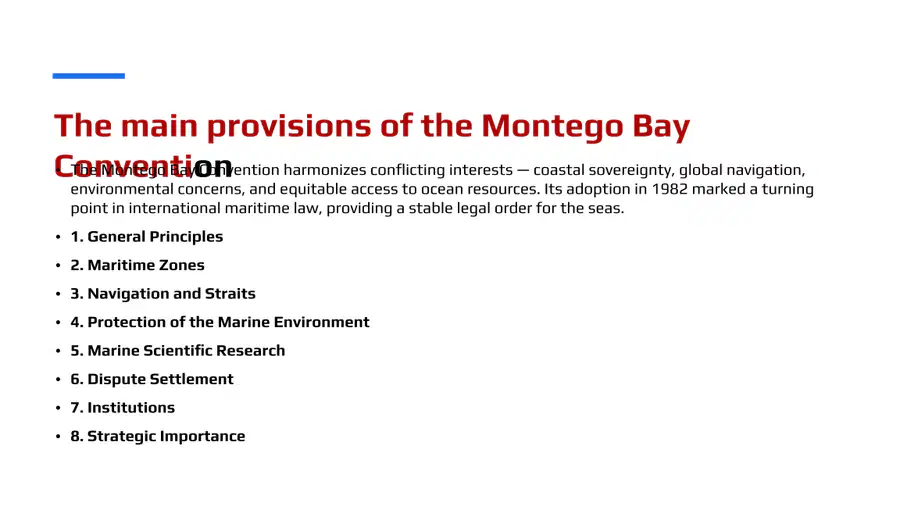
What is the foundation of international maritime law?
The 1982 United Nations Convention on the Law of the Sea
The 1990 United Nations Convention on the Law of the Sea
The 1975 United Nations Convention on the Law of the Sea
The 2000 United Nations Convention on the Law of the Sea
10
11
12
Multiple Choice
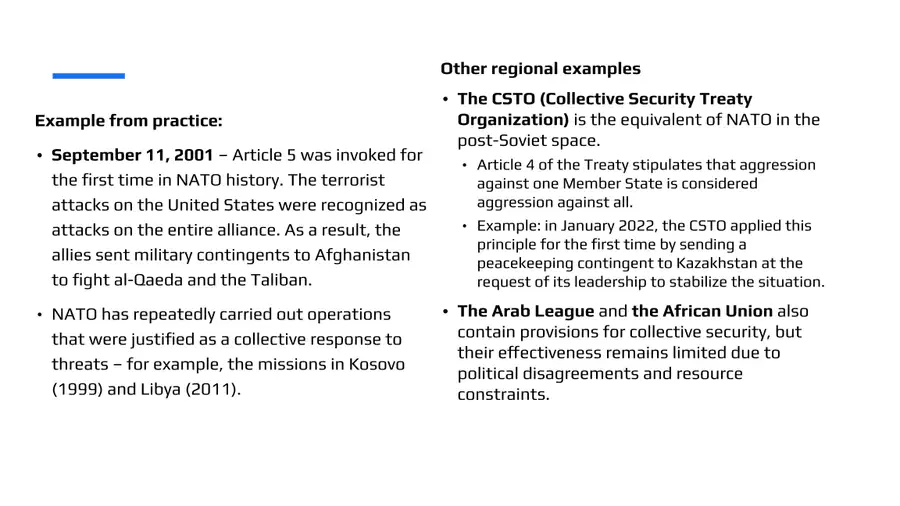
What does Article 4 of the CSTO Treaty state regarding aggression against a Member State?
It is considered a collective response
It is not recognized
It is considered aggression against all
It requires a unanimous vote
13
14
Multiple Choice
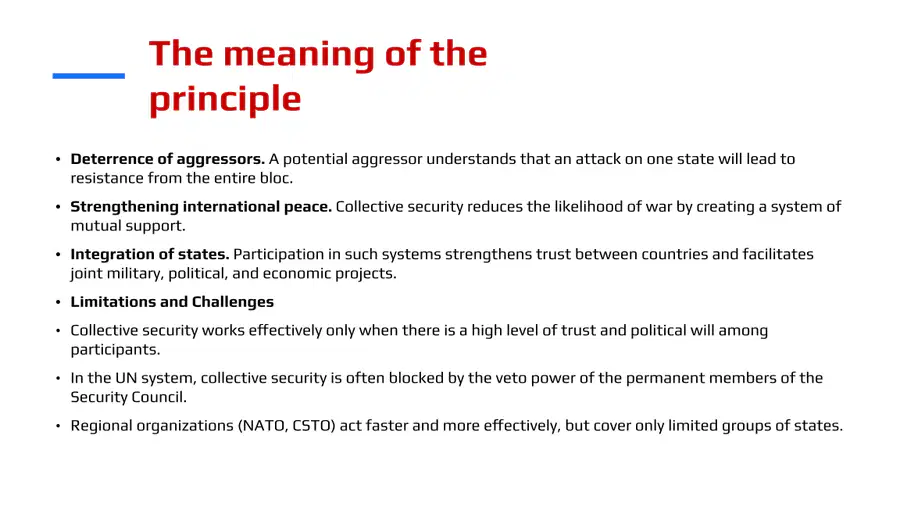
What are the main benefits of collective security as outlined in the image?
Deterrence of aggressors
Strengthening international peace
Integration of states
Limitations and Challenges
15

16
Multiple Select
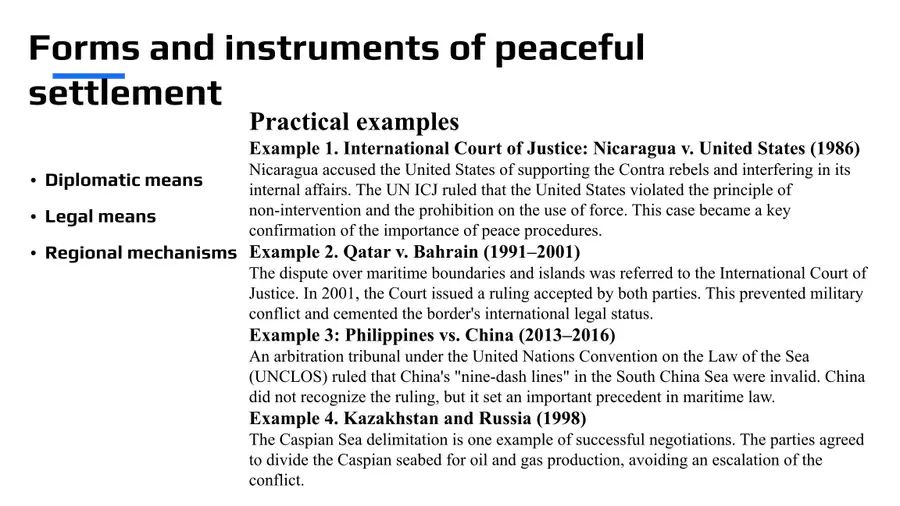
What are the specific methods of settlement listed in Article 33 (Chapter VI) of the UN Charter?
Negotiation
Mediation
Reconciliation
Legal proceedings
17
18
Multiple Choice
What principle did the UN ICJ rule was violated by the United States in the Nicaragua case?
Non-intervention
Freedom of navigation
Right to self-defense
International trade
19
Multiple Choice
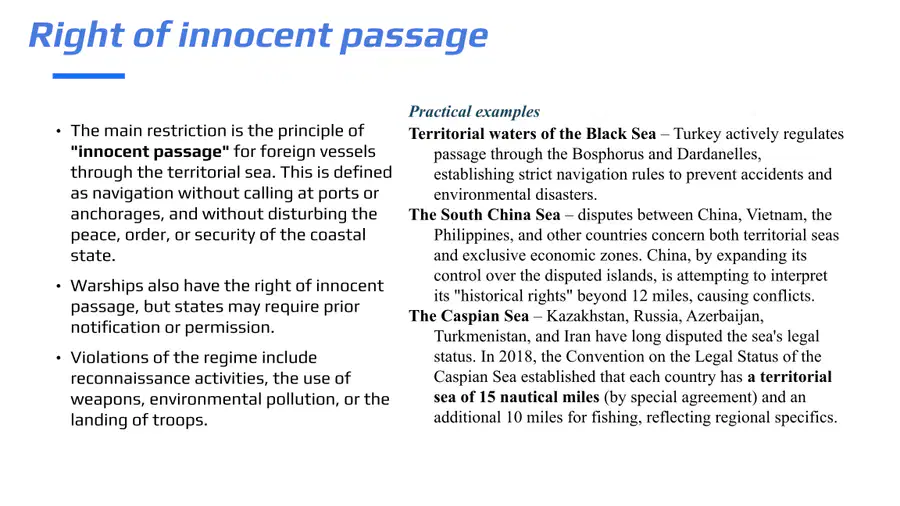
Which case involved a dispute over maritime boundaries and was referred to the International Court of Justice?
Nicaragua v. United States
Qatar v. Bahrain
Philippines vs. China
Kazakhstan and Russia
20
Multiple Choice
What were the main outcomes of the International Court of Justice ruling in the case of Nicaragua v. United States (1986)?
The US was found guilty of supporting rebels
The US was exonerated from all charges
The ruling had no impact on international law
The case was dismissed without a ruling
21
Multiple Select
The decision of the International court of justice is not binding
True
False
22
Multiple Choice
The The International Court of Justice's (ICJ) role as an International Organization is
is a collective defense against common threats
resolves legal conflicts between nations
negotiates trade agreements, settling trade disputes
maintain international peace, protect human rights, and address global challenges
23
24
Multiple Select
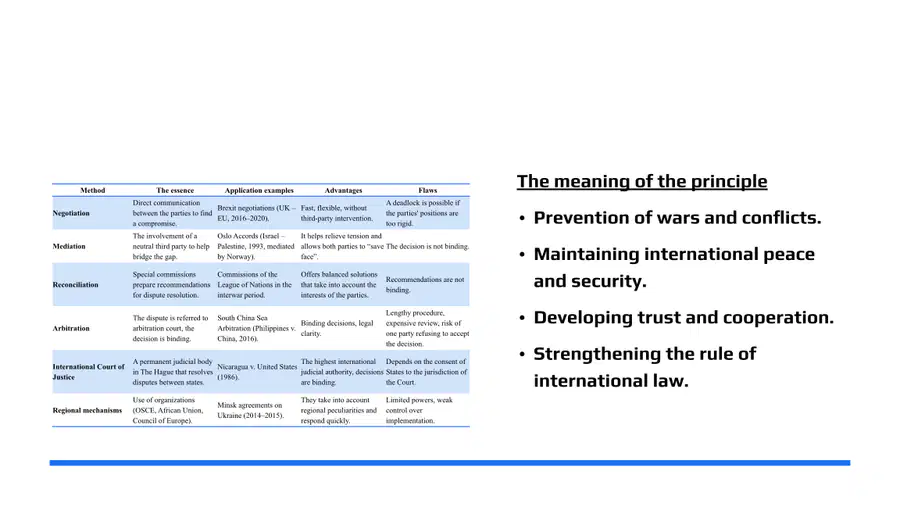
What are the advantages and flaws of the different methods of conflict resolution listed in the table?
Fast, flexible, without third-party intervention.
Helps relieve tension and allows both parties to 'save face'.
Binding decisions, legal clarity.
Depends on the consent of States to the jurisdiction of the Court.
25
26
Open Ended
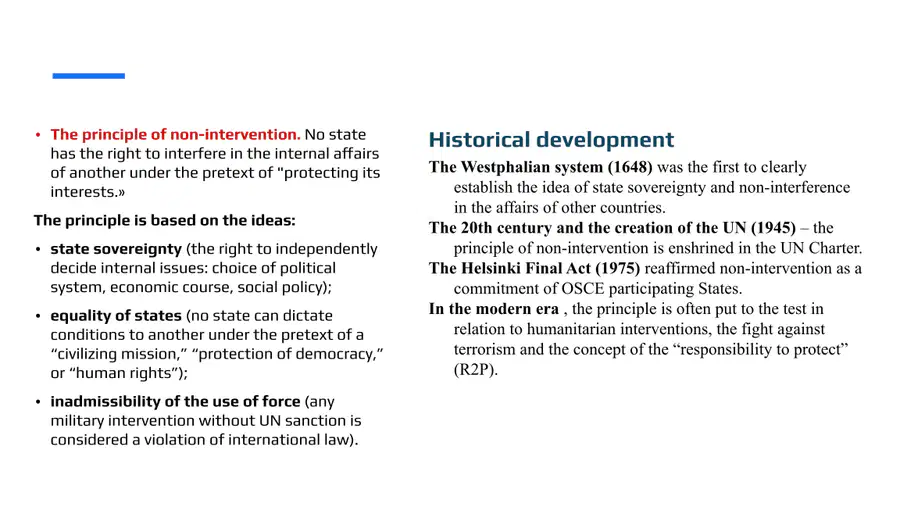
Explain the significance of the Westphalian system in the context of state sovereignty and non-interference.
27
28
Multiple Choice
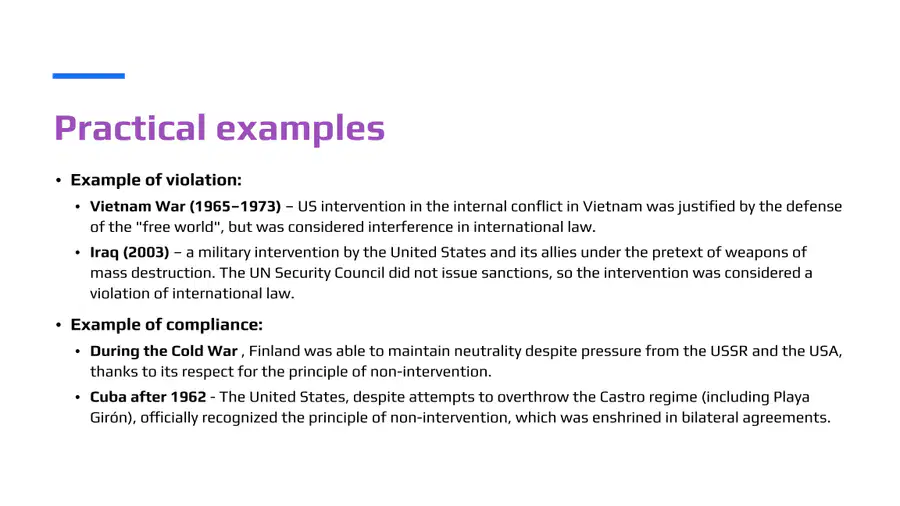
What principle did Finland respect during the Cold War to maintain neutrality?
Non-intervention
Intervention
International law
Bilateral agreements
29
Multiple Choice
What were the examples of violation of international law mentioned in the text?
Vietnam War
Iraq War
Cuba after 1962
Finland during the Cold War
30
Multiple Choice

The domino theory, which provided the basis for U.S. entry into the Vietnam War, was the belief that intervention was necessary to prevent —
The expansion of communism across Southeast Asia
The loss of UN military bases in Asia.
The inclusion of Taiwan in the Warsaw Pact.
The rise of China as a dominant economic power.
31
32
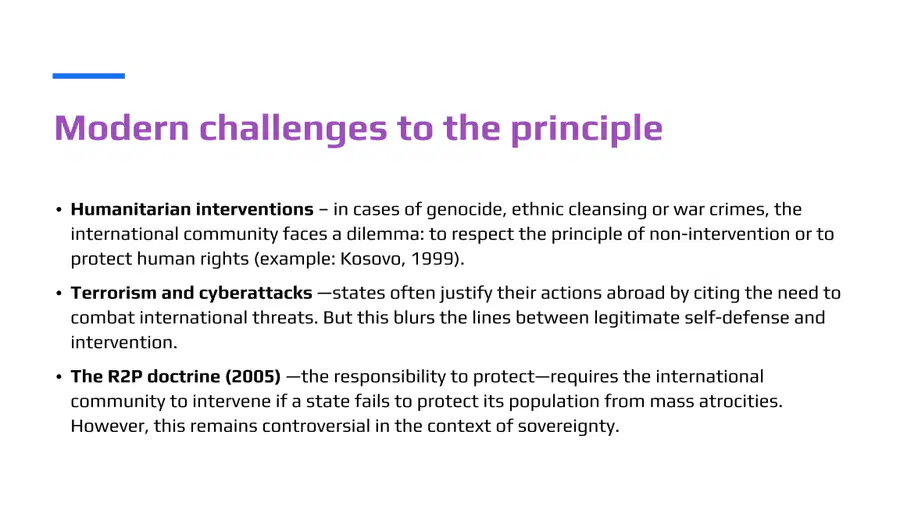
Multiple Choice
What are the modern challenges to the principle of non-intervention as discussed in the text?
Humanitarian interventions
Terrorism and cyberattacks
The R2P doctrine
All of the above
33
34
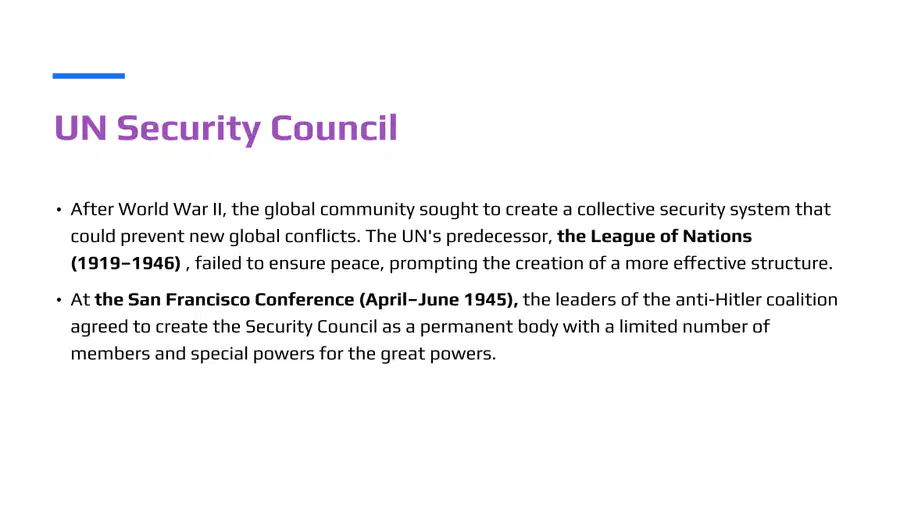
Multiple Choice
What was the purpose of creating the UN Security Council after World War II?
To promote global trade
To prevent new global conflicts
To establish a world government
To support the League of Nations
35
36
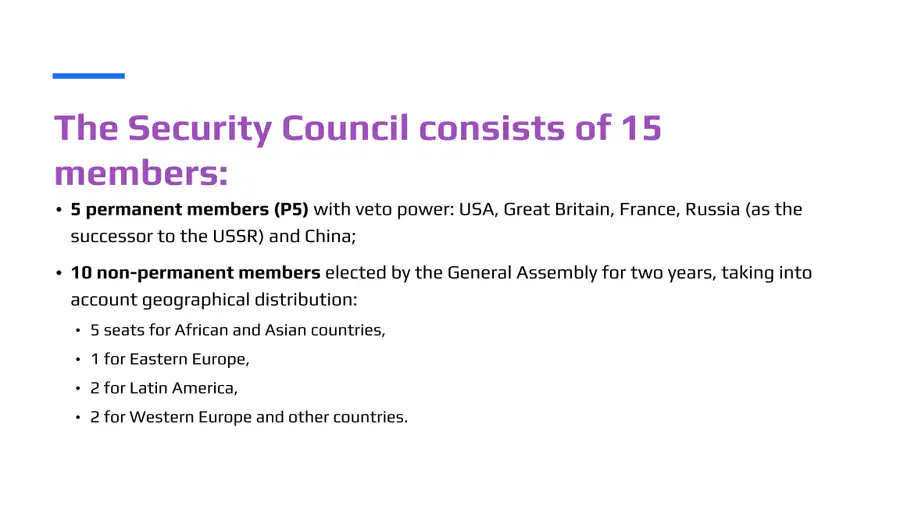
Multiple Choice
What is the geographical distribution of the non-permanent members in the Security Council?
5 for African and Asian countries, 1 for Eastern Europe, 2 for Latin America, 2 for Western Europe
5 for Eastern Europe, 1 for Latin America, 2 for African countries, 2 for Western Europe
10 for African and Asian countries, 5 for Eastern Europe, 2 for Latin America, 2 for Western Europe
5 for Latin America, 1 for Eastern Europe, 2 for African countries, 2 for Western Europe
37
Multiple Choice
How many permanent members are there in the Security Council, and which countries hold this position?
3
5
7
10
38
Multiple Choice
39
40
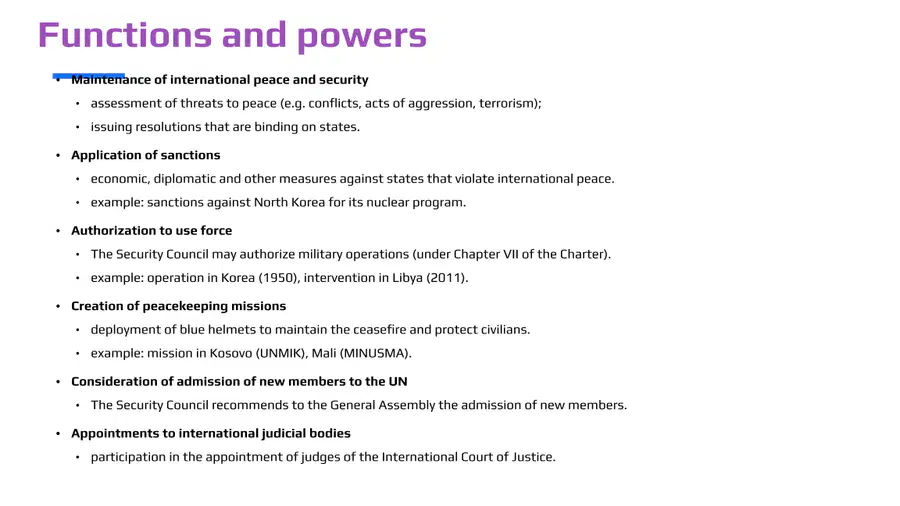
Multiple Choice
What are the main functions and powers of the Security Council regarding international peace and security?
Maintenance of international peace and security
Application of sanctions
Authorization to use force
Creation of peacekeeping missions
41
42
Multiple Choice
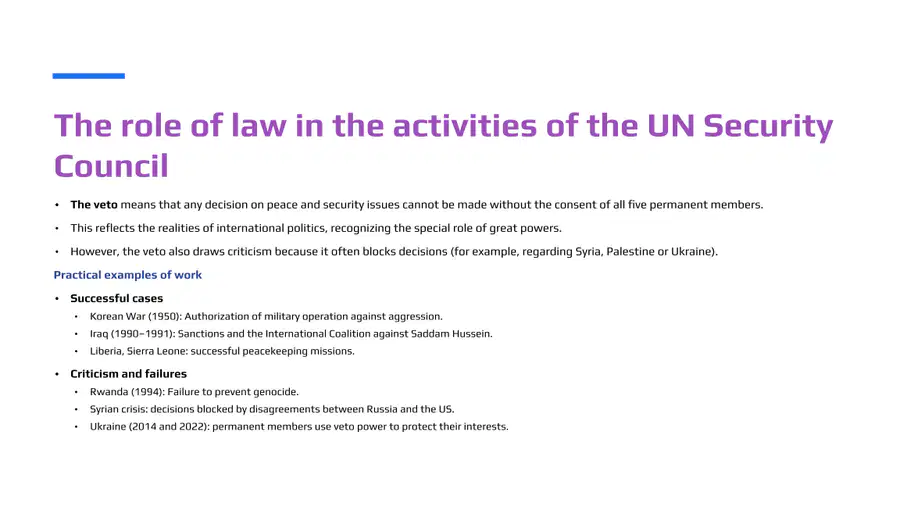
What does the veto in the UN Security Council signify?
It allows any member to make decisions unilaterally.
It means decisions cannot be made without the consent of all five permanent members.
It is a tool for enforcing international law.
It is used to promote peacekeeping missions.
43
44
Multiple Choice
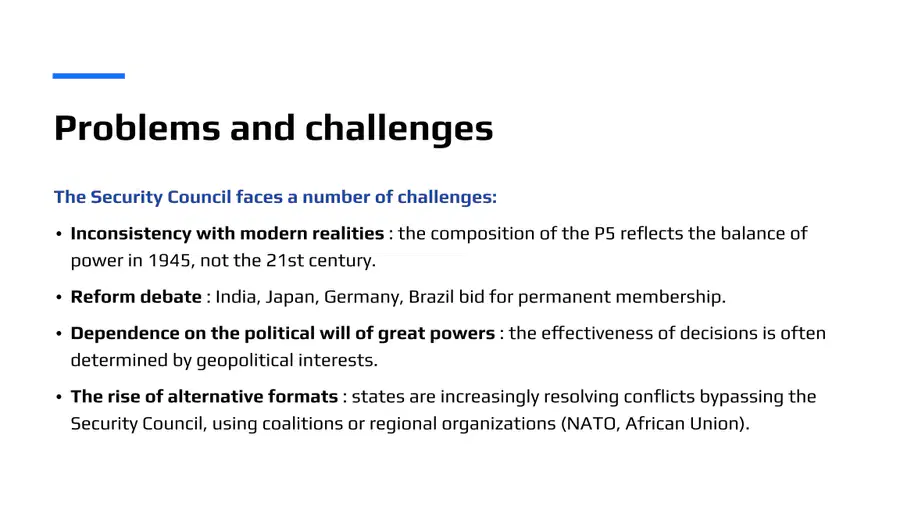
What are the main challenges faced by the Security Council as mentioned in the text?
Inconsistency with modern realities
Dependence on the political will of great powers
The rise of alternative formats
Reform debate
45
46
Multiple Select
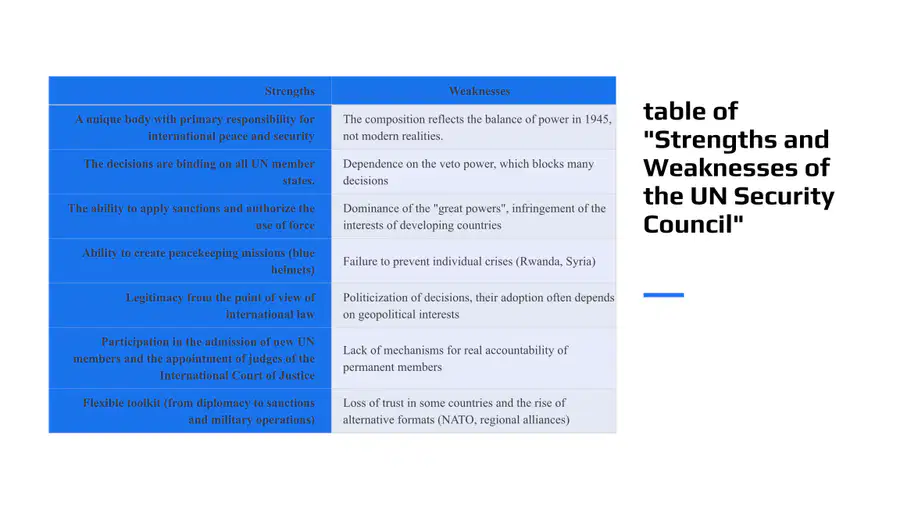
What are the strengths and weaknesses of the UN Security Council?
A unique body with primary responsibility for international peace and security
The decisions are binding on all UN member states.
The ability to apply sanctions and authorize the use of force
Ability to create peacekeeping missions (blue helmets)
47

48
Multiple Choice
What was the primary purpose of NATO's creation after World War II?
To promote economic ties
To establish a regional defense alliance
To support the League of Nations
To rebuild Europe
49
50
Multiple Choice
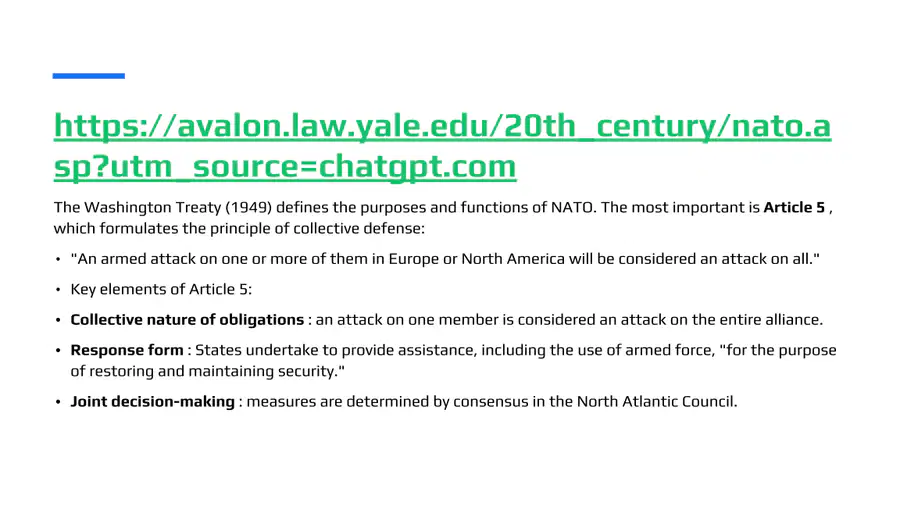
What is the principle of collective defense as defined in Article 5 of the Washington Treaty?
An armed attack on one member is an attack on all
Only European members are protected
NATO members can act independently
Collective defense is optional
51
52
Multiple Choice
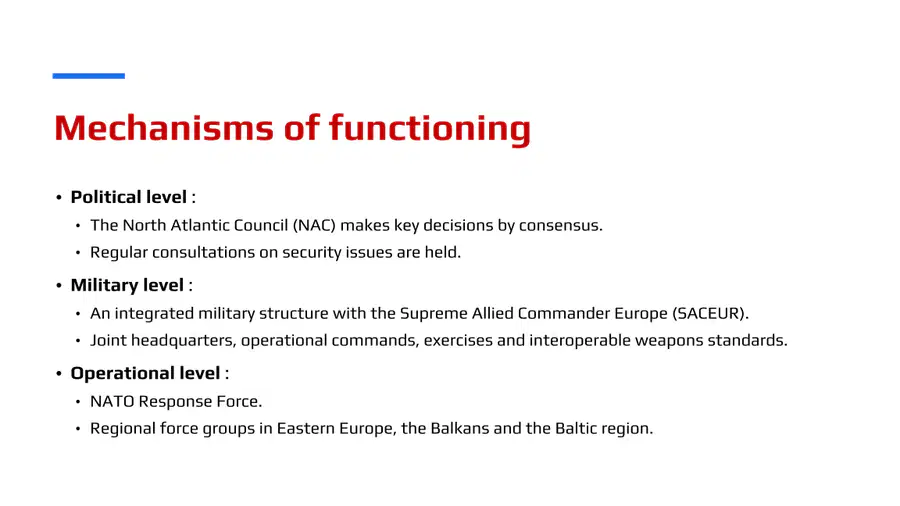
What are the three levels of mechanisms of functioning mentioned in the text?
Political level
Military level
Operational level
Economic level
53
Multiple Choice
The North Atlantic Treaty Organization's (NATPO) role as an International Organization is
is a collective defense against common threats
resolves legal conflicts between nations
negotiates trade agreements, settling trade disputes
maintain international peace, protect human rights, and address global challenges
54
Multiple Choice
NATO (North Atlantic Treaty Organization) would be most directly involved in which situation?
Creating global environmental regulations
Creating international trade agreements
a military attack on a member country
an economic recession in another country
55
56
Open Ended
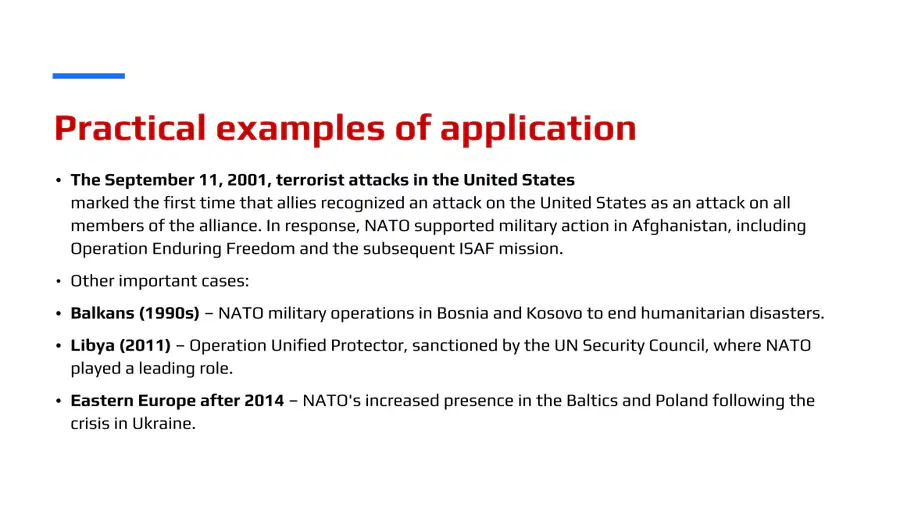
List the important cases mentioned in the image where NATO was involved in military operations.
57
Multiple Choice
Which NATO operation was initiated in response to the September 11 attacks?
Operation Enduring Freedom
Operation Unified Protector
ISAF mission
Balkans mission
58
Multiple Choice
What significant event on September 11, 2001, led NATO to recognize an attack on the United States as an attack on all members of the alliance?
The terrorist attacks
The invasion of Afghanistan
The formation of NATO
The Cold War
59
60
Multiple Choice
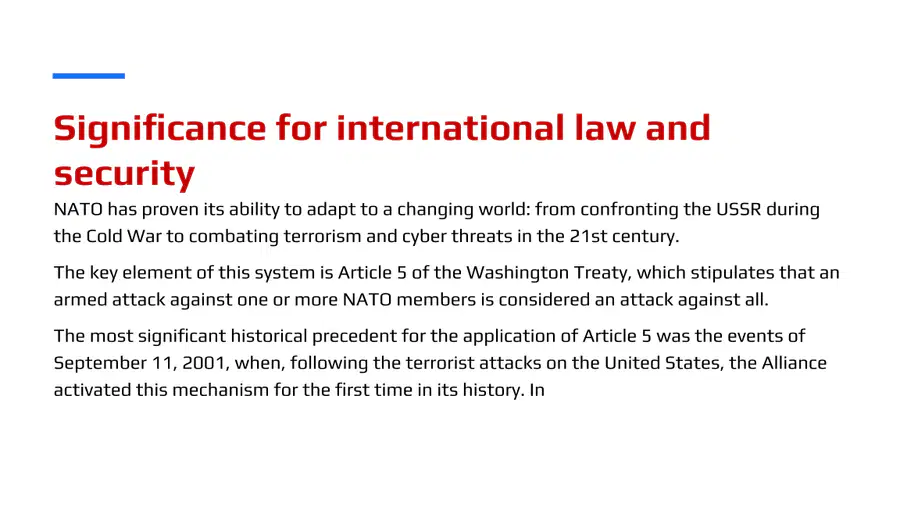
What is the significance of Article 5 of the Washington Treaty in the context of NATO's response to armed attacks?
It allows NATO to act independently of its members
It states that an attack on one member is an attack on all
It was first activated during the Cold War
It is only applicable to cyber threats
61
62
Multiple Choice
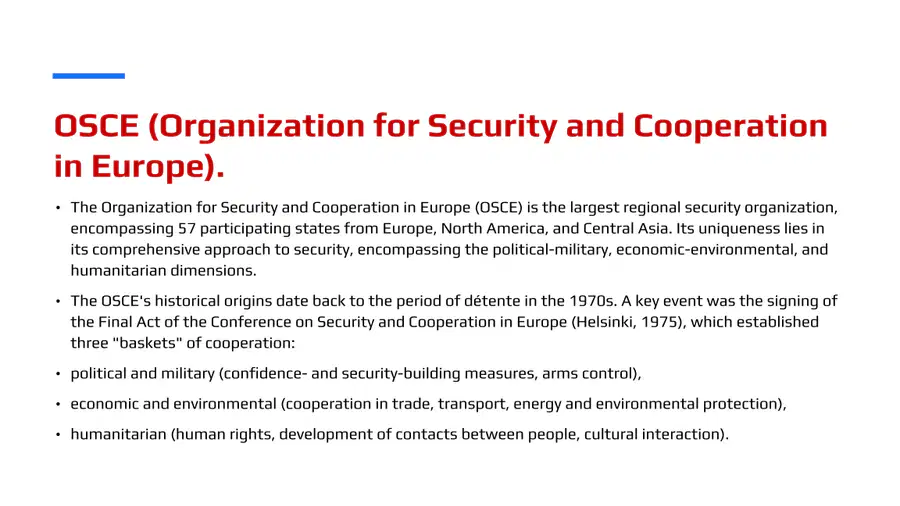
What are the three "baskets" of cooperation established by the OSCE?
Political and military
Economic and environmental
Humanitarian
Cultural and social
63
64
Multiple Choice
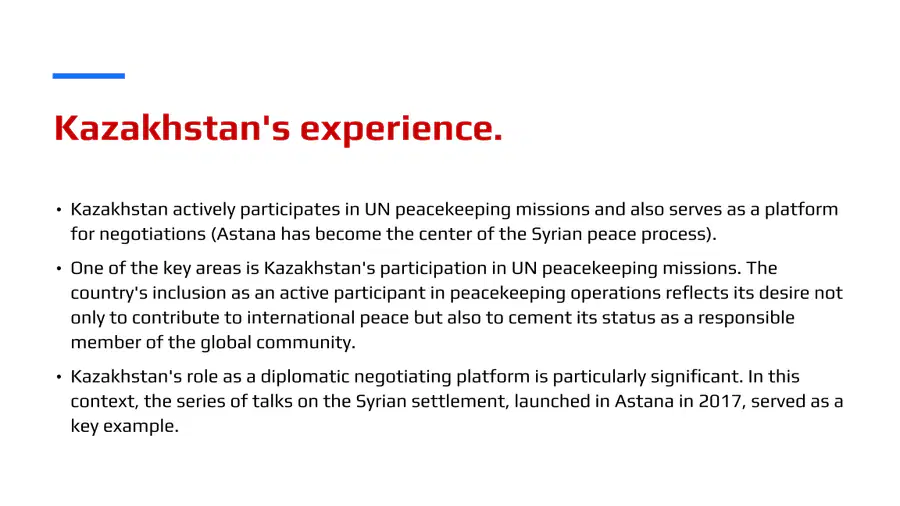
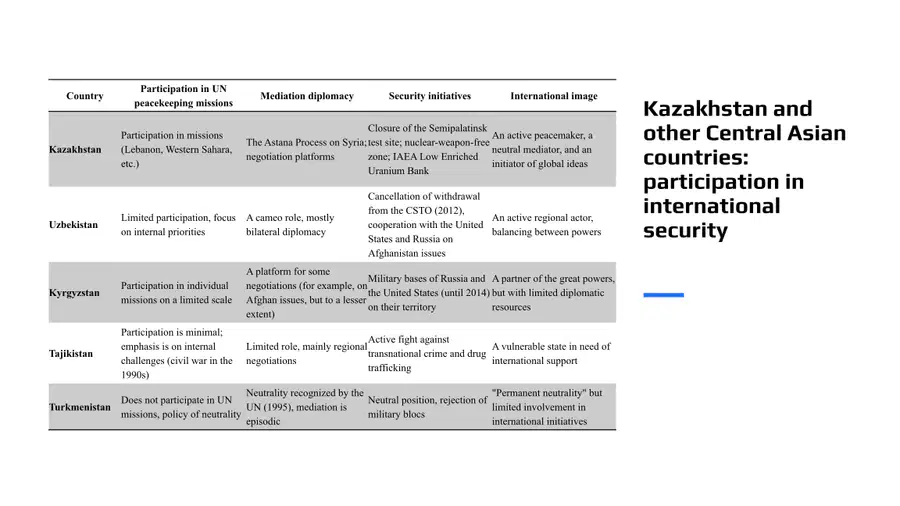
What role does Kazakhstan play in UN peacekeeping missions?
Active participant in peacekeeping operations
Only a negotiator
Not involved in peacekeeping
Only a member of the global community
65

66
Multiple Choice
What are the practical significances of the Astana process as mentioned in the text?
Building trust
Institutionalization of negotiations
Role in global politics
None of the above
67
68
69
70

71

72

73
74
75
76
77
78

79
80

81
Poll
Насколько уверенно вы себя чувствуете по этому вопросу сейчас?
Show answer
Auto Play
Slide 1 / 81
SLIDE
Similar Resources on Wayground

76 questions
HB Senses
Presentation
•
KG - University
77 questions
ITCC102-M4(SY24-25_101I)
Presentation
•
University
75 questions
2 - The Essentials of Designing user experience
Presentation
•
University
74 questions
Unit 4 Comprehensive Review
Presentation
•
University
74 questions
March 24-28 3D Shapes and Attributes
Presentation
•
KG
78 questions
NUR 401 Clotting
Presentation
•
University
Popular Resources on Wayground
10 questions
Safety Day 2026 – Student Review

Quiz
•
9th Grade
21 questions
Continents and Oceans
Quiz
•
6th Grade
20 questions
Parts of Speech
Quiz
•
5th Grade
16 questions
Subject & Predicate
Quiz
•
5th Grade
25 questions
Multiplication Facts
Quiz
•
5th Grade
12 questions
Map Skills
Quiz
•
3rd Grade
22 questions
Continents and Oceans
Quiz
•
5th Grade
15 questions
Rounding Decimals
Quiz
•
5th Grade