
WH 10.2

Presentation
•
History
•
10th Grade
•
Practice Problem
•
Medium

Justin English
Used 4+ times
FREE Resource
11 Slides • 19 Questions
1
1 Thessalonians 5:16-22
16 Rejoice always, 17 pray without ceasing, 18 give thanks in all circumstances; for this is the will of God in Christ Jesus for you. 19 Do not quench the Spirit. 20 Do not despise prophecies, 21 but test everything; hold fast what is good. 22 Abstain from every form of evil.
2
Multiple Choice
What role did moneychangers play in medieval European trade fairs?
They produced coins for trade to discourage barter.
They exchanged foreign coins and provided banking services.
They organized the trade fairs and other related events to encourage trade.
They set the prices for goods and allowed greed to overwhelm them.
3
Multiple Choice
Which document granted townsmen their basic freedoms from feudal lords during medieval times?
Charter
Decree
Treaty
Edict
4
Multiple Choice
The word '_____' comes from the Italian word banca, meaning 'bench.'
bank
treasure
exchange
chair
5
Multiple Choice
What was the primary function of merchant and craft guilds in medieval towns.
function as a medieval labor union
regulate the business activity
control all the activity in a town
to encourage free trade with no regulations
6
Multiple Select
Which of the following statements about medieval markets and fairs are correct?
Markets were the primary centers for local trade.
Trade fairs attracted merchants from all over Europe and foreign countries.
Fairs only allowed local merchants to participate.
Fairs provided a meeting place for East-West trade.
7
Multiple Select
Which of the following were classes of members within a craft guild?
Apprentices
Journeymen
Masters
Merchants
8
Multiple Choice
What does the term "catholic" mean?
Universal or encompassing all.
A place of worship.
A gathering of believers.
A religious hierarchy.
9
Multiple Choice
What was the name of the political system in which local rulers offered protection in return for services?
Democracy
Feudalism
Monarchy
Communism
10

11

12
Multiple Choice
Which of the following subjects was NOT part of the quadrivium in medieval education?
Arithmetic
Geometry
Music
Rhetoric
13
Multiple Choice
What term was used to describe the ignorance and superstition of this period?
Middle Ages
Medieval Period
Dark Ages
Age of Faith
14

15
Multiple Choice
Which two cities were home to some of the earliest universities in Europe?
Bologna and Paris
London and Rome
Madrid and Vienna
Oxford and Cambridge
16

17
Multiple Choice
Which was not a significant Scholastic thinker?
Thomas Aquinas
Anselm
Roger Bacon
Peter Abelard
18


19
Multiple Select
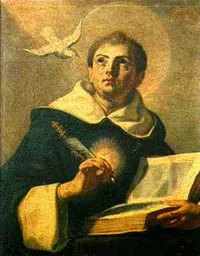
Which of the following statements about Thomas Aquinas is/are correct?
He believed Aristotle's philosophy could help understand theological ideas.
He thought the church's teaching was always right when it disagreed with Aristotle.
He was called 'the prince of the Schoolmen.'
He rejected the use of critical reasoning in theology.
20

21
Multiple Choice
Roger Bacon made significant contributions in the areas of physics, geography, and ___.
chemistry
astronmomy
poetry
22

23

24
Multiple Choice
Who wrote The Canterbury Tales?
Geoffrey Chaucer
Dante Alighieri
Thomas Aquinas
Roger Bacon
25


26

27
Multiple Choice
The architectural style prevalent in Europe from 1050 to about 1150 was ___.
Baroque
Greek
Lintel
28
Multiple Choice
What were the two main groups of studies in the medieval liberal arts curriculum?
Trivium and Quadrivium
Grammar and Rhetoric
Arithmetic and Geometry
Music and Astronomy
29
Open Ended
Compare the architectural features of Romanesque and Gothic cathedrals as shown in the images. What are the key differences between these two styles?
30
Open Ended
How did the use of vernacular language influence literature in the Middle Ages?
1 Thessalonians 5:16-22
16 Rejoice always, 17 pray without ceasing, 18 give thanks in all circumstances; for this is the will of God in Christ Jesus for you. 19 Do not quench the Spirit. 20 Do not despise prophecies, 21 but test everything; hold fast what is good. 22 Abstain from every form of evil.
Show answer
Auto Play
Slide 1 / 30
SLIDE
Similar Resources on Wayground

23 questions
Population Pyramids
Presentation
•
10th Grade
24 questions
Taxonomy
Presentation
•
10th Grade
21 questions
The Rise of Nationalism Manning
Presentation
•
10th Grade
21 questions
VSC 3.3 and 3.4--Constitutional Convention
Presentation
•
KG - 11th Grade
21 questions
Introduction to U.S. Imperialism
Presentation
•
10th Grade
21 questions
Renaissance and Reformation Part 1
Presentation
•
10th - 11th Grade
22 questions
Early Rome Republic Notes
Presentation
•
10th Grade
24 questions
World War II: The War in Europe
Presentation
•
11th Grade
Popular Resources on Wayground
10 questions
Safety Day 2026 – Student Review

Quiz
•
9th Grade
21 questions
Continents and Oceans
Quiz
•
6th Grade
20 questions
Parts of Speech
Quiz
•
5th Grade
16 questions
Subject & Predicate
Quiz
•
5th Grade
25 questions
Multiplication Facts
Quiz
•
5th Grade
12 questions
Map Skills
Quiz
•
3rd Grade
22 questions
Continents and Oceans
Quiz
•
5th Grade
15 questions
Rounding Decimals
Quiz
•
5th Grade
Discover more resources for History
25 questions
The American Revolution
Quiz
•
7th - 10th Grade
15 questions
The Bill of Rights
Quiz
•
8th - 12th Grade
15 questions
Ancient Rome
Quiz
•
7th - 10th Grade
16 questions
Students of Civics Unit 2: The Constitution
Quiz
•
7th - 11th Grade
10 questions
Exploring the 7 Principles of the Constitution

Interactive video
•
6th - 10th Grade
10 questions
Significance of the Declaration of Independence
Interactive video
•
6th - 10th Grade
10 questions
Exploring the Age of Exploration
Interactive video
•
6th - 10th Grade
10 questions
French and Indian War
Interactive video
•
9th - 10th Grade