

How A Bill Becomes a Law

Presentation
•
Social Studies
•
7th Grade
•
Practice Problem
•
Medium

Nathaniel Santos
Used 1+ times
FREE Resource
20 Slides • 16 Questions
1
2
3
Multiple Choice
What is the main purpose of a bill in the legislative process?
To create new laws
To enforce existing laws
To interpret laws
To repeal the Constitution
4
5
6
7
8
Multiple Choice
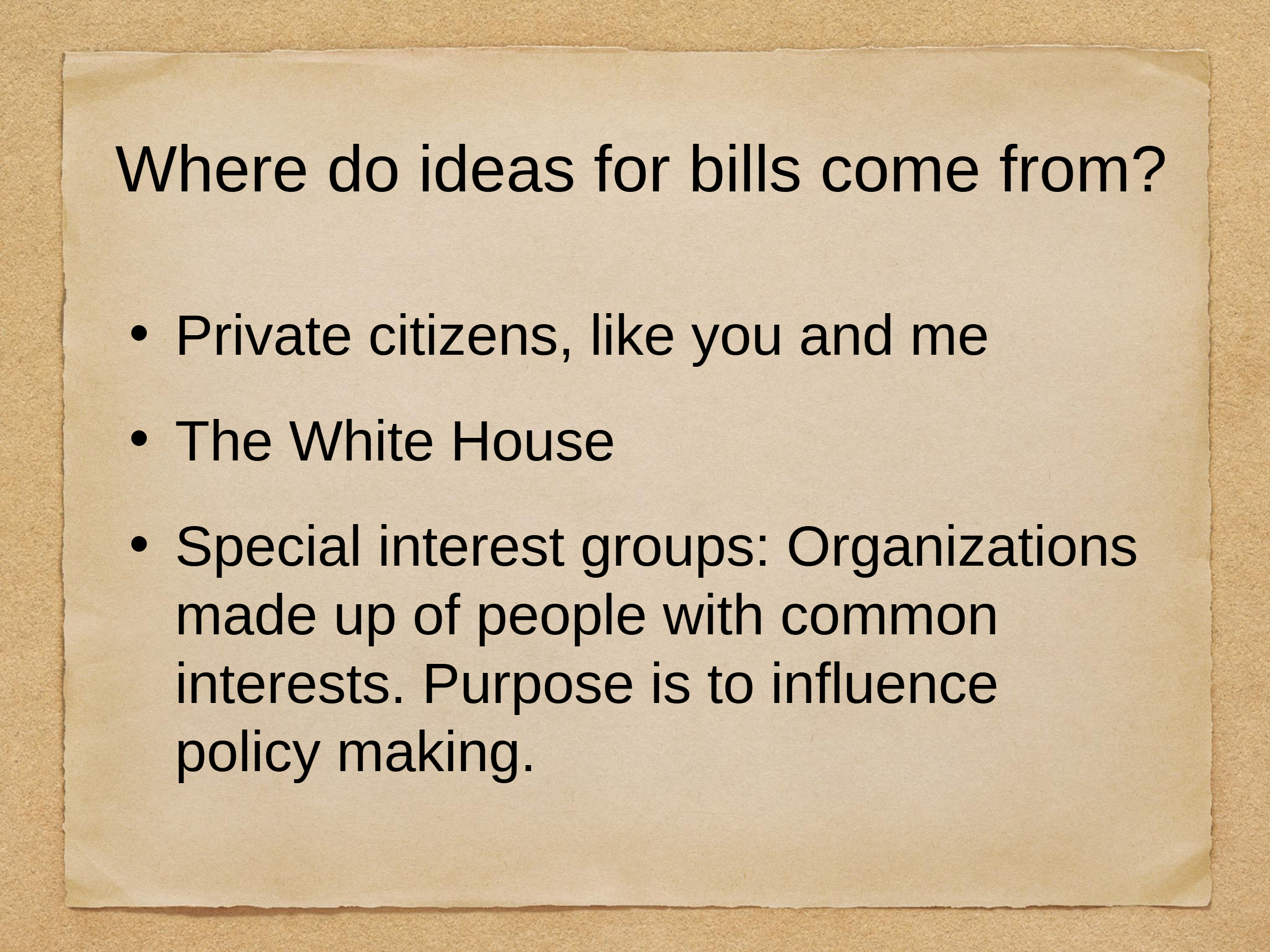
Which of the following is NOT a common source of ideas for bills in the US legislative process?
Private citizens
The White House
Special interest groups
Foreign governments
9
10
11
Multiple Select
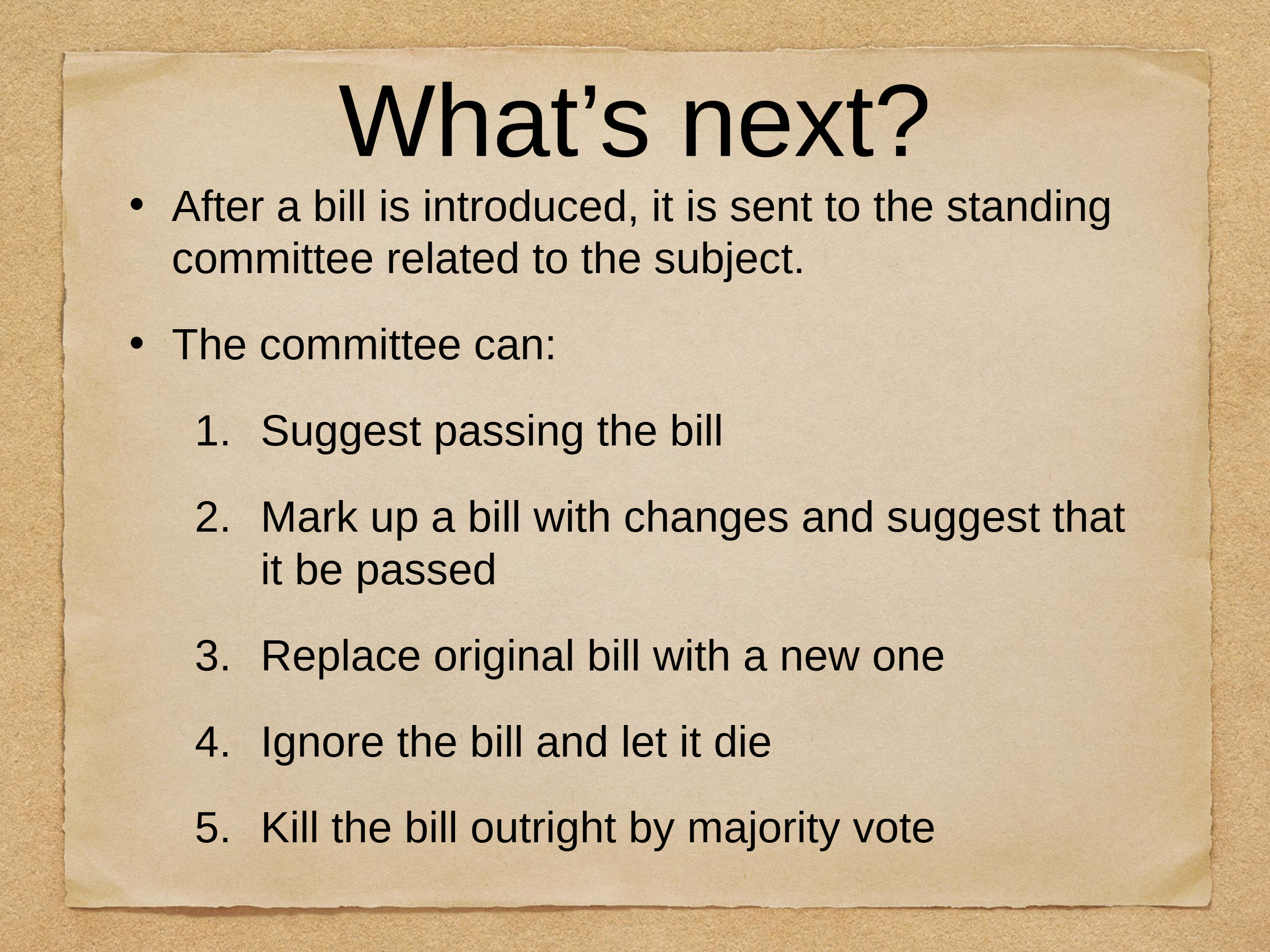
Which actions can a committee take after receiving a bill? Select all that apply.
Suggest passing the bill
Mark up a bill with changes and suggest it be passed
Replace original bill with a new one
Send the bill directly to the President
12
Multiple Choice
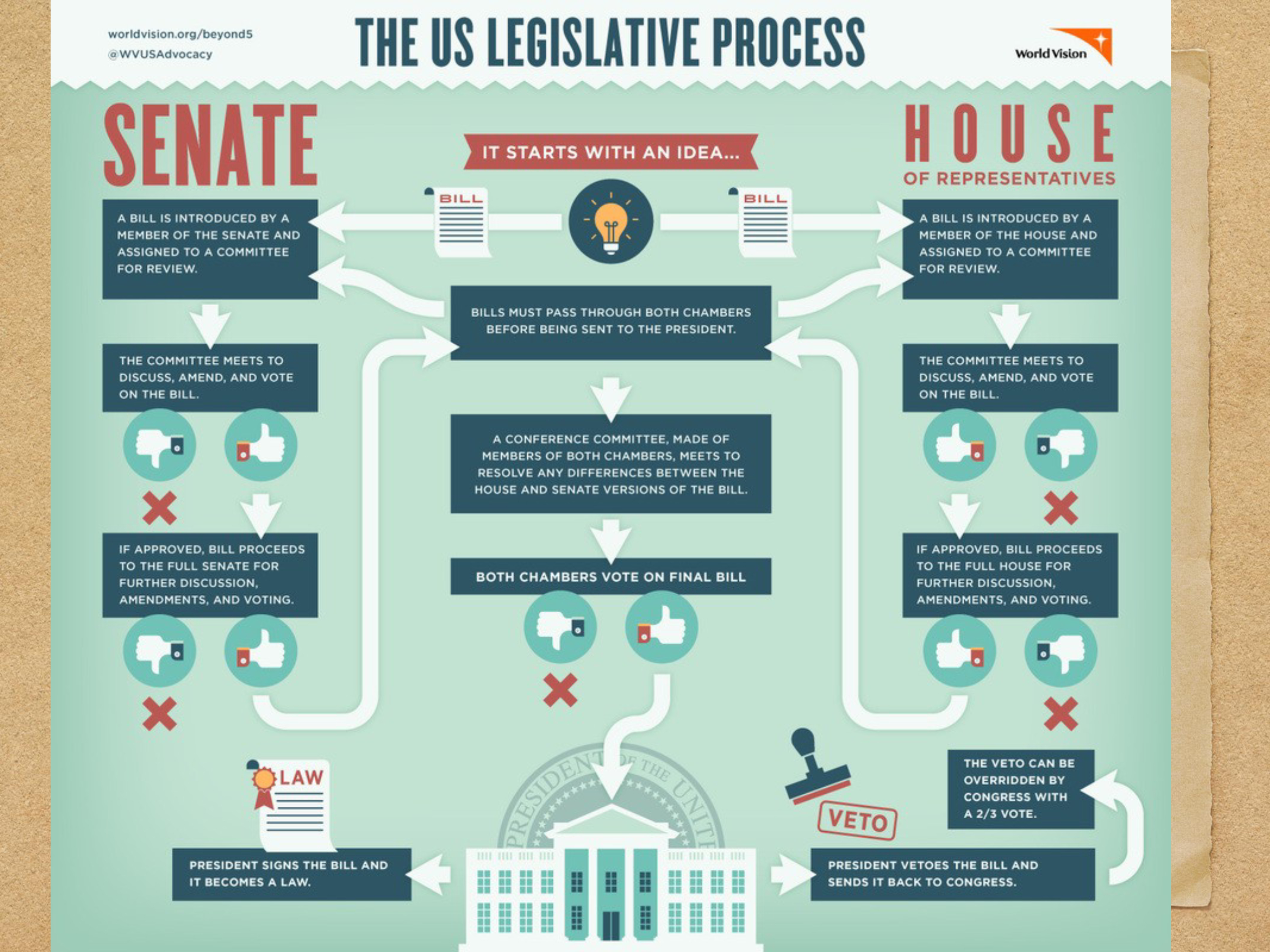
After a bill is introduced in Congress, what is the first step in its legislative journey?
It is signed by the President
It is sent to a standing committee
It goes to the Supreme Court
It is voted on by both chambers
13
14
Multiple Choice
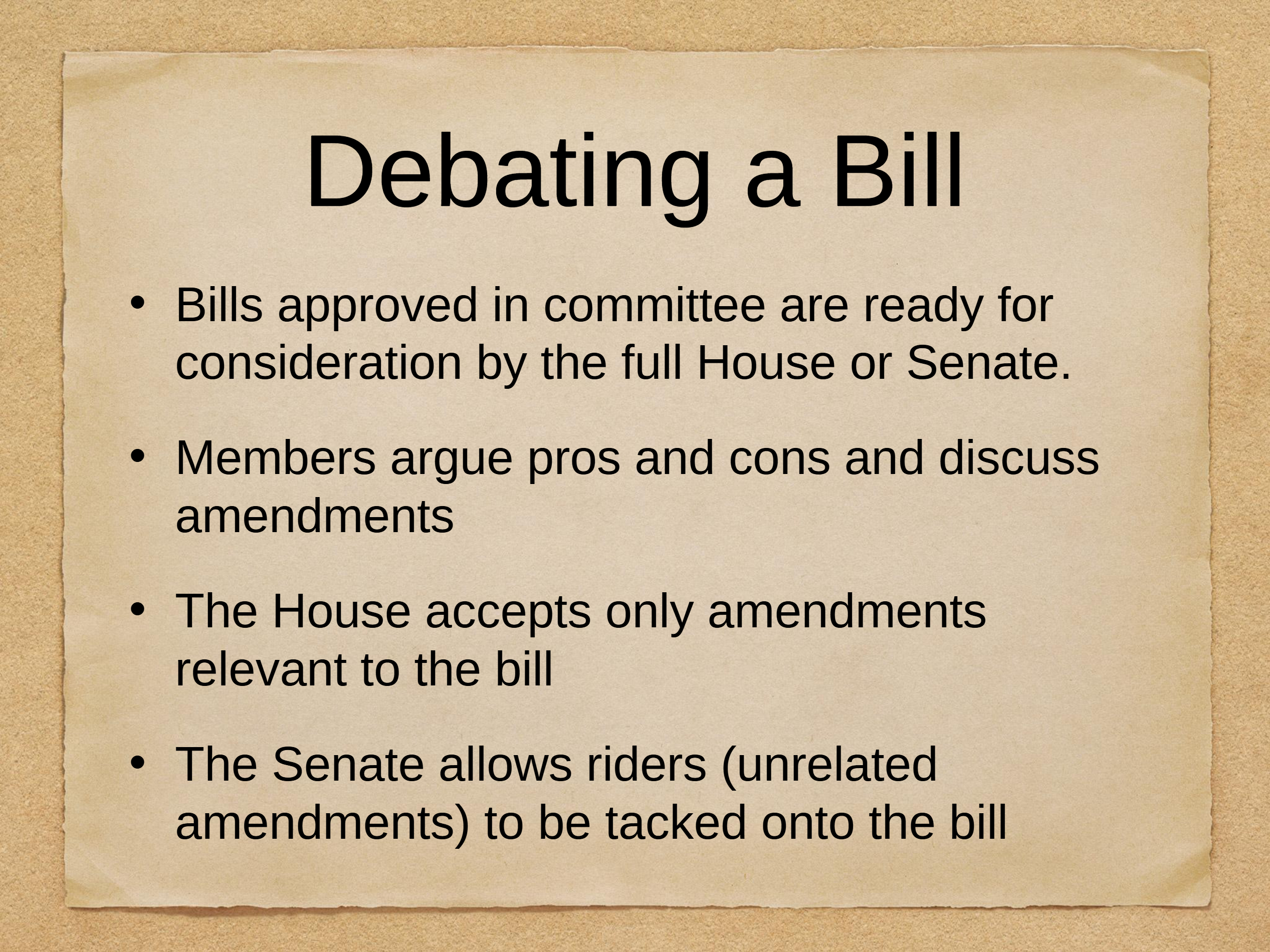
Which of the following is true about how amendments are accepted during the debate of a bill in the House and Senate?
The House accepts only amendments relevant to the bill, while the Senate allows unrelated amendments (riders).
Both the House and Senate accept only amendments relevant to the bill.
The Senate accepts only amendments relevant to the bill, while the House allows unrelated amendments (riders).
Neither the House nor the Senate allows amendments during debate.
15
16
Open Ended
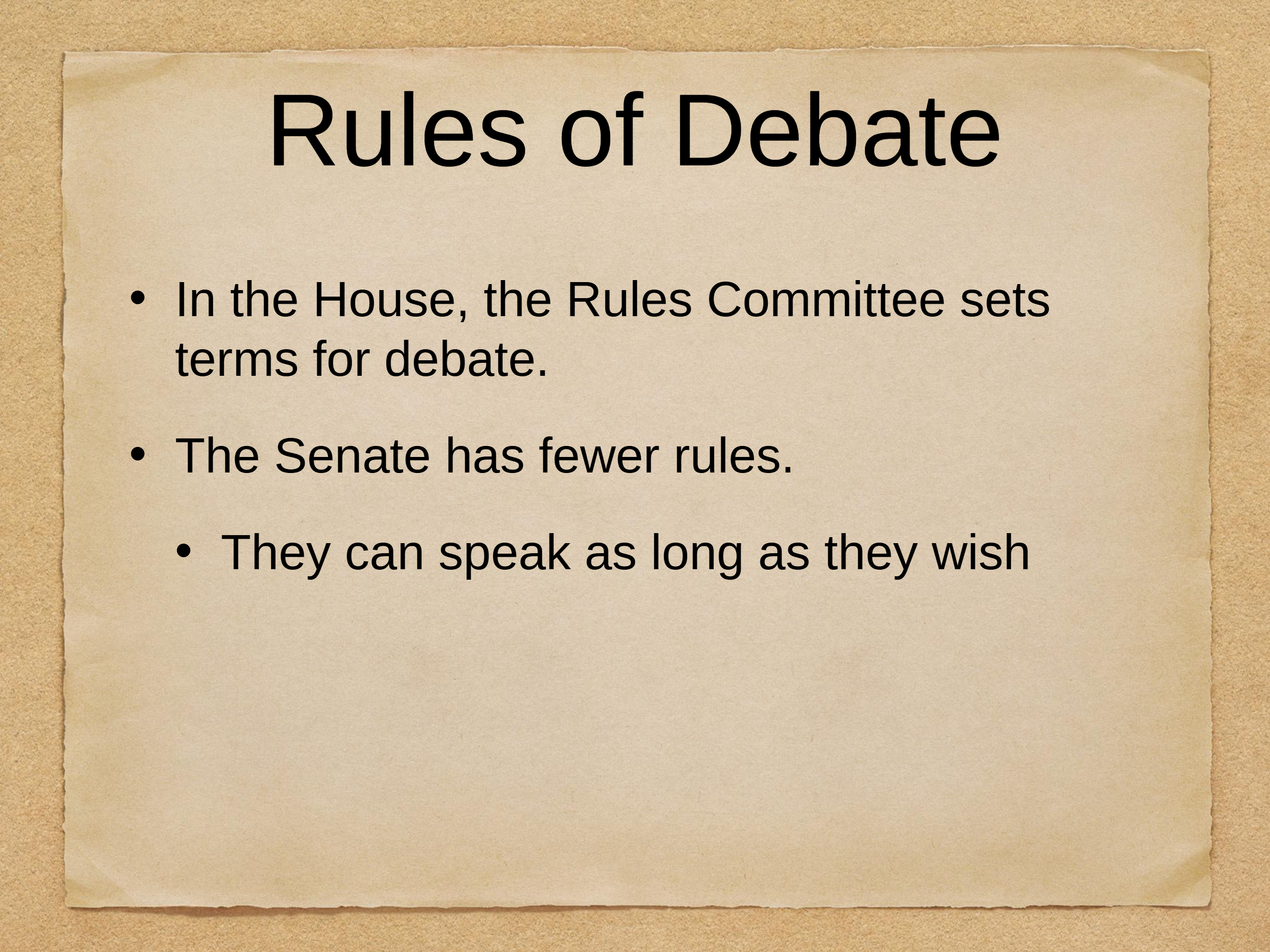
Compare the rules of debate in the House and Senate. How do these rules affect the way members can participate in debates?
17
18
Multiple Select
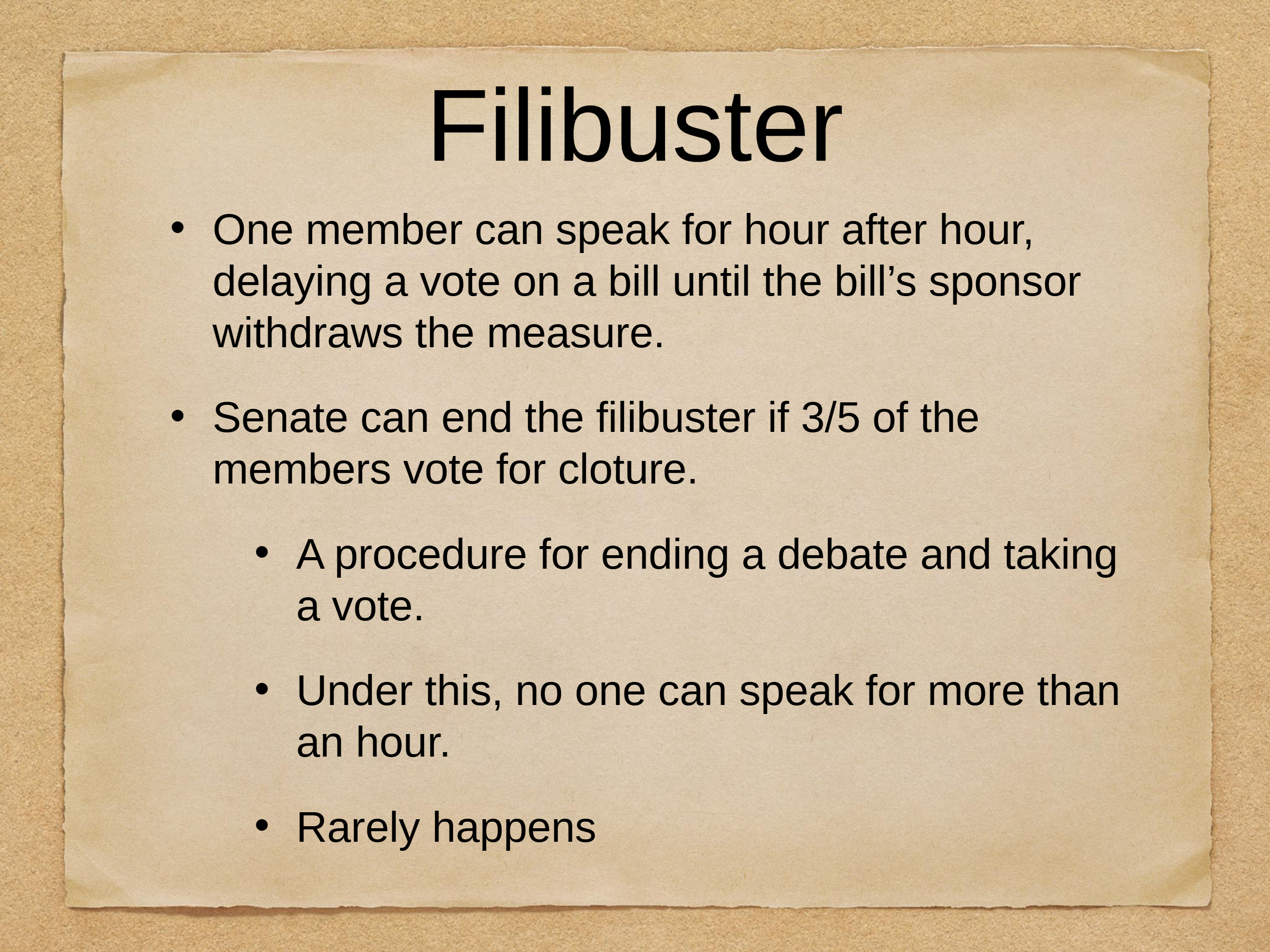
Which of the following statements about filibuster and cloture in the Senate are correct?
A filibuster allows one member to delay a vote by speaking for long periods.
Cloture is a procedure to end a filibuster and requires 3/5 of the Senate to vote for it.
After cloture is invoked, no one can speak for more than an hour.
Filibusters are common and happen frequently.
19
20
Fill in the Blanks
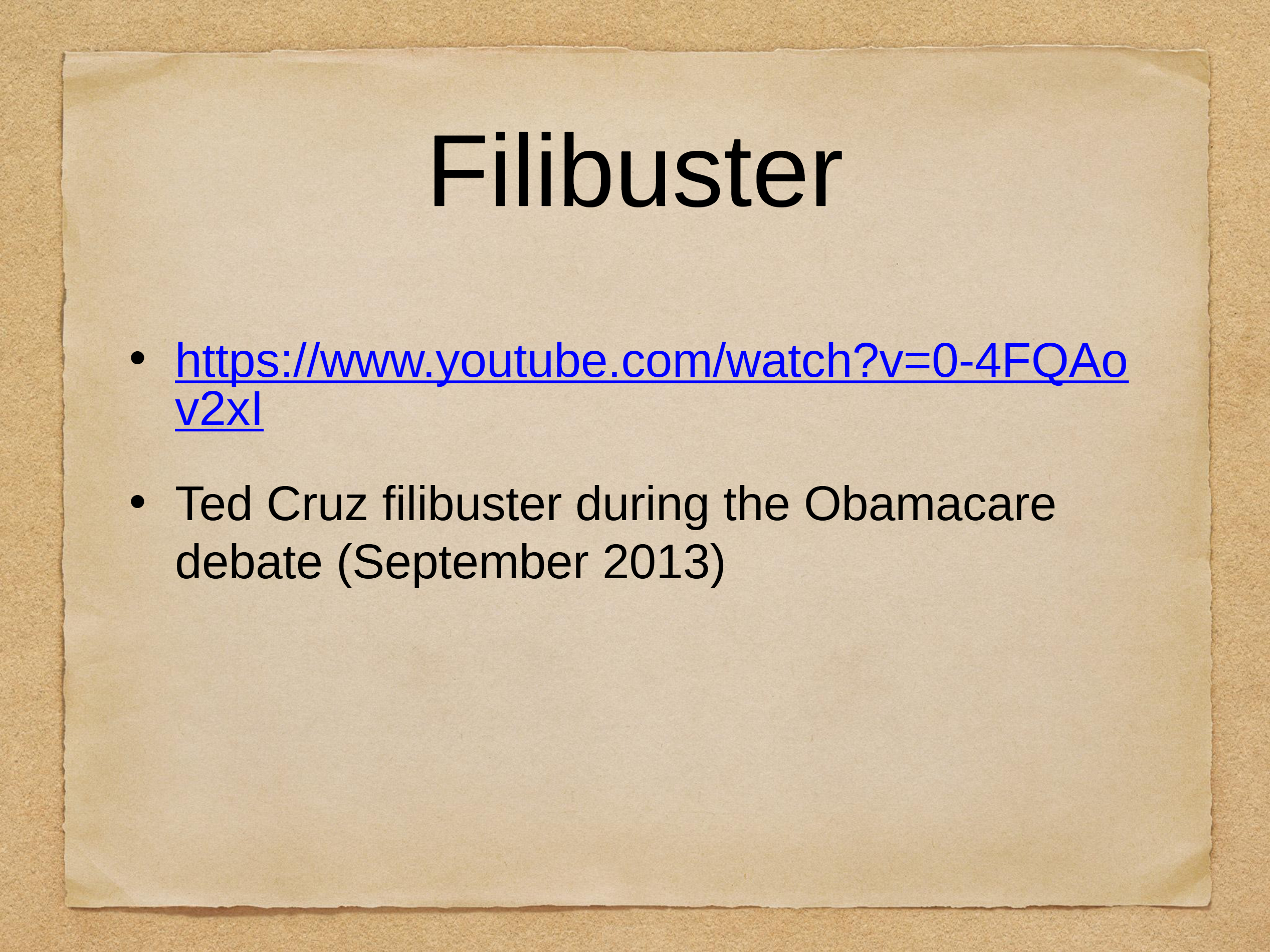
Ted Cruz conducted a filibuster during the debate on
Type answer...
21
22
23
24
Multiple Choice
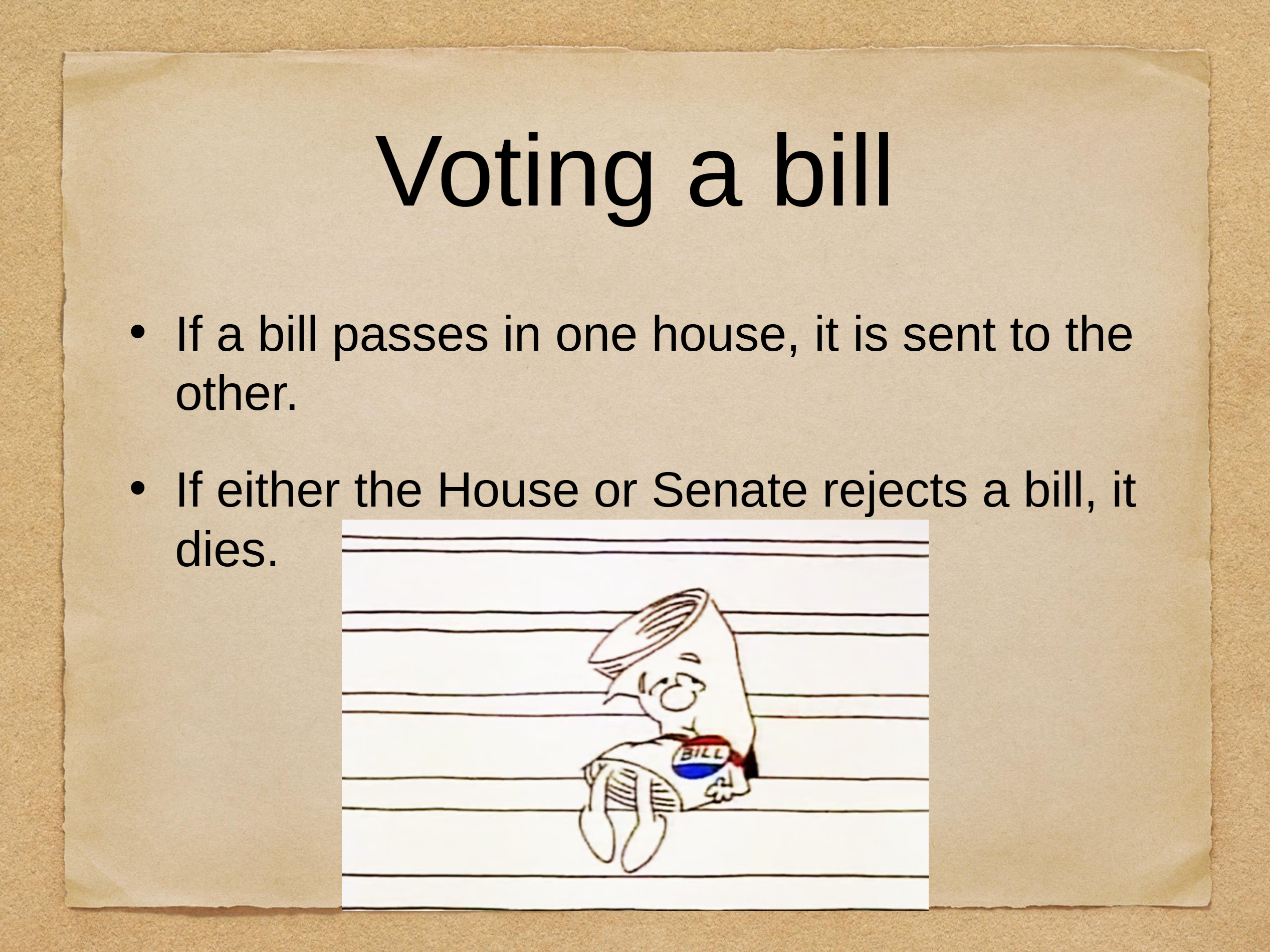
What happens if a bill passes in one house of Congress?
It is sent to the other house.
It becomes law immediately.
It is sent to the President.
It is rejected.
25
26
Multiple Choice
What is the main purpose of a Conference Committee in the legislative process?
To reconcile differences between House and Senate versions of a bill.
To sign bills into law.
To reject bills.
To amend bills after they become law.
27
28
Multiple Select
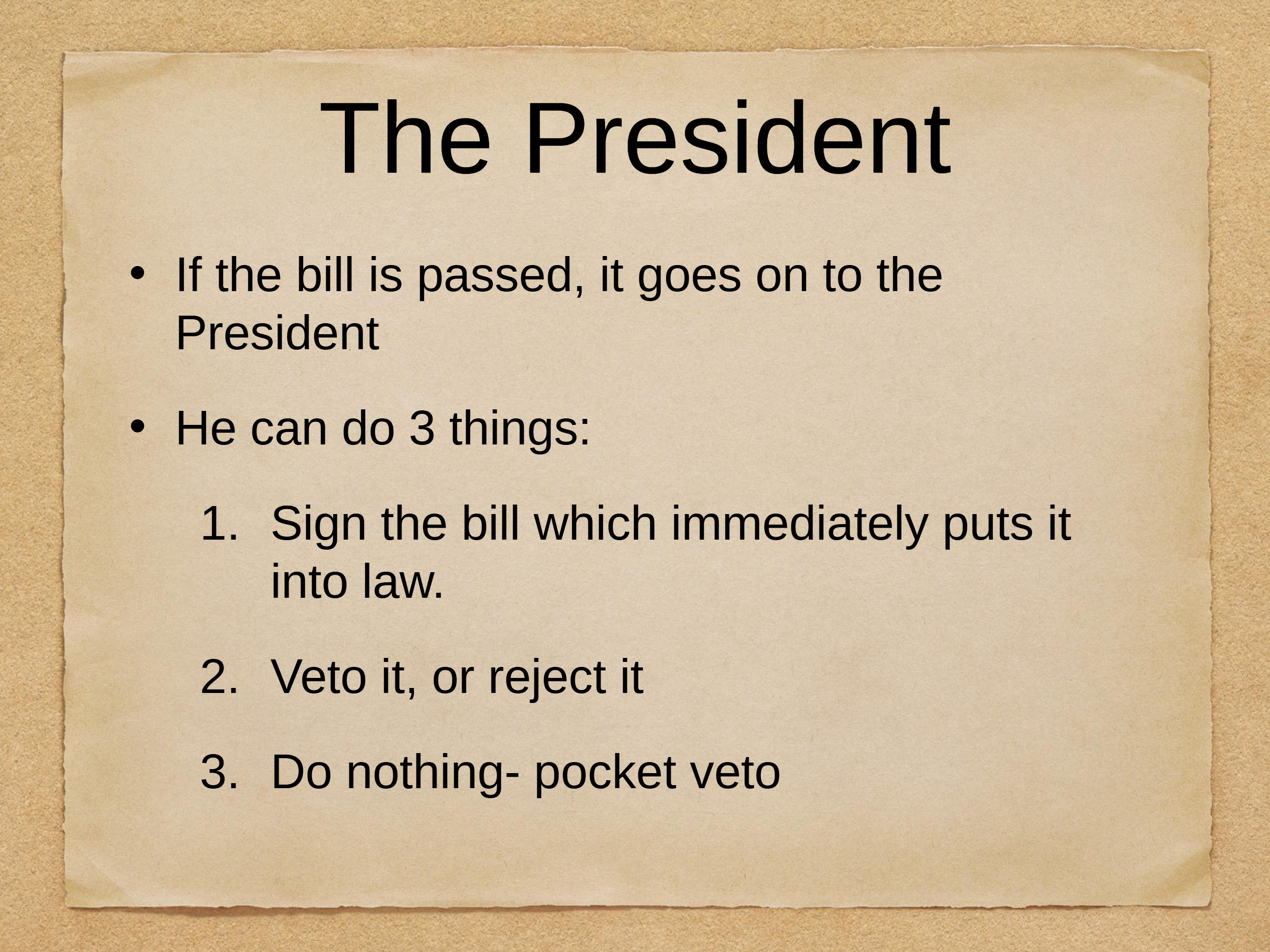
Which actions can the President take when a bill is presented to him?
Sign the bill into law
Veto the bill
Do nothing (pocket veto)
Send the bill back to Congress for amendments
29
30
Fill in the Blanks
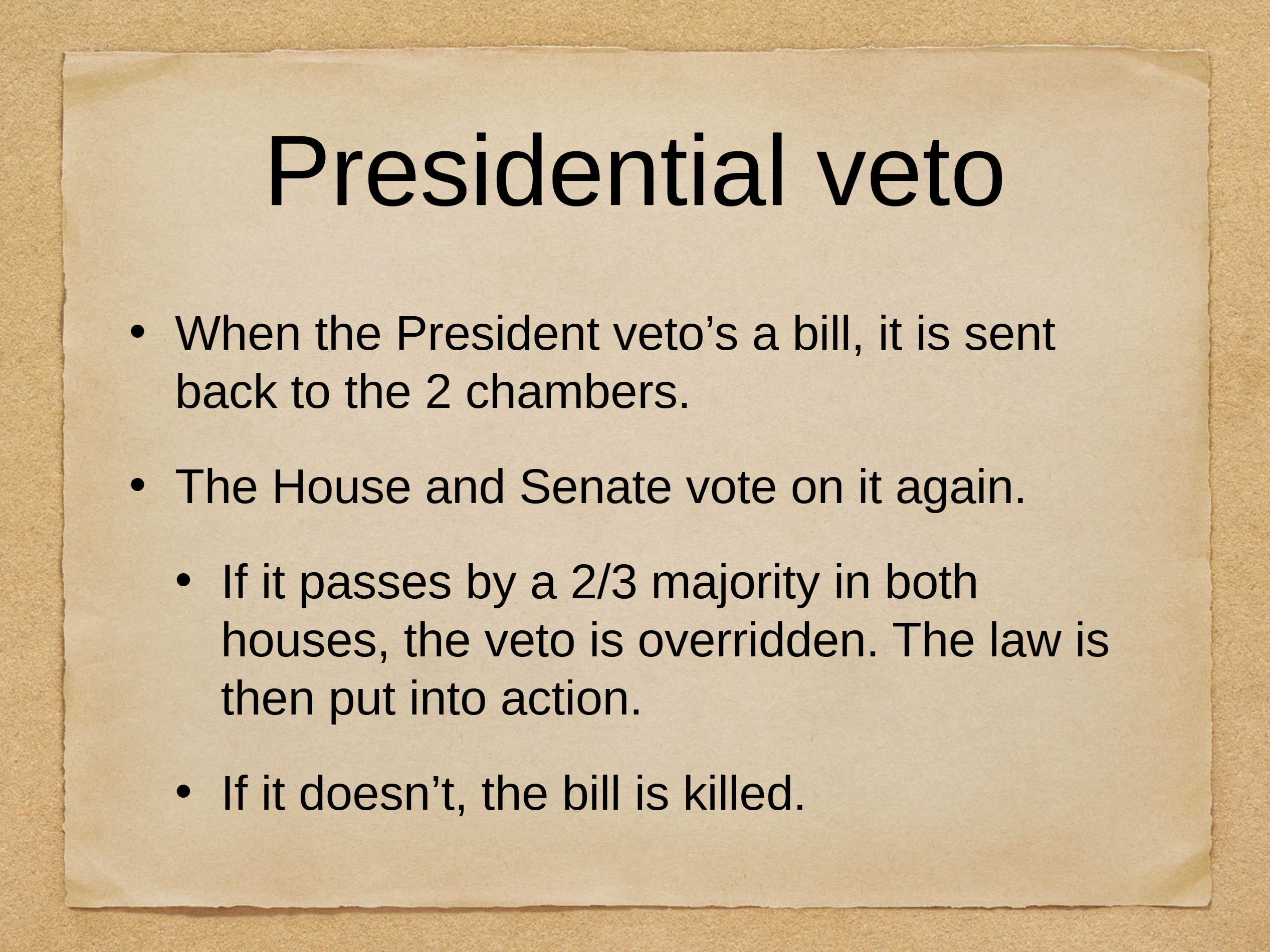
If the President vetoes a bill, it is sent back to the two
Type answer...
31
32
Multiple Choice
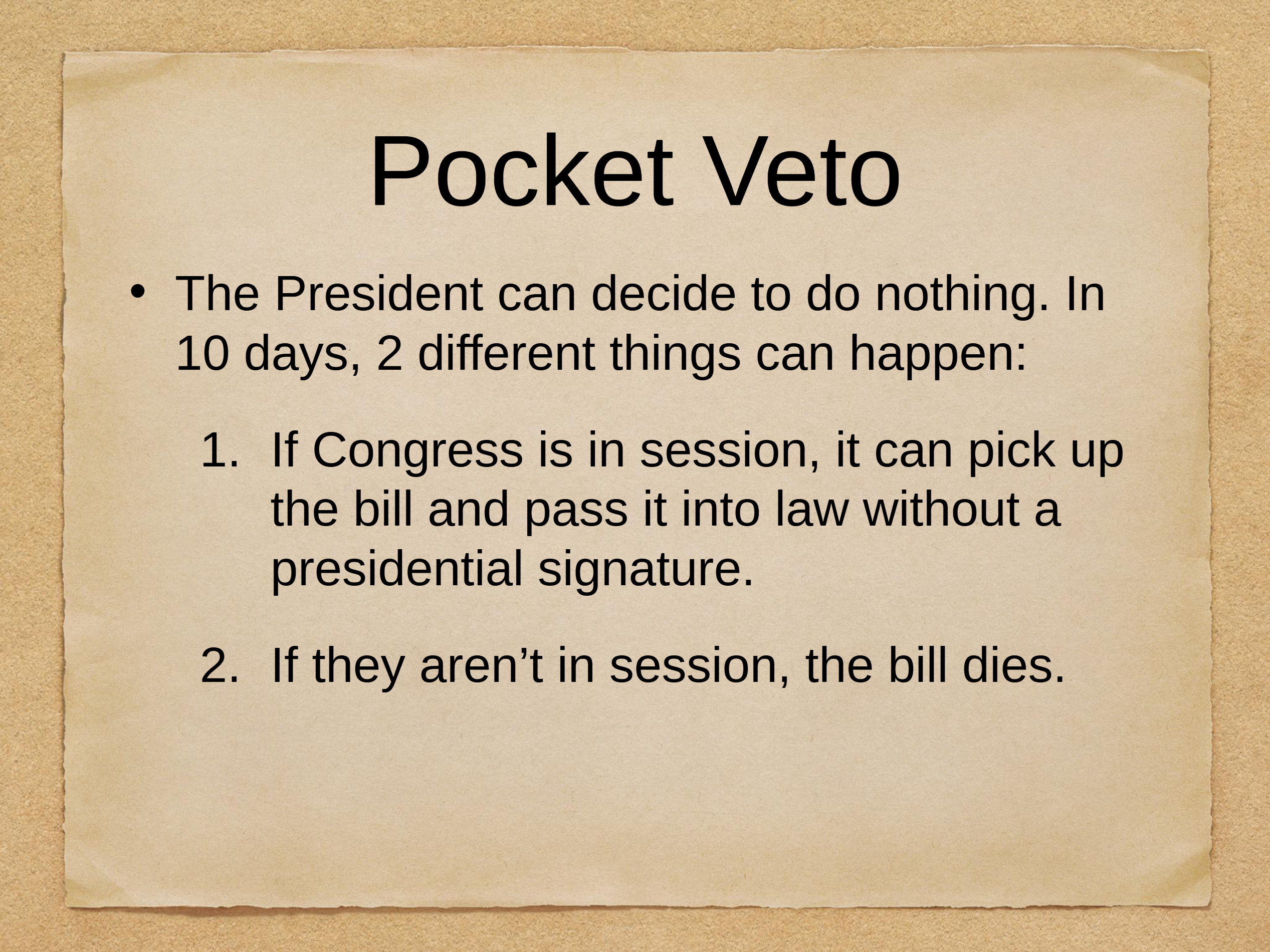
What happens if Congress is not in session during the 10 days after the President decides to do nothing with a bill?
The bill dies.
The bill becomes law.
The bill is sent to the Supreme Court.
The bill is sent back to the Conference Committee.
33
Open Ended
Explain what happens during a pocket veto and how Congress can respond to it.
34
35
Open Ended
The video 'I'm Just a Bill' helps explain how a bill becomes a law. Do you have any questions or would you like to know more about any part of this process?
36
Open Ended
After watching the video 'I'm Just a Bill,' what is one step in the process of how a bill becomes a law that you found most interesting or surprising?
Show answer
Auto Play
Slide 1 / 36
SLIDE
Similar Resources on Wayground

27 questions
Life in the Anglo Colonies
Presentation
•
7th Grade
30 questions
Social Studies CFA 1
Presentation
•
6th Grade
31 questions
Five Pillars of Islam
Presentation
•
7th Grade
34 questions
Juneteenth and Its Impact
Presentation
•
7th Grade
30 questions
Lesson 4.4: The New Kingdom
Presentation
•
6th Grade
32 questions
Transition Words and Phrases
Presentation
•
7th Grade
28 questions
Unit 4 Test Review
Presentation
•
7th Grade
32 questions
Shays' Rebellion
Presentation
•
7th Grade
Popular Resources on Wayground
21 questions
Continents and Oceans

Quiz
•
6th Grade
20 questions
Parts of Speech
Quiz
•
5th Grade
16 questions
Subject & Predicate
Quiz
•
5th Grade
25 questions
Multiplication Facts
Quiz
•
5th Grade
12 questions
Map Skills
Quiz
•
3rd Grade
22 questions
Continents and Oceans
Quiz
•
5th Grade
15 questions
Rounding Decimals
Quiz
•
5th Grade
20 questions
Brand Labels
Quiz
•
5th - 12th Grade
Discover more resources for Social Studies
10 questions
Exploring the Age of Exploration: Key Events and Figures

Interactive video
•
6th - 10th Grade
12 questions
13 Colonies Geography and Economy
Quiz
•
7th Grade
26 questions
SW Asia History
Quiz
•
7th Grade
15 questions
Historical Inquiry Vocab Quiz
Quiz
•
6th - 8th Grade
20 questions
US Involvement in the Middle East
Quiz
•
7th Grade
19 questions
Influencing Govt (Interest Groups-Media)
Quiz
•
6th - 8th Grade
8 questions
Notes: Argumentative Writing
Presentation
•
7th - 8th Grade
5 questions
American Revolution
Interactive video
•
7th Grade