

Skeletal System - Fractures

Presentation
•
Health Sciences
•
10th Grade
•
Practice Problem
•
Hard

Charissa Haywood
FREE Resource
13 Slides • 7 Questions
1
Unit 4 - Skeletal System
By Charissa Haywood

Mini Lesson
2
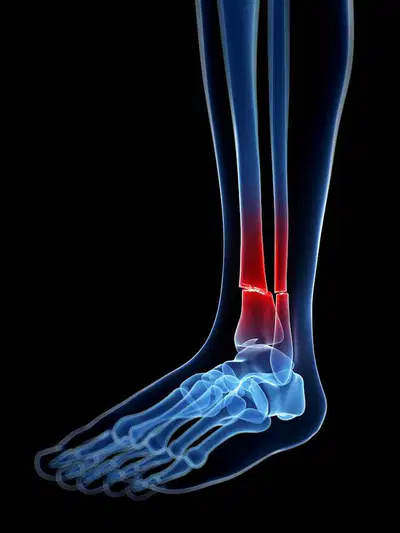
A fracture is a break or crack in a bone. A fracture occurs when force exerted against a bone is stronger than the bone can structurally withstand.
What is a fracture?
3
When a patient has broken a bone they are likely to have pain, swelling, bruising, deformity (looks out of place), inability to use a limb.
Diagnostic Tests like XRays, CT Scans, or MRI's can help confirm if a patient has a broken bone.
How do we know when a bone is fractured?
4
Poll
Take your best guess: What bones do you think are the ones MOST broken?
Upper Arm
Lower Arm
Wrist
Shoulder
5
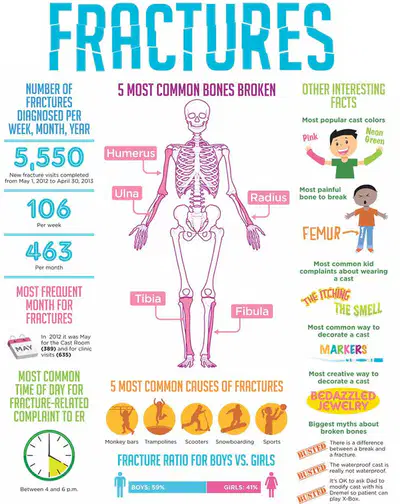
The 5 most common broken bones in children are the
Humerus (upper arm bone)
Ulna (lower arm bone)
Radius (lower arm bone)
Tibia (Lower leg bone)
Fibula (Lower leg bone)
Most common cause of broken bones in kids:
Monkey Bars
Trampoline
Scooters
6
Multiple Choice
Which of the following is NOT a common fracture in kids?
Ulna
Radius
Humerus
Ribs
7
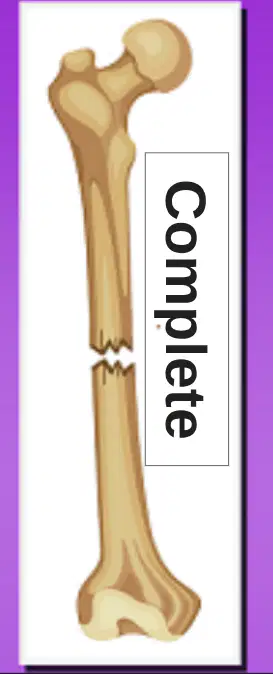
There are several different categories of fractures so let's learn a few of the basics. All fractures can be classified as partial or complete.
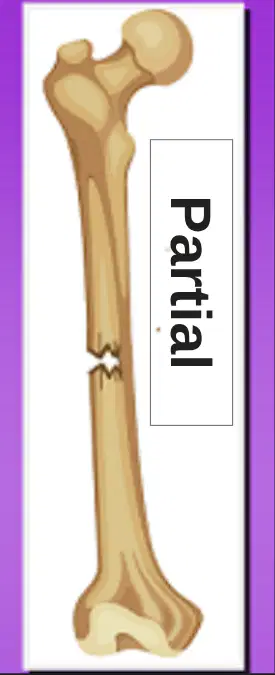
A partial fracture (as seen here to the left) is where the bone is NOT broken all the way through.
A complete fracture (as seen here to the right) is where the bone is broken all the way through.
8
Fill in the Blanks
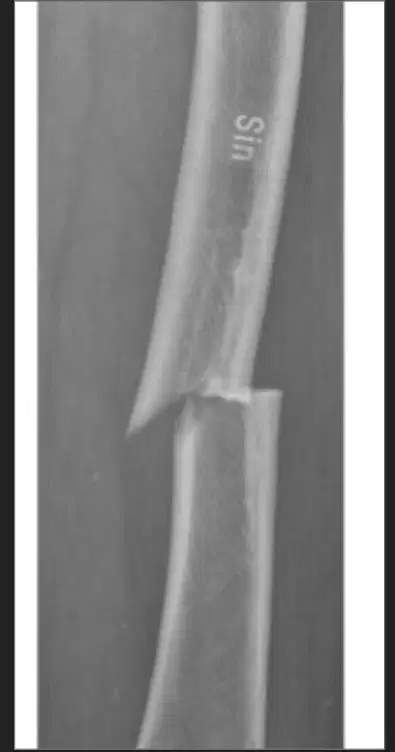
9
Fill in the Blanks
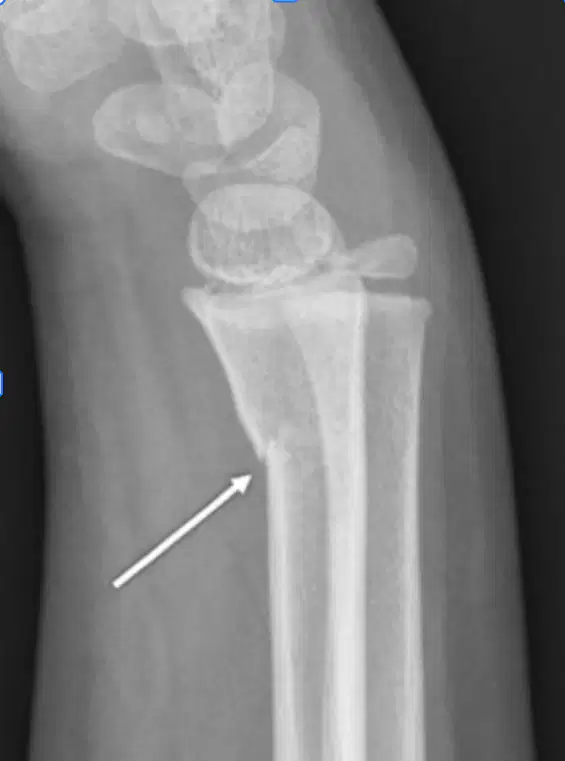
10
All fractures can also be classified as closed or open.
A closed fracture is a break in the bone that stays inside the skin. This is also known as a "simple" fracture. (top pic)
An open fracture is a break where the bone is so badly broken, it protrudes or pokes through the skin and can be seen from the outside. (side pic)
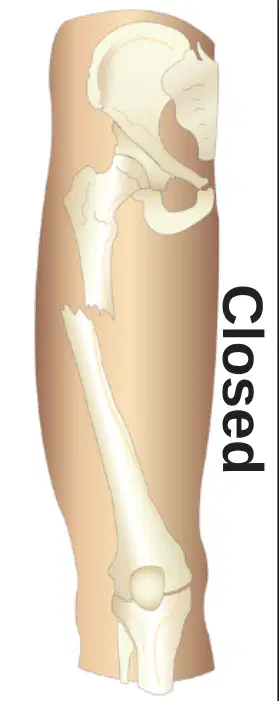
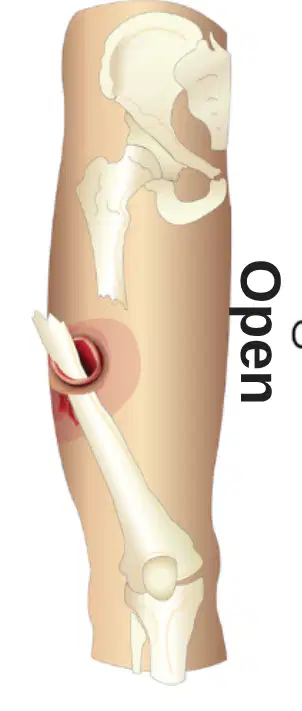
11
Open Ended
When a patient suffers an open fracture it is very serious. Other than fixing the broken bone, what are some other risks or concerns the medical team might have?
12
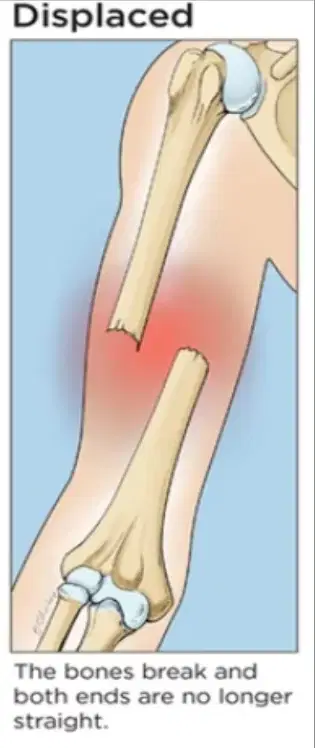
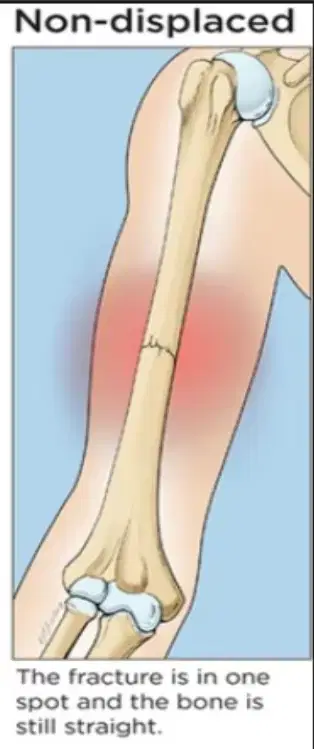
Fractures can also be classified as non-displaced or displaced.
A non-displaced fracture is a break in the bone where the two ends where the bone is fractured still line up and have not moved out of place.
An displaced fracture is a break where the two ends of the broken bone are NOT lined up and have moved out of place and will need to be re-set.
13
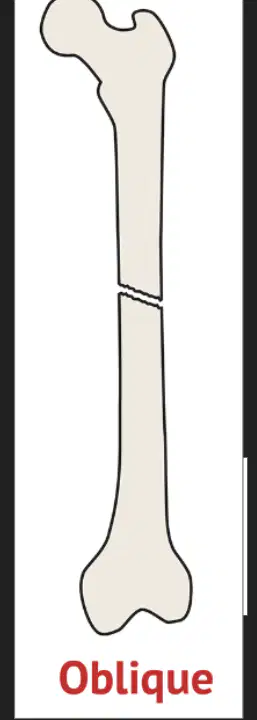
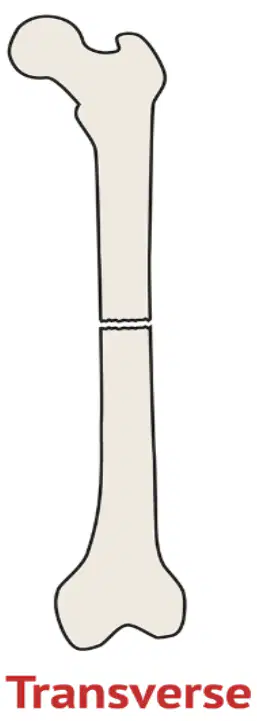
Fractures can also be classified as transverse or oblique.
A transverse fracture is a break that occurs in a straight line across the bone.
An oblique fracture is a break that occurs at a diagonal angle across the bone.
14
Labelling
Look at the picture of this leg fracture. Place the appropriate type of fracture in the correct box.
Oblique
Open
Displaced
Non-Displaced
Closed
Partial
Transverse
Complete
15
Let's talk about a few more types. The following types of fractures don't really exist in pairs of opposites like the others have. They kind of stand alone.
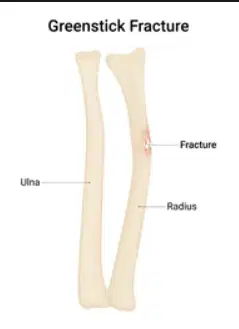
A greenstick fracture is a partial break (doesn't break all the way through the bone) that causes the bone to bend.
These are common in younger children because their bones are softer and more flexible. These fractures are usually caused by a child falling.

16
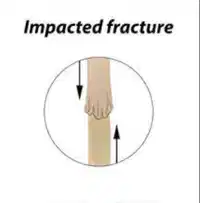
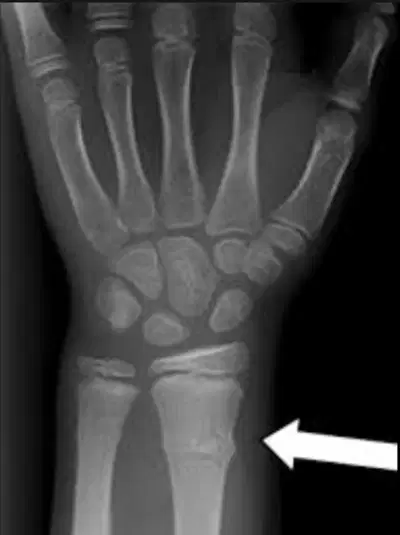
An impacted fracture is a break where the broken ends of the bone are jammed together by the force of the injury. Sometimes this is also called a buckle fracture
In this bottom picture you can see the impacted fracture gives the appearance of the bones buckling or smushed together
17
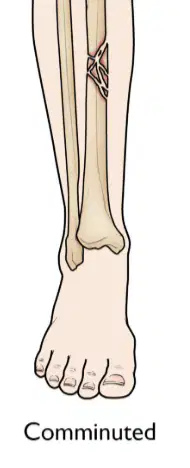
A comminuted fracture is an intense break due to a severe trauma that causes the bones to be broken in at least three pieces. Sometimes these fractures leave many bone fragments at the fracture site.
18
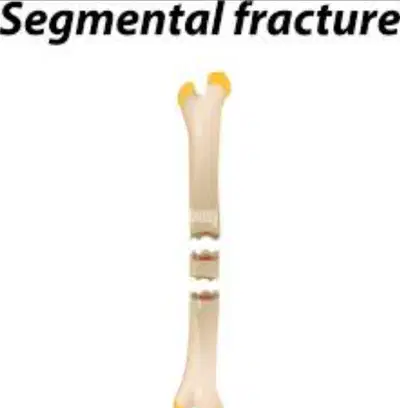
A segmental fracture is one bone that is broken in two places causing a "floating" segment of bone between the two breaks.
19
Labelling
Label the XRay image with the appropriate name for the fracture.
Impacted
Greenstick
Comminuted
Segmental
20
What do I do now?
Create-A-Fracture
You will need the "Create-a-Fracture" packet. For each type of fracture, you will cut out your bone and then cut and position the bone to represent the image of that fracture. You can use the front of the packet to remind you of each fracture and the definition.
Unit 4 - Skeletal System
By Charissa Haywood
Mini Lesson
Show answer
Auto Play
Slide 1 / 20
SLIDE
Similar Resources on Wayground

15 questions
Present Perfect
Presentation
•
10th Grade
15 questions
Neolithic Revolution & Early Civilizations
Presentation
•
10th Grade
16 questions
6/1: Evolution: Gene Variation
Presentation
•
10th Grade
16 questions
Adjectives agreement - French
Presentation
•
10th Grade
14 questions
8. Indirect questions
Presentation
•
10th Grade
16 questions
Ten Steps of the AVID Tutorial
Presentation
•
10th Grade
16 questions
Acid-Base Summary
Presentation
•
10th Grade
15 questions
Narrative Text
Presentation
•
10th Grade
Popular Resources on Wayground
10 questions
HCS SCI 03 Summer School Assessment 1

Quiz
•
3rd Grade
15 questions
HCS SCI 05 Summer School Assessment 1 Review
Quiz
•
5th Grade
22 questions
Day 9 Equations and Inequalities Review
Quiz
•
9th Grade
10 questions
Writing and Identifying Ratios Practice
Quiz
•
5th - 6th Grade
7 questions
PYRAMID PERSPECTIVES part 1
Presentation
•
9th - 12th Grade
12 questions
Understanding the Fourth of July
Quiz
•
9th Grade
15 questions
Soccer World Cup Quiz Questions
Quiz
•
7th Grade