

AI - How computers learn from Data

Presentation
•
Computers
•
6th - 8th Grade
•
Practice Problem
•
Hard

Michael O'Gorman
FREE Resource
52 Slides • 16 Questions
1

2
Multiple Choice
What types of inputs can be used to train a Teachable Machine model?
numbers, colors, and shapes
text, videos, and gestures
images, sounds, and poses
smells, tastes, and temperatures
3
4
5
Multiple Choice
Picture a toddler. The child knows what the family cat looks like (provided they have one) but has no idea that there are a lot of other cats in the world that are all different. The thing is, if the kid sees another cat, he or she will still be able to recognize it as a cat through a set of features such as two ears, four legs, a tail, fur, whiskers, etc.
Supervised Learning
Unsupervised Learning
6
7
8
9
Multiple Choice
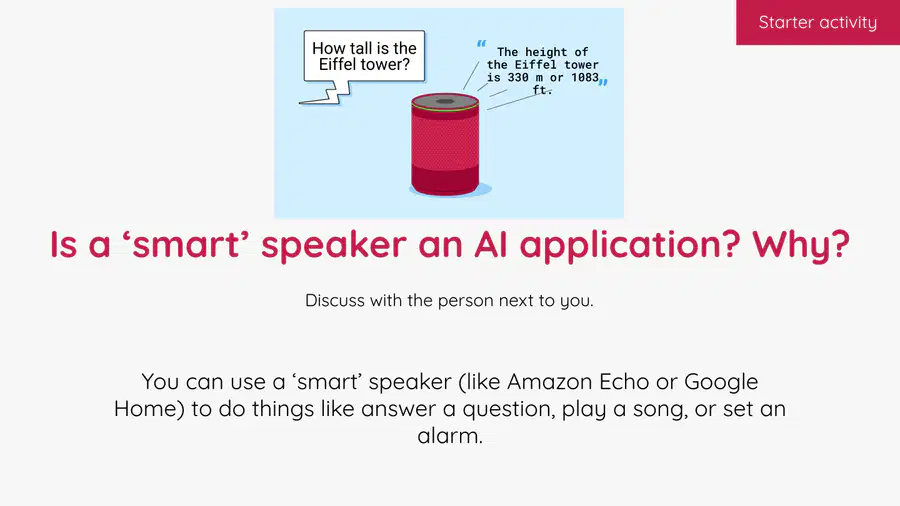
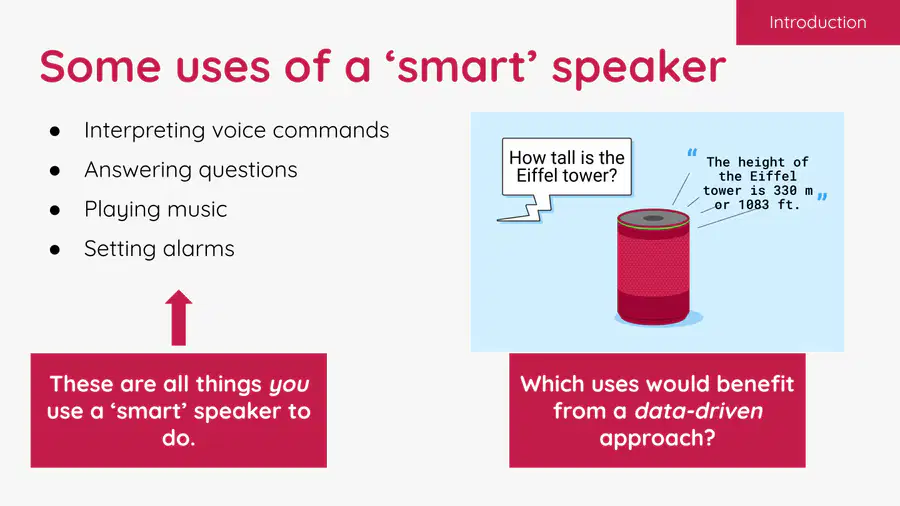
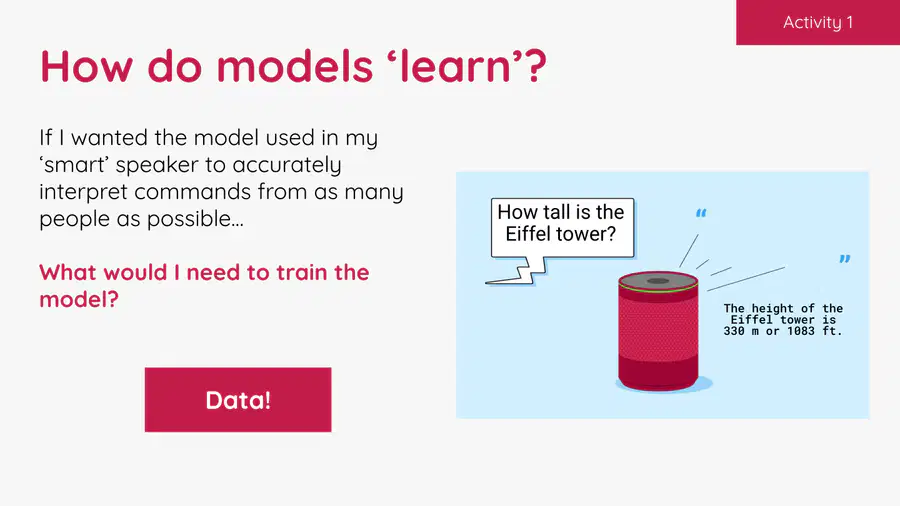
What are some uses of a 'smart' speaker?
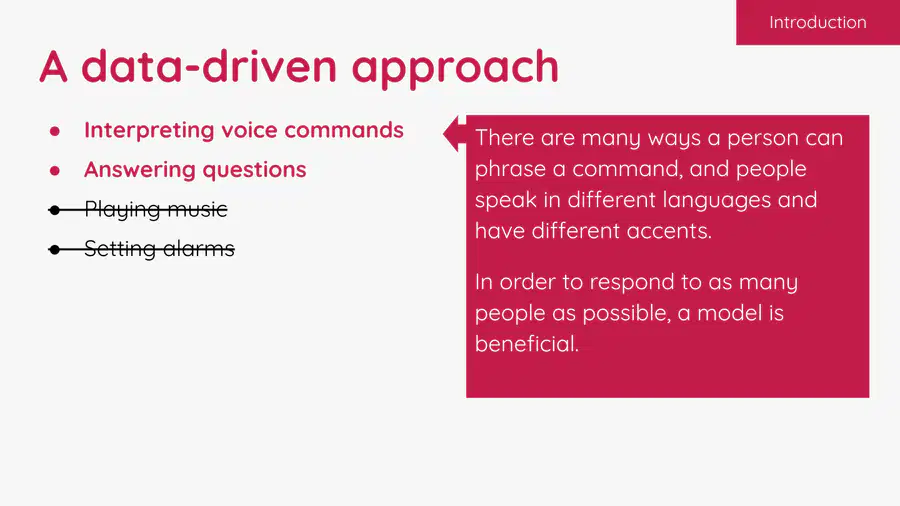
Interpreting voice commands
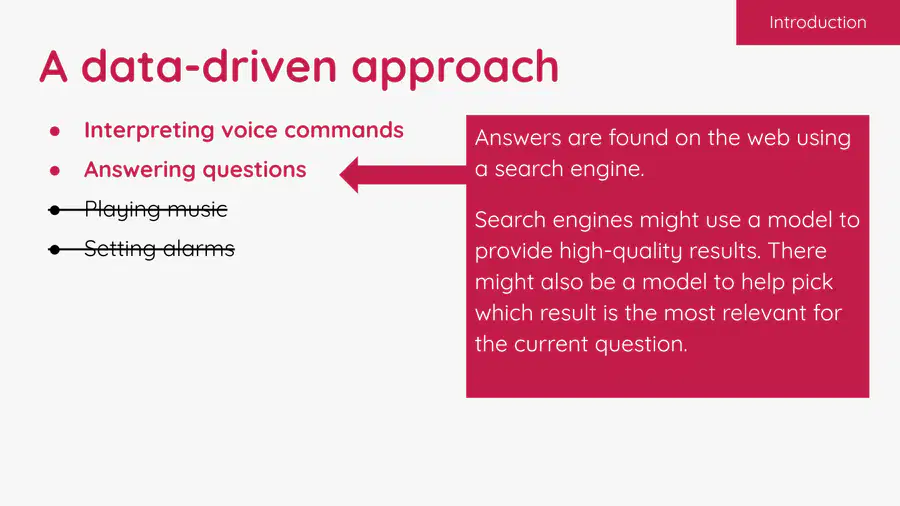
Answering questions
Playing music
Setting alarms
10
11
12
13
Multiple Choice
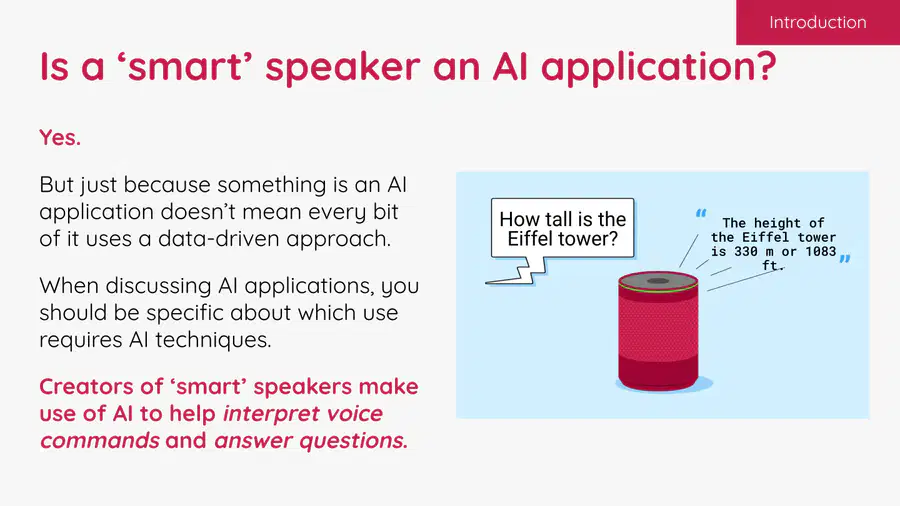
Is a ‘smart’ speaker an AI application? Why?
Yes
No
Sometimes
Not sure
14
15
16
Multiple Choice
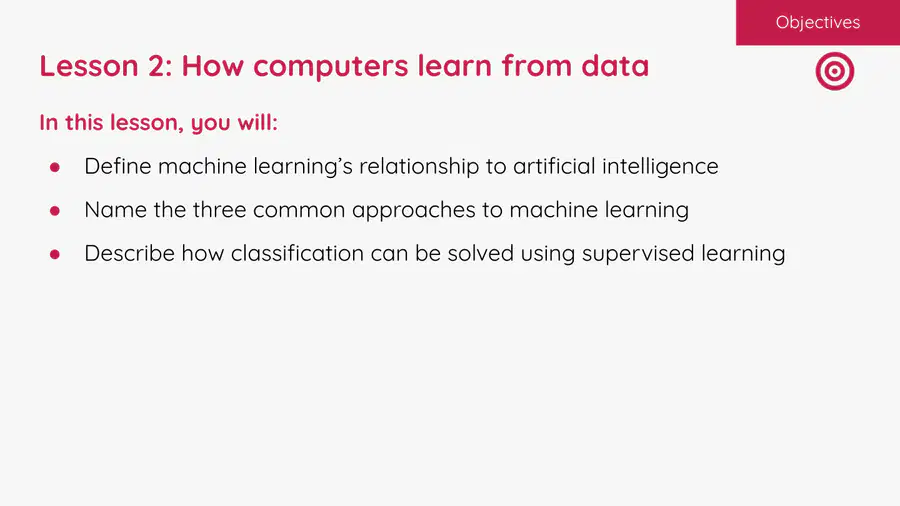
What is Machine Learning?
Machine Learning is a subset of artificial intelligence
17
18
Multiple Choice
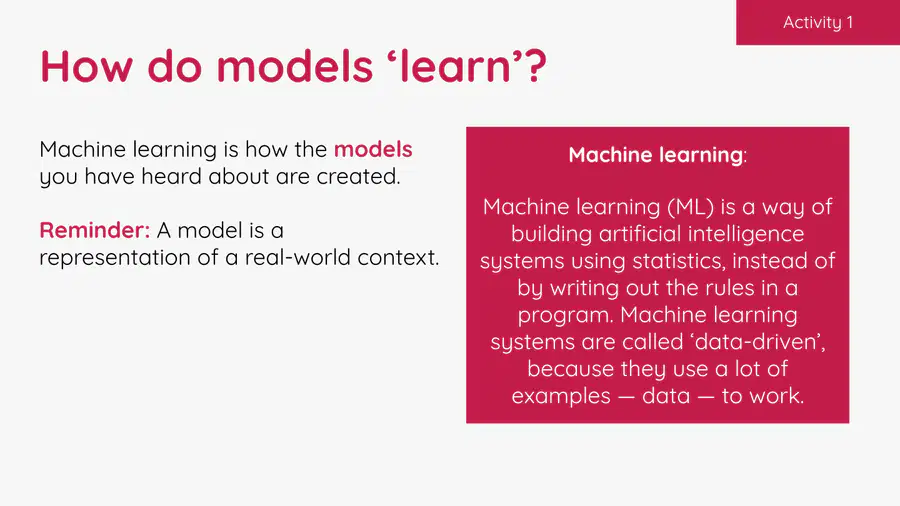
What is machine learning and how does it relate to models?
A method of programming rules
A way to build AI systems
A representation of real-world context
A type of data analysis
19
20
Multiple Choice
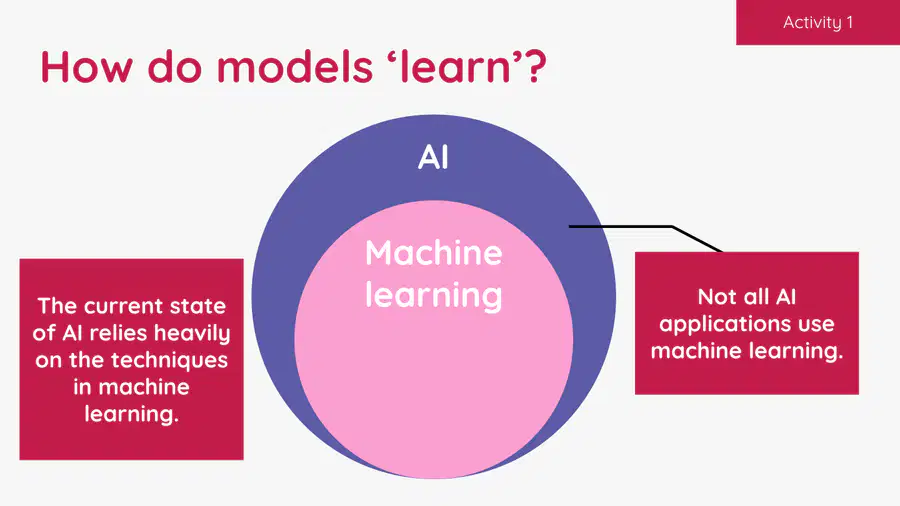
What is the relationship between AI and machine learning?
Machine learning is a subset of AI
AI is a subset of machine learning
AI and machine learning are the same
Machine learning does not relate to AI
21
22
Multiple Choice
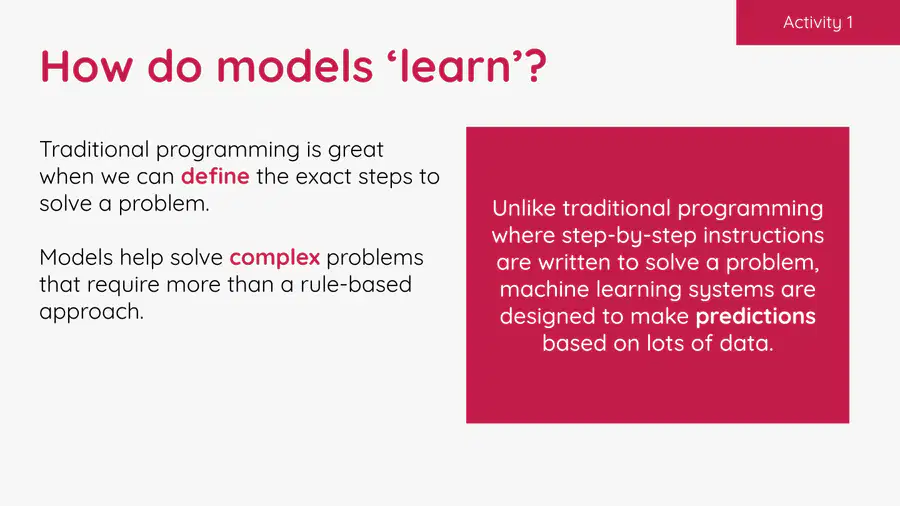
How do models ‘learn’?
By defining exact steps
By solving complex problems
By making predictions
By following rules
23
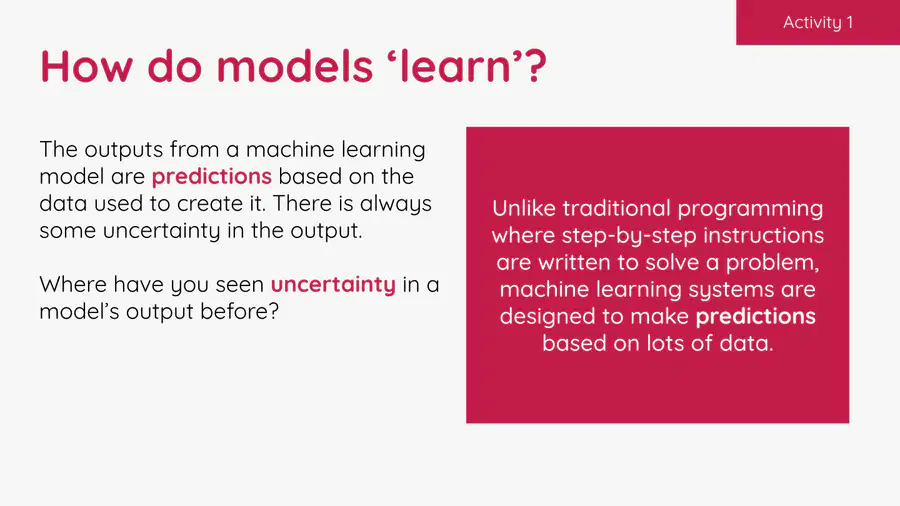
24
Multiple Choice
What is the primary goal of data science?
Automating tasks
Extracting meaningful insights from data
Enhancing Computer Vision
Developing mkachine learning algorithms
25
26
Multiple Choice
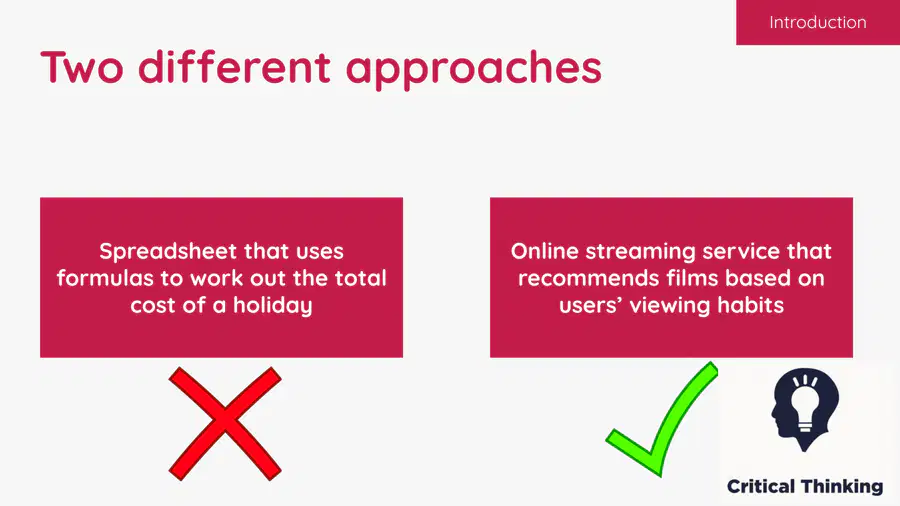
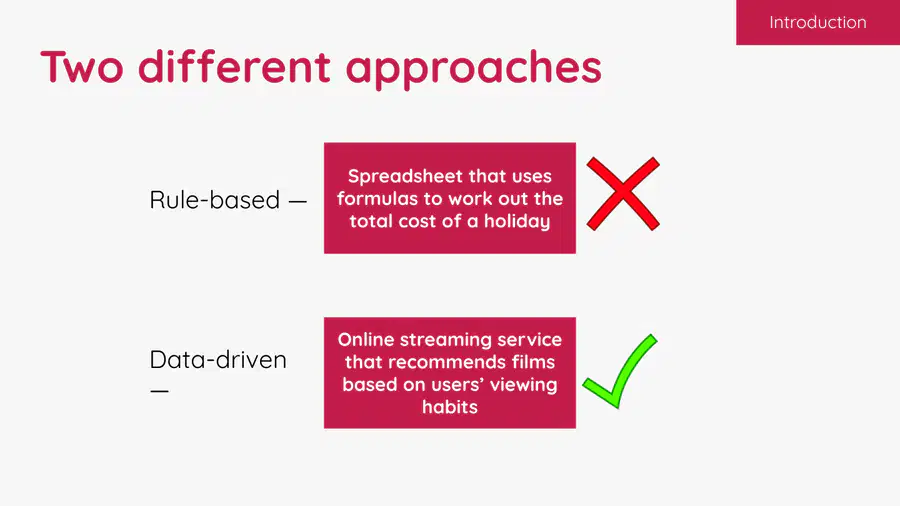
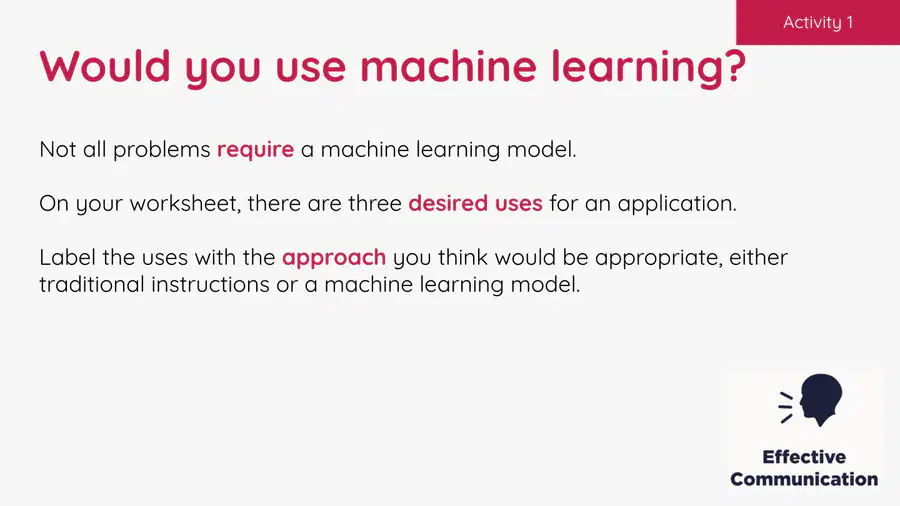
How does machine learning differ from traditional programming in terms of rules?
Machine learning infers rules from data and labels, while traditional programming defines rules in a programming language.
Machine learning defines rules in a programming language, while traditional programming infers rules from data and labels.
Machine learning eliminates the need for rules, while traditional programming heavily relies on defined rules.
Machine learning and traditional programming both use predefined rules.
27
28
Multiple Choice
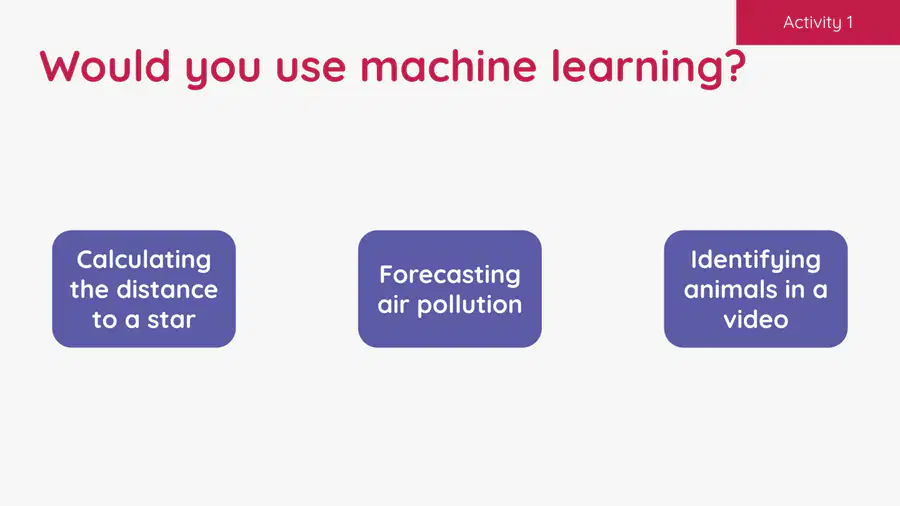
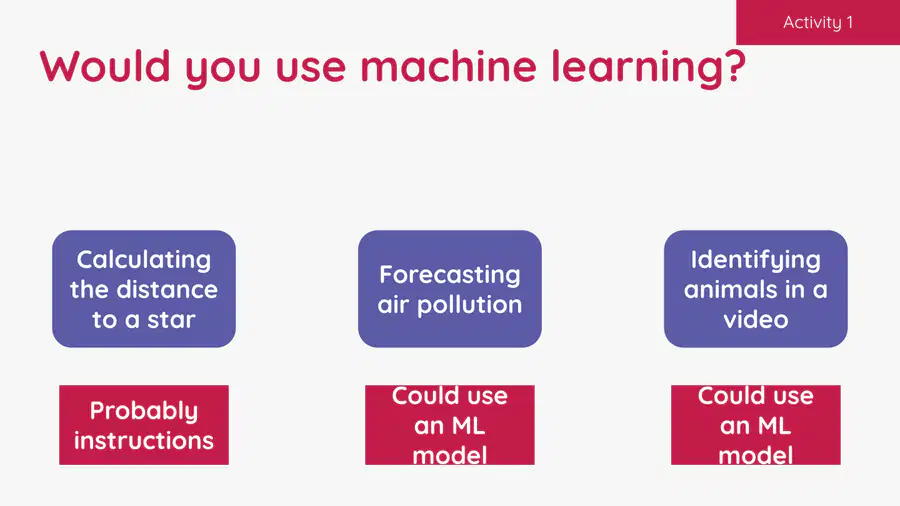
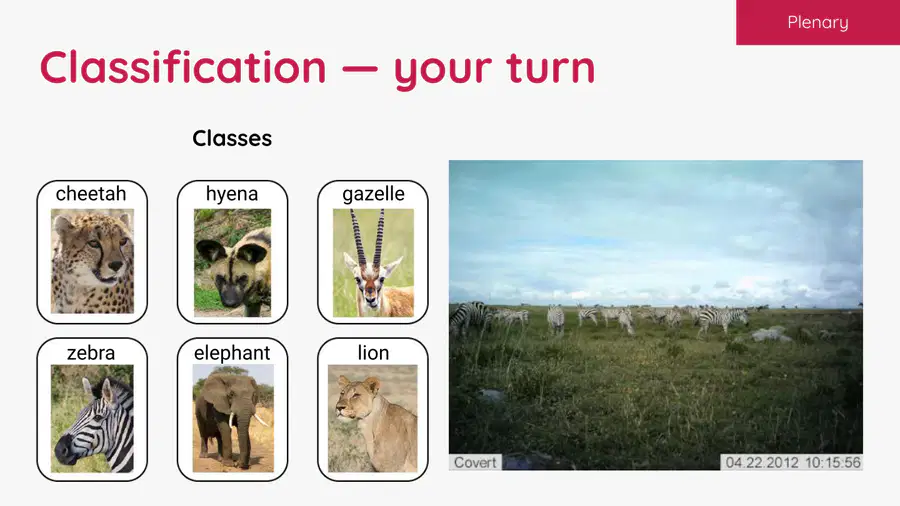
Which of the following activities would you use machine learning for?
Calculating the distance to a star
Forecasting air pollution
Identifying animals in a video
None of the above
29
Multiple Choice
Recognizing ___ in data is an important part of machine learning.
text
patterns
images
30
31
32
Multiple Choice
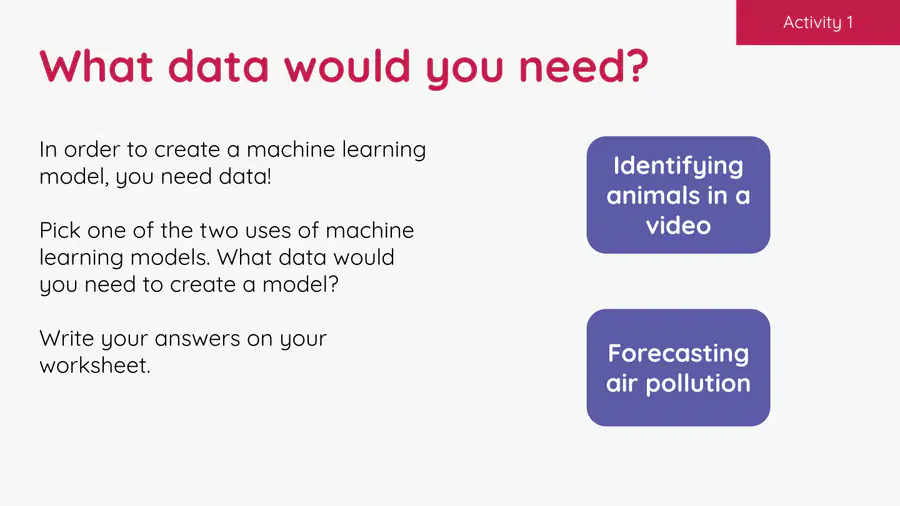
What data would you need to create a machine learning model for forecasting air pollution?
Historical pollution data
Weather data
Traffic data
Geographical data
33
Multiple Choice
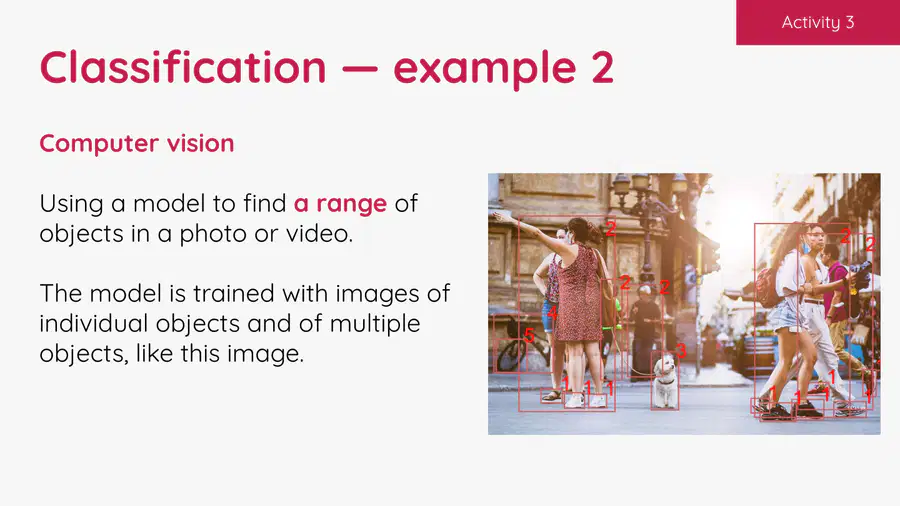
What data would you need to create a machine learning model for identifying animals in a video?
Images of animals
Videos of animals
Sound recordings of animals
Text descriptions of animals
34
35
36
37
Multiple Select
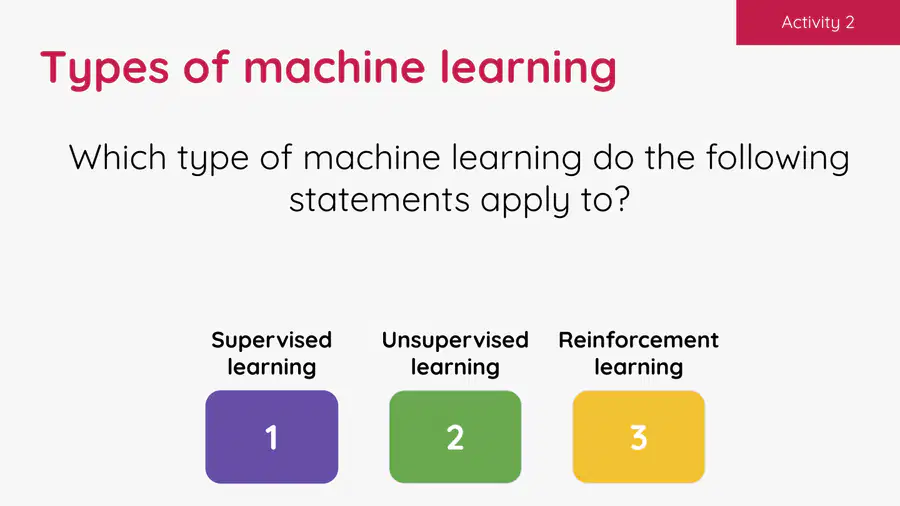
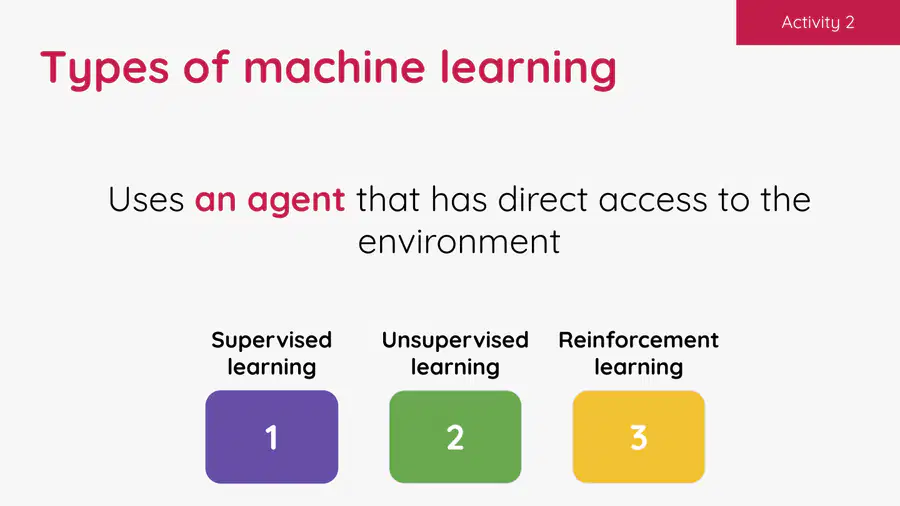
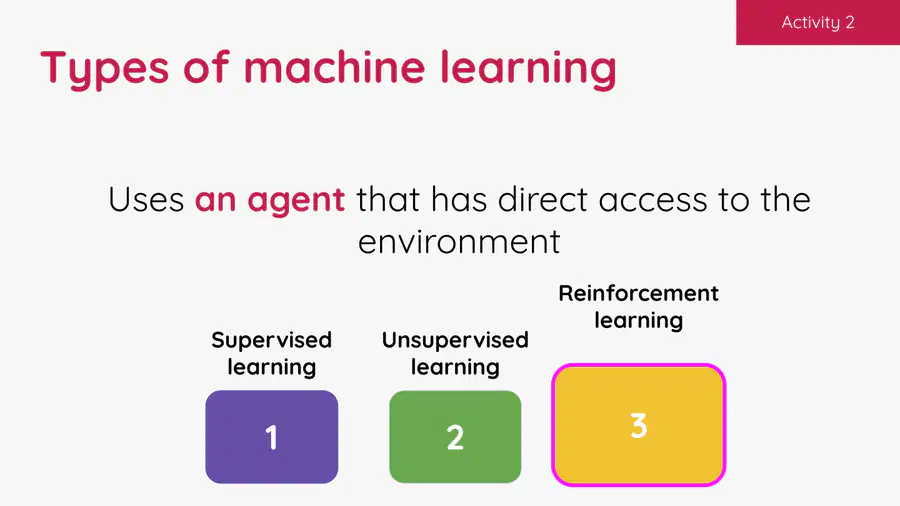
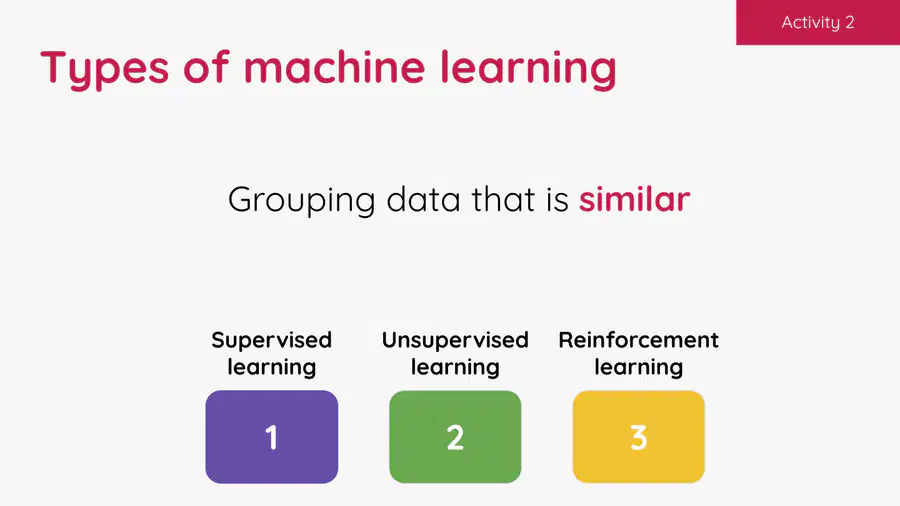
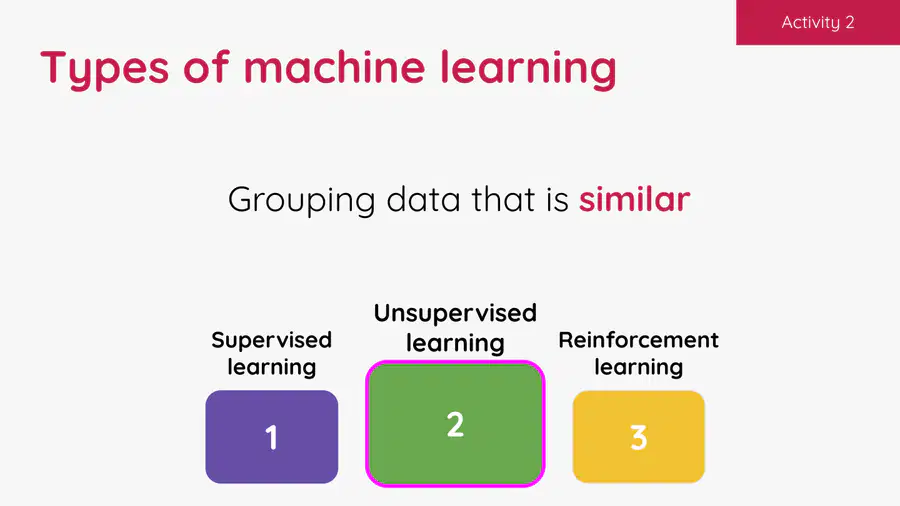
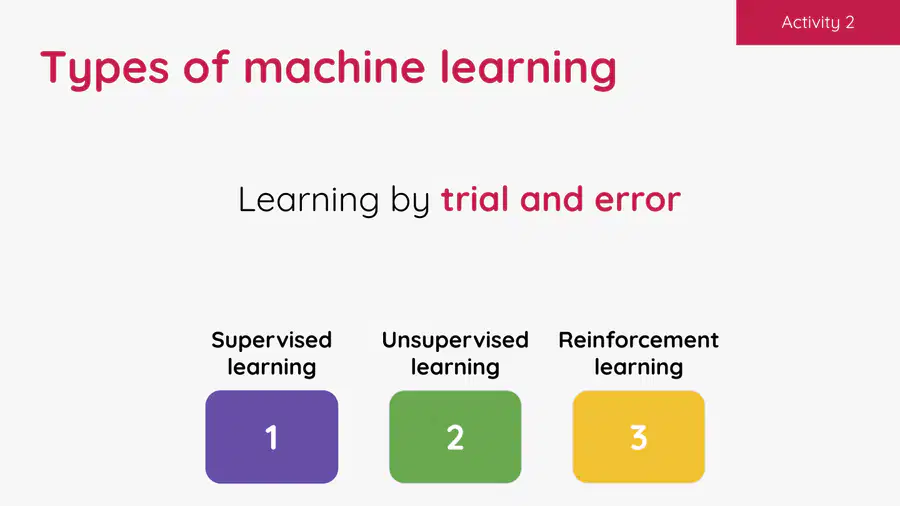
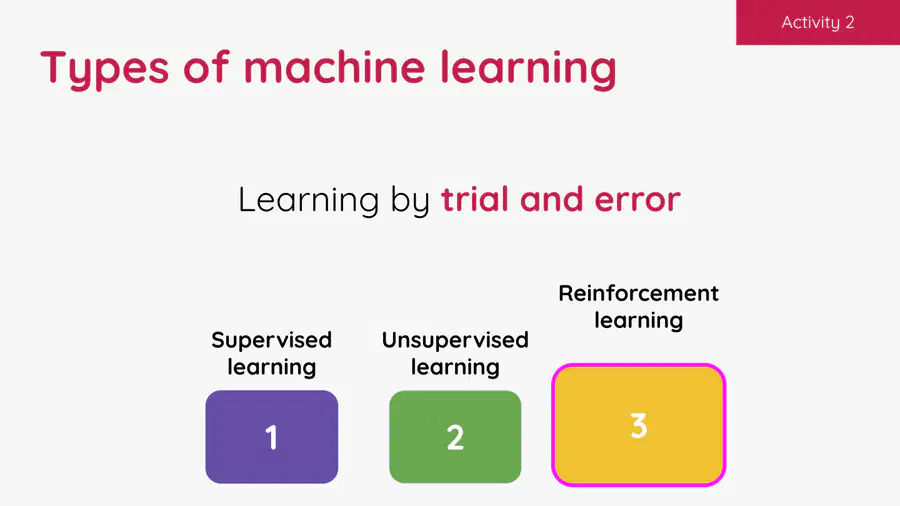
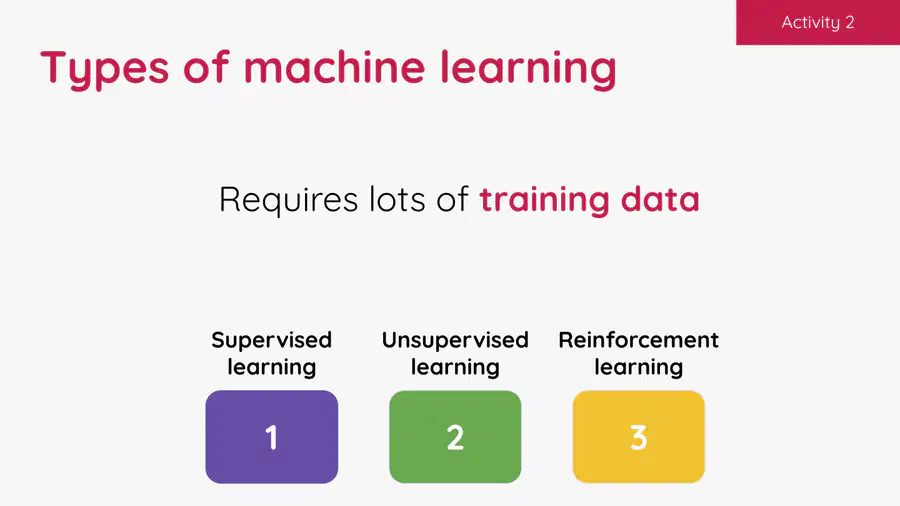
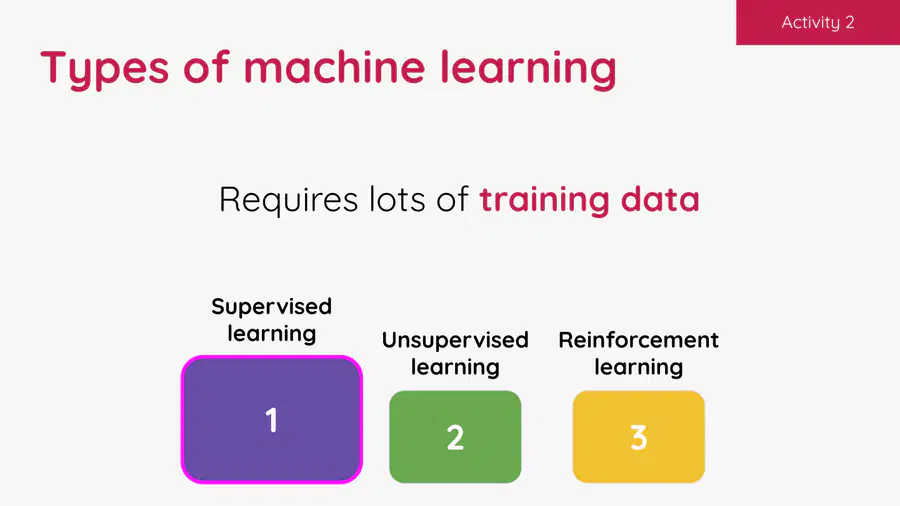
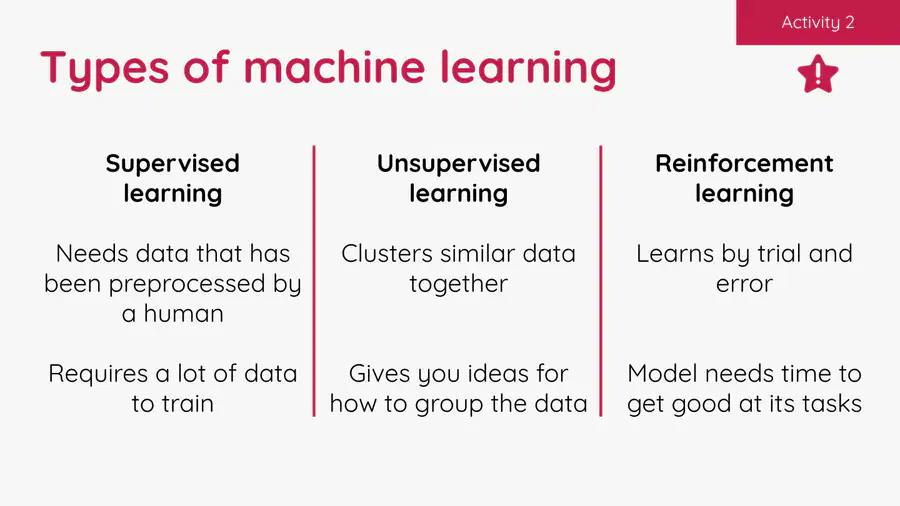
What are the three types of machine learning mentioned in the image?
Supervised learning
Unsupervised learning
Reinforcement learning
Deep learning
38
39
40
41
Multiple Choice
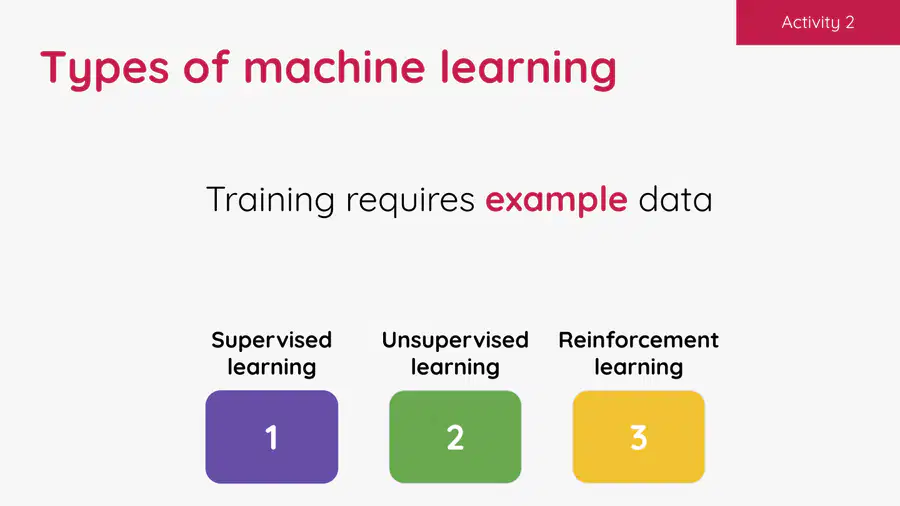
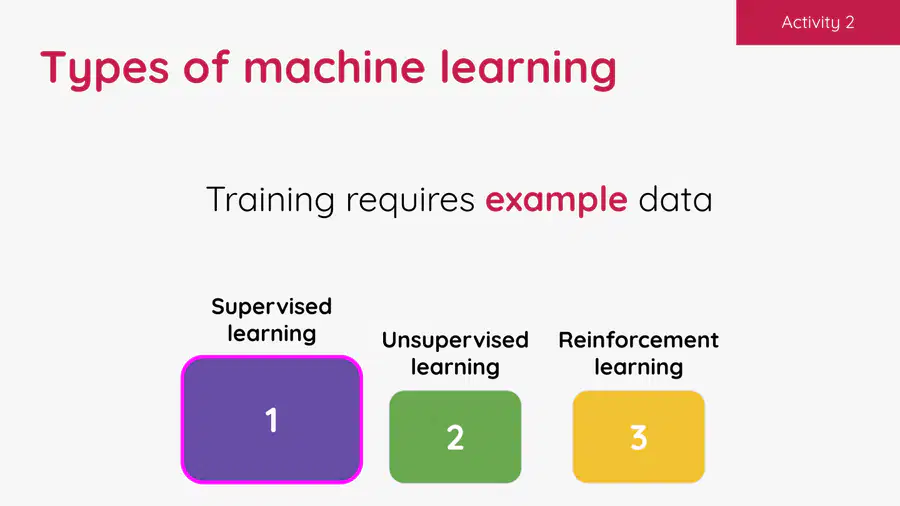
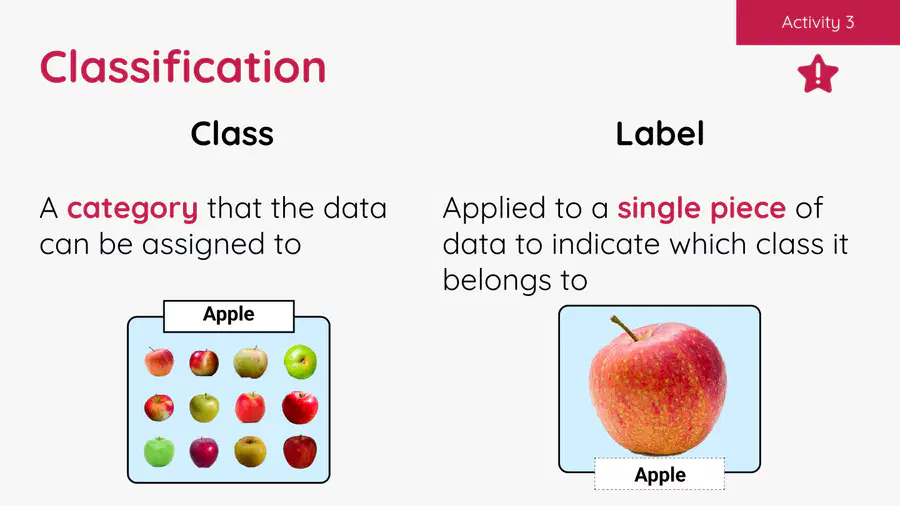
What is the primary difference between supervised and unsupervised learning?
Supervised learning uses labeled data, while unsupervised learning uses unlabeled data.
Supervised learning is used only for classification problems, while unsupervised learning is used for regression problems.
Unsupervised learning algorithms are always faster than supervised learning algorithms.
Supervised learning can't handle big data, while unsupervised learning is designed for it.
42
43
44
45
46
47
48
49
50
51
52
53
54
55
56
57
58
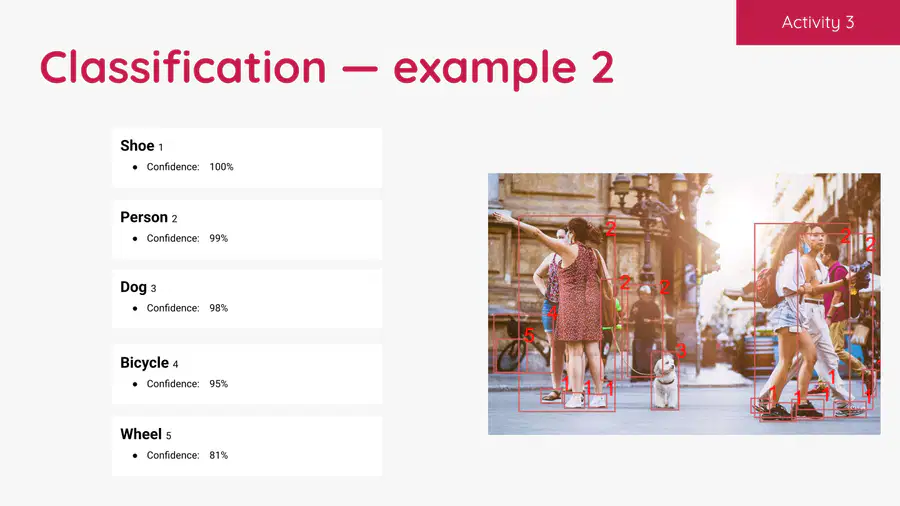
59

60
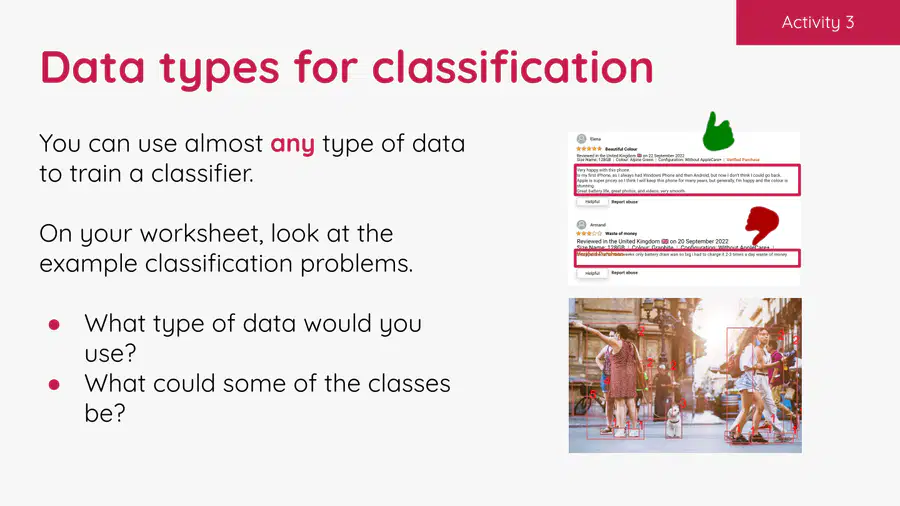
61
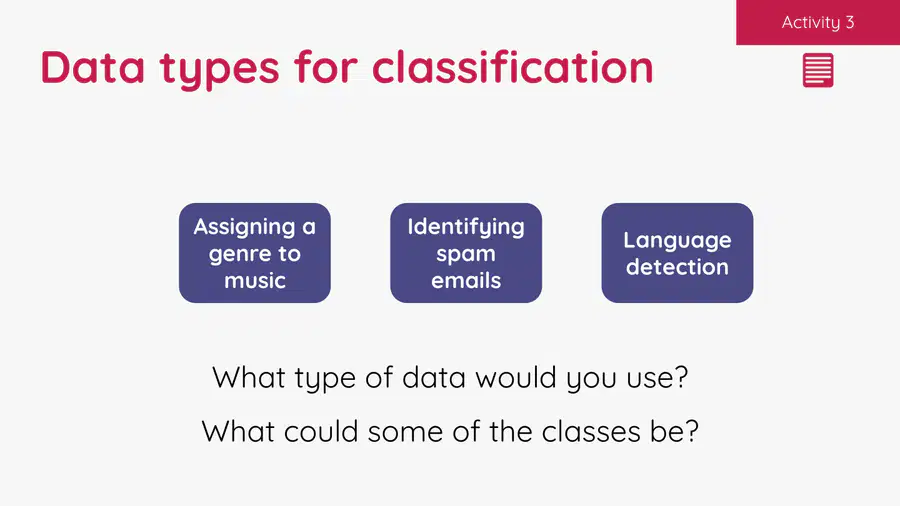
62
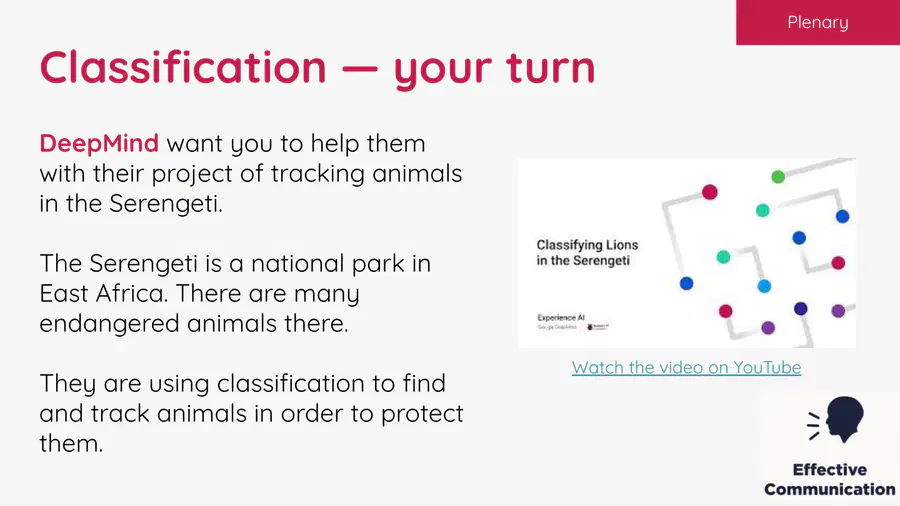
63
64
65
66
67
68
Show answer
Auto Play
Slide 1 / 68
SLIDE
Similar Resources on Wayground

67 questions
Cells Unit
Presentation
•
6th - 8th Grade
63 questions
3.1 KEGRAVITIAN
Presentation
•
7th - 8th Grade
60 questions
Roman World Takes Shape
Presentation
•
6th - 7th Grade
61 questions
Plate Motion @Home Lesson 13 Slides
Presentation
•
6th - 8th Grade
63 questions
Change Over Time Lesson
Presentation
•
6th - 8th Grade
61 questions
Volleyball Lesson
Presentation
•
6th - 8th Grade
65 questions
Basics of Communication CIEV +
Presentation
•
6th - 8th Grade
61 questions
EAC Entry Event 2026
Presentation
•
6th - 8th Grade
Popular Resources on Wayground
11 questions
Hallway & Bathroom Expectations

Quiz
•
6th - 8th Grade
10 questions
HCS SCI 03 Summer School Assessment 2
Quiz
•
3rd Grade
11 questions
Home Scope
Quiz
•
7th - 8th Grade
12 questions
2026 TAP Technology in the Classroom
Presentation
•
Professional Development
15 questions
HCS SCI 05 Summer School Assessment 2 Review
Quiz
•
5th Grade
15 questions
HCS SCI 04 Summer School Review 2
Quiz
•
4th Grade
59 questions
Geometry Unit 3 Review
Quiz
•
9th - 12th Grade
14 questions
FAST ELA READING SMAPLE TEST MATERIALS

Passage
•
3rd Grade