Change Over Time Lesson
Presentation
•
Science
•
6th - 8th Grade
•
Practice Problem
•
Easy
+2
Standards-aligned
Tamicka Bonnick
Used 17+ times
FREE Resource
30 Slides • 31 Questions
1
2
3
Multiple Choice
What is the process called by which a species gradually changes over time?
Evolution
Mutation
Adaptation
Extinction
4
5
6
7
Multiple Choice
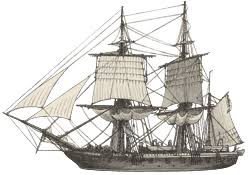
What was the name of Darwin's ship?
Indefatigable
Bugle
Sloop John B
Beagle
8
Multiple Choice
Where did Charles Darwin go on his round-the-world voyage?
Antarctica and the Arctic
North America and Europe
South America, Australia, and Africa
Only around the British Isles
9
10
Fill in the Blanks
11
12
13
Multiple Choice
What organism did Darwin study at the Galapagos Island?
Dogs
Dragons
Finches
Tigers
14
Multiple Choice
15
Multiple Select
According to Darwin's theory, which of the following statements are true?
(Select 2 answers)
Populations have variations.
All offspring survive to adulthood.
Favorable traits are passed on to future generations.
A population's gene pool remains unchanged over time.
16
Multiple Choice
Darwin noticed that the different islands all had their own slightly different varieties of animals.
What does this tell us about how species change to fit their environment?
Species adapt to their environment over time.
All species are identical regardless of location.
Species do not change based on environment.
Species migrate to environments that suit them.
17
18
19
Fill in the Blanks
20
Multiple Choice
According to Charles Darwin, which trait is most important for survival?
Strength
Intelligence
Responsiveness to change
Speed
21
Mutation is a change in an organism's DNA.
This occurs during DNA replication (when the DNA is being copied).
What is Mutation?
22
23
Multiple Choice
24
Multiple Choice
What is the primary cause of mutations?
Errors that happen when DNA is copied
Changes in an organism's diet
An organism's choice to change its traits
The process of a chromosome winding up
25
Multiple Choice
Which of the following statements about mutations is true?
All mutations are harmful to organisms.
Mutations can only improve an organism.
Most mutations have no effect on organisms.
Mutations cannot be passed down to the next generation.
26
Multiple Choice
What do hurtful mutations do?
Decreases skills
27
Multiple Choice
28
29
Hotspot
Which moth would the bird catch very easily?
30
Open Ended
Which one will the bird catch?
How does the environment determine this?
31
Which one will the bird catch?
How does the environment determine this?
Questions
The white moth is easy to see on the darker tree trunk and would be eaten by birds.
The dark moth is easy to see on the lighter tree trunk and would be eaten by birds.
Answer
32
33
Multiple Select
Which of the following are sources of genetic variation in a population?
(Select 2 answers)
Sexual reproduction
Mutations
Environmental changes
Natural selection
34
35
36
Multiple Choice
Which type of adaptation involves a physical feature that helps an organism survive?
Behavioral
Physiological
Structural
Environmental
37
Fill in the Blanks
38
39
40
41
Multiple Choice
Which of the following statements best describes the difference between adaptation and evolution?
Adaptation is a long-term change in a population's traits, while evolution is a short-term change in individuals.
Adaptation refers to helpful traits in individuals, while evolution refers to accumulated genetic changes in populations.
Adaptation and evolution are both short-term changes in individuals.
Adaptation and evolution are both caused by artificial selection.
42
Open Ended
Explain how adaptation and evolution are related, using the example of the fox and its fur.
43
Explain how adaptation and evolution are related, using the example of the fox and its fur.
Adaptation and evolution are connected because adaptations are the small changes that can lead to evolution over time.
For example, in a cold environment, some foxes may be born with thicker fur than others. This thicker fur is an adaptation because it helps those foxes stay warm and survive winter. Since the foxes with thick fur are more likely to survive and have babies, they pass that trait on.
Over many generations, more and more foxes in the population have thick fur. This long-term change in the population is evolution — it happened because the helpful adaptation (thick fur) became more common.
44
45
46
47
48
Multiple Choice
Which beetle color was selected against (did not survive) in the population over generations?
Green
Brown
Red
Yellow
49
Multiple Choice
Based on the beetle diagrams, what effect does the birds' preference for green beetles have on the beetle population over generations?
The number of green beetles increases over time.
The number of orange beetles increases over time.
Both green and orange beetles remain equal in number.
The beetle population goes extinct.
50
Multiple Choice
Based on the diagrams of mice and birds, what process is being illustrated that leads to changes in the population over generations?
Natural selection
Genetic drift
Migration
Artificial selection
51
Dropdown
52
53
54
55
Fill in the Blanks
56
Multiple Select
Based on the giraffe scenario, which factors contributed to the increase in long-necked giraffes?
Environmental pressure from limited food
Genetic variation in neck length
Migration of giraffes
Predation by lions
57
Dropdown
58
59
60
Multiple Choice
What is the environmental pressure that led to antibiotic resistance in bacteria?
Use of antibiotics
Increase in temperature
Lack of nutrients
Exposure to sunlight
61
Multiple Choice
How does natural selection explain the increase in antibiotic-resistant bacteria in a population?
Resistant bacteria survive and reproduce, passing on resistance to offspring.
All bacteria become resistant immediately after antibiotic use.
Antibiotics cause bacteria to mutate and become resistant instantly.
Non-resistant bacteria become resistant by learning from resistant ones.
Show answer
Auto Play
Slide 1 / 61
SLIDE

Similar Resources on Wayground
52 questions
Natural Resources
Presentation
•
6th - 9th Grade
53 questions
Carbon Cycle Lesson
Presentation
•
6th - 8th Grade
58 questions
Element, Compounds and Mixture Reivew
Presentation
•
6th - 8th Grade
53 questions
Introduction to Punnet Squares
Presentation
•
6th - 8th Grade
56 questions
Unit 3 Study Guide: Atoms & Periodic Table
Presentation
•
6th - 8th Grade
53 questions
Geological Processes Test Review
Presentation
•
6th - 8th Grade
56 questions
2024 March Mammal Madness Slide show
Presentation
•
6th - 8th Grade
56 questions
Landforms Notes
Presentation
•
6th - 8th Grade
Popular Resources on Wayground
20 questions
STAAR Review Quiz #3
Quiz
•
8th Grade
20 questions
Equivalent Fractions
Quiz
•
3rd Grade
6 questions
Marshmallow Farm Quiz
Quiz
•
2nd - 5th Grade
20 questions
Main Idea and Details
Quiz
•
5th Grade
20 questions
Context Clues
Quiz
•
6th Grade
20 questions
Inferences
Quiz
•
4th Grade
19 questions
Classifying Quadrilaterals
Quiz
•
3rd Grade
12 questions
What makes Nebraska's government unique?
Quiz
•
4th - 5th Grade
Discover more resources for Science
8 questions
Amoeba Sister Asexual vs Sexual Reproduction
Interactive video
•
8th Grade
19 questions
Introduction to Properties of Waves
Presentation
•
6th - 8th Grade
16 questions
Interactions within Ecosystems
Presentation
•
6th - 8th Grade
45 questions
Food Webs
Quiz
•
6th - 8th Grade
50 questions
Stars, Galaxies, HR Diagram
Quiz
•
8th Grade
16 questions
Photosynthesis and Cellular Respiration Review
Quiz
•
7th Grade
20 questions
Abiotic & Biotic Factors
Quiz
•
7th Grade
40 questions
Unit F1 Review
Quiz
•
8th Grade