Search Header Logo
Unit 6 Review Lesson

Unit 6 Review Lesson

Assessment

Presentation

•

Science

•

9th Grade

•

Practice Problem

•

Easy

•
NGSS
MS-PS1-1, HS-PS1-1, HS-PS1-8

+3

Standards-aligned

Created by

Tea Waltner

Used 6+ times

FREE Resource

20 Slides • 59 Questions

1

Unit 4-6 Review

This lesson will review topics from Units 4-6. This is to help us begin thinking about reviewing for our semester test in a few weeks.

2

media

You are expected to fill out your notes on pages 11 & 12 as you work through this lesson

​

​Fill out your Notes

3

media

4

Match

Match the following subatomic particles to their charge

Proton

Neutron

Electron

Positive

Neutral (no charge)

Negative

5

Multiple Select

Which two particles are found in the nucleus of an atom?

1

Proton

2

Electron

3

Nucleolus

4

Neutron

6

Multiple Choice

Where in the atom are electrons found?

1

Nucleus

2

Proton

3

Inner Core

4

Electron Cloud

7

Multiple Choice

What are the subatomic particles?

1

Protons, Electrons, Neutrons

2

Molecules, and atoms

3

Electrons, Protons, Nucleus

4

Nucleus, and Electrons

8

Hotspot

Which arrow points to the electrons?

9

Hotspot

Which arrow points to the neutrons?

10

media

11

Multiple Choice

A lithium nucleus contains 3 protons and 4 neutrons.

What is its nuclide notation?

1
2
3
4

12

Multiple Choice

A nucleus X has 17 protons and 18 neutrons.

Which notation is correct for this nucleus?

1
2
3
4

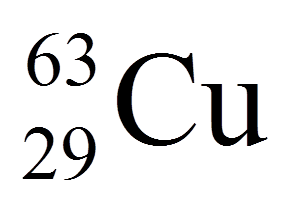
13

Fill in the Blanks

media image

Determine the number of protons:

Type answer...

14

Multiple Choice

Question image

Determine the number of neutrons:

1

79

2

119

3

198

4

76

5

82

15

Multiple Choice

Question image

Determine the mass number:

1

79

2

119

3

198

4

76

5

82

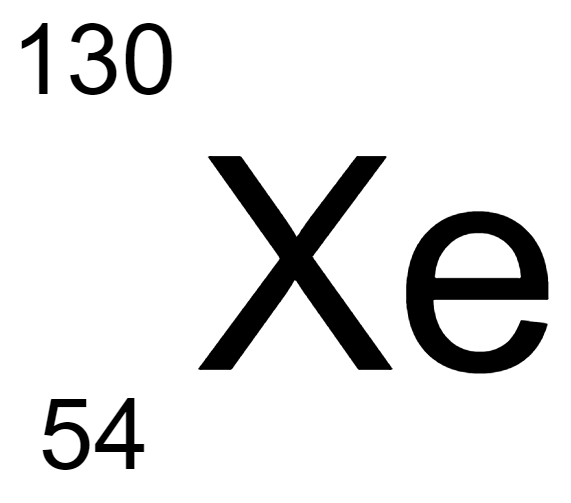
16

Multiple Choice

Question image

Determine the number of neutrons:

1

54

2

130

3

55

4

76

5

184

17

Multiple Choice

Question image

Determine the atomic number:

1

54

2

130

3

55

4

76

5

184

18

Multiple Choice

Question image
The top number in this isotope notation is
1
the mass number
2
the atomic number
3
the atomic mass
4
the neutron number

19

Multiple Choice

Question image
The bottom number in this isotope notation is
1
the mass number
2
the atomic number
3
the atomic mass
4
the neutron number

20

media

21

Multiple Choice

How many neutrons would Fe-56 have?
1
56
2
26
3
30
4
33

22

Multiple Choice

How many protons does P-30 have?
1
30
2
16
3
12
4
15

23

Multiple Choice

How many protons does Pb-209 have?
1
127
2
209
3
82
4
291

24

Multiple Choice

Which of the following is the correct isotope notation for Silver-105:

1
2
3
4

25

Labeling

Label the isotope symbol for Calcium-41.

Drag labels to their correct position on the image

22

41

20

19

21

40

39

26

Drag and Drop

Atoms of the same element which have a different number of neutrons are called .


Drag these tiles and drop them in the correct blank above
isotopes
ions
quarks
molecules

27

media

28

Fill in the Blanks

How many electrons does 63Li+1 have?

Type answer...

29

Fill in the Blanks

How many neutrons does 63Li+1 have?

Type answer...

30

Fill in the Blanks

How many neutrons does beryllium-11 have?

Type answer...

31

Fill in the Blanks

How many neutrons does 48Ca2+ have?

Type answer...

32

Fill in the Blanks

How many electrons does 48Ca2+ have?

Type answer...

33

media

34

media

35

Multiple Choice

Which of the following elements is an example of a metal?

1

Copper

2

Boron

3

Silicon

4

Arsenic

36

Multiple Choice

Which of the following elements is a metal?

1

Oxygen (O)

2

Xenon (Xe)

3

Cesium (Cs)

4

Silicon (Si)

37

Categorize

Options (8)

Sodium (Na)

Chromium (Cr)

Gallium (Ga)

Tin (Sn)

Antimony (Sb)

Astatine (At)

Tellurium (Te)

Boron (B)

Match each element to the correct label of metal or metalloid

Metal
Metalloid

38

Multiple Choice

Which of the following elements is a nonmetal as shown in the periodic table diagram?

1

Helium

2

Iron

3

Copper

4

Zinc

39

Categorize

Options (13)

Silicon (Si)

Arsenic (As)

Germanium (Ge)

Selenium (Se)

Iodine (I)

Phosphorus (P)

Carbon (C)

Chlorine (Cl)

Bismuth (Bi)

Aluminum (Al)

Polonium (Po)

Platinum (Pt)

Mercury (Hg)

Match each element to the correct label of metal, nonmetal, or metalloid

Metal
Nonmetal
Metalloid

40

media

41

Multiple Choice

Question image

Sodium, Na, belongs to the ______ family.

1

Halogen

2

alkali metal

3

Noble gas

4

alkaline earth metal

42

Multiple Choice

Question image

Helium (He) belongs to the ______ family.

1

alkali metal

2

halogen

3

noble gas

43

Multiple Choice

Question image

Chlorine, Cl, belongs to the ______ family.

1

Noble gas

2

alkaline earth metal

3

Halogen

4

Transition metal

44

Multiple Choice

What is the name of group number 2?

1

transition metals

2

halogens

3

metaloids

4

alkaline earth metals

45

Categorize

Options (12)

Sodium (Na)

Cesium (Cs)

Barium (Ba)

Beryllium (Be)

Calcium (Ca)

Iron (Fe)

Tungsten (W)

Cadmium (Cd)

Argon (Ar)

Xenon (Xe)

Iodine (I)

Rubidium (Rb)

Organize the elements into the correct categories

Alkali Metals
Alkaline Earth Metals
Transition Metals
Nonmetals

46

media

47

media

48

Multiple Choice

Which of the following is a characteristic of metals?

1

They are good conductors of electricity.

2

They are brittle and dull.

3

They do not conduct heat.

4

They are gases at room temperature.

49

Multiple Choice

Question image
Which is a property of a metal?
1
It is brittle
2
It is a good Insulator
3
It has a dull appareance
4
It is malleable

50

media

Turn to page 12 to continue in with your notes

​

​Turn the Page

51

media

52

media

53

Multiple Choice

HCl

1

Covalent

2

Ionic

3

Metallic

54

Multiple Choice

FeO

1

Covalent

2

Ionic

3

Metallic

55

Multiple Choice

N2

1

Covalent

2

Ionic

3

Metallic

56

Multiple Choice

Valence electrons are shared

1

Ionic bonds

2

Covalent bonds

57

Multiple Choice

Valence electrons are transferred

1

Ionic bonds

2

Covalent bonds

58

media

59

media

60

media

61

media

62

Multiple Choice

How many valence electrons does an atom need to become stable?

1

2

2

4

3

6

4

8

63

Multiple Choice

Ionic Bonds occur between what two types of atoms?

1

metals and metals

2

Non metals and Non metals

3

Metals and Non Metals

4

unknown

64

Multiple Choice

Positively charged Atoms are called?

1

cations

2

anions

65

Multiple Choice

negatively charged atoms are called?

1

cations

2

anions

66

Multiple Choice

At atom loses 2 electrons, its charge becomes what

1

+1

2

+2

3

-1

4

-2

67

Match

Match the following elements with the correct ionic charge

barium, Ba

potassium, K

sulfur, S

phosphorus, P

Neon, Ne

2+

1+

2-

3-

does not form ions

68

Multiple Choice

Sodium and Bromine will make a _____ bond.

1

ionic

2

covalent

3

metallic

69

Multiple Choice

Carbon and Oxygen will make a ___________ bond.

1

ionic

2

covalent

3

metallic

70

Multiple Choice

A cation is formed by:

1

losing electrons

2

gaining electrons

3

losing protons

4

gaining protons

71

Multiple Choice

An anion is formed by

1

losing electrons

2

gaining electrons

3

losing protons

4

gaining protons

72

Multiple Choice

In an ionic bond the CATION is always the

1

metal

2

nonmetal

73

Multiple Choice

In an ionic bond the ANION is always the

1

metal

2

nonmetal

74

Multiple Choice

Which of the following is the correct formula for this ionic bond?: Al & S

1

AlS3

2

Al2S3

3

Al3S2

4

Al3S

75

Multiple Choice

An ion of OXYGEN would have what charge?

1

+1

2

+2

3

6

4

-2

76

Multiple Choice

An ion of NITROGEN would have what charge?

1

+1

2

+3

3

5

4

-3

77

media

78

media

79

Categorize

Options (8)

pH of 4

Turns blue litmus paper red

pH of 7

Pure water

OH- ions

Turns red litmus paper blue

pH of 9

H+ ions

Categorize the following as either an Acid, Base, or Neutral

Acid
Base
Neutral
pattern-tertiary
Unit 4-6 Review

This lesson will review topics from Units 4-6. This is to help us begin thinking about reviewing for our semester test in a few weeks.

Show answer

Auto Play

Slide 1 / 79

SLIDE