Search Header Logo
UNIT 6

UNIT 6

Assessment

Presentation

Science

11th Grade

Practice Problem

Medium

NGSS
HS-PS1-4

Standards-aligned

Created by

VCIS Educational Apps

Used 1+ times

FREE Resource

62 Slides • 23 Questions

1

media

2

media

3

media

4

Multiple Choice

Question image
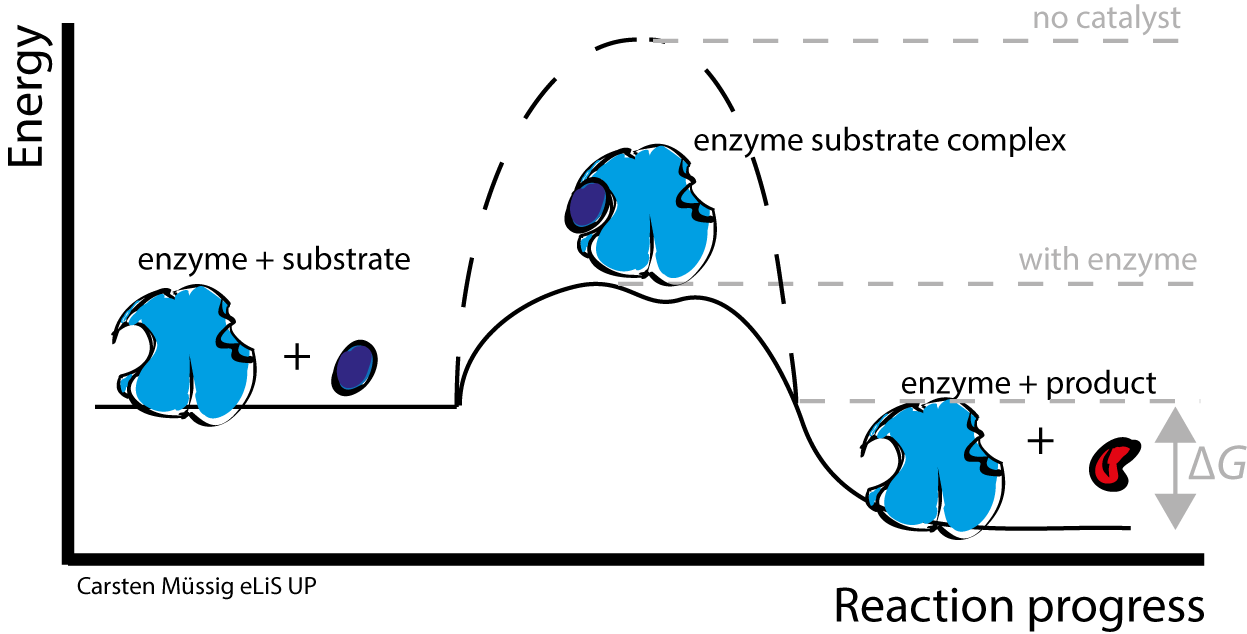
An enzyme speeds up a reaction by
1
lowering the activation energy.
2
raising the activation energy.
3
releasing energy.
4
absorbing energy.

5

media

6

media

7

media

8

Multiple Choice

What is metabolism and why is it important for organisms?

1

It refers to the chemical reactions in organisms

2

It is the process of energy generation from food

3

It allows maintenance of normal functions and survival

4

All of the above

9

media

10

Fill in the Blanks

11

media

12

Multiple Choice

Which of the following processes could be described as catabolism?

1

The production of polypeptides from amino acids by the action of enzymes.

2

The synthesis of glycogen in the liver from glucose.

3

The digestion of starch into maltose in digestion.

4

The production of a large DNA molecule from nucleotide monomers.

13

media

14

Multiple Choice

What are the two main processes of metabolism illustrated in the image?

1

Catabolism

2

Anabolism

3

Photosynthesis

4

Respiration

15

media

16

Open Ended

What are oxidation/reduction reactions?

17

Multiple Choice

Which metal is most easily oxidized?

1

Co

2

Ag

3

Cu

4

Mg

18

Multiple Choice

Oxidation is the… (Higher Tier Question)

1

loss of electrons

2

gain of electrons

3

loss of protons

4

gain of protons

19

media

20

Multiple Choice

What is the difference between reduction and oxidation in terms of electron transfer?

1

Reduction involves losing electrons

2

Oxidation involves gaining electrons

3

Reduction involves gaining electrons

4

Oxidation involves losing protons

21

media

22

Multiple Choice

Redox reactions (reduction and oxidation reactions) pertain to the movement of what subatomic particle between atoms or molecules?

1

Electrons

2

Protons

3

Neutrons

4

Centrons

23

media

24

media

25

media

26

Open Ended

What are the real-life applications of redox reactions?

27

media

28

Multiple Choice

Question image
What are the reactants (what is needed) for photosynthesis?
1
glucose and oxygen
2
light, water, and carbon dioxide

29

media

30

Multiple Choice

Which of the following is the correct sequence of stages in cellular respiration?

1

Glycolysis \rightarrow Krebs cycle \rightarrow Electron transport chain

2

Krebs cycle \rightarrow Glycolysis \rightarrow Electron transport chain

3

Electron transport chain \rightarrow Glycolysis \rightarrow Krebs cycle

4

Glycolysis \rightarrow Electron transport chain \rightarrow Krebs cycle

31

media

32

Multiple Choice

What are the products of glycolysis from one molecule of glucose?

1

2 ATP

2

2 NADH

3

2 pyruvate

4

2 ADP

33

media

34

Multiple Choice

What are the main products of the redox reactions in the Krebs cycle?

1

ATP

2

NADH

3

FADH2

4

CoA

35

media

36

media

37

media

38

media

39

media

40

media

41

media

42

media

43

media

44

media

45

media

46

media

47

media

48

media

49

media

50

media

51

media

52

media

53

media

54

media

55

media

56

media

57

media

58

media

59

media

60

media

61

media

62

Multiple Choice

Question image

This image shows oxidative phosphorylation, which is made of two steps. These steps are...

1

ETC and chemiosmosis

2

chemiosmosis and the Krebs Cycle

3

ATP Synthase and Glycolysis

4

Calvin Cycle and ETC

63

media

64

media

65

media

66

media

67

media

68

media

69

Multiple Choice

Question image

Examine the diagram of the electron transport chain below. Why do protons move through ATP synthase? Hint: how does diffusion work?

1

The protons move to an area of lower concentration.

2

The protons prefer to be in the cell's cytoplasm.

3

The protons need to enter the matrix to produce oxygen.

70

media

71

Multiple Choice

What are the two main processes shown in the equations for photosynthesis?

1

Oxidation of water and reduction of CO2

2

Oxidation of CO2 and reduction of water

3

Oxidation of glucose and reduction of oxygen

4

Oxidation of hydrogen and reduction of carbon

72

media

73

Multiple Choice

What are free radicals and why are they considered very reactive?

1

Atoms with paired electrons

2

Uncharged atoms or molecules with unpaired electrons

3

Charged molecules

4

Stable molecules

74

media

75

Multiple Choice

What are free radicals and how do they affect the body?

1

They are beneficial for health

2

They can cause damage

3

They are a type of antioxidant

4

They have no effect on the body

76

media

77

Multiple Choice

What role do antioxidants play in counteracting free radicals in the body?

1

They donate protons

2

They donate electrons

3

They absorb free radicals

4

They produce free radicals

78

media

79

Multiple Choice

What role do antioxidants play in relation to free radicals?

1

They donate protons to free radicals

2

They donate electrons to free radicals

3

They neutralize free radicals by absorbing them

4

They create more free radicals

80

media

81

media

82

media

83

media

84

media

85

Poll

How confident do you feel about this topic now?

Very confident
Somewhat confident
Not confident
media

Show answer

Auto Play

Slide 1 / 85

SLIDE