Search Header Logo
  1. Resource Library
  2. Social Studies
  3. History
  4. ...
  5. Poetry's Power & Civil Rights Movement
Poetry's Power & Civil Rights Movement

Poetry's Power & Civil Rights Movement

Assessment

Presentation

•

Social Studies

•

9th - 10th Grade

•

Practice Problem

•

Medium

Created by

Maria Ellenberger

Used 1+ times

FREE Resource

10 Slides • 3 Questions

1

​Poetry's Power & The Civil Rights Movement

2.4.1

2

media
media

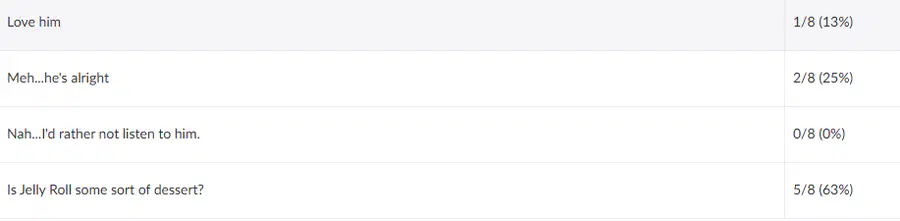
Yesterday's Poll Results

3

media
media

Yesterday's Poll Results

4

Open Ended

Question image

Today, people use social media to share ideas and fight for change. During the Civil Rights Movement, people used poetry and art to do the same.

How are poetry and art similar to social media as ways to inspire change? How are they different?

Why do you think people choose these methods to share their message?

5

6
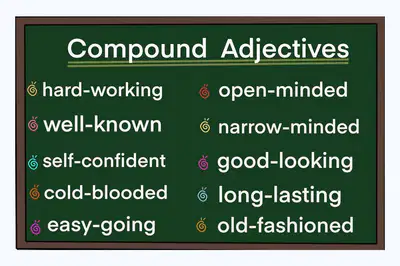
  • to link parts of a compound word;

  • to join two or more adjectives when they come before a noun and act as a single idea; and

  • in compound terms or prefixes.

​Hyphen -

media

7

media
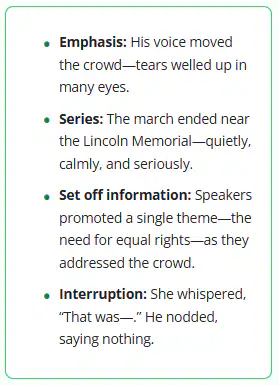
  • emphasize a point;

  • mark the beginning and ending of a series;

  • set off extra information; and

  • mark interruptions in dialogue.

Dash —

8

Multiple Choice

Which sentence correctly uses a dash?

1

The poet’s words - powerful and moving - echoed through the crowd.

2

The poet’s words—powerful and moving—echoed through the crowd.

3

The poet’s words powerful—and moving—echoed through the crowd.

4

The poet’s words powerful and moving—echoed through the crowd.

9

  • Poet who writes about significant historical and cultural themes. 

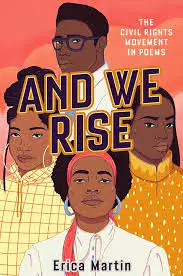
  • Her debut poetry collection, And We Rise, was released in February 2022. 

  • The collection explores the Civil Rights Movement of the 1950s and 1960s. 

  • Martin uses dates as poem titles, referencing key historical events. 

  • She addresses events such as Martin Luther King Jr.’s “I Have a Dream” speech and the end of Reconstruction in the South. 

Erica Martin

media

10

11

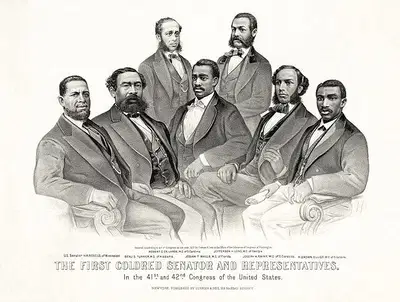
  • Reconstruction (1865–1877): Federal government enforced civil rights and new laws in the South. 

  • Black Americans gained political power: voted, held office, shaped constitutions. 

  • Compromise of 1877: Ended Reconstruction; federal troops withdrew. 

  • Afterward, white supremacist groups and lawmakers used violence and discriminatory laws (poll taxes, literacy tests) to suppress Black rights. 

​

​Reconstruction Era

media

12

media
media
media

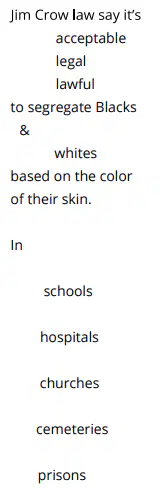
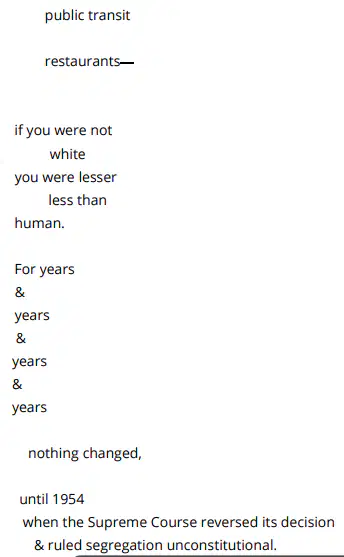
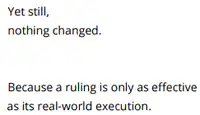
"It's 1877 When"

How does Martin use punctuation, repetition, & spacing to communicate her ideas?

13

Multiple Select

Which of the following answers express the overall message or theme of this poem? (2 correct)

1

Laws alone don’t end racism—real change needs enforcement and commitment.

2

It celebrates Civil Rights victories and reminds us of the value of hard work.

3

It critiques systemic racism and calls for action beyond legal decisions to achieve equality.

4

It claims the Civil Rights Movement was led by the U.S. Army and soldiers on the front lines.

pattern-tertiary
​Poetry's Power & The Civil Rights Movement

2.4.1

Show answer

Auto Play

Slide 1 / 13

SLIDE