

Magnetic Fields 2.2

Presentation
•
Science
•
8th Grade
•
Practice Problem
•
Hard
+6
Standards-aligned

Chad Studer
Used 1+ times
FREE Resource
27 Slides • 20 Questions
1
2

3
Multiple Choice
What is the significance of understanding potential and kinetic energy in the context of magnetic fields?
It helps us predict how objects will move in a magnetic field.
It allows us to create stronger magnets.
It explains why magnets lose their strength over time.
It helps us understand electricity generation.
4

5
6
7
8
Multiple Select
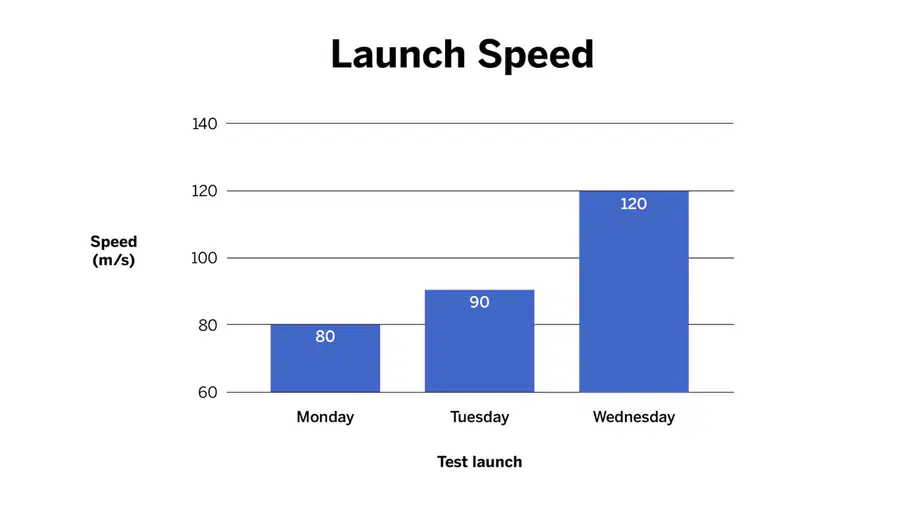
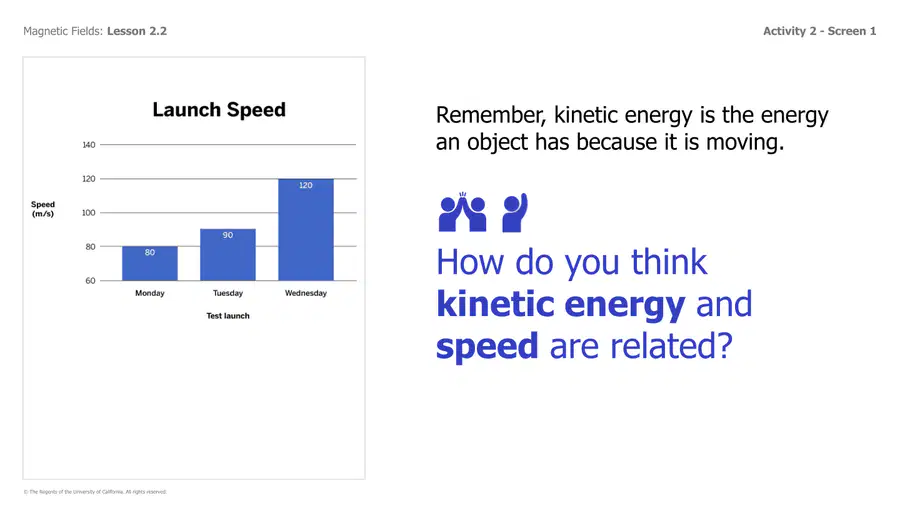
Select all statements that are true about kinetic energy and speed based on the launch speed data.
Kinetic energy increases as speed increases.
The test with the highest speed had the most kinetic energy.
All test launches had the same kinetic energy.
Speed and kinetic energy are directly related.
9
Multiple Choice
Which test launch had the lowest speed?
Monday
Tuesday
Wednesday
None of the above
10
Open Ended
In which test did the spacecraft have the most kinetic energy?
11
Fill in the Blanks
Fill in the blank: The faster an object is moving, the more
12
13
Open Ended
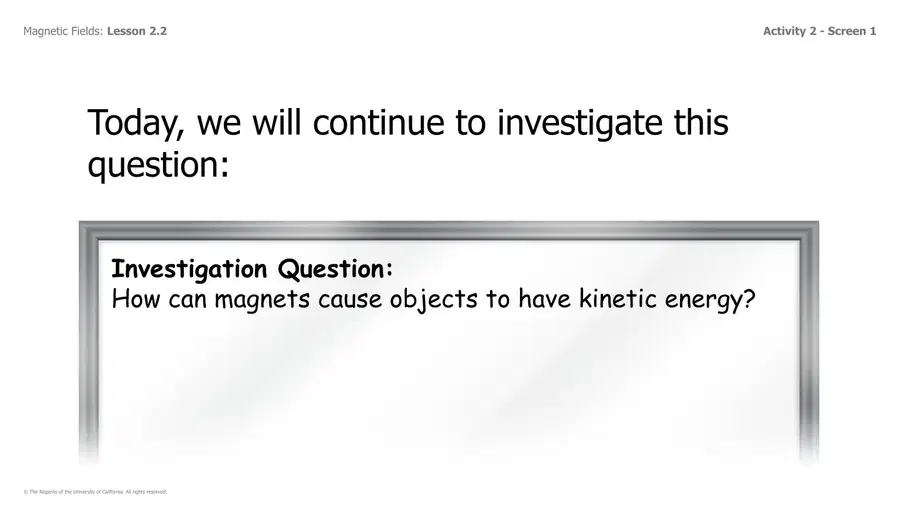
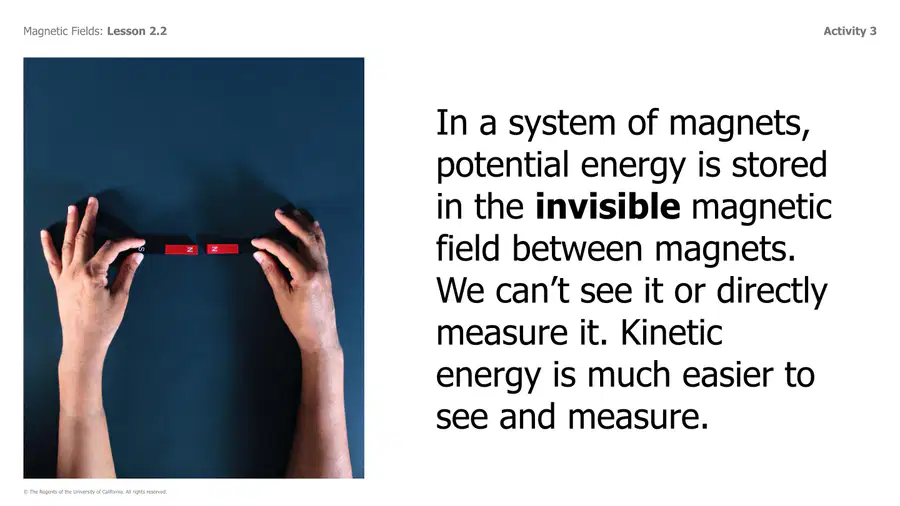
How can magnets cause objects to have kinetic energy?
14
15
Fill in the Blanks
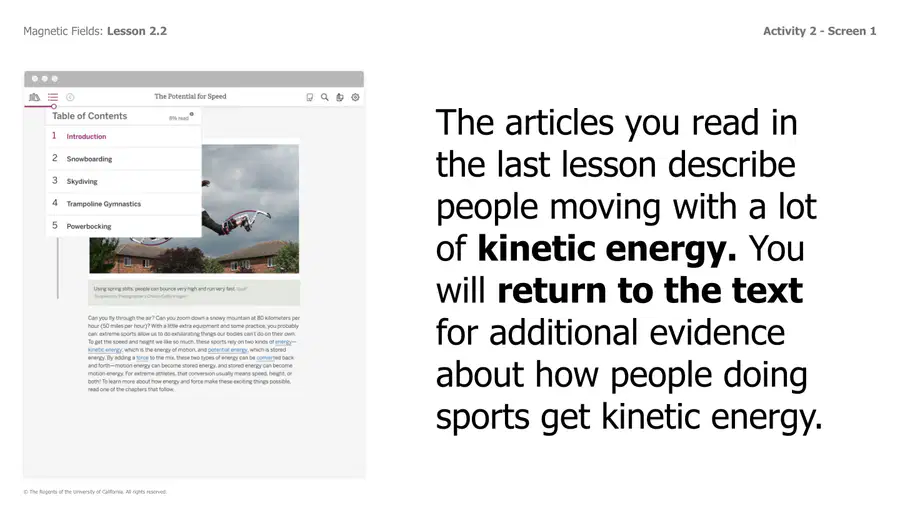
Kinetic energy is the energy of
16
Multiple Choice
According to the articles, what are two types of energy involved in extreme sports?
Kinetic and potential energy
Thermal and sound energy
Chemical and electrical energy
Light and nuclear energy
17
18
Open Ended
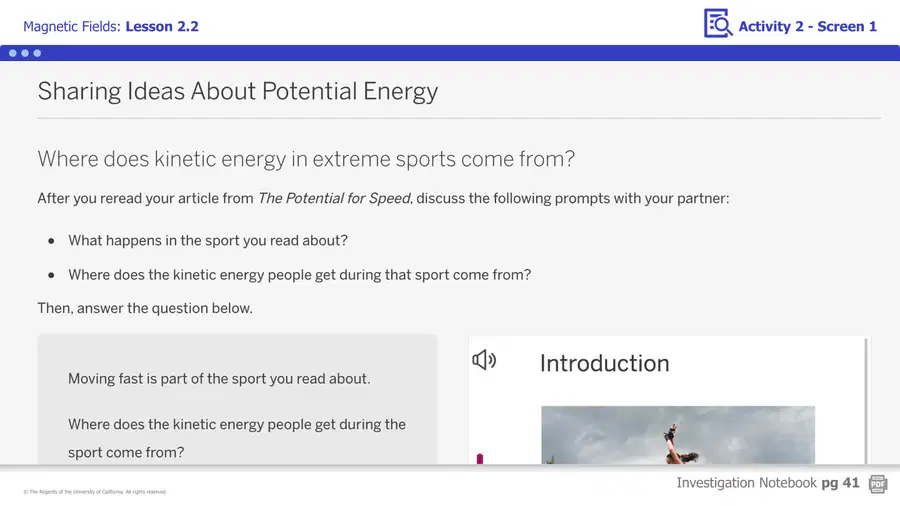
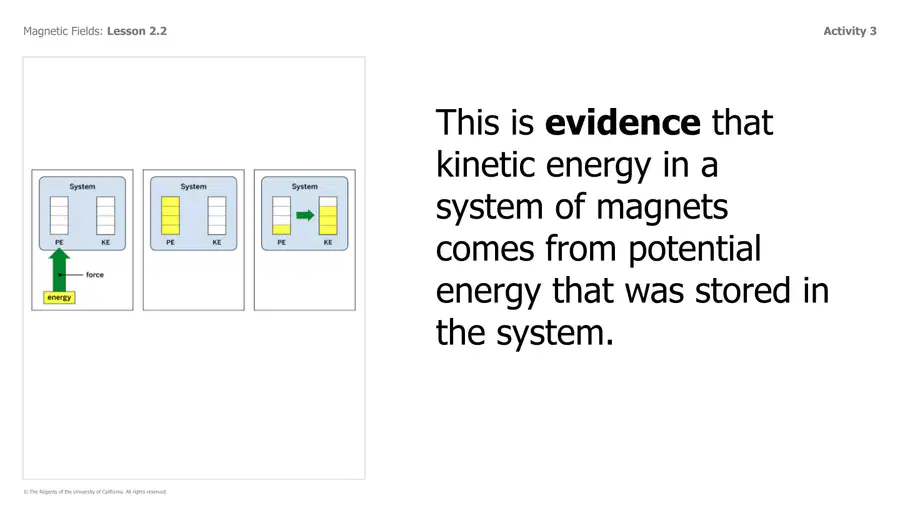
Where does kinetic energy in extreme sports come from?
19
Open Ended
What ideas do you have about where kinetic energy comes from?
20
21
Open Ended
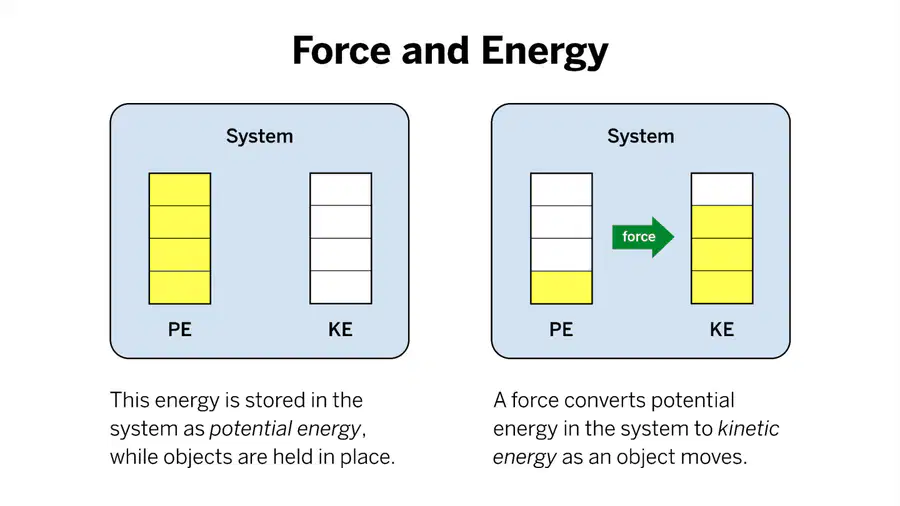
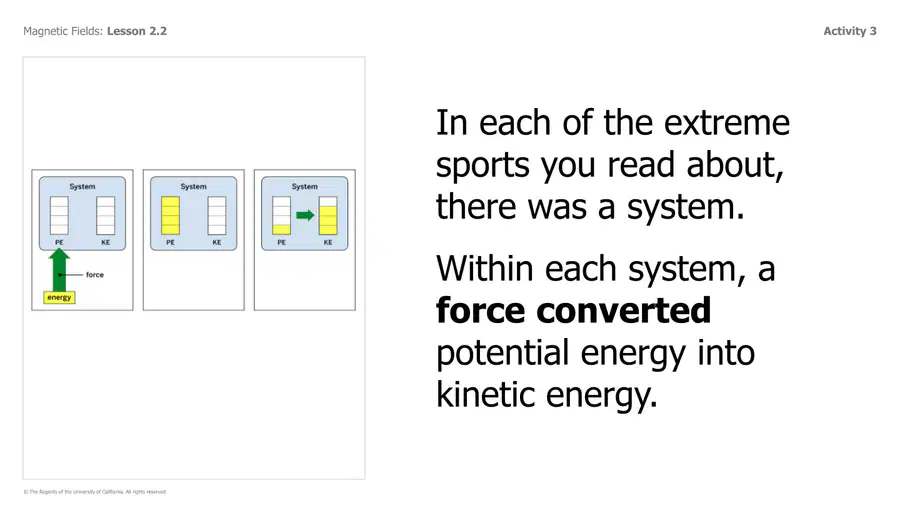
Explain how energy can change from potential energy to kinetic energy in a system. Use examples from the lesson.
22
Multiple Choice
What happens to potential energy in a system when a force is applied to an object?
It remains unchanged
It is converted to kinetic energy
It disappears
It increases
23
24
Multiple Choice
Which of the following best describes potential energy?
Energy that is stored in an object or system
Energy that is always moving
Energy that is lost when an object is held in place
Energy that cannot be converted
25
26
27
28
29
Open Ended
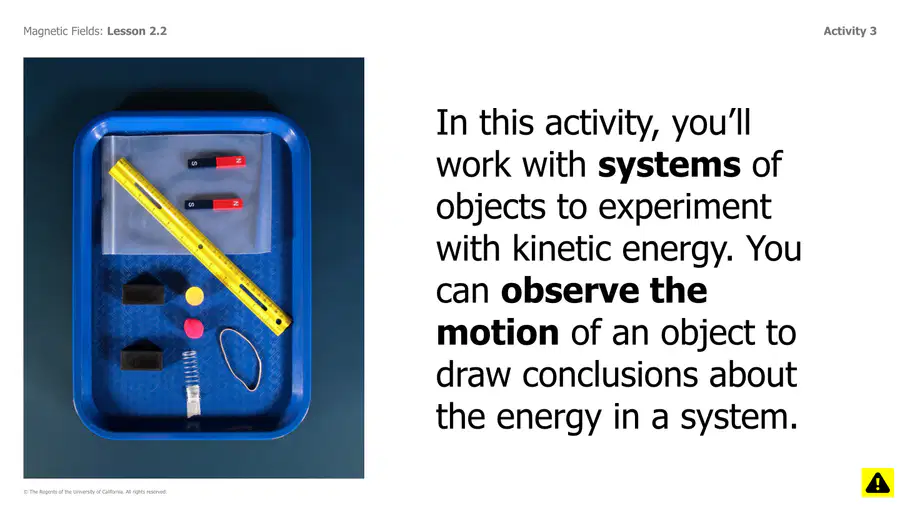
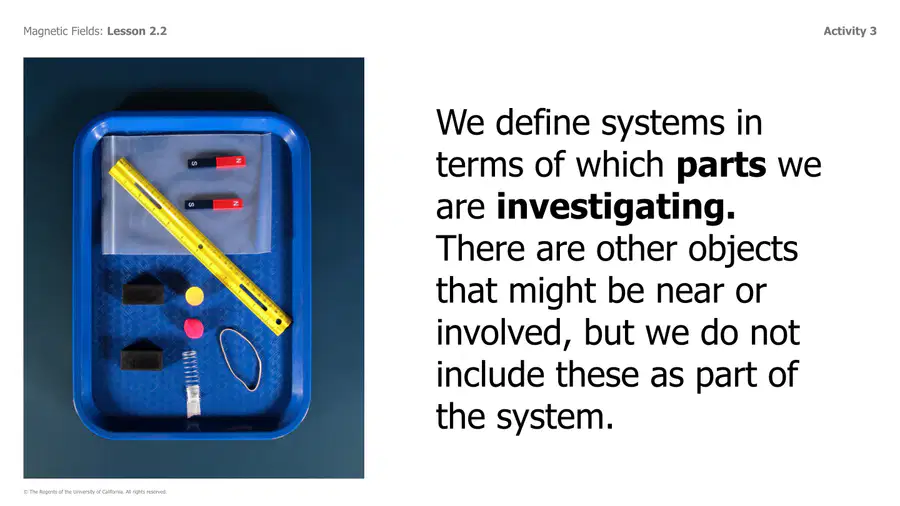
Why is it important to clearly define which parts are included in a system when conducting an experiment?
30
Multiple Select
Which of the following statements about systems in an experiment are correct?
A system includes only the parts being investigated
A system includes all objects nearby
A system includes objects not involved in the investigation
A system is defined by the experimenter
31
32
Multiple Choice
What is defined as the 'system' in the example where a hand moves a ball and then lets it go?
The hand and the ball
The ball and Earth
The hand and Earth
The ball only
33

34
35
36
Open Ended
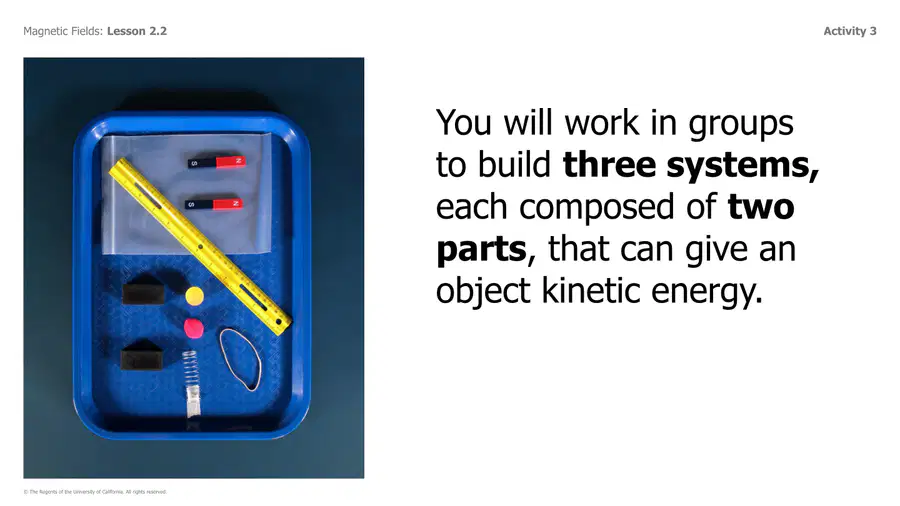
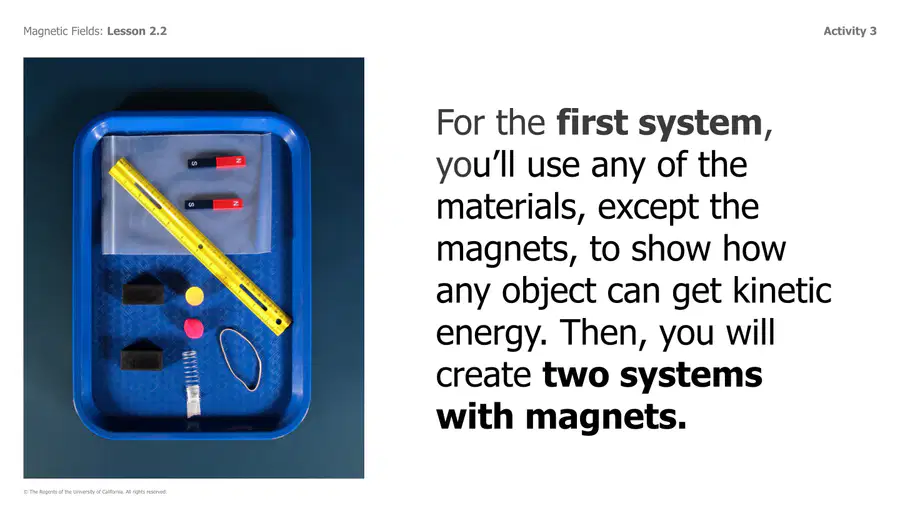
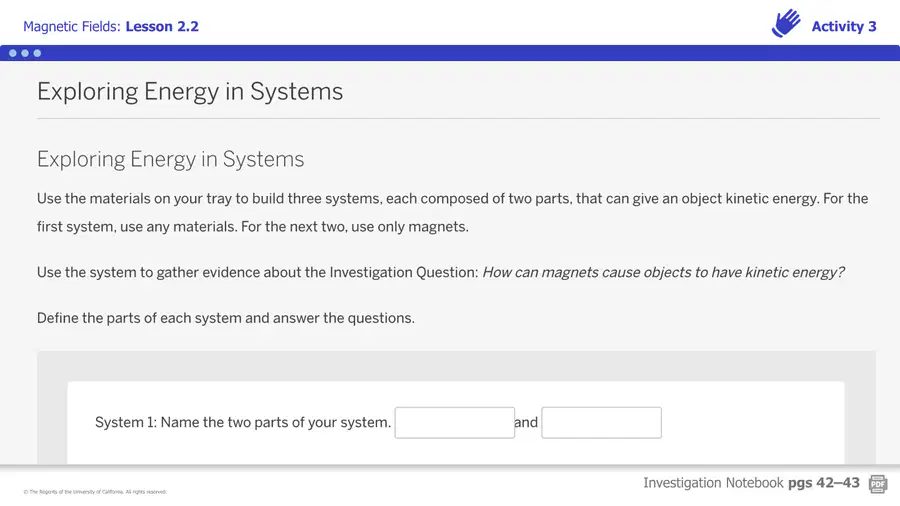
Describe how you would use the materials provided to build a system that can give an object kinetic energy without using magnets.
37
38
39
Multiple Choice
Based on the instructions, what is the main purpose of building three systems with the materials provided?
To test the strength of magnets
To give an object kinetic energy
To measure temperature changes
To observe color changes
40
Fill in the Blanks
Fill in the blank: The investigation question asks, 'How can
41
42
43
44
45
46
47
Multiple Choice
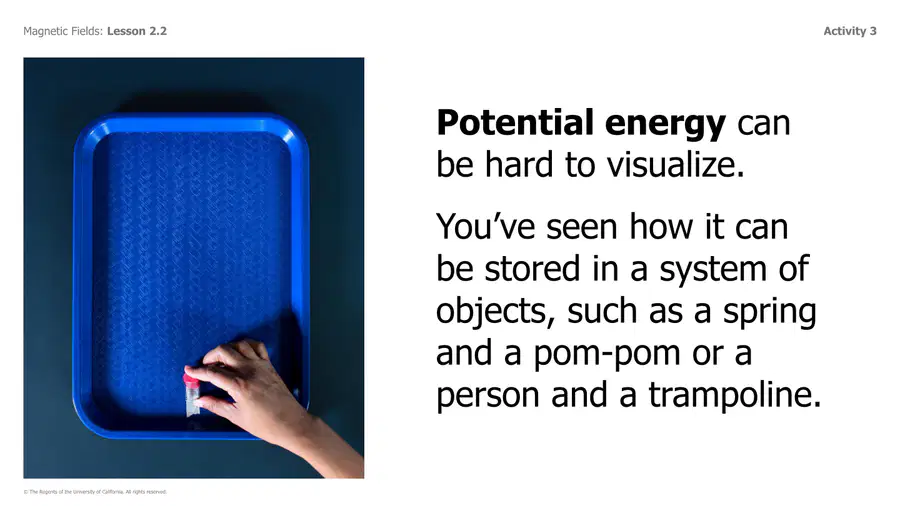
What is the difference between potential energy and kinetic energy in the context of magnetic fields?
Potential energy is stored energy due to position, while kinetic energy is the energy of motion.
Potential energy is the energy of motion, while kinetic energy is stored energy due to position.
Both potential and kinetic energy are types of energy that do not relate to magnetic fields.
Potential energy and kinetic energy are always equal in magnetic fields.
Show answer
Auto Play
Slide 1 / 47
SLIDE
Similar Resources on Wayground

42 questions
Genetics Notes (Science Duo)
Presentation
•
8th Grade
42 questions
AKS 9B - Electromagnetic vs. Mechanical Waves
Presentation
•
8th Grade
42 questions
Mitosis and Meiosis Review
Presentation
•
7th - 8th Grade
39 questions
The Sky from Earth
Presentation
•
7th - 8th Grade
42 questions
Seasons
Presentation
•
8th Grade
42 questions
Digestive System
Presentation
•
8th Grade
42 questions
Transformations
Presentation
•
8th Grade
43 questions
Earth in Space
Presentation
•
7th - 8th Grade
Popular Resources on Wayground
10 questions
How much do you know about our Portrait of an Eagle?

Quiz
•
10th Grade
10 questions
Fast Food Slogans
Quiz
•
6th - 8th Grade
21 questions
Continents and Oceans
Quiz
•
6th Grade
20 questions
Parts of Speech
Quiz
•
5th Grade
16 questions
Subject & Predicate
Quiz
•
5th Grade
25 questions
Multiplication Facts
Quiz
•
5th Grade
12 questions
Map Skills
Quiz
•
3rd Grade
22 questions
Continents and Oceans
Quiz
•
5th Grade
Discover more resources for Science
20 questions
Scientific Method and Variables
Quiz
•
8th Grade
20 questions
Scientific method and variables
Quiz
•
8th Grade
27 questions
Counting Atoms - Subscripts
Quiz
•
8th Grade
20 questions
Claim, Evidence and Reasoning (CER)
Quiz
•
6th - 8th Grade
18 questions
Counting Atoms
Quiz
•
7th - 8th Grade
20 questions
Elements, Compounds and Mixtures
Quiz
•
8th Grade
10 questions
Exploring Chemical and Physical Changes

Interactive video
•
6th - 10th Grade
10 questions
Decoding the Periodic Table of Elements
Interactive video
•
6th - 10th Grade