Aquatic Ecosystems and Energy Transfer Review
Presentation
•
Science
•
9th - 12th Grade
•
Medium
+3
Standards-aligned
GHS Biology undefined
Used 3+ times
FREE Resource
21 Slides • 40 Questions
1
By GHS Biology
2
3
4
Multiple Select
Which of the following are considered biotic factors? Mark all that apply.
deer
wind
water
daisy
fly
5
6
Multiple Select
Which of the following are considered abiotic factors? Mark all that apply.
dog
mud puddle
bird
sunlight
cat
7
8
9
Multiple Select
What are some factors affecting Aquatic Ecosystems?
Depth
Temperature
Water level
Chemistry (like oxygen level, and pH)
10
11
Multiple Choice
Why is sunlight important to aquatic ecosystems?
It isn't.
It's a vital biotic factor for aquatic ecosystems
Photosynthetic organisms need it to produce food sources for aquatic food chains.
12
Multiple Choice
Complete the statement.
As you go deeper the bodies of water, the temperature ________, the rate of photosynthesis _________ and the light availability _______.
decreases, increases, decreases
increases, increases, decreases
increases, increases, increases
13
14
15
Multiple Choice
In aquatic ecosystems, plants are a vital part of the food chain. In which aquatic zone will you find plants?
benthic zone
limnetic zone
aphotic zone
photic zone
16
Multiple Choice
Jill made the table below during her research on aquatic zones and living organisms. Based on Jill’s observations, which conclusion could you draw?
Organisms in the intertidal zone must be able to withstand very cold water.
There are no producers/plants in the benthic zone that rely on photosynthesis.
Organisms in the benthic zone must be able to tolerate large amounts of oxygen.
The warm water and abundant sunlight in the neritic zone limits the plankton population.
17
Fun fact: Bull sharks are adapted to survive in both fresh and saltwater. They are euryhaline.
18
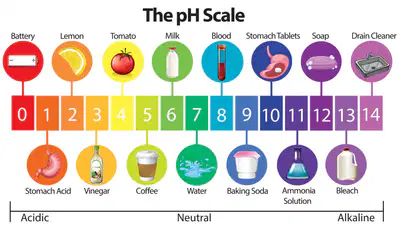
Don't forget: Carbon dioxide also dissolves in aquatic environments in the form of carbonic acid, which contributes to making oceans more acidic.
19
20
21
Multiple Select
Check all that apply: Plants are categorized as....
Producers
Consumers
Autotrophs
Heterotrophs
22
Multiple Select
Check all that apply: Which of the following would be considered a heterotroph.
Plants
Fish
Photosynthesizing Bacteria (aka cyanobacteria)
Sea Horse
23
Multiple Select
Check all that apply: Cows are categorized as...
(Cows only eat plants)
Carnivores
Herbivores
Heterotroph
Producers
24
Multiple Select
Check all that apply: Lions are categorized as...
(lions only eat meat)
Carnivore
Omnivore
Autotroph
Heterotroph
25
Multiple Select
Check all that apply: Humans are categorized as...
(humans eat meat and vegetables)
Consumer
Omnivore
Producers
Carnivore
26
First Trophic Level
But can also include algae, phytoplankton, and cyanobacteria
27
Multiple Choice
What do producers in a food chain primarily use as energy to create their food?
Water
Sunlight
Carbon dioxide
Soil nutrients
28
Multiple Select
Check all that apply: Which of the following would be classified as producers
Tree
Photosynthesizing bacteria (aka cyanobacteria)
Fish
Seaweed/Algae
29
(2nd Trophic Level)
(3rd Trophic Level)
(4th Trophic Level)
(4th Trophic Level)
(3rd Trophic Level)
(2nd Trophic Level)
30
Multiple Choice
What trophic level do primary consumers occupy in an energy pyramid?
Third
First
Second
Fourth
31
Multiple Select
Name the primary consumer(s) in this food web. Mark all that apply.
hawk
rabbit
wolf
robin
caterpillar
32
Multiple Select
Name the secondary consumer(s) in this food web. Mark all that apply.
hawk
rabbit
wolf
robin
caterpillar
33
Multiple Select
Name the tertiary consumer(s) in this food web. Mark all that apply.
hawk
rabbit
wolf
robin
caterpillar
34
35
Multiple Choice
Fungi, bacteria and worms can all break down organic material, what is the correct name for these type of organisms.
Producers
Consumers
Predators
Decomposers
36
Multiple Select
In the picture, what organisms are considered decomposers? (check all that apply)
Insect-eating Bird
Bacteria
Mountain Lion
Snake
Fungi
37
38
Multiple Select
Name the predators from this food web. Mark all that apply.
hawk
rabbit
wolf
robin
caterpillar
39
Multiple Select
Name the prey from this food web. Mark all that apply.
plant
rabbit
wolf
robin
caterpillar
40
41
Multiple Choice
42
43
Multiple Choice
Where does the red tail hawk directly get his energy from?
Hare (rabbit)
Red Fox
Lynx
White Spruce
44
Multiple Select
What organism(s) would be classified as a producer?
Wildflowers
Grass
Hawk
Rabbit
45
Multiple Select
According to this food web, what are the two energy sources for the snake?
Rabbit
Hawk
Grass
Mouse
46
The vast majority of energy that exists in food webs originates from the sun and is converted into chemical energy through photosynthesis in plants.
Energy is transferred between organisms in food webs from producers to consumers. The energy is used by organisms to carry out life processes and lost in heat.
Only 10% of the energy from the Sun is transferred to each trophic level.
Energy Transfer
47
Multiple Choice
Which organism has the most available energy in the food web?
Grass
Deer
Hawk
Insect-eating bird
48
Multiple Choice
Producers are found at the bottom of the pyramid because producers
Provide energy for the consumers
Have less mass than consumers
Depend on consumers
Have fewer species than consumers
49
Only 10% of the energy get stored. So, when the next level on the pyramid eats them, that 10% gets passed down to them.
90% of the energy entering each step of the pyramid is used up by the consumers
50
Multiple Choice
According to the 10% rule, how much energy is transferred from one trophic level to the next?
20%
10%
5%
50%
51
Multiple Choice
What happens to the amount of energy available to organisms when moving from trophic level 1 to trophic level 2?
The energy decreases by approximately 90%
The energy increases by approximately 90%
The energy increases by approximately 10%
The energy decreases by approximately 10%
52
Multiple Choice
What happens to the 90% of energy that is not transferred to the next trophic level?
It is stored for later use
It is lost to the environment as heat
It is converted into matter
It is used for growth
53
Multiple Choice
Why do energy pyramids typically have fewer levels at the top than at the base?
There is more energy available at the top, so fewer levels are needed
Organisms at the top of the pyramid are larger and need more energy
Less energy is available for organisms as you move up the pyramid
More organisms are found at the base of the pyramid than at the top
54
Multiple Choice
If the producers have 10,000 kilojoules of energy, how much energy do the secondary consumers have?
1,000 kilojoules
100 kilojoules
1 kilojoule
10 kilojoules
55
Multiple Choice
If the tertiary consumers have 0.01 kilojoules of energy, how much energy do the producers have?
1 kilojoule
100 kilojoules
10 kilojoules
0.1 kilojoules
56
Multiple Choice
What would happen to the frog population is insecticide was used by the pond?
Nothing, they wouldn't be affected
It would grow in number
It would decrease in number because the grasshopper population would be destroyed.
It would die off because of the insecticide
57
Multiple Choice
58
Multiple Choice
An arctic food web is shown. Suppose that the lemming population is removed from the web. Which of the following would be a likely short-term effect of this change?
The arctic fox population will increase.
The polar bear population will increase.
The caribou population will decrease.
The snowy owl population will decrease.
59
Multiple Choice
A marine (ocean) food web is shown. A large decrease in the sea otter population would most likely cause the size of which of the following populations to increase the most?
abalone
sea urchin
kelp
barnacle
60
Multiple Choice
61
Multiple Choice
How does deforestation affect the energy flow in a food web?
It increases the amount of energy available to primary consumers
It decreases the overall energy flow by reducing the number of primary producers
It has no significant effect on energy flow
It redirects energy flow more towards aquatic ecosystems
By GHS Biology
Show answer
Auto Play
Slide 1 / 61
SLIDE

Similar Resources on Wayground
58 questions
Proteins Carbohydrates and Lipids
Presentation
•
9th - 12th Grade
54 questions
Gilded Age
Presentation
•
9th - 12th Grade
56 questions
U5D5 Global and Local Wind Systems
Presentation
•
9th - 12th Grade
56 questions
Earth's Motion Review
Presentation
•
9th - 12th Grade
57 questions
Life is Cellular
Presentation
•
9th - 12th Grade
53 questions
Biomolecules
Presentation
•
9th - 12th Grade
55 questions
Frases útiles en la clase
Presentation
•
9th - 12th Grade
54 questions
Airplane Wings and Their Functions
Presentation
•
9th - 12th Grade
Popular Resources on Wayground
10 questions
How much do you know about our Portrait of an Eagle?
Quiz
•
10th Grade
10 questions
Fast Food Slogans
Quiz
•
6th - 8th Grade
21 questions
Continents and Oceans
Quiz
•
6th Grade
20 questions
Parts of Speech
Quiz
•
5th Grade
16 questions
Subject & Predicate
Quiz
•
5th Grade
25 questions
Multiplication Facts
Quiz
•
5th Grade
12 questions
Map Skills
Quiz
•
3rd Grade
22 questions
Continents and Oceans
Quiz
•
5th Grade
Discover more resources for Science
10 questions
Exploring Chemical and Physical Changes
Interactive video
•
6th - 10th Grade
20 questions
Atomic Structure
Quiz
•
9th Grade
10 questions
Decoding the Periodic Table of Elements
Interactive video
•
6th - 10th Grade
10 questions
Exploring the Periodic Table
Interactive video
•
6th - 10th Grade
14 questions
Physical and Chemical Changes
Quiz
•
10th Grade
22 questions
Periodic Table Review
Quiz
•
9th - 12th Grade
20 questions
Observation vs. Inference
Quiz
•
7th - 9th Grade
14 questions
Periodic Trends
Interactive video
•
11th Grade