

Buoyancy & Energy

Presentation
•
Science
•
5th Grade
•
Easy

P I
Used 2+ times
FREE Resource
12 Slides • 14 Questions
1

2

3
Multiple Choice
Which force pushes objects upward when they are in water?
Gravity
Friction
Buoyant force
Magnetic force
4
Multiple Choice
Why do you think understanding buoyancy and energy is important in our daily lives?
5

6
Multiple Choice
Which of the following objects will float in water?
Rubber duck
Steel marble
Coin
Rock
7

8
Multiple Choice
Explain how density affects whether an object will float or sink in water.
9

10
Fill in the Blanks
11

12
Multiple Choice
Describe two ways energy is used in your daily life at home or in transport.
13

14
Multiple Choice
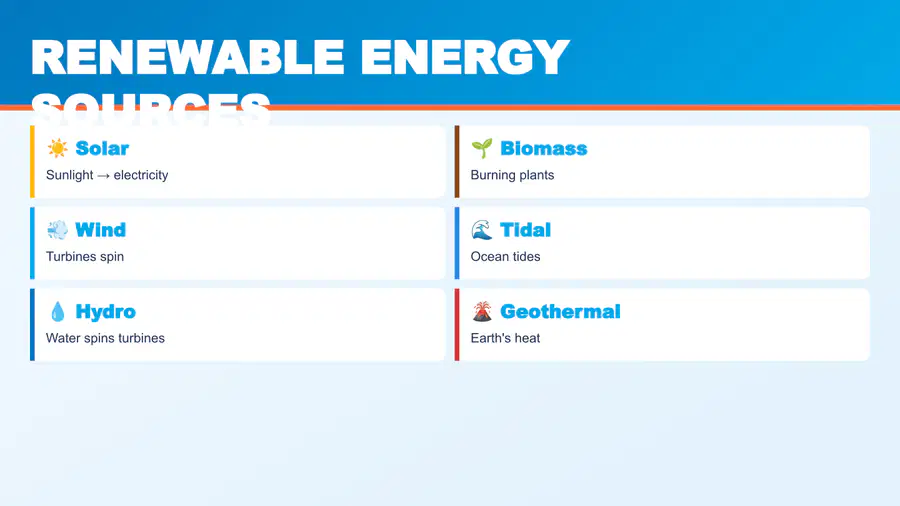
What is the main difference between renewable and non-renewable energy sources?
Renewable sources can be replenished naturally, non-renewable cannot.
Renewable sources are always cheaper.
Non-renewable sources are always safer.
Renewable sources are only used in homes.
15
16
Multiple Select
Which of the following are examples of renewable energy sources?
Solar
Wind
Coal
Hydro
17
18
Multiple Choice
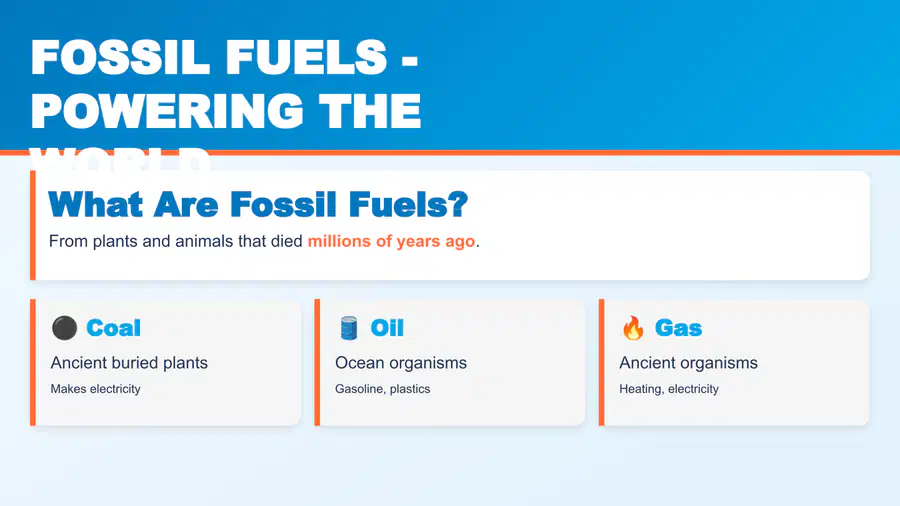
Which of the following is NOT a source of fossil fuels?
Ancient buried plants
Ocean organisms
Ancient organisms
Living trees
19
20
Multiple Choice
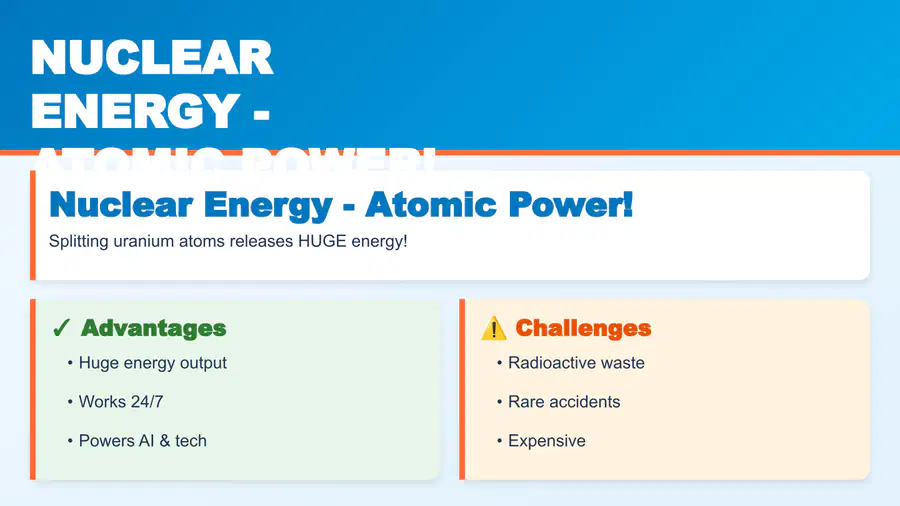
Compare the advantages and challenges of nuclear energy as described in the lesson.
21
22
Multiple Select
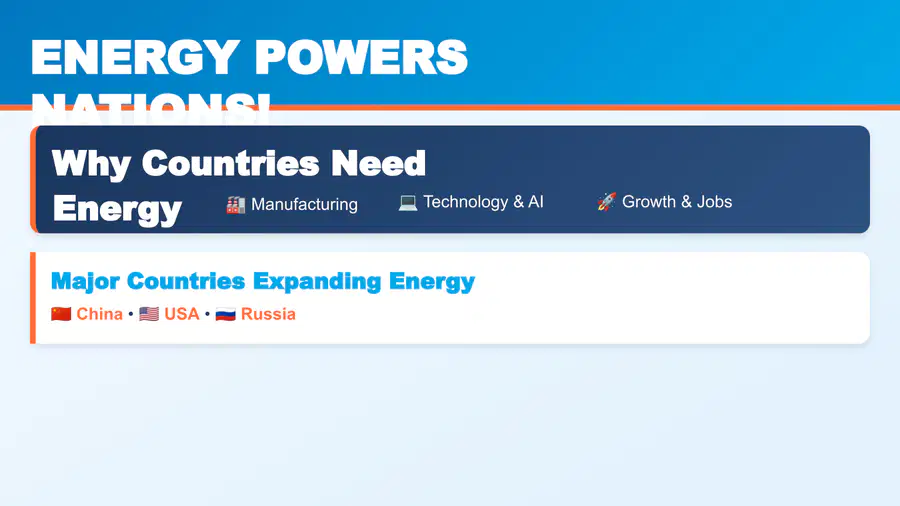
Which of the following are reasons why countries need energy?
Manufacturing
Technology & AI
Growth & Jobs
Tourism
23
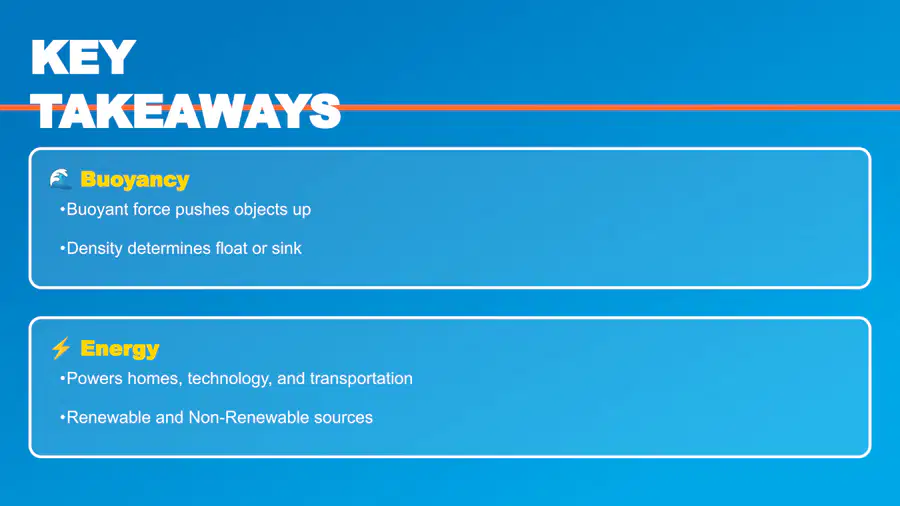
24
Fill in the Blanks
25
Fill in the Blanks
26
Multiple Choice
How do buoyant force and gravity interact to affect objects in water?
Show answer
Auto Play
Slide 1 / 26
SLIDE
Similar Resources on Wayground

21 questions
Intro to Matter
Presentation
•
5th Grade
20 questions
Kinetic and Potential Energy
Presentation
•
4th - 6th Grade
22 questions
Thermal Energy: Conductors & Insulators
Presentation
•
5th Grade
21 questions
Landforms and Oceans
Presentation
•
5th Grade
20 questions
nutrition
Presentation
•
4th - 5th Grade
20 questions
Photosynthesis
Presentation
•
4th - 5th Grade
23 questions
Mixtures and Solutions
Presentation
•
5th Grade
19 questions
Science - Types of Precipitation Day 1
Presentation
•
5th Grade
Popular Resources on Wayground
10 questions
HCS SCI 03 Summer School Assessment 1

Quiz
•
3rd Grade
15 questions
HCS SCI 05 Summer School Assessment 1 Review
Quiz
•
5th Grade
22 questions
Day 9 Equations and Inequalities Review
Quiz
•
9th Grade
10 questions
Writing and Identifying Ratios Practice
Quiz
•
5th - 6th Grade
7 questions
PYRAMID PERSPECTIVES part 1
Presentation
•
9th - 12th Grade
12 questions
Understanding the Fourth of July
Quiz
•
9th Grade
15 questions
Soccer World Cup Quiz Questions
Quiz
•
7th Grade