Day 11 Review
Presentation
•
Science
•
5th Grade
•
Practice Problem
•
Medium
+2
Standards-aligned
Katie RolesvilleES
Used 3+ times
FREE Resource
15 Slides • 17 Questions
1
2
3
Multiple Choice
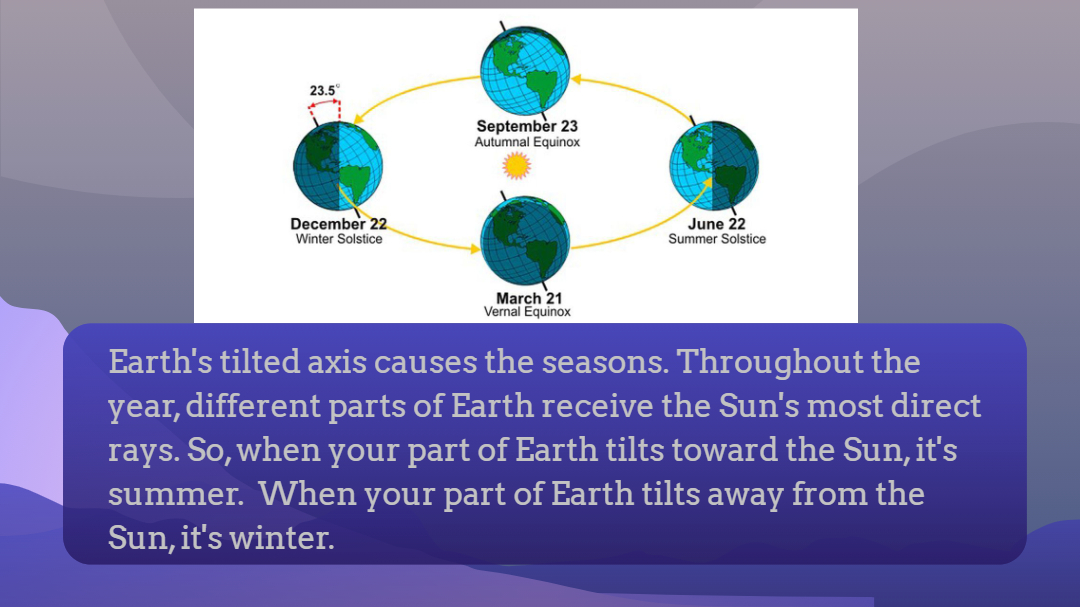
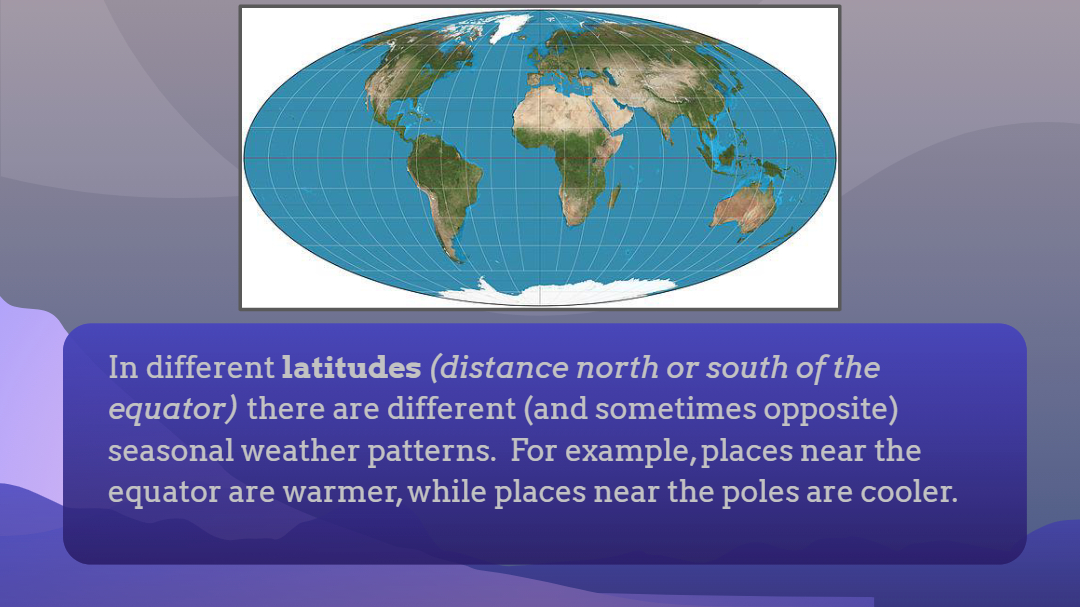
Which of the following statements best explains why places near the equator are generally warmer than places near the poles?
The equator receives more direct sunlight throughout the year.
The poles are closer to the sun than the equator.
The equator has more land than the poles.
The poles receive more rainfall than the equator.
4
Labeling
What is the climate zone of the blue square?
polar zone
temperate zone
tropical zone
5
6
Multiple Choice
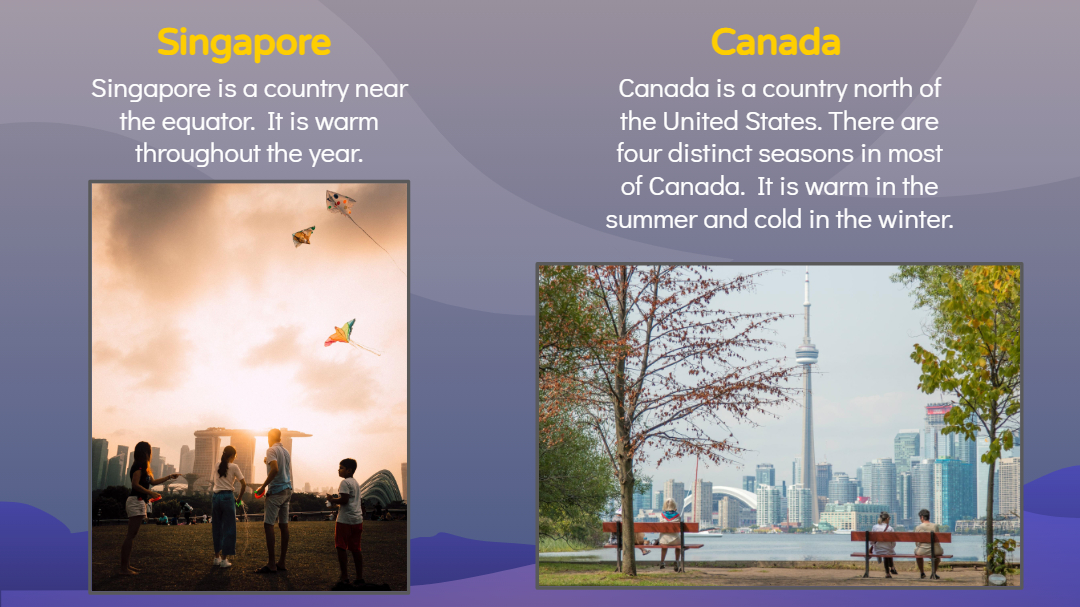
Which country experiences warm weather throughout the year due to its location near the equator?
Singapore
Canada
South Africa
United States
7
8
Multiple Choice
Which zone has the the coldest place on earth?
Tropical
Temperate
Polar
9
10
Multiple Choice
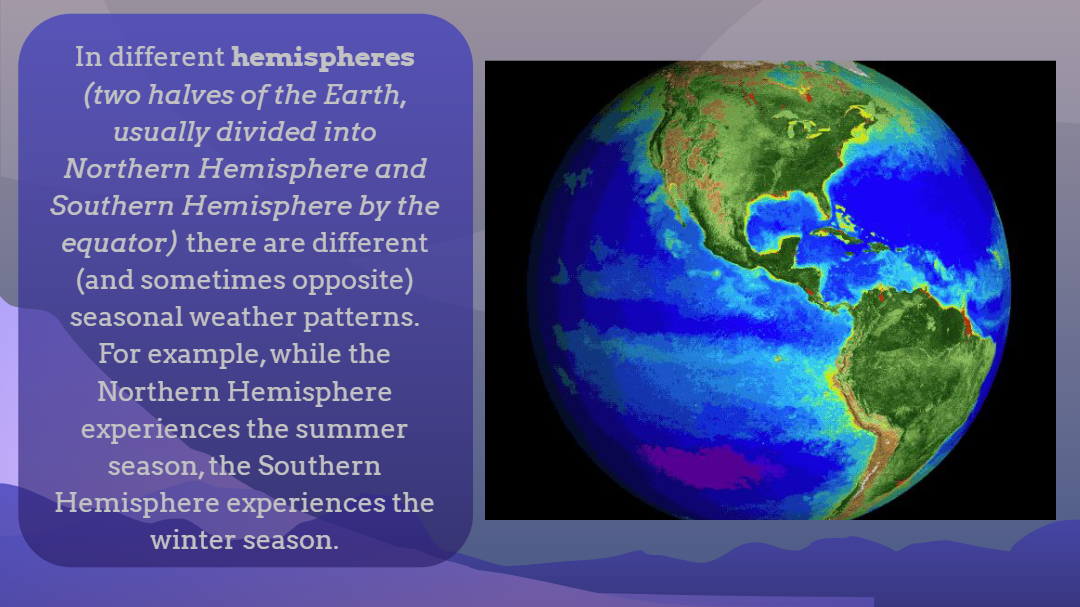
Which hemisphere experiences summer when the other experiences winter?
Southern Hemisphere
Eastern Hemisphere
Western Hemisphere
11
12
Multiple Choice
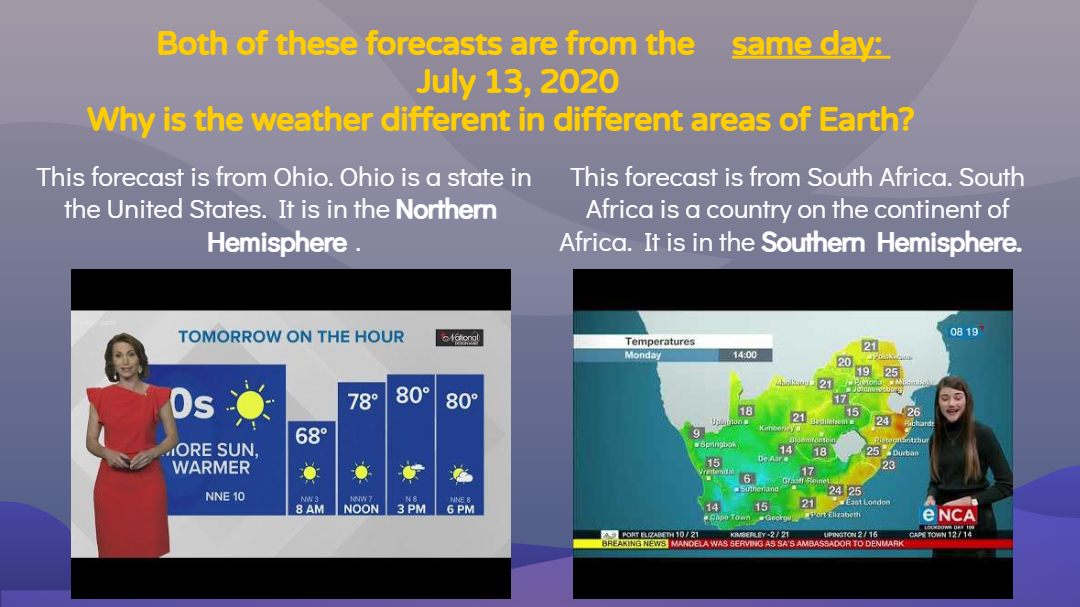
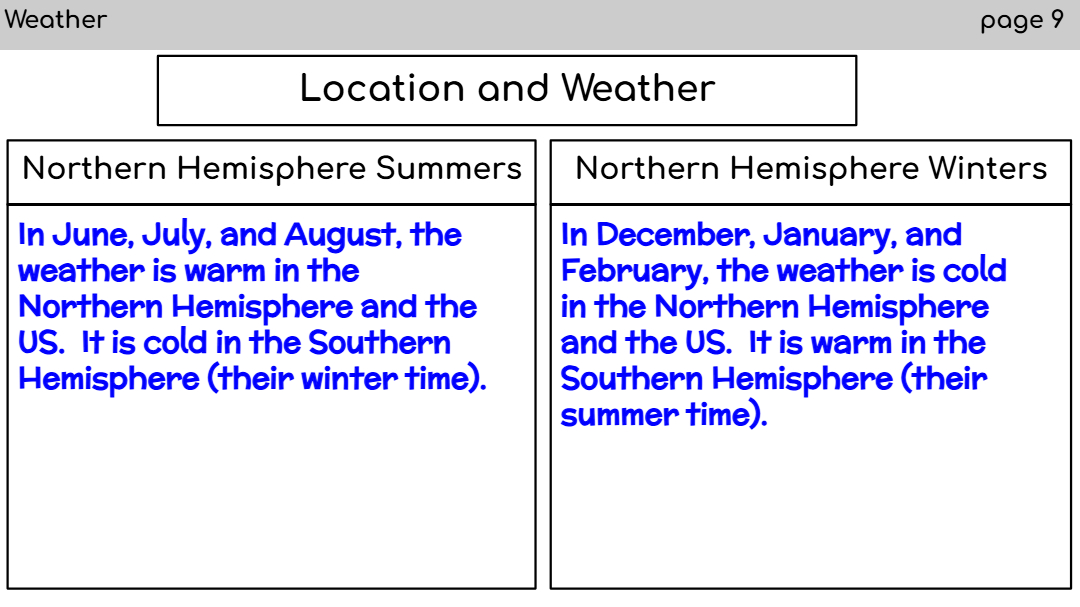
On July 13, 2020, why is the weather forecast different in Ohio and South Africa?
Ohio is colder
They are in opposite hemispheres
South Africa is not near Ohio
13
14
Multiple Choice
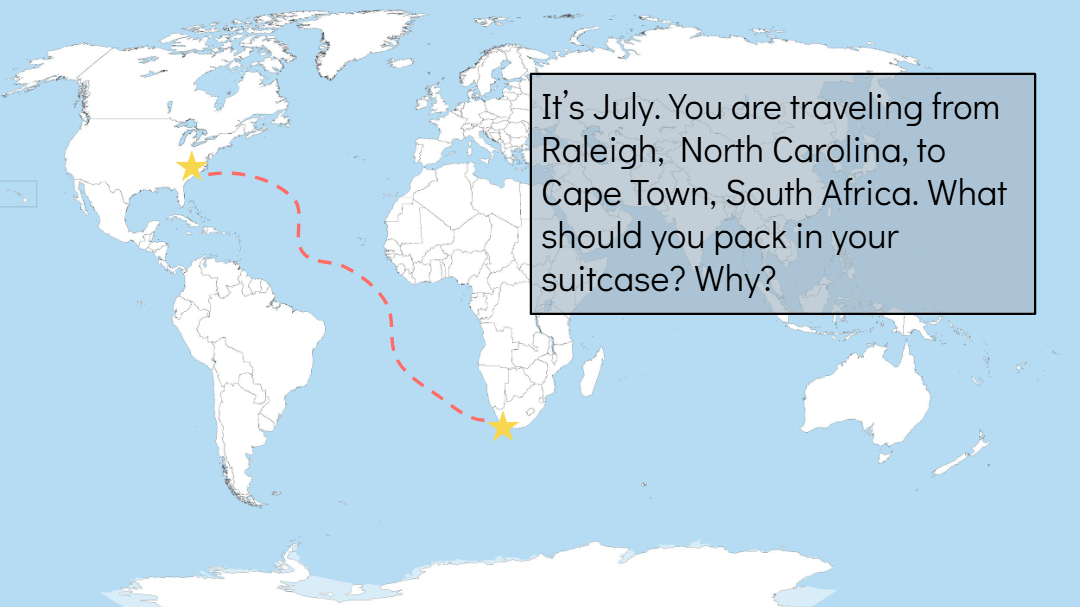
What items you would pack if traveling from Raleigh, North Carolina, to Cape Town, South Africa, in July
Sunscreen
Coat
15
16
Fill in the Blanks
In June, July, and August, the weather is
Type answer...
17
18
Multiple Choice
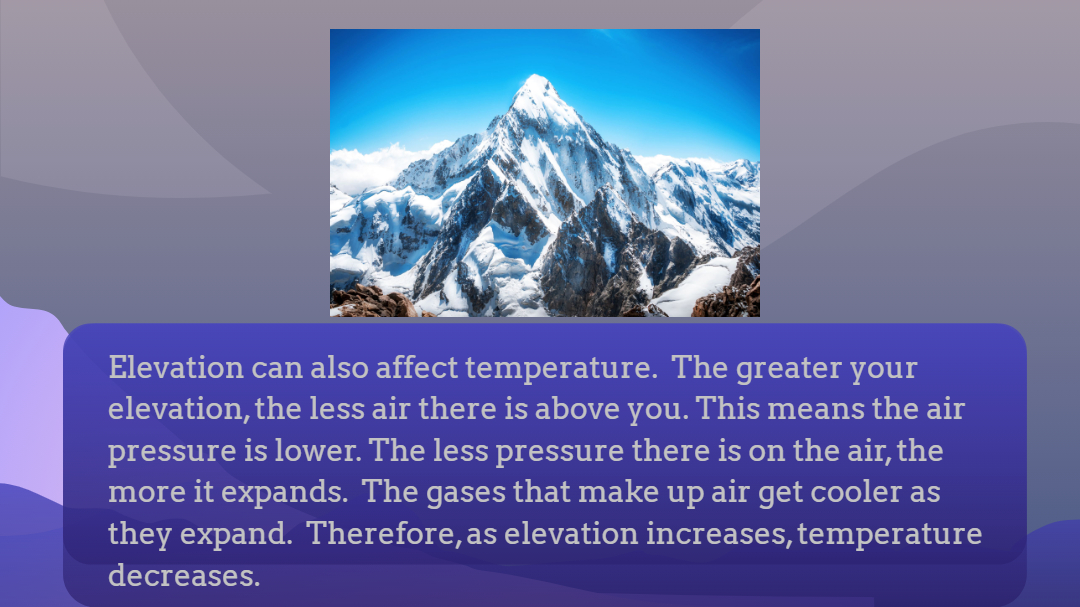
How does elevation affect temperature and air pressure?
As elevation increases, temperature and air pressure both increase.
As elevation increases, temperature decreases and air pressure increases.
As elevation increases, temperature and air pressure both decrease.
As elevation increases, temperature increases and air pressure decreases.
19
20
Multiple Choice
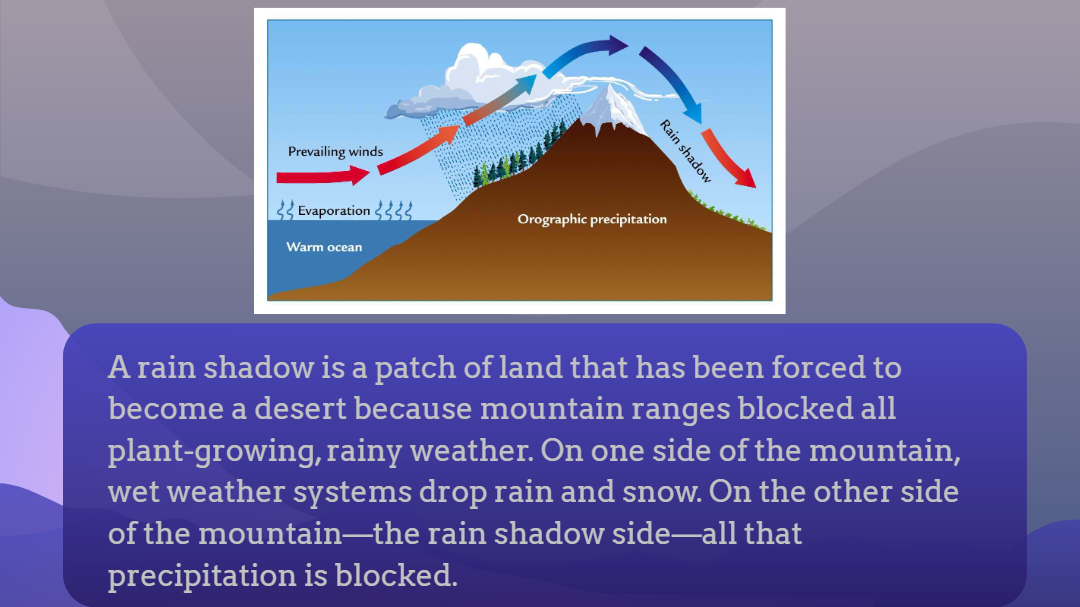
A rain shadow forms on the ___________ side of a mountain as a result of ___________ precipitation there.
windward; more
windward; less
leeward; more
leeward; less
21
22
Multiple Choice
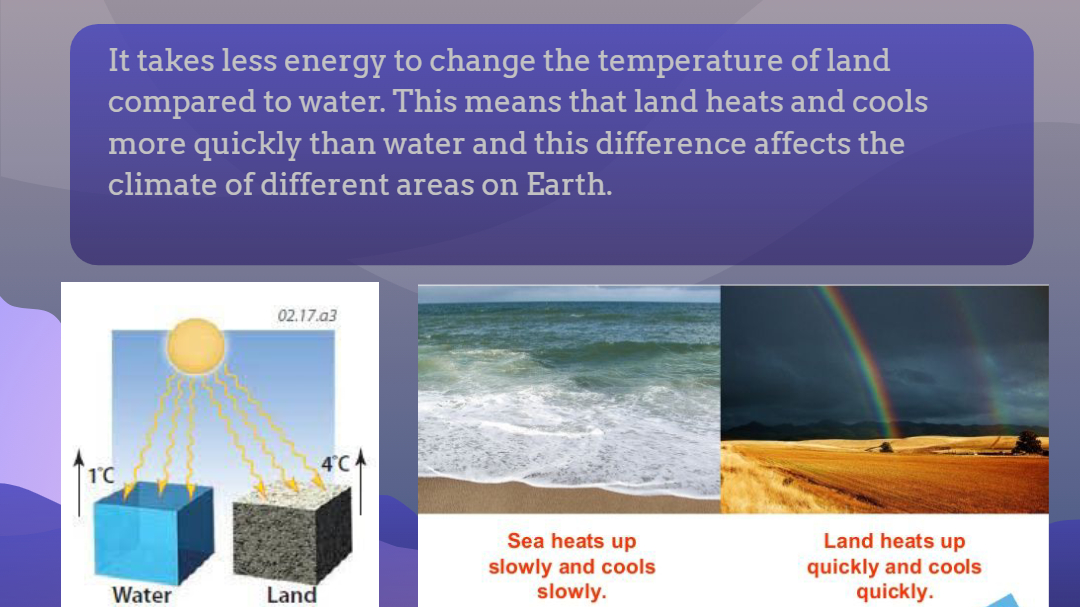
What is one reason land heats up and cools down more quickly than water?
Land absorbs more sunlight than water.
Land requires less energy to change temperature than water.
Water heats up faster because it is transparent.
Water loses heat more quickly than land.
23
24
Multiple Choice
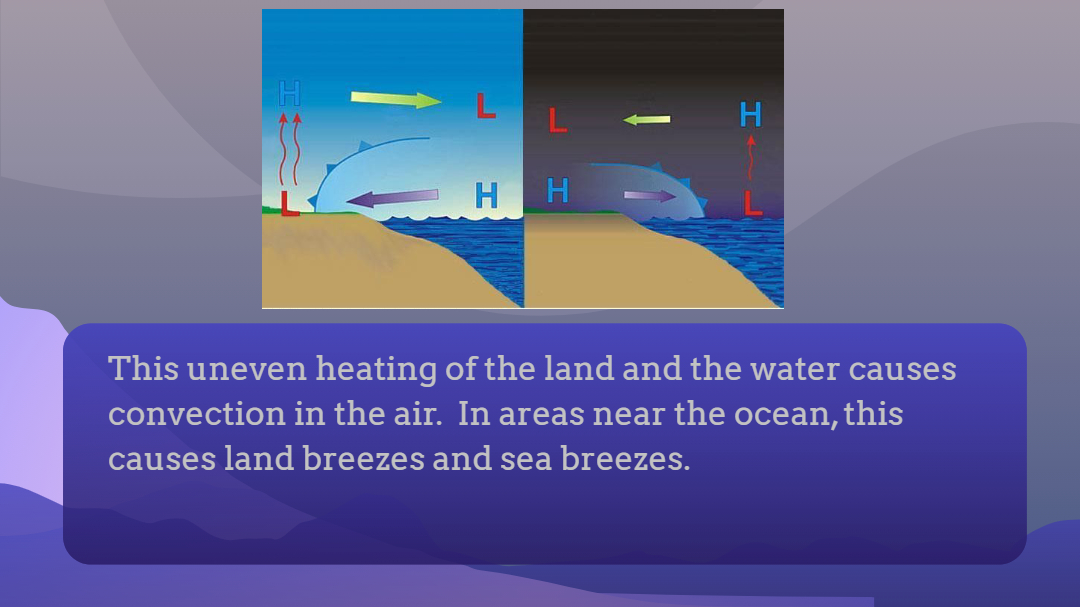
The uneven heating of land and water causes ___ in the air.
radiation
conduction
convection
25
26
Multiple Select
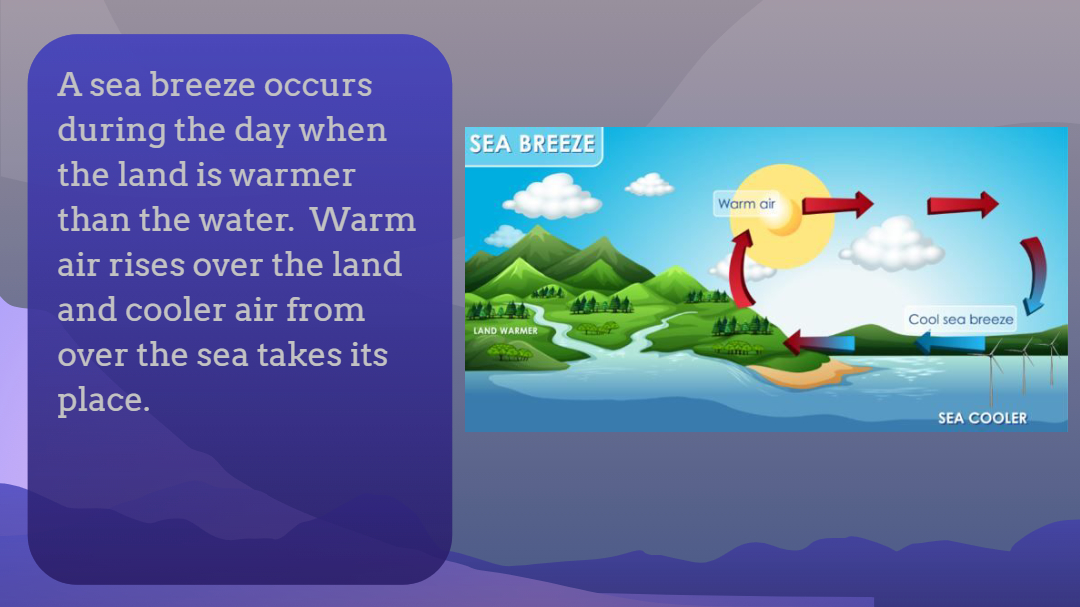
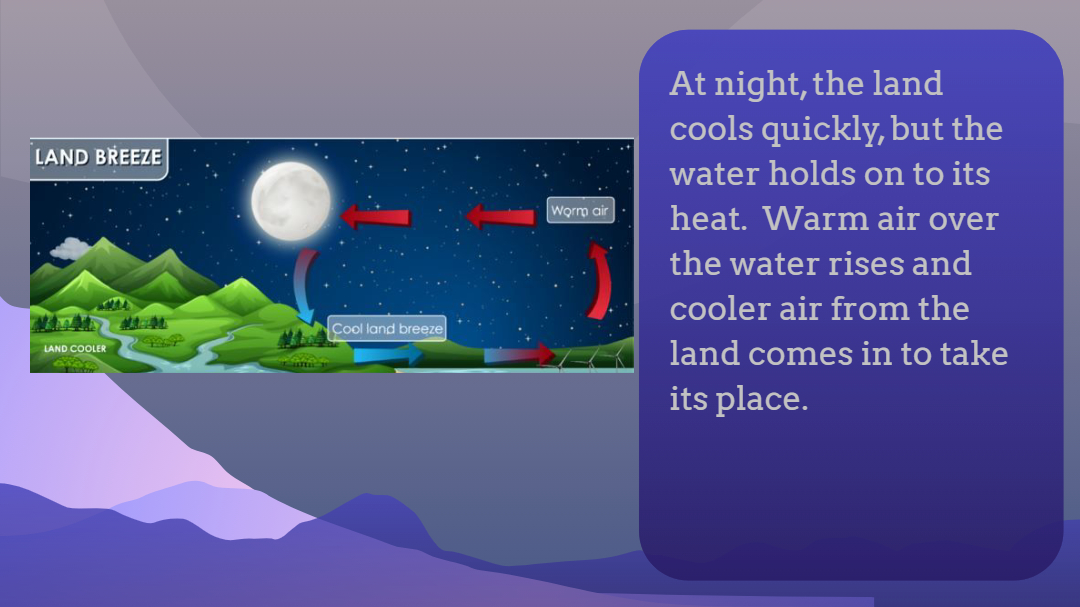
Select TWO statements that are true about sea breezes.
Sea breezes occur during the day when land is warmer than water.
Warm air rises over the sea and cool air from the land takes its place.
Cool air from the sea moves toward the land.
Sea breezes occur at night when the land is cooler than the water.
27
28
Multiple Choice
29
30
Multiple Choice
Sarah lives beside the ocean in Eureka, California. Her penpal, Ruby, lives in Redding, California, which is located inland.
As a school project one year, Sarah and Ruby decide to collect local climate data and compare the average monthly high and low temperatures from their cities. The data they collect are shown below.
Based on the climate data that Sarah and Ruby collect, they can conclude that:
locations by the ocean typically do not get as cold in the winter or as hot in the summer as locations that are located inland.
locations by the ocean typically get much colder in the winter and much hotter in the summer than locations that are located inland.
locations by the ocean typically get much less precipitation during the winter than locations that are located inland.
locations by the ocean typically get much less precipitation during the summer than locations that are located inland.
31
Multiple Choice
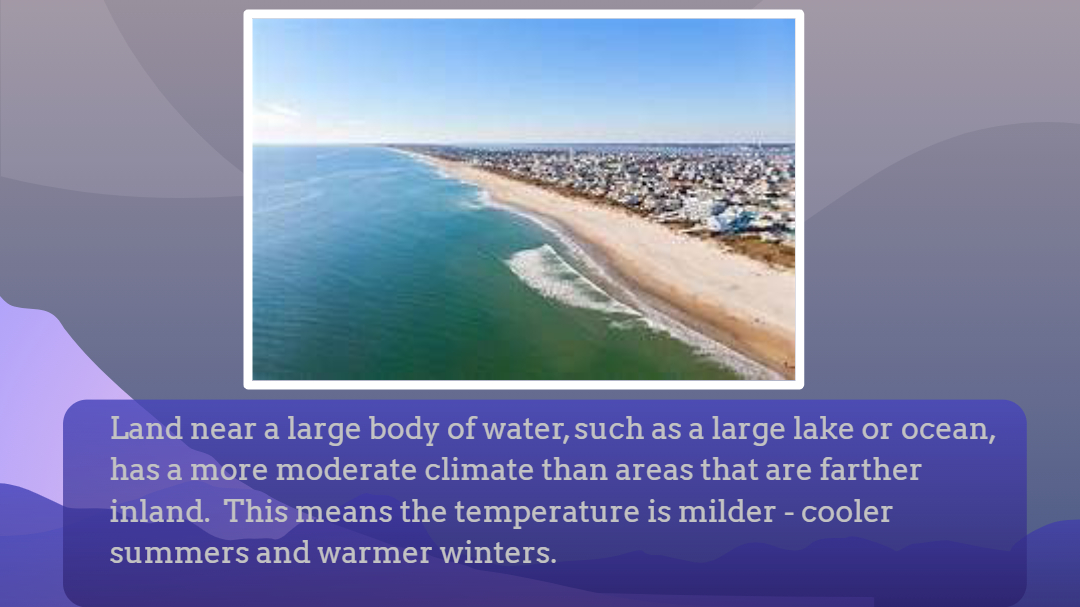
Why does land near a large body of water tend to have a more moderate climate compared to areas farther inland?
Because water heats and cools more slowly than land, moderating the temperature.
Because land absorbs more sunlight than water, making the climate milder.
Because water reflects sunlight, causing cooler summers and warmer winters.
Because land near water is at a lower altitude, resulting in milder temperatures.
32
Multiple Choice
Places near the ___ are generally warmer than places near the poles.
mountains
Show answer
Auto Play
Slide 1 / 32
SLIDE

Similar Resources on Wayground
23 questions
Adaptations and Traits
Presentation
•
5th Grade
23 questions
Adaptations
Presentation
•
5th Grade
25 questions
Unicellular & Multicellular
Presentation
•
4th - 5th Grade
24 questions
Mixture and solution
Presentation
•
5th Grade
26 questions
Science STAAR TEKS
Presentation
•
5th Grade
26 questions
Classifying Animals
Presentation
•
5th Grade
24 questions
Food Chains and Food Webs - lesson
Presentation
•
5th Grade
25 questions
Big Idea 17 Review
Presentation
•
5th Grade
Popular Resources on Wayground
10 questions
Safety Day 2026 – Student Review
Quiz
•
9th Grade
21 questions
Continents and Oceans
Quiz
•
6th Grade
20 questions
Parts of Speech
Quiz
•
5th Grade
16 questions
Subject & Predicate
Quiz
•
5th Grade
25 questions
Multiplication Facts
Quiz
•
5th Grade
12 questions
Map Skills
Quiz
•
3rd Grade
22 questions
Continents and Oceans
Quiz
•
5th Grade
15 questions
Rounding Decimals
Quiz
•
5th Grade
Discover more resources for Science
20 questions
Mixtures and Solutions Practice
Quiz
•
5th Grade
20 questions
Food Chains and Food Webs Review
Quiz
•
5th Grade
20 questions
GC Interim #1 Review 2026
Quiz
•
5th Grade
20 questions
5.3 Force and Motion Study Guide Review
Quiz
•
5th Grade
15 questions
Force and Motion
Presentation
•
5th Grade
25 questions
Chemical and Physical Changes in Matter
Quiz
•
5th Grade
10 questions
Exploring the Periodic Table Structure
Interactive video
•
5th Grade
14 questions
Land Breeze and Sea Breeze
Quiz
•
5th Grade