

Writing and Naming Compounds

Presentation
•
Science
•
9th - 12th Grade
•
Medium
Standards-aligned

Barbara White
Used 7+ times
FREE Resource
31 Slides • 13 Questions
1

High School
2
Distinguish between ionic and covalent compounds based on their constituent elements.
Name ionic compounds with transition metals and polyatomic ions using IUPAC rules.
Write chemical formulas for ionic compounds by balancing the charges of their ions.
Use the prefix system to correctly name binary covalent compounds.
Determine the names and formulas for simple hydrocarbons like alkanes, alkenes, and alkynes.


3
Key Vocabulary
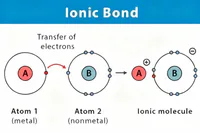
Ionic Bond
A chemical bond created by the complete transfer of valence electrons from one atom to another.

Covalent Bond
A chemical bond that involves the sharing of electron pairs between atoms, either equally or unequally.

Polyatomic Ion
A charged group of two or more covalently bonded atoms that functions as a single ionic unit.

Transition Metal
An element from the d-block of the periodic table that forms ions with different positive charges.

Hydrocarbon
An organic compound consisting entirely of hydrogen and carbon atoms, forming the basis of organic chemistry.
4
Types of Chemical Bonds

Ionic Bonds
Electrons are transferred from a metal atom to a non-metal atom.
This is caused by a large difference in electronegativity between atoms.
An example is the bond in Sodium Chloride, forming NaCl.

Covalent Bonds
Electrons are shared between two or more non-metal atoms.
Unequal electron sharing creates a polar covalent bond, like in H-F.
Equal electron sharing creates a nonpolar covalent bond, like in Cl-Cl.

Metallic Bonds
These bonds are found exclusively between atoms in metallic elements.
Valence electrons form a "sea" shared among a lattice of metal atoms.
This structure allows metals to be malleable, ductile, and conduct electricity.
5
Solved Example 1
Given Potassium (K) has an electronegativity of 0.8 and Fluorine (F) has an electronegativity of 4.0, calculate the difference and determine the type of chemical bond that forms between them.
Step 1: Analyze and Sketch the Problem
6
Solved Example 1
Given Potassium (K) has an electronegativity of 0.8 and Fluorine (F) has an electronegativity of 4.0, calculate the difference and determine the type of chemical bond that forms between them.
Step 2: Solve for the Unknown
7
Solved Example 1
Given Potassium (K) has an electronegativity of 0.8 and Fluorine (F) has an electronegativity of 4.0, calculate the difference and determine the type of chemical bond that forms between them.
Step 3: Evaluate the Answer
The calculated electronegativity difference of 3.2 is a large value, which indicates a high tendency for electron transfer.
The bond forms between a metal (Potassium) and a non-metal (Fluorine), which typically results in an ionic bond. The answer is reasonable.
8
Multiple Choice
Based on electronegativity, what type of bond forms between a metal and a non-metal when electrons are fully transferred?
Metallic Bond
Nonpolar Covalent Bond
Polar Covalent Bond
Ionic Bond
9
Naming Binary Ionic Compounds
Binary ionic compounds are made of a metal and a non-metal.
First, name the metal cation; its name does not change.
Second, name the non-metal anion, changing the ending to “-ide.”
So, the chemical formula NaCl is named Sodium Chloride.

10
Solved Example 2
What is the chemical formula for an ionic compound made of aluminum and sulfur? Aluminum forms an ion with a +3 charge, and sulfur forms an ion with a -2 charge.
Step 1: Analyze and Sketch the Problem
11
Solved Example 2
What is the chemical formula for an ionic compound made of aluminum and sulfur? Aluminum forms an ion with a +3 charge, and sulfur forms an ion with a -2 charge.
Step 2: Solve for the Unknown
12
Solved Example 2
What is the chemical formula for an ionic compound made of aluminum and sulfur? Aluminum forms an ion with a +3 charge, and sulfur forms an ion with a -2 charge.
Step 3: Evaluate the Answer
13
Multiple Choice
What is the correct chemical name for the ionic compound with the formula K2S?
Potassium (II) Sulfide
Potassium Sulfide
Dipotassium Sulfide
Potassium Sulfur
14
Writing Formulas for Ionic Compounds
An ionic compound's formula must have balanced positive and negative charges to be neutral.
Write the symbols and charges for the ions, like aluminum (Al3+) and oxygen (O2-).
"Cross over" the charge numbers to make them the subscripts for the other ion.
The final formula is Al2O3, balancing the charges: (2 × +3) + (3 × -2) = 0.


15
Multiple Choice
Following the rules for balancing charges, what is the correct chemical formula for a compound formed from beryllium (Be2+) and bromide (Br-)?
Be2Br
Be2Br3
BeBr
BeBr2
16
Ionic Compounds with Transition Metals
Transition metals can form ions with multiple charges, like Cu+ and Cu2+.
A Roman numeral after the metal’s name shows its specific charge.
In CuCl2, copper has a +2 charge, so it is named copper(II) chloride.
In PbBr4, lead has a +4 charge, so it is named lead(IV) bromide.


17
Solved Example 4
What is the chemical formula for iron(III) oxide?
Step 1: Analyze and Sketch the Problem
Goal: To write the correct chemical formula for iron(III) oxide.
Knowns: The cation is iron (Fe) and the anion is oxide (O). The Roman numeral (III) tells us the charge of the iron ion is +3. Oxygen is in group 16, so its ion has a -2 charge.
Ions: Fe3+ and O2-.
Unknown: The subscripts for each element in the neutral compound.
18
Solved Example 4
What is the chemical formula for iron(III) oxide?
Step 2: Solve for the Unknown
Use the "criss-cross" method to balance the charges. The numerical value of the cation's charge becomes the subscript for the anion, and the numerical value of the anion's charge becomes the subscript for the cation.
The +3 charge on iron becomes the subscript for oxygen, and the -2 charge on oxygen becomes the subscript for iron. This gives the formula: Fe2O3.
19
Solved Example 4
What is the chemical formula for iron(III) oxide?
Step 3: Evaluate the Answer
Check that the total charge of the compound is zero.
Total positive charge from iron: 2 ions × (+3 charge/ion) = +6.
Total negative charge from oxide: 3 ions × (-2 charge/ion) = -6.
The total charge is (+6) + (-6) = 0. The formula is correct.
20
Multiple Choice
What is the charge of the iron ion in the compound named iron(III) bromide?
-3
+2
+3
0
21
Compounds with Polyatomic Ions
A polyatomic ion is a group of atoms acting as one unit with a charge, like NO3-.
Name the compound using the ion's name, so Na3PO4 is called sodium phosphate.
A hydrate is an ionic compound with water, named using a prefix for water molecules.
Balance charges to write formulas, like Mg3(PO4)2, using parentheses around the ion.


22
Solved Example 5
What is the chemical formula for the ionic compound formed between calcium (Ca2+) and the nitrate ion (NO3-)?
Step 1: Analyze and Sketch the Problem
Goal: To write the correct chemical formula for calcium nitrate.
Knowns: The cation is calcium (Ca2+) with a charge of +2. The polyatomic anion is nitrate (NO3-) with a charge of -1.
Unknown: The chemical formula for the neutral compound.
23
Solved Example 5
What is the chemical formula for the ionic compound formed between calcium (Ca2+) and the nitrate ion (NO3-)?
Step 2: Solve for the Unknown
Write the ion symbols, Ca2+ and NO3-. Then, use the “cross-over” method, where the charge of each ion becomes the subscript for the other ion.
This results in the formula Ca1(NO3)2. Since subscripts of 1 are omitted, the final correct formula is Ca(NO3)2.
24
Solved Example 5
What is the chemical formula for the ionic compound formed between calcium (Ca2+) and the nitrate ion (NO3-)?
Step 3: Evaluate the Answer
The formula is Ca(NO3)2. Let's check the total charge.
Charge from calcium: 1 × (+2) = +2.
Charge from nitrate: 2 × (-1) = -2.
The total charge of the compound is (+2) + (-2) = 0. The formula is correct because the compound is neutral.
25
Multiple Choice
What is the correct name for the compound with the formula NH4Cl?
Ammonium(I) chloride
Ammonium chloride
Ammonium chlorate
Nitrogen hydride chloride
26
Naming Binary Covalent Compounds
Binary covalent compounds are formed between two non-metal elements.
A prefix shows the number of atoms: di- (2), tri- (3), tetra- (4).
The first element gets a prefix only if more than one atom is present.
The second element always gets a prefix and its ending changes to -ide. For example, SF6 is sulfur hexafluoride and P4O10 is tetraphosphorus decoxide.

27
Solved Example 6
Given the IUPAC name dinitrogen trioxide, what is its chemical formula? Use the prefix system to determine the number of atoms for each element.
Step 1: Analyze and Sketch the Problem
Goal: Determine the chemical formula from the compound's name.
Knowns: The name is dinitrogen trioxide. Prefixes indicate atom count: "di-" means 2, and "tri-" means 3.
Unknown: The chemical formula.
28
Solved Example 6
Given the IUPAC name dinitrogen trioxide, what is its chemical formula? Use the prefix system to determine the number of atoms for each element.
Step 2: Solve for the Unknown
Identify the elements and prefixes: "Dinitrogen" indicates two nitrogen (N) atoms, and "trioxide" indicates three oxygen (O) atoms.
Combine the element symbols with their respective counts as subscripts to get the final chemical formula: N2O3.
29
Solved Example 6
Given the IUPAC name dinitrogen trioxide, what is its chemical formula? Use the prefix system to determine the number of atoms for each element.
Step 3: Evaluate the Answer
Review the derived formula N2O3.
N2 corresponds to the prefix "di-" for nitrogen, and O3 corresponds to the prefix "tri-" for oxygen (oxide). The formula correctly represents the name dinitrogen trioxide.
30
Multiple Choice
What is the correct name for the covalent compound PBr3?
Monophosphorus tribromide
Phosphorus(III) bromide
Phosphorus tribromide
Phosphorus bromide
31
Writing Formulas for Covalent Compounds
Prefixes in a name become the subscripts in the chemical formula.
For dihydrogen monoxide, "di-" means two hydrogen atoms, giving the formula H2O.
For arsenic trioxide, "tri-" means three oxygen atoms, creating the formula AsO3.
No prefix on the first element, as in arsenic, means one atom.

32
Multiple Choice
Based on the prefix system, what is the chemical formula for oxygen difluoride?
O2F2
O2F
OF
OF2
33
Naming Simple Hydrocarbons

Alkanes (-ane)

Alkenes (-ene)

Alkynes (-yne)
34
Solved Example 8
An alkane contains 7 carbon atoms. Using the prefix 'hept-' and the suffix '-ane', determine its chemical name and write the correct chemical formula for this hydrocarbon.
Step 1: Analyze and Sketch the Problem
35
Solved Example 8
An alkane contains 7 carbon atoms. Using the prefix 'hept-' and the suffix '-ane', determine its chemical name and write the correct chemical formula for this hydrocarbon.
Step 2: Solve for the Unknown
36
Solved Example 8
An alkane contains 7 carbon atoms. Using the prefix 'hept-' and the suffix '-ane', determine its chemical name and write the correct chemical formula for this hydrocarbon.
Step 3: Evaluate the Answer
37
Multiple Choice
What is the correct name for a hydrocarbon with the chemical formula C4H10?
Butyne
Tetrane
Butane
Butene
38
Misconception | Correction |
|---|---|
Prefixes like di- and tri- are used for all compounds. | These prefixes are only for covalent compounds (two non-metals). |
All transition metals need a Roman numeral in their name. | Exceptions like Zinc (Zn) and Silver (Ag) have fixed charges. |
The ending of a polyatomic ion's name changes to "-ide". | The name of the polyatomic ion is used as is. |
The formula for all hydrocarbons is the same. | The formula depends on if it’s an alkane, alkene, or alkyne. |
39
Multiple Choice
Why is the compound CaCl2 named "calcium chloride" while SnCl2 is named "tin(II) chloride"?
The "(II)" indicates there are two atoms, not the charge.
Covalent naming rules apply to calcium, while ionic rules apply to tin.
Calcium is a main group metal with a fixed charge, while tin is a transition metal with a variable charge.
Both should be named with prefixes as "calcium dichloride" and "tin dichloride".
40
Multiple Choice
What is the correct chemical formula for the compound manganese(III) sulfite?
Mn3(SO3)2
Mn2(SO3)3
Mn(SO3)3
MnSO3
41
Multiple Choice
Analyze the compound with the formula Sr3N2. What is its name and why are prefixes not used?
Strontium nitride; prefixes are optional and were left out for simplicity.
Strontium nitride; it is an ionic compound between a metal and non-metal, so charges are balanced without prefixes.
Strontium(II) nitride; strontium is a transition metal and requires a Roman numeral.
Tristrontium dinitride; prefixes are required to show the number of atoms for all compounds.
42
Multiple Choice
A compound is named "dinitrogen pentoxide". What does this name allow you to conclude about its bonding and chemical formula?
It is an ionic compound with the formula N2O5 because nitrogen has a +5 charge.
It is an ionic compound and should be named "nitrogen(V) oxide".
It is a covalent compound with the formula N2O5 because prefixes indicate it's formed between two non-metals.
It is a covalent compound with the formula N5O2.
43
Name ionic compounds with the metal, then non-metal (-ide); use Roman numerals for transition metals.
Use special names for polyatomic ions and balance charges to write the formula.
Name covalent compounds using prefixes (di-, tri-) to show the number of atoms.
Name hydrocarbons with a prefix for carbon atoms and a suffix for bond type.
44
Poll
On a scale of 1-4, how confident are you about writing and naming chemical compounds after this review?
1
2
3
4
High School
Show answer
Auto Play
Slide 1 / 44
SLIDE
Similar Resources on Wayground

35 questions
The Scientific Method Notes Check
Presentation
•
9th - 12th Grade
38 questions
Cellular Transport
Presentation
•
8th - 12th Grade
42 questions
Biomolecule terms 2 - Enzymes
Presentation
•
9th - 12th Grade
41 questions
EOC Practice 2
Presentation
•
9th - 12th Grade
40 questions
Gravity, Mass and Weight
Presentation
•
9th Grade - University
41 questions
Greenhouse Effect Unit Test REVIEW Lesson
Presentation
•
9th - 12th Grade
35 questions
Biomolecule terms Part 1
Presentation
•
9th - 12th Grade
Popular Resources on Wayground
10 questions
Safety Day 2026 – Student Review

Quiz
•
9th Grade
21 questions
Continents and Oceans
Quiz
•
6th Grade
20 questions
Parts of Speech
Quiz
•
5th Grade
16 questions
Subject & Predicate
Quiz
•
5th Grade
25 questions
Multiplication Facts
Quiz
•
5th Grade
12 questions
Map Skills
Quiz
•
3rd Grade
22 questions
Continents and Oceans
Quiz
•
5th Grade
15 questions
Rounding Decimals
Quiz
•
5th Grade
Discover more resources for Science
10 questions
Exploring Chemical and Physical Changes

Interactive video
•
6th - 10th Grade
20 questions
Atomic Structure
Quiz
•
9th Grade
10 questions
Exploring the Electromagnetic Spectrum for Middle School Science
Interactive video
•
6th - 10th Grade
10 questions
Exploring Force and Motion Concepts
Interactive video
•
6th - 10th Grade
10 questions
Exploring Air Masses and Weather Fronts
Interactive video
•
6th - 10th Grade
14 questions
Periodic Trends
Interactive video
•
11th Grade
10 questions
Exploring the States of Matter
Interactive video
•
6th - 10th Grade
10 questions
Exploring Forces: Net Force, Normal Force, Gravity, and Friction
Interactive video
•
6th - 10th Grade