

Changes in Matter

Presentation
•
Science
•
6th Grade
•
Medium
Standards-aligned

N Powell
Used 1+ times
FREE Resource
19 Slides • 15 Questions
1

2
3
4
Multiple Choice
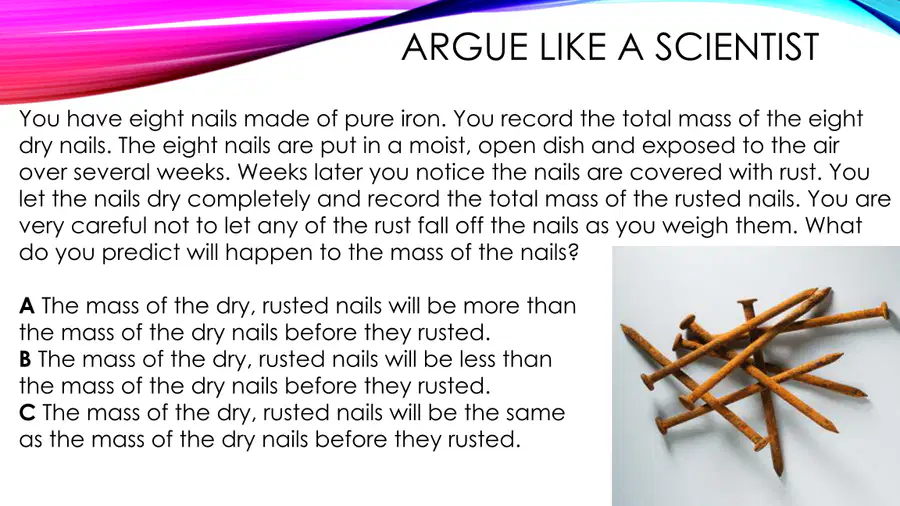
What do you predict will happen to the mass of the nails after they rust, if none of the rust falls off?
The mass of the dry, rusted nails will be more than the mass of the dry nails before they rusted.
The mass of the dry, rusted nails will be less than the mass of the dry nails before they rusted.
The mass of the dry, rusted nails will be the same as the mass of the dry nails before they rusted.
5
6
Multiple Choice
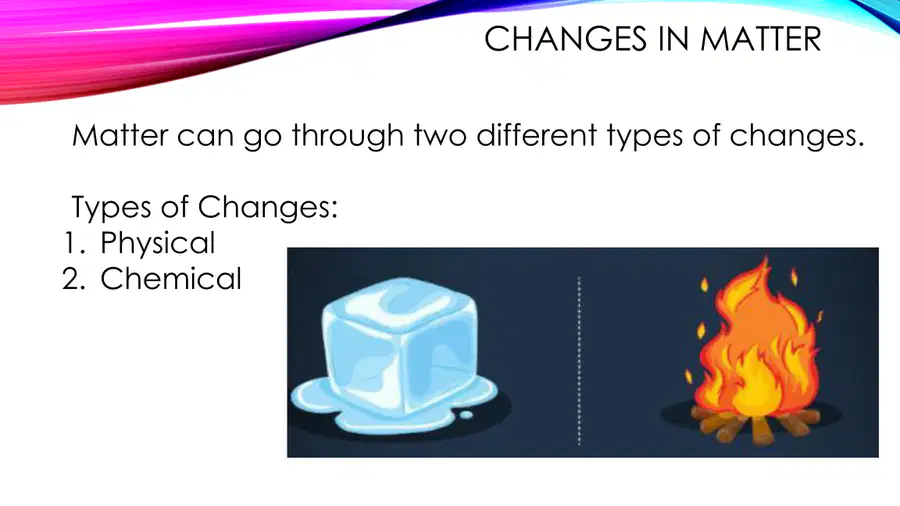
What are the two main types of changes that matter can undergo?
Physical and chemical changes
Solid and liquid changes
Melting and freezing changes
Evaporation and condensation changes
7
8
Multiple Choice
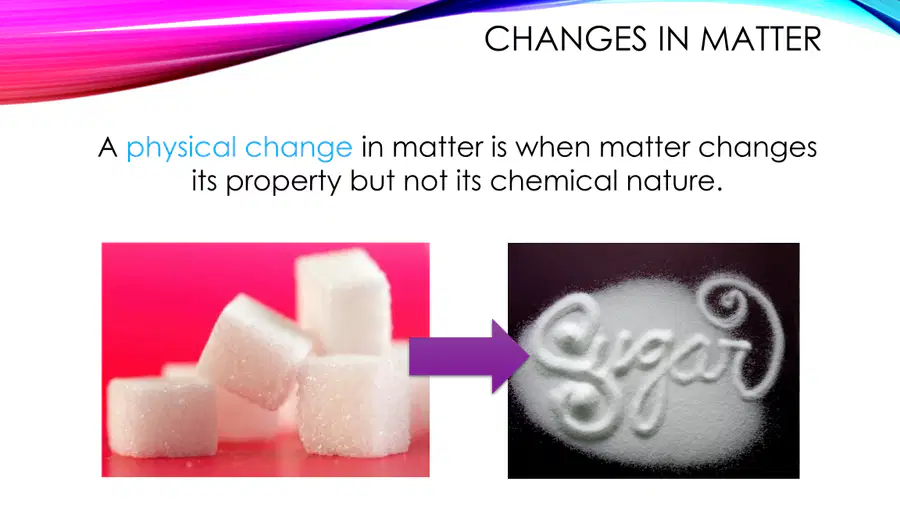
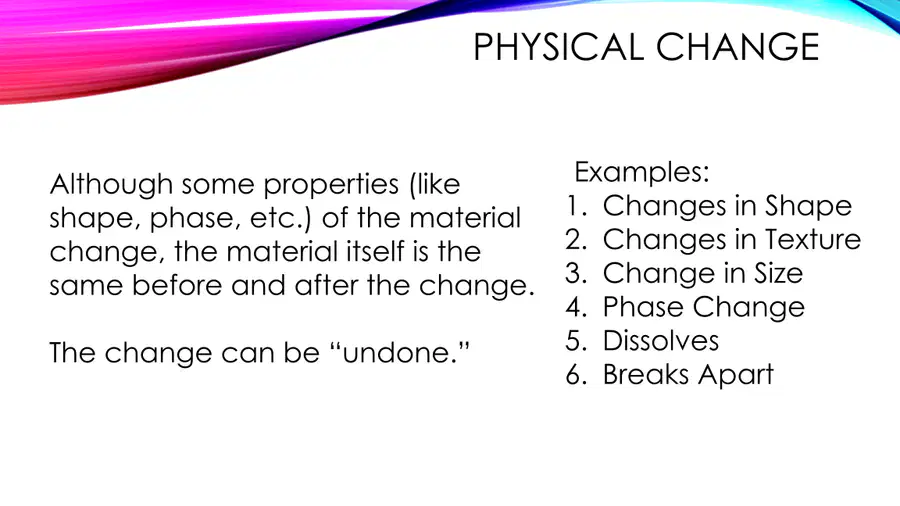
Explain the difference between a physical change and a chemical change using examples from the slides.
9
10
11
Multiple Choice
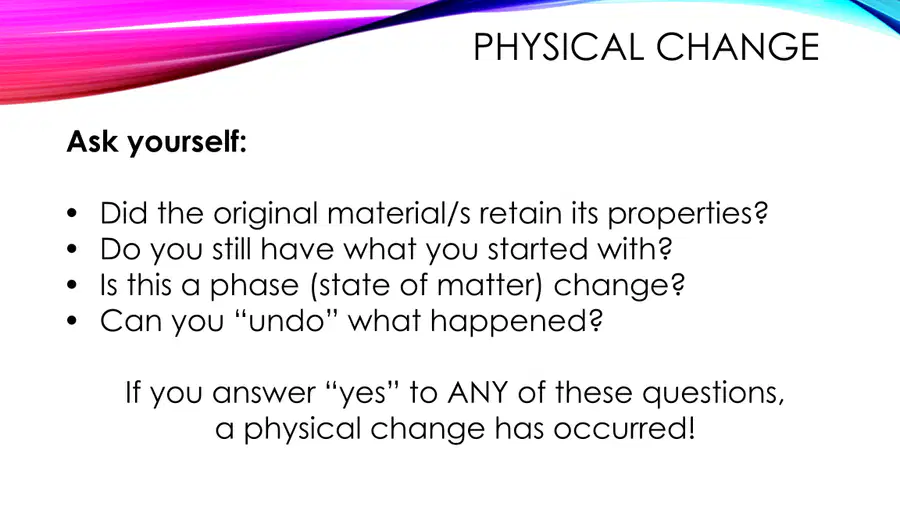
List three questions you can ask yourself to determine if a change is physical, based on the slides.
12
13
Multiple Select
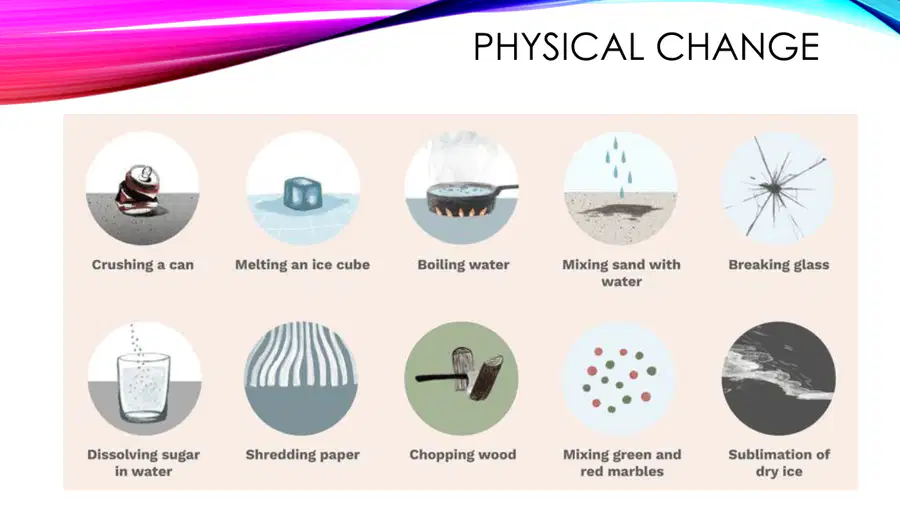
Which of the following are examples of physical changes?
Melting an ice cube
Burning wood
Mixing sand with water
Boiling water
14
15
Multiple Choice
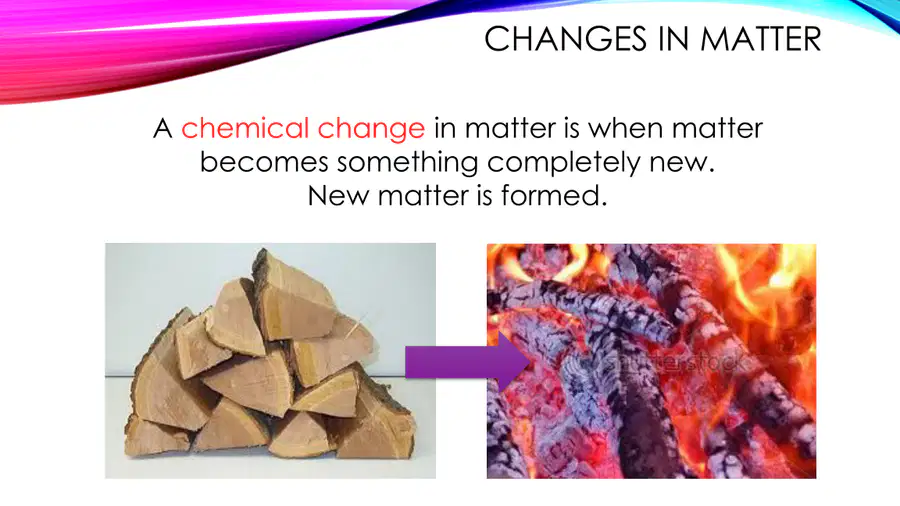
Which of the following best describes a chemical change, as shown in the transformation of wood to ash?
Matter changes state but remains the same substance
Matter is broken into smaller pieces but remains the same
Matter becomes something completely new and new matter is formed
Matter is mixed but can be separated again
16
17
Multiple Choice
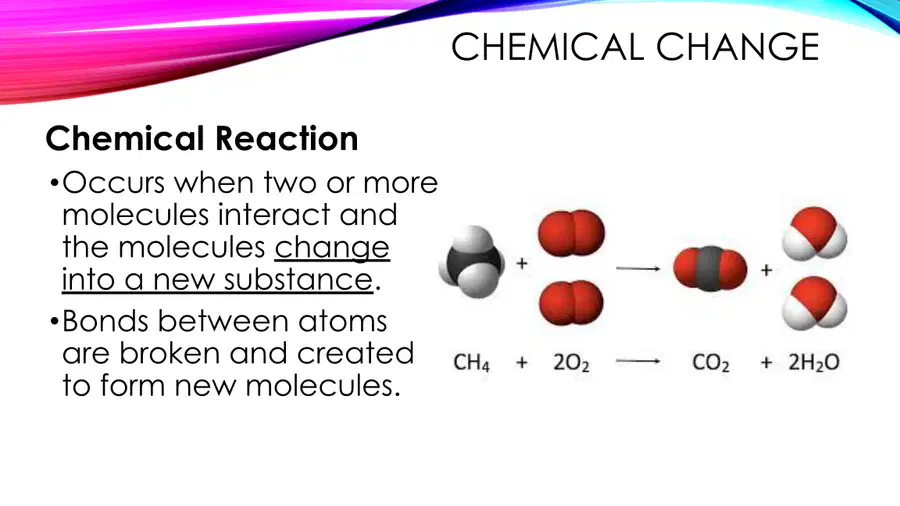
Explain how a chemical reaction leads to the formation of new substances, using the example of methane and oxygen reacting.
18
19
Multiple Choice
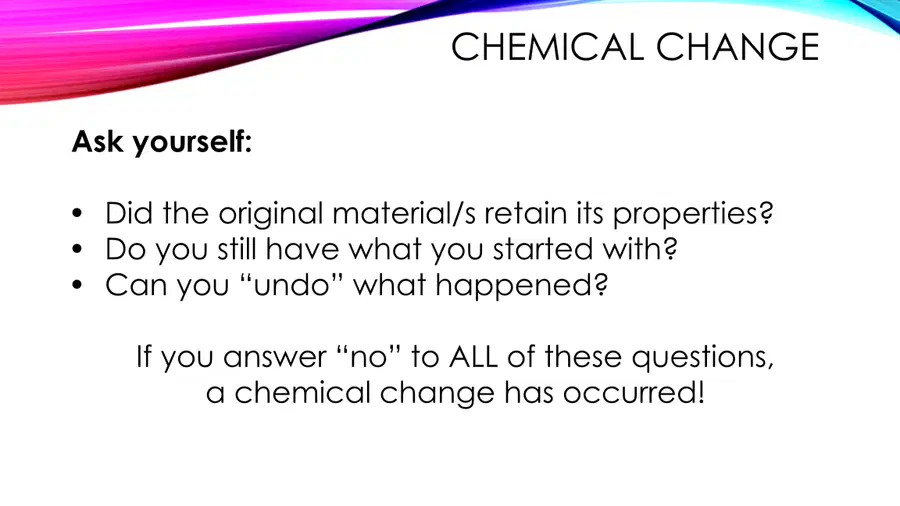
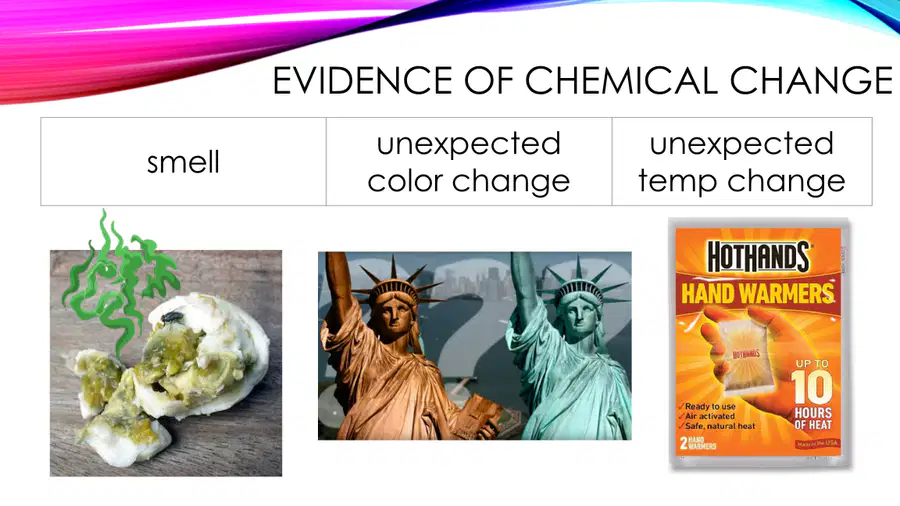
Which of the following are signs that a chemical change has occurred?
Unexpected color change
Unexpected temperature change
Burning
All of the above
20
21
22
Multiple Select
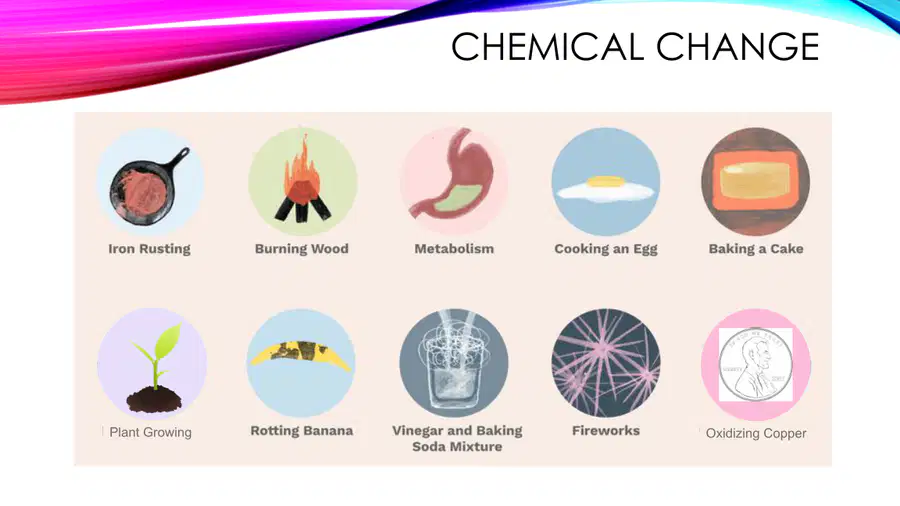
Select all examples that represent a chemical change from the list below.
Iron rusting
Burning wood
Cooking an egg
Melting ice
23
24
Multiple Choice
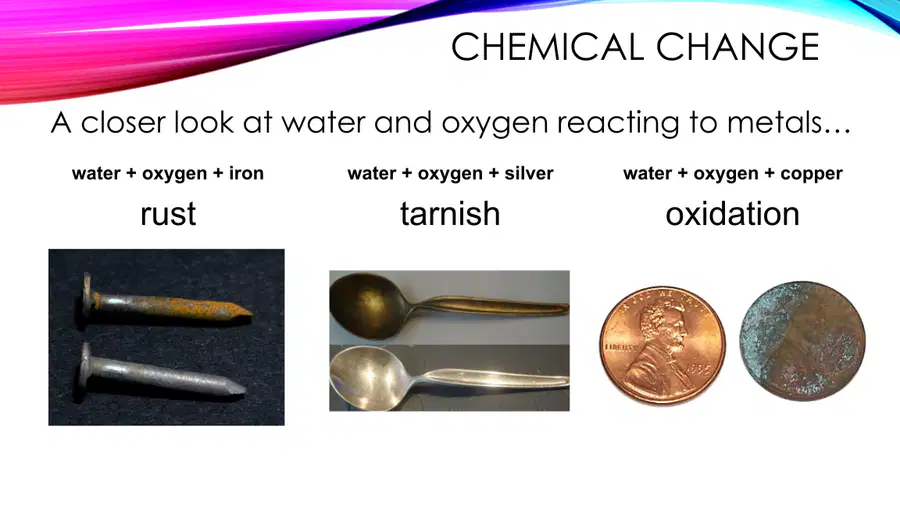
Compare and contrast rusting, tarnishing, and oxidation as chemical changes involving metals. What do they have in common and how are they different?
25
26
Multiple Choice
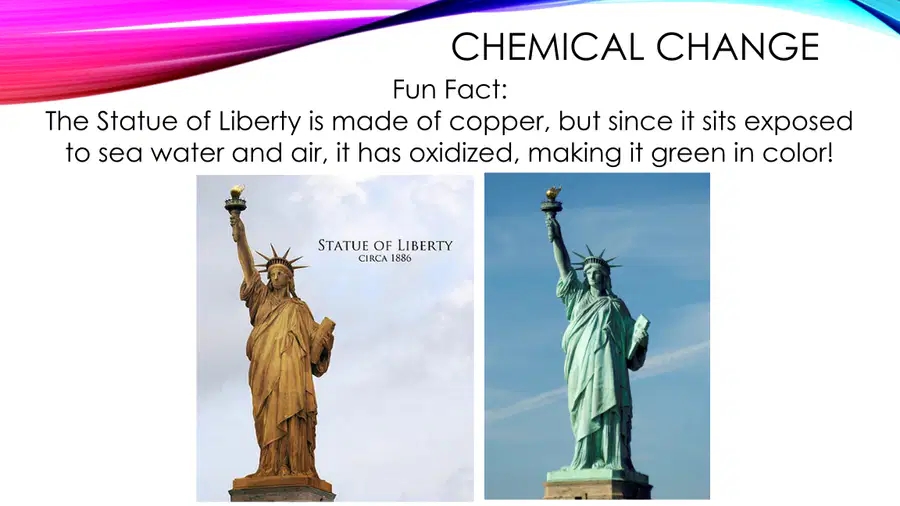
Which process caused the Statue of Liberty to change color over time?
Oxidation
Melting
Evaporation
Condensation
27
28
Multiple Choice
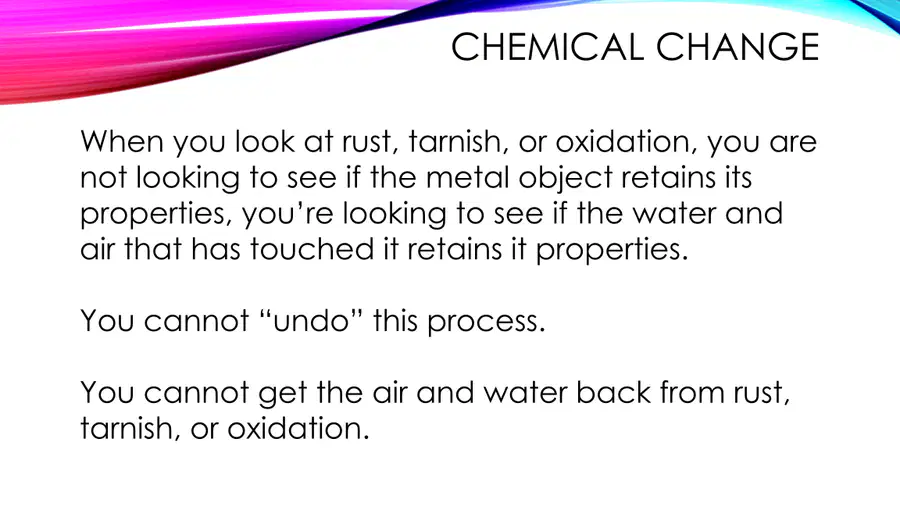
Explain why rust, tarnish, or oxidation cannot be reversed to get back the original air and water.
29
30
Multiple Select
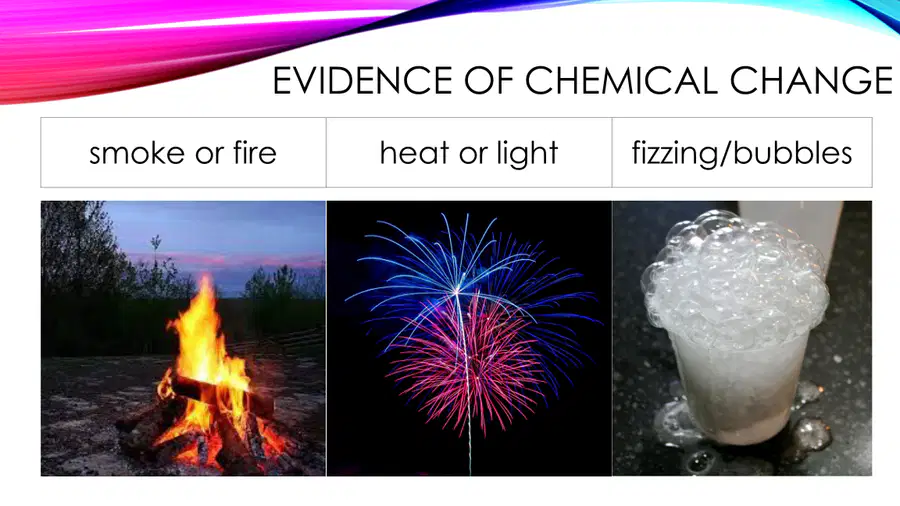
Which of the following are evidence of a chemical change?
Smoke or fire
Heat or light
Fizzing/bubbles
All of the above
31
32
33
Multiple Choice
Describe how baking cookies is an example of a chemical change.
34
Multiple Choice
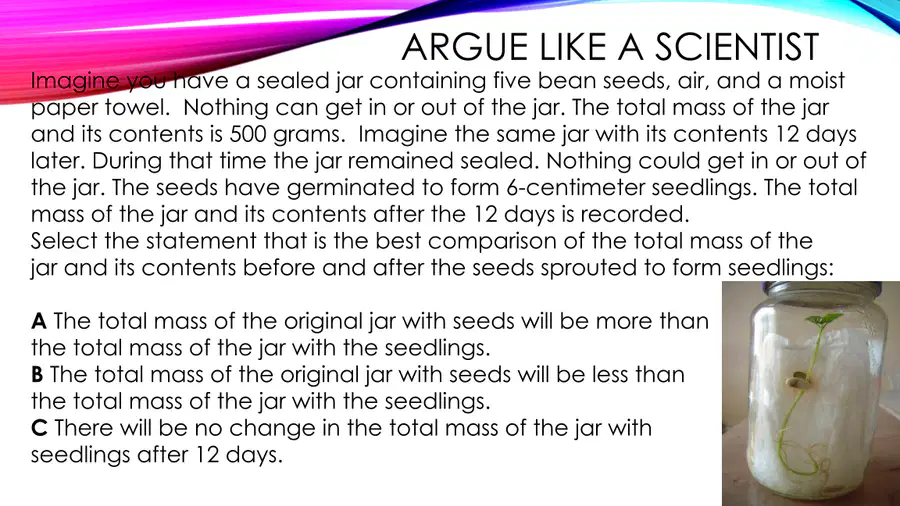
Select the statement that is the best comparison of the total mass of the jar and its contents before and after the seeds sprouted to form seedlings:
The total mass of the original jar with seeds will be more than the total mass of the jar with the seedlings.
The total mass of the original jar with seeds will be less than the total mass of the jar with the seedlings.
There will be no change in the total mass of the jar with seedlings after 12 days.
Show answer
Auto Play
Slide 1 / 34
SLIDE
Similar Resources on Wayground

26 questions
Forms of Energy Lesson
Presentation
•
6th Grade
25 questions
Erosion and Deposition
Presentation
•
6th Grade
25 questions
Unit 2 Metals, Nonmetals, and Metalloids Lesson
Presentation
•
6th Grade
29 questions
Cell Analogies
Presentation
•
6th Grade
27 questions
What makes water a unique liquid?
Presentation
•
6th Grade
31 questions
Finding the Epicenter
Presentation
•
6th Grade
25 questions
Characteristics and Properties of Waves Review
Presentation
•
6th Grade
27 questions
Volcano Formation
Presentation
•
5th Grade
Popular Resources on Wayground
10 questions
How much do you know about our Portrait of an Eagle?

Quiz
•
10th Grade
10 questions
Fast Food Slogans
Quiz
•
6th - 8th Grade
21 questions
Continents and Oceans
Quiz
•
6th Grade
20 questions
Parts of Speech
Quiz
•
5th Grade
16 questions
Subject & Predicate
Quiz
•
5th Grade
25 questions
Multiplication Facts
Quiz
•
5th Grade
12 questions
Map Skills
Quiz
•
3rd Grade
22 questions
Continents and Oceans
Quiz
•
5th Grade
Discover more resources for Science
10 questions
6.6D - Relative Density Review
Quiz
•
6th Grade
20 questions
Claim, Evidence and Reasoning (CER)
Quiz
•
6th - 8th Grade
20 questions
Density
Quiz
•
6th Grade
10 questions
Exploring Chemical and Physical Changes

Interactive video
•
6th - 10th Grade
20 questions
Food Chains & Food Webs
Quiz
•
5th - 7th Grade
18 questions
Interpreting Distance/Time Graphs
Quiz
•
6th Grade
10 questions
Decoding the Periodic Table of Elements
Interactive video
•
6th - 10th Grade
15 questions
Potential and Kinetic Energy
Quiz
•
6th Grade