

Laws of Motion Vocab. Lesson

Presentation
•
Science
•
6th Grade
•
Easy
+1
Standards-aligned

Emmanuel Walker
Used 15+ times
FREE Resource
11 Slides • 12 Questions
1
2
Multiple Choice
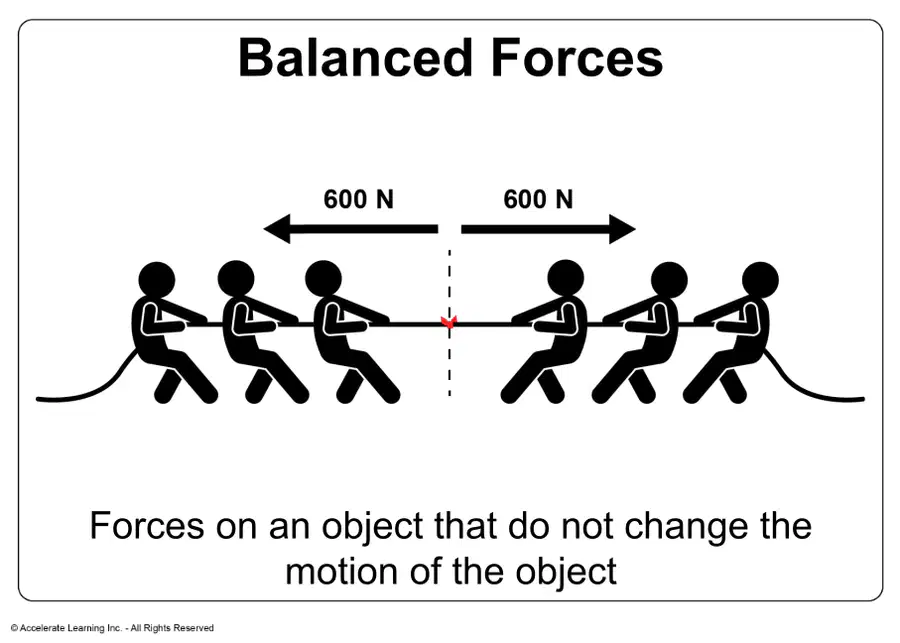
What is the significance of balanced forces in everyday life?
They help objects move faster
They keep objects at rest or moving at constant speed
They always cause objects to change direction
They increase the weight of objects
3
4
Multiple Choice
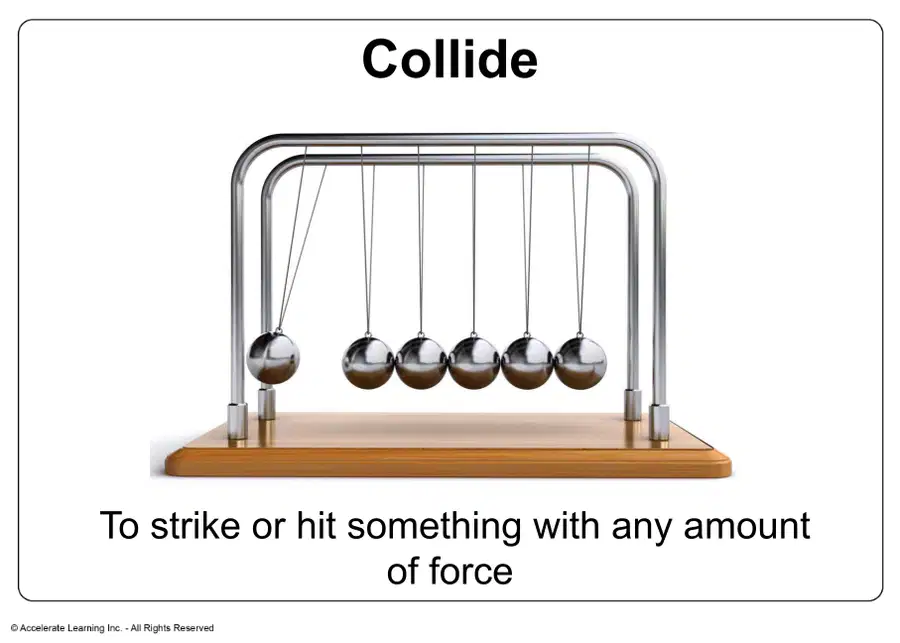
Collision is transfer of energy between objects by striking or hitting with any amount of force.
True
False
5
6
Multiple Choice
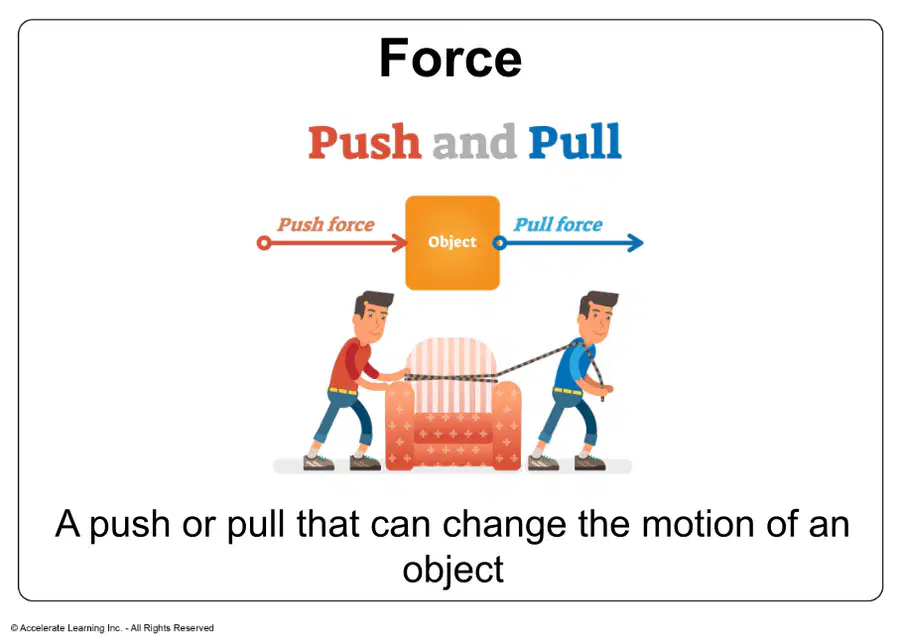
Which of the following BEST describes a force?
A push or pull that can change the motion of an object
A type of energy
A measure of temperature
A form of matter
7
8
Multiple Choice
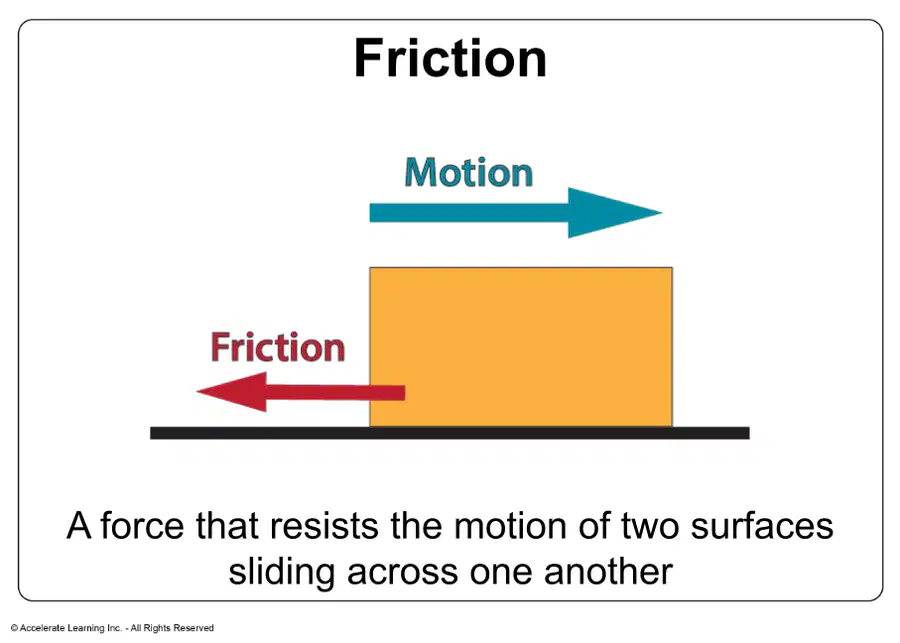
How does friction affect the motion of objects?
It resists the motion of objects sliding across each other
It increases the speed of moving objects
It causes objects to float
It makes objects invisible
9

10
Multiple Choice
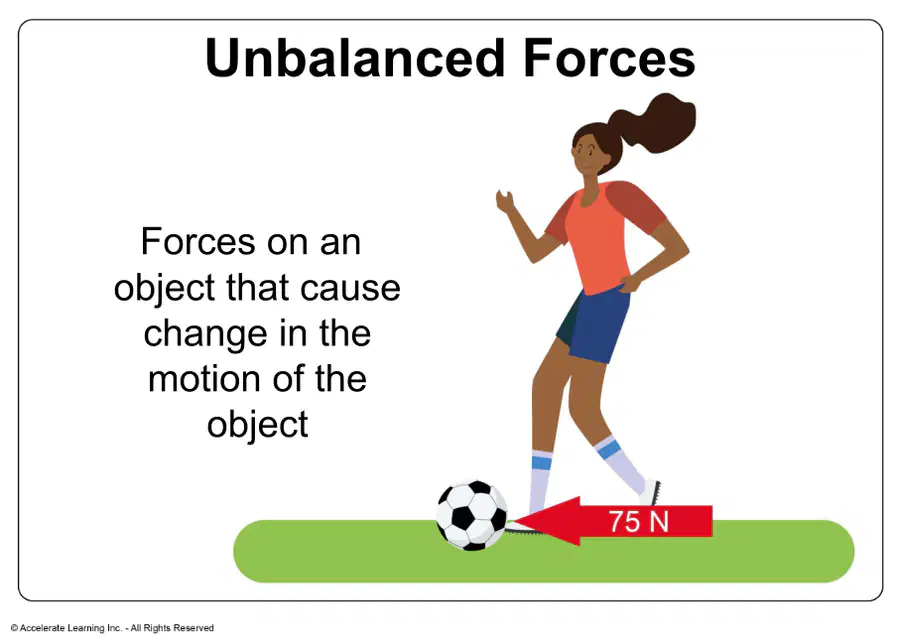
How does inertia affect the motion of a soccer ball when it is kicked?
No force was applied to the ball.
The ball moved because of the unbalanced force of the kick.
The soccer ball will not move.
11

12
Multiple Choice
Fill in the blank: The change in an object's position with respect to time is called ___.
force
inertia
None of these
13

14
Multiple Choice
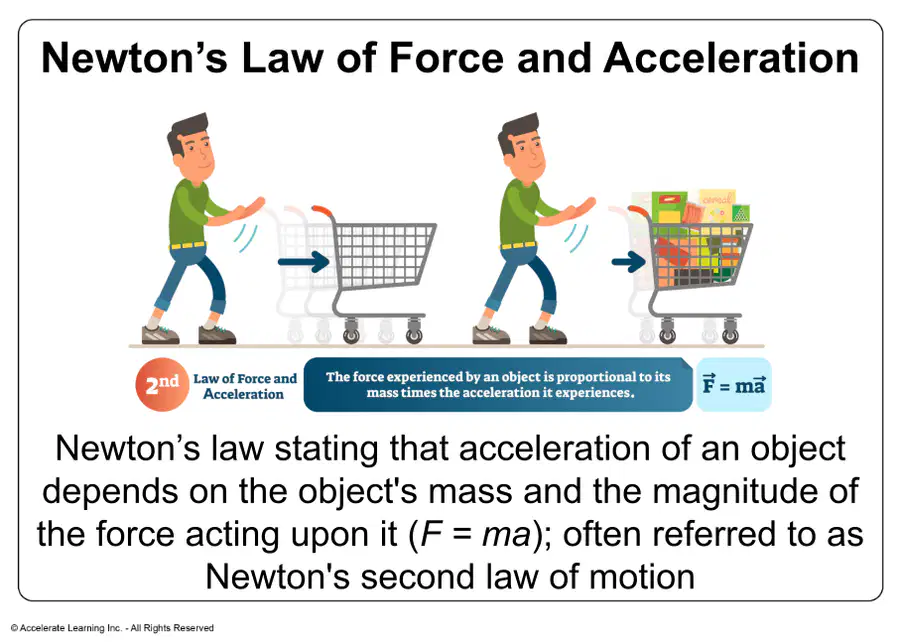
Which of Newton's laws states that an object at rest stays at rest, or an object in motion stays in motion, unless acted upon by an unbalanced force?
Newton's First Law
Newton's Second Law
Newton's Third Law
Law of Universal Gravitation
15
16
Multiple Select
Select ALL that apply: According to Newton's second law of motion, which factors affect the acceleration of an object?
The object's mass
The force applied to the object
The color of the object
The object's shape
17

18
Multiple Choice
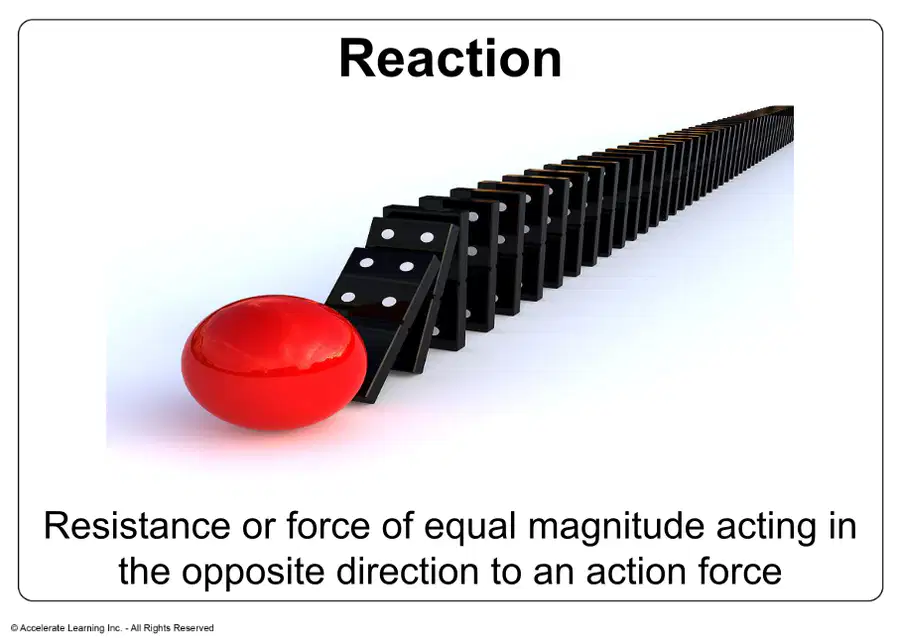
Which of the following statements correctly describes Newton's third law of motion?
For every action force, there is an equal and opposite reaction force
Objects at rest stay at rest unless acted upon by a force
Acceleration depends on mass and force
Friction resists motion between surfaces
19
20
Multiple Choice
Newton's third law states that for every action, there is an equal and opposite ___.
gravity
inertia
reaction
None of these
21
22
Multiple Choice
What affects the motion of an object? Example: kicking a soccer ball.
Balanced Force
Gravity
Unbalanced Force
Friction
23
Multiple Choice
How do balanced forces affect the motion of an object?
They change the direction of the object
They increase the speed of the object
They do not change the motion of the object
They decrease the mass of the object
Show answer
Auto Play
Slide 1 / 23
SLIDE
Similar Resources on Wayground

20 questions
Human Impact on Air
Presentation
•
6th Grade
20 questions
Convection Currents and Winds
Presentation
•
6th Grade
17 questions
Water Quality
Presentation
•
6th Grade
17 questions
Weather vs climate
Presentation
•
6th Grade
19 questions
Lesson 9 Volcanic Eruptions
Presentation
•
6th Grade
16 questions
Types of Maps
Presentation
•
6th Grade
20 questions
solar system
Presentation
•
6th Grade
20 questions
Heat Transfer
Presentation
•
6th Grade
Popular Resources on Wayground
10 questions
How much do you know about our Portrait of an Eagle?

Quiz
•
10th Grade
10 questions
Fast Food Slogans
Quiz
•
6th - 8th Grade
21 questions
Continents and Oceans
Quiz
•
6th Grade
20 questions
Parts of Speech
Quiz
•
5th Grade
16 questions
Subject & Predicate
Quiz
•
5th Grade
25 questions
Multiplication Facts
Quiz
•
5th Grade
12 questions
Map Skills
Quiz
•
3rd Grade
22 questions
Continents and Oceans
Quiz
•
5th Grade
Discover more resources for Science
10 questions
6.6D - Relative Density Review
Quiz
•
6th Grade
20 questions
Claim, Evidence and Reasoning (CER)
Quiz
•
6th - 8th Grade
20 questions
Density
Quiz
•
6th Grade
10 questions
Exploring Chemical and Physical Changes

Interactive video
•
6th - 10th Grade
20 questions
Food Chains & Food Webs
Quiz
•
5th - 7th Grade
18 questions
Interpreting Distance/Time Graphs
Quiz
•
6th Grade
10 questions
Decoding the Periodic Table of Elements
Interactive video
•
6th - 10th Grade
15 questions
Potential and Kinetic Energy
Quiz
•
6th Grade