

Media and Pop Culture Week 1 Class 2

Presentation
•
Other
•
University
•
Easy

Ashley Smalls
Used 1+ times
FREE Resource
31 Slides • 46 Questions
1
2
3
4
Multiple Choice
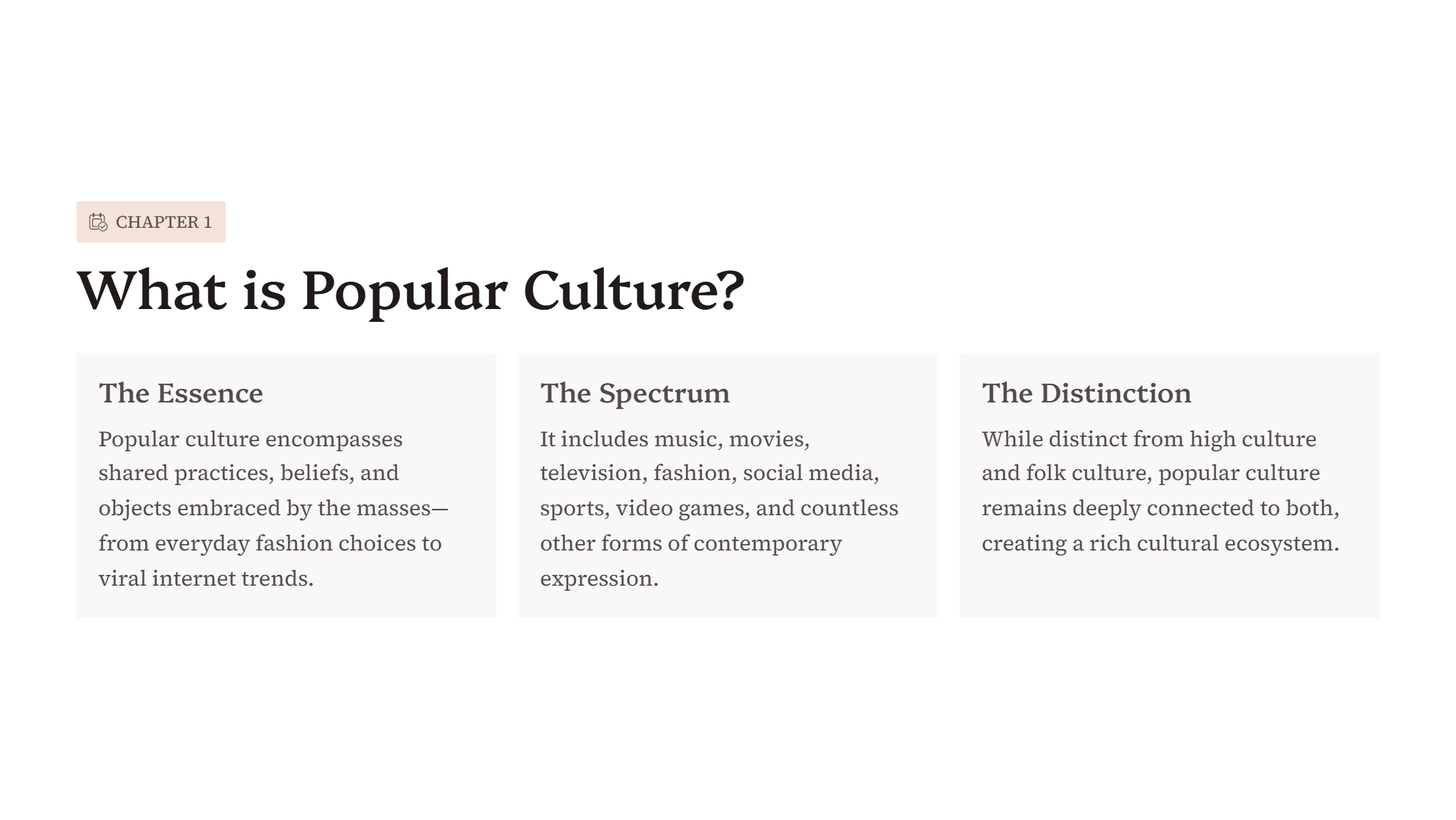
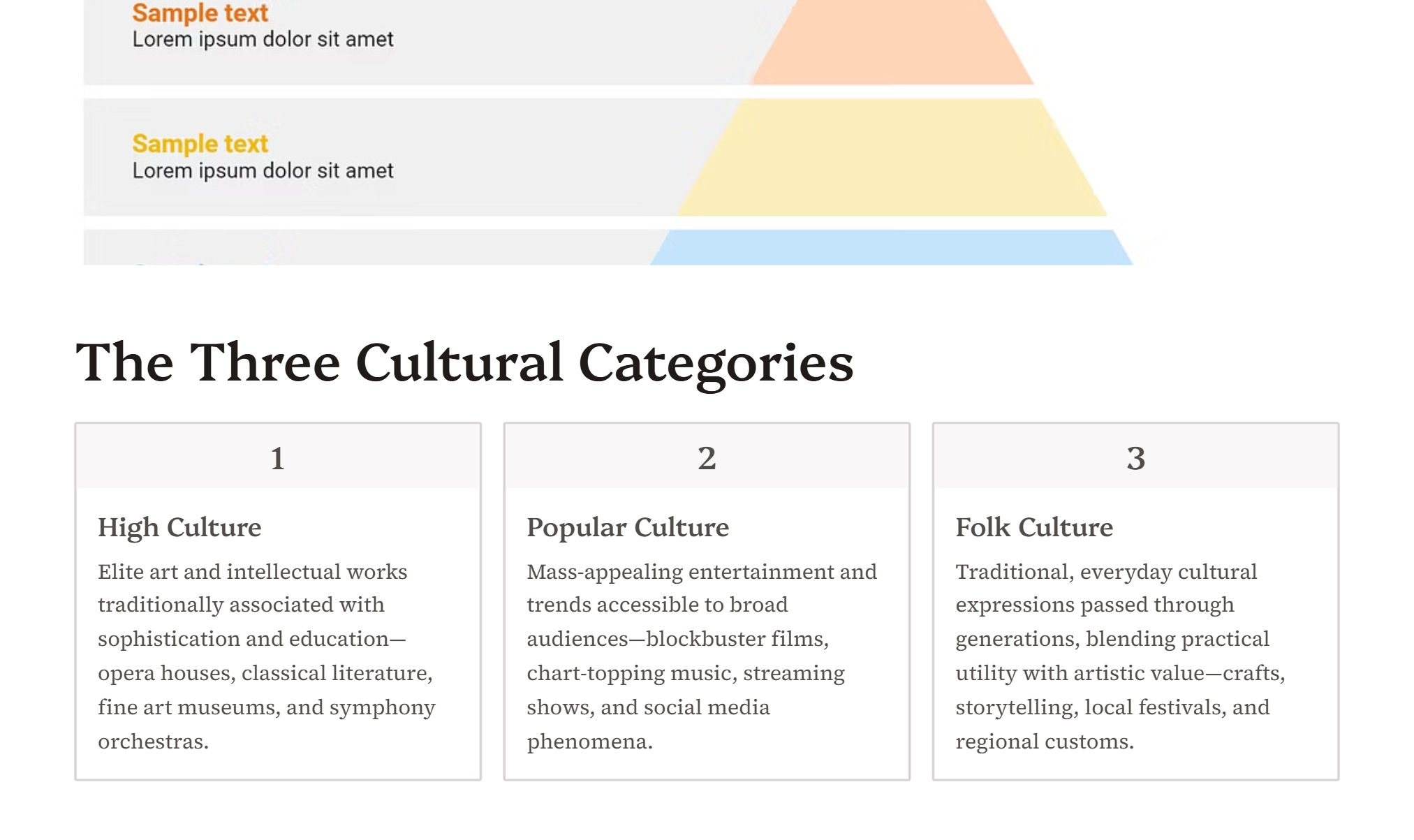
What are the three cultural categories mentioned in the lesson?
High Culture
Popular Culture
Folk Culture
All of the above
5
Multiple Choice
Which type of culture best describes TikTok dance trends that spread widely through social media?
High culture
Folk culture
Popular culture
6
Multiple Choice
Which type of culture best describes reality TV shows that are produced for mass audiences and widely consumed?
High culture
Folk culture
Popular culture
7
Multiple Choice
Which type of culture best describes the Met Gala, an elite fashion event associated with art institutions and exclusivity?
High culture
Folk culture
Popular culture
8
Multiple Choice
Which type of culture best describes traditional holiday foods that are passed down through families or communities over time?
High culture
Folk culture
Popular culture
9
Multiple Choice
Which type of culture best describes streetwear brands that become widely popular and influence mainstream fashion?
High culture
Folk culture
Popular culture
10
11
Multiple Choice
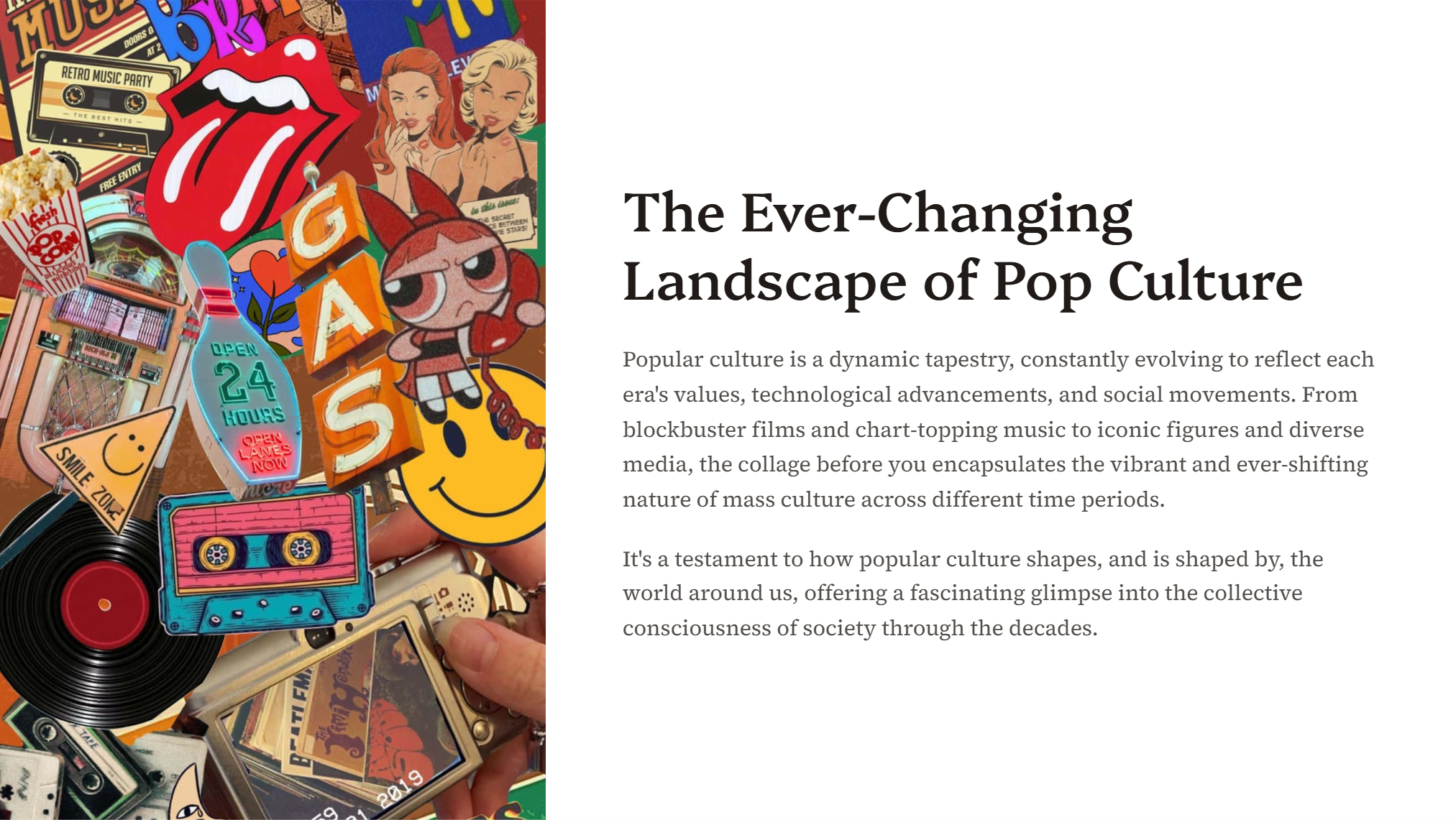
What are some key elements that reflect the evolution of popular culture over time?
Technological advancements
Social movements
Blockbuster films
All of the above
12
Poll
What do you think most strongly drives changes in popular culture over time?
New technology and media platforms
Changes in social values and beliefs
Major historical or political events
Celebrity influence
13
Poll
How would you describe the pace of change in popular culture today?
Much faster
Somewhat faster
About the same
Slower
14
Poll
Who do you think has the greatest influence on shaping popular culture today?
Audiences and online communities
Social media platforms and algorithms
Media companies and brands
Celebrities and influencers
15
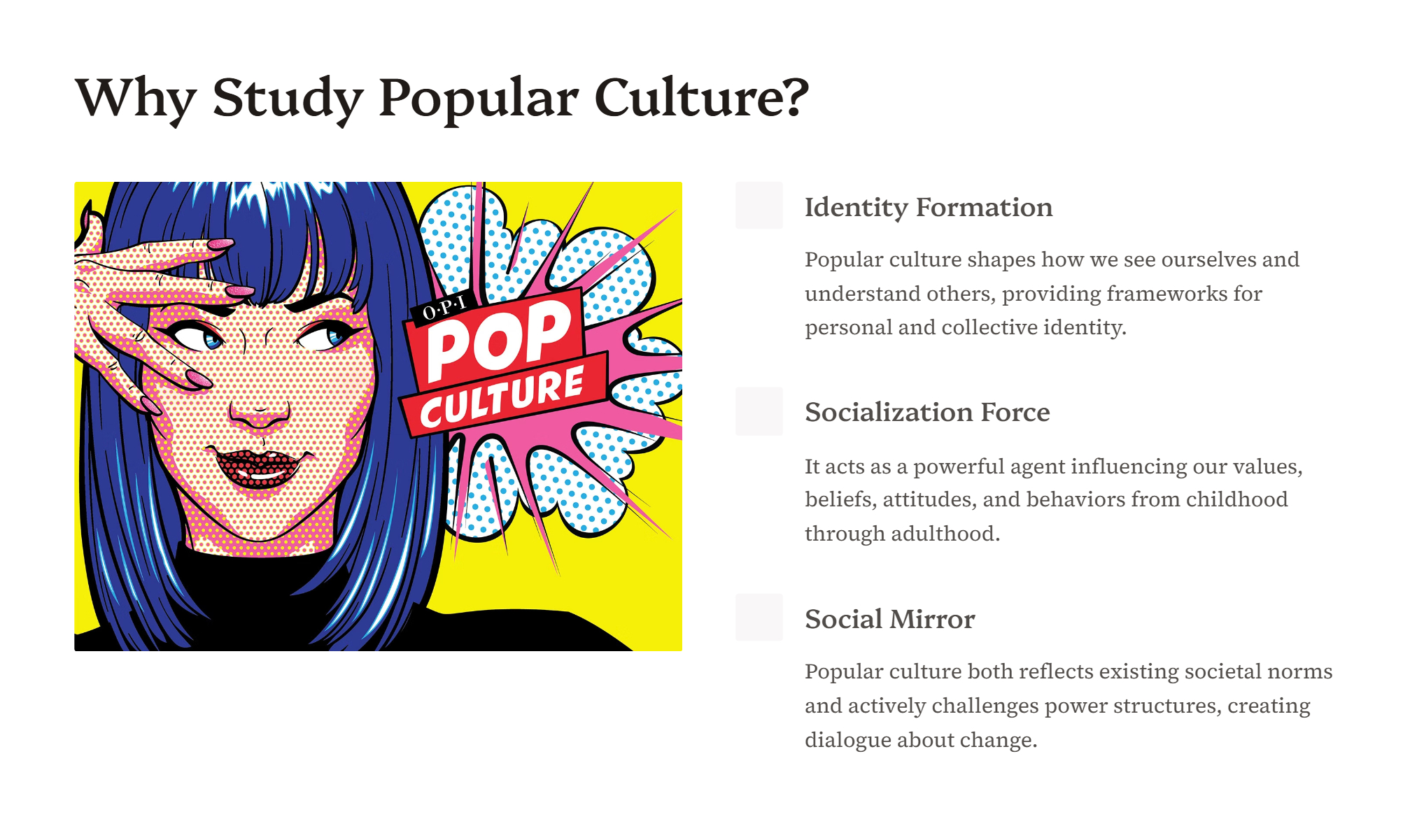
16
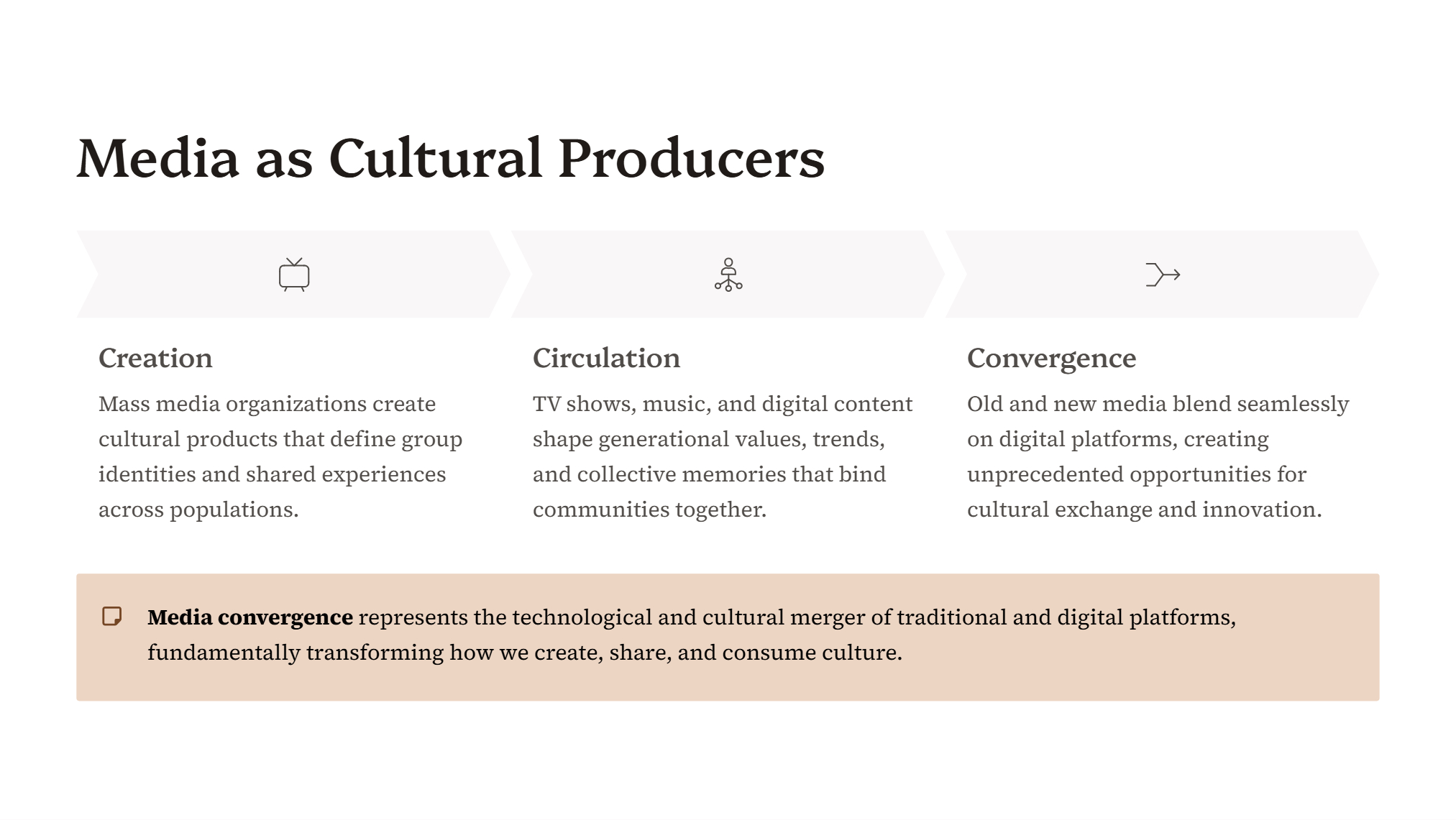
17
Multiple Choice
What does media convergence represent in the context of cultural production?
The separation of traditional and digital media
The technological and cultural merger of traditional and digital platforms
The decline of mass media organizations
The rise of individual content creators
18
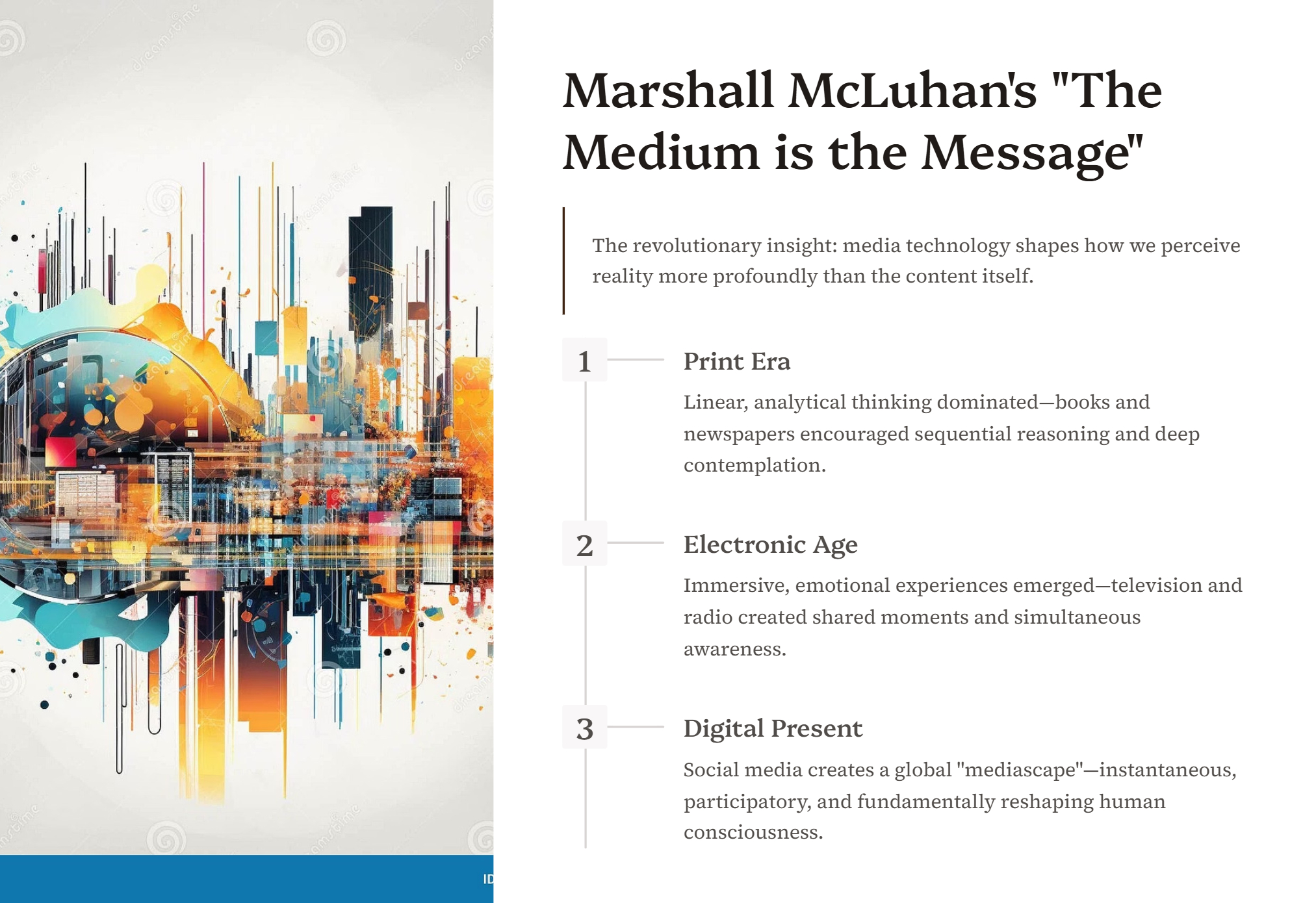
19
Poll
“The Medium Is the Message”
A breakup text vs a breakup phone call
A breakup text
A breakup phone call
20
Poll
“The Medium Is the Message”
An apology sent by email vs said in person
An apology sent by email
An apology said in person
21
Poll
“The Medium Is the Message”
A political message on TikTok vs on a news website
A political message on TikTok
A political message on a news website
22
The Medium is the Message
The medium shapes how a message is understood
The same words can feel different depending on how they are delivered
Platforms influence tone, emotion, credibility, and meaning
In popular culture, how something is shared matters as much as what is shared
23
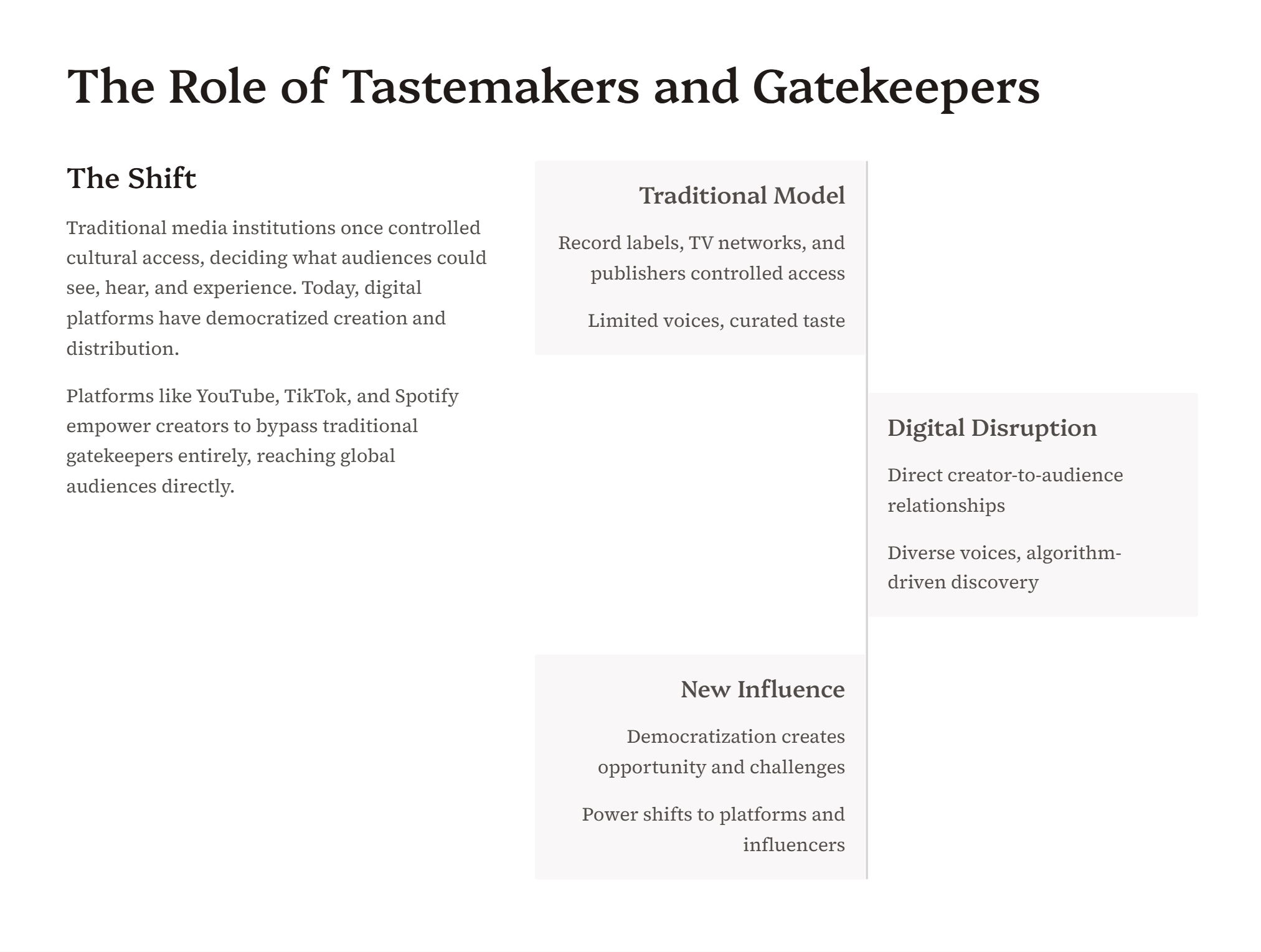
24
Multiple Choice
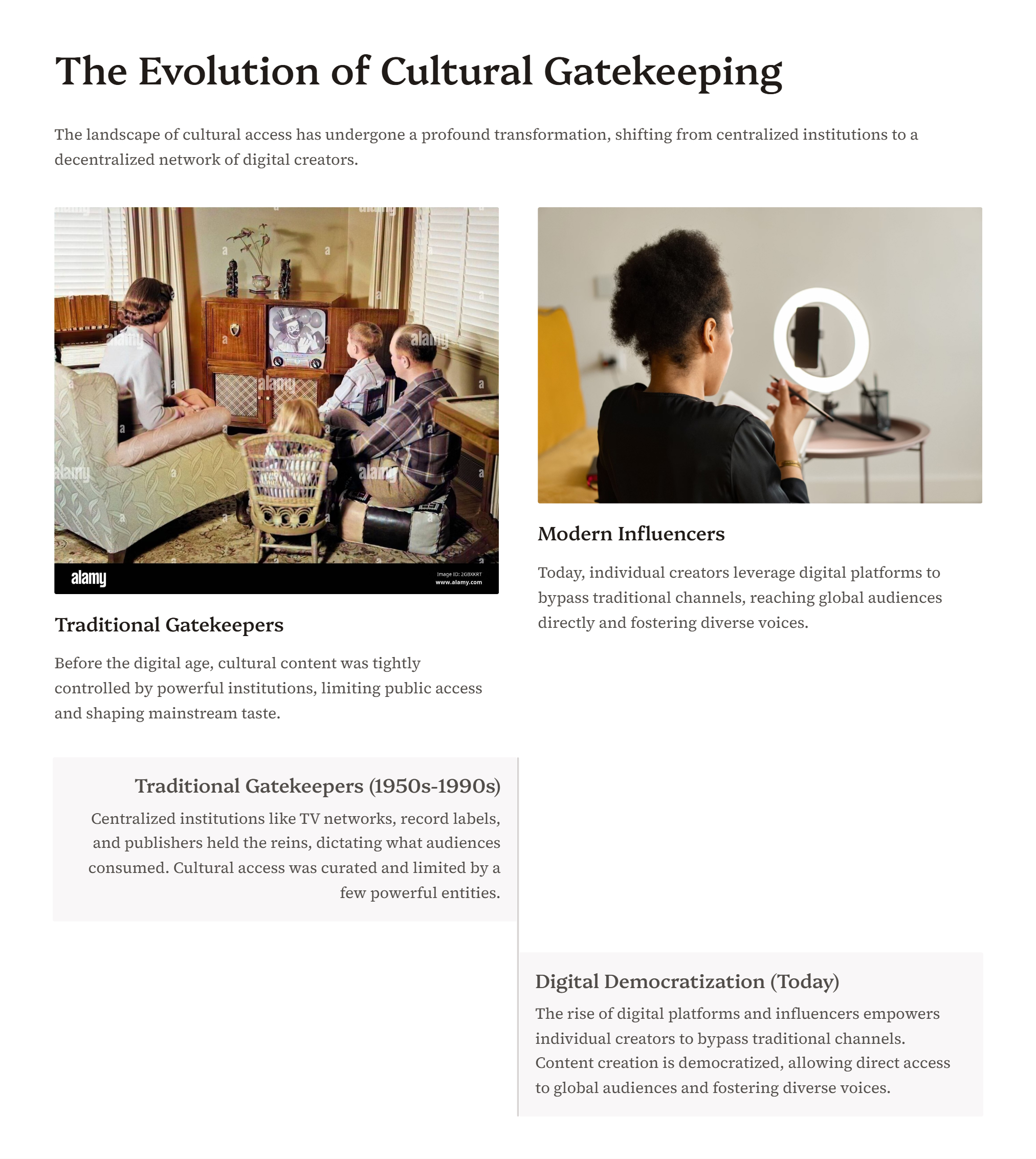
What are the key differences between the traditional model of media access and the new digital platforms?
Traditional media controlled access
Digital platforms empower creators
Limited voices in traditional media
Direct creator-to-audience relationships
25
26
Multiple Choice
What are the key differences between traditional gatekeepers and modern influencers in cultural access?
Traditional gatekeepers control content
Modern influencers use digital platforms
Both limit public access
Cultural access is the same now and then
27

28
29
Multiple Choice
Tastemakers vs. Gatekeepers — KATSEYE × Gap
In the KATSEYE Gap commercial, who acted as the primary gatekeeper?
Fans on social media
KATSEYE
Gap as a brand
Fashion influencers
30
Multiple Choice
Tastemakers vs. Gatekeepers — KATSEYE × Gap
Who functioned as the tastemakers that helped shape how the commercial was received?
Television networks
Gap executives
KATSEYE and their fanbase
Fashion critics
31
Multiple Choice
Tastemakers vs. Gatekeepers — KATSEYE × Gap
Why did the KATSEYE Gap commercial gain positive traction online?
It relied only on celebrity status
It aligned with existing fan culture and aesthetics
It avoided social media entirely
It followed traditional advertising rules
32
Multiple Choice
Tastemakers vs. Gatekeepers — KATSEYE × Gap
This campaign best demonstrates which shift in popular culture?
Gatekeepers completely control meaning
Audiences no longer matter
Tastemakers and audiences help determine cultural impact
Advertising has stopped influencing culture
33
Multiple Choice
Tastemakers vs. Gatekeepers — KATSEYE × Gap
Compared to controversial ads that receive backlash, what does the KATSEYE example show?
All celebrity ads succeed
Brands always predict audience reactions
Cultural meaning is negotiated after release
Gatekeepers prevent criticism
34
35

36
Multiple Choice
Tastemakers vs. Gatekeepers — Sydney Sweeney Jeans Commercial
In the Sydney Sweeney jeans commercial, who acted as the primary gatekeeper?
Social media users
Sydney Sweeney
The brand and its creative team
Fashion influencers
37
Multiple Choice
Tastemakers vs. Gatekeepers — Sydney Sweeney Jeans Commercial
What role did Sydney Sweeney play in the campaign’s strategy?
Audience gatekeeper
Tastemaker chosen to attract attention
Platform algorithm
Cultural critic
38
Multiple Choice
Tastemakers vs. Gatekeepers — Sydney Sweeney Jeans Commercial
Why did this commercial receive backlash from audiences?
It lacked celebrity recognition
It conflicted with audience values and interpretations
It was not widely distributed
It avoided social media
39
Multiple Choice
Tastemakers vs. Gatekeepers — Sydney Sweeney Jeans Commercial
After the commercial was released, who most strongly reshaped its meaning?
The brand’s PR team
Traditional media critics
Online audiences and social media discourse
Fashion magazines
40
Multiple Choice
Tastemakers vs. Gatekeepers — Sydney Sweeney Jeans Commercial
Compared to the KATSEYE × Gap campaign, this example best shows that:
Celebrity ads always fail
Gatekeepers fully control cultural meaning
Audiences can reject messages even when brands use star power
Tastemakers no longer matter
41

42
Poll
You, Pop Culture, and Influence
When you discover a new trend (music, fashion, slang, show), where does it usually come from?
Friends or peers
Social media (TikTok, Instagram, YouTube)
Celebrities or influencers
Brands or ads
43
Poll
How likely are you to engage with a brand after seeing it connected to a pop culture figure you already follow?
Very likely
Somewhat likely
Not very likely
Not likely at all
44
Poll
Have you ever shared, reposted, or talked about a brand or trend in a way that changed how others viewed it?
Yes, often
Yes, once or twice
Not intentionally
No
45
Poll
When a pop culture campaign gets backlash online, what do you think causes it most?
The brand misreads the audience
The celebrity choice doesn’t fit the culture
The message clashes with social values
The message clashes with social values
46
Poll
Which statement best reflects your role in popular culture?
I mostly consume what’s already popular
I help spread trends through sharing and reacting
I influence my friends’ tastes
I actively shape conversations online
47
Popular Culture and Identity
What’s interesting here is that these reactions aren’t just about the ads themselves.
They’re about who people see themselves reflected in, what feels authentic, and what feels off.
Popular culture works when people recognize their values, identities, or experiences in it — and it breaks down when they don’t.
48
49
Multiple Select
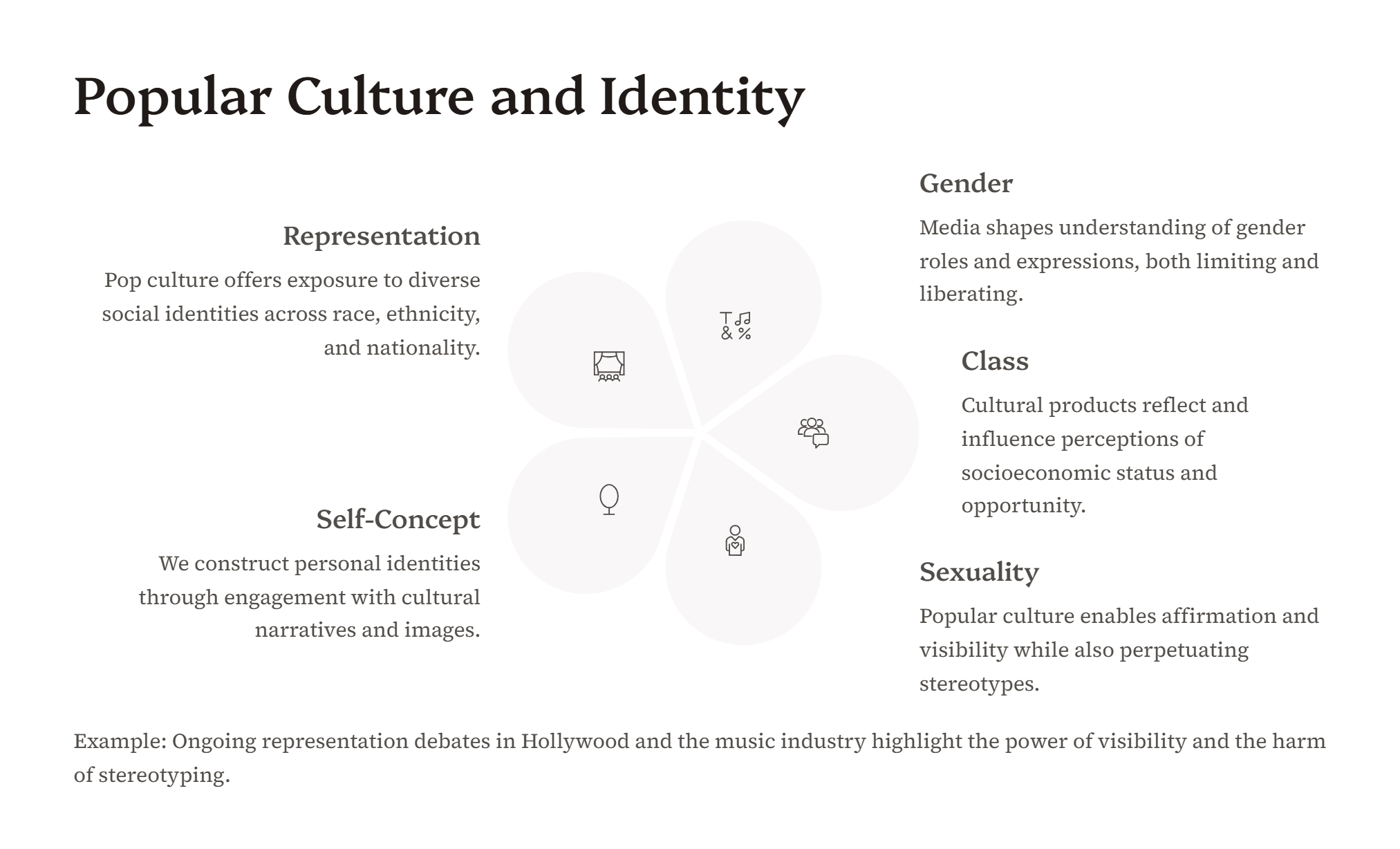
What are the five key aspects of popular culture and identity as represented in the image?
Representation
Self-Concept
Gender
Class
Sexuality
50
51
Multiple Choice

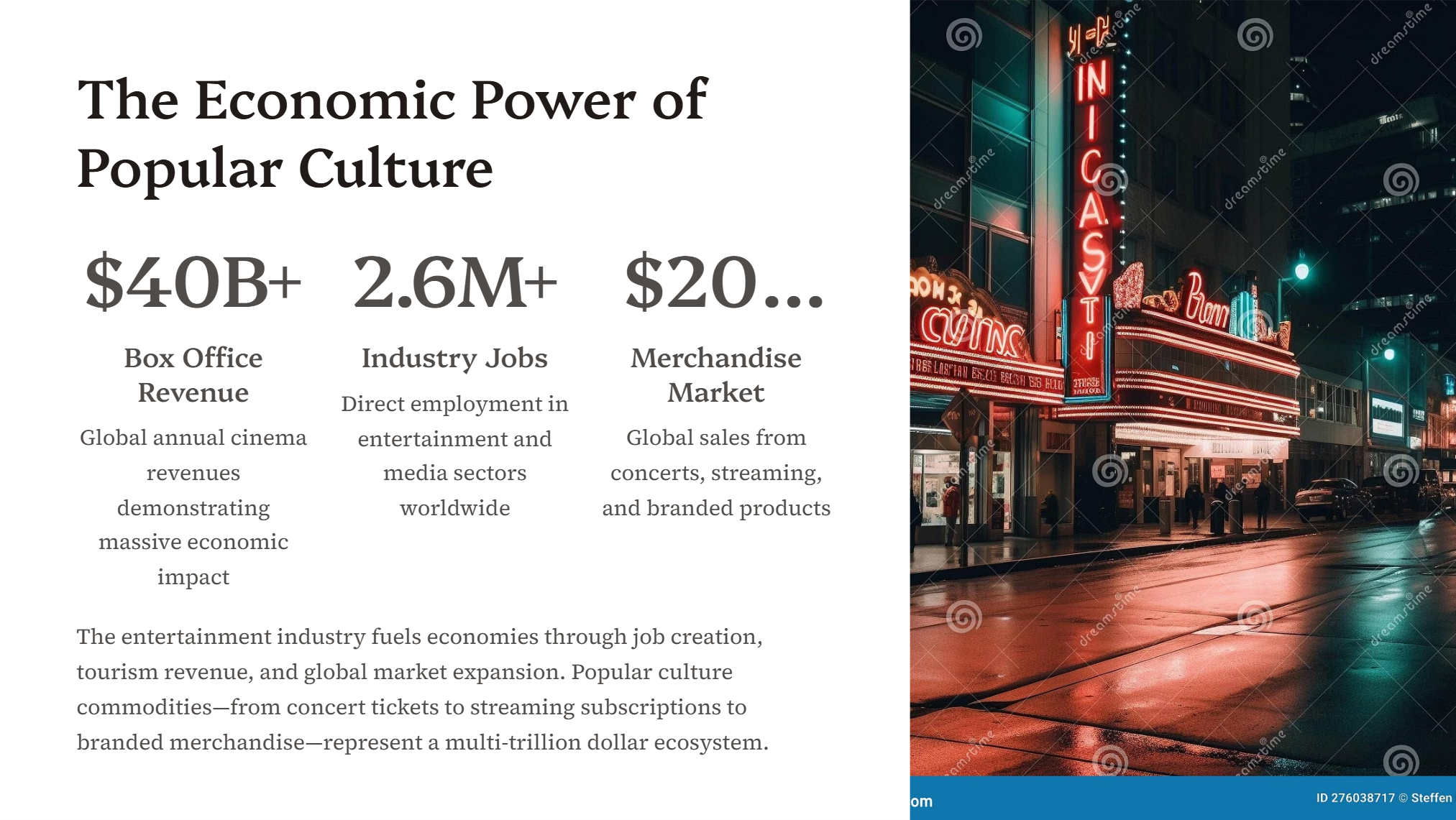
What is the global sales figure for the merchandise market related to popular culture?
$10B
$15B
$20B
$25B
52
Multiple Choice

How many industry jobs are directly related to the entertainment and media sectors worldwide?
1.5M
2.0M
2.6M+
3.0M
53
Multiple Choice

What is the estimated global annual box office revenue of the cinema industry?
$20B
$30B
$40B+
$50B
54
55
Multiple Choice
Which of the following is a true statement about the role of the media in providing citizens with information?
There has been an increase in social media and Internet news consumption by the public, causing the top five media conglomerates to have greater control over public opinion.
Demand for instantaneous news reporting has led to the growth of 24-hour news operations and a shift to online media consumption.
Investigative reporting dominates the news because it is less expensive than political commentary.
The media is increasingly controlled by the major political parties, who determine which stories are covered by the press.
56
57
Multiple Choice
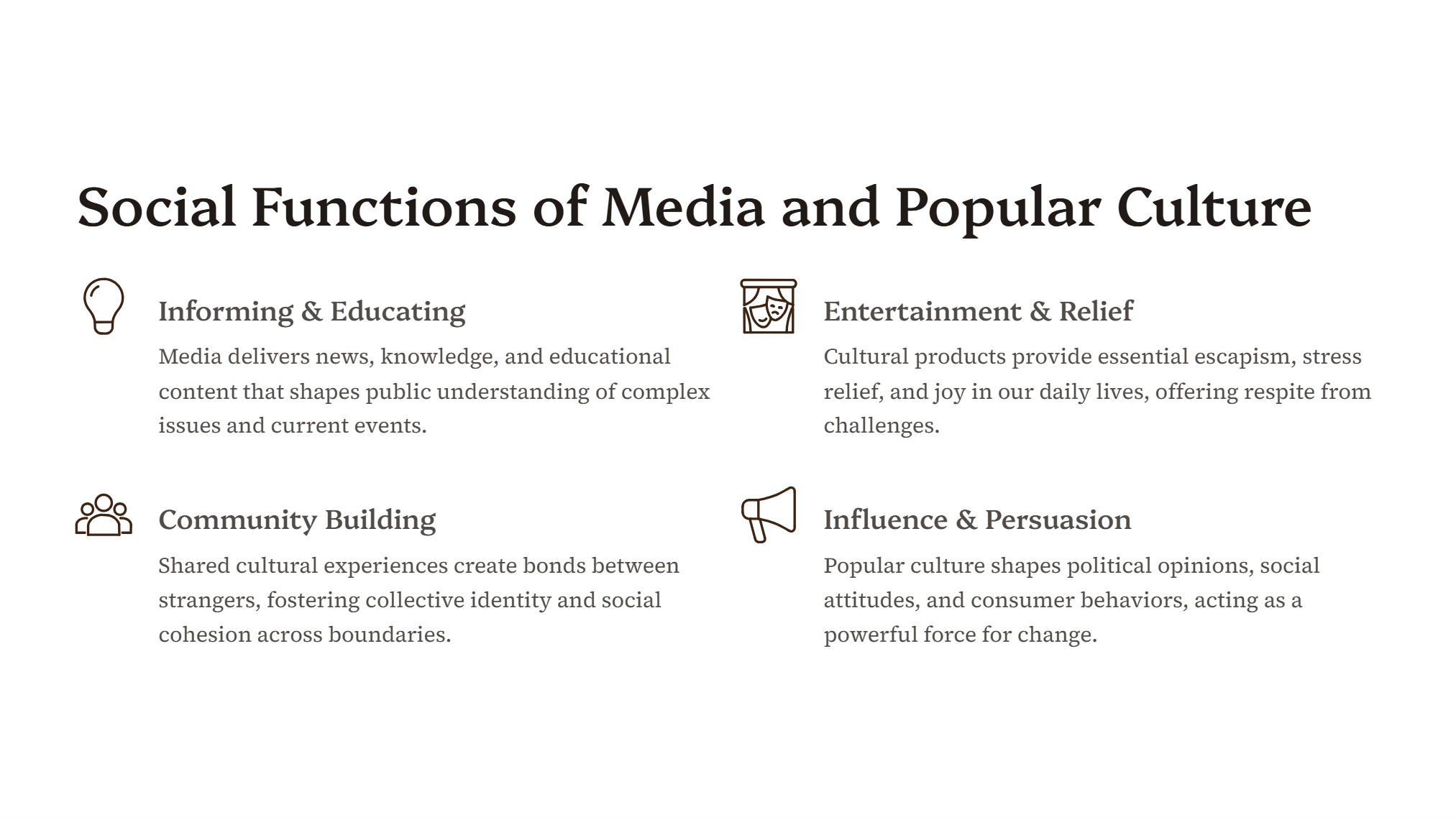
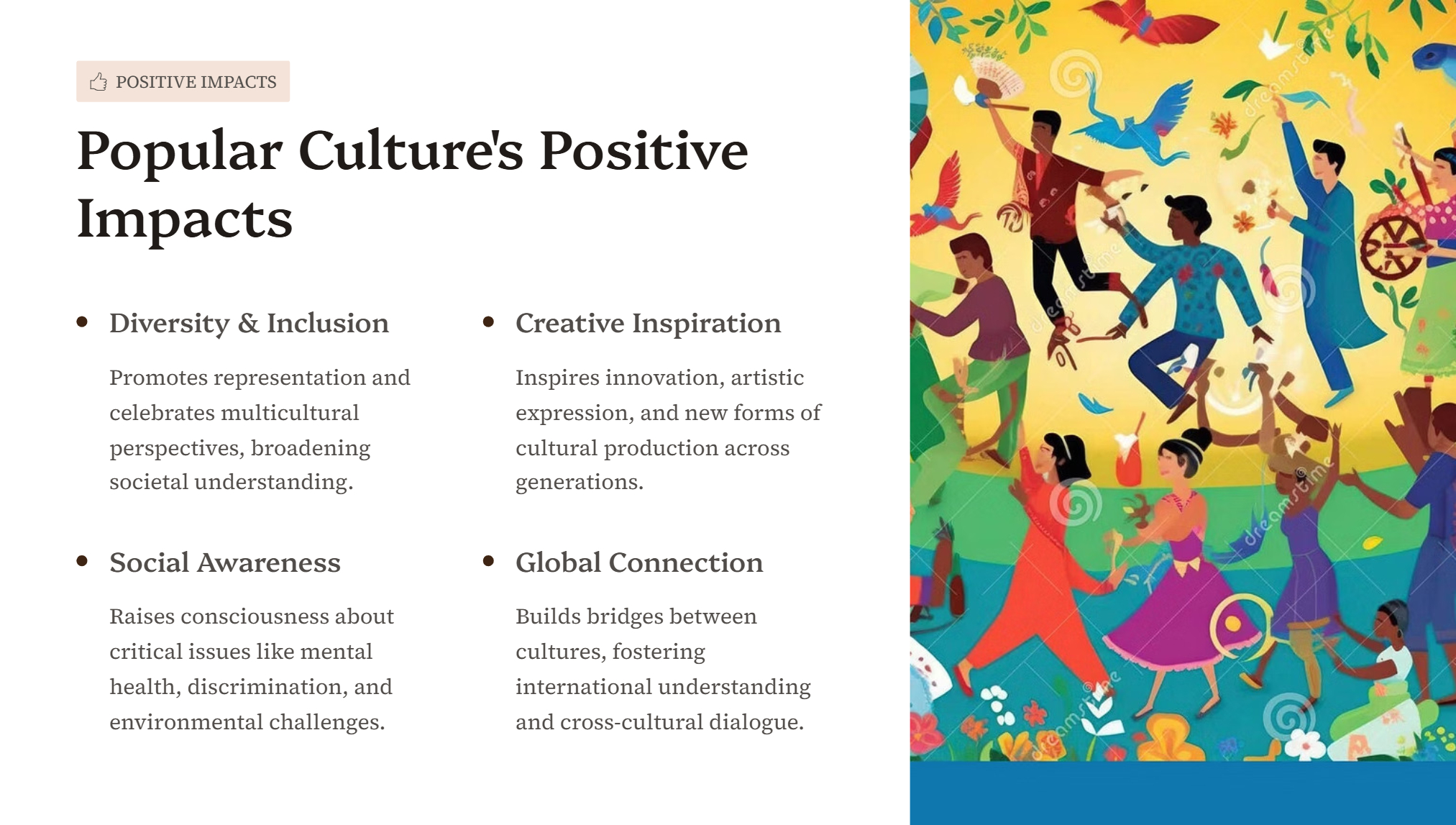
What are the positive impacts of popular culture as mentioned in the image?
Diversity & Inclusion
Creative Inspiration
Social Awareness
Global Connection
All of the above
58
59
Fill in the Blank

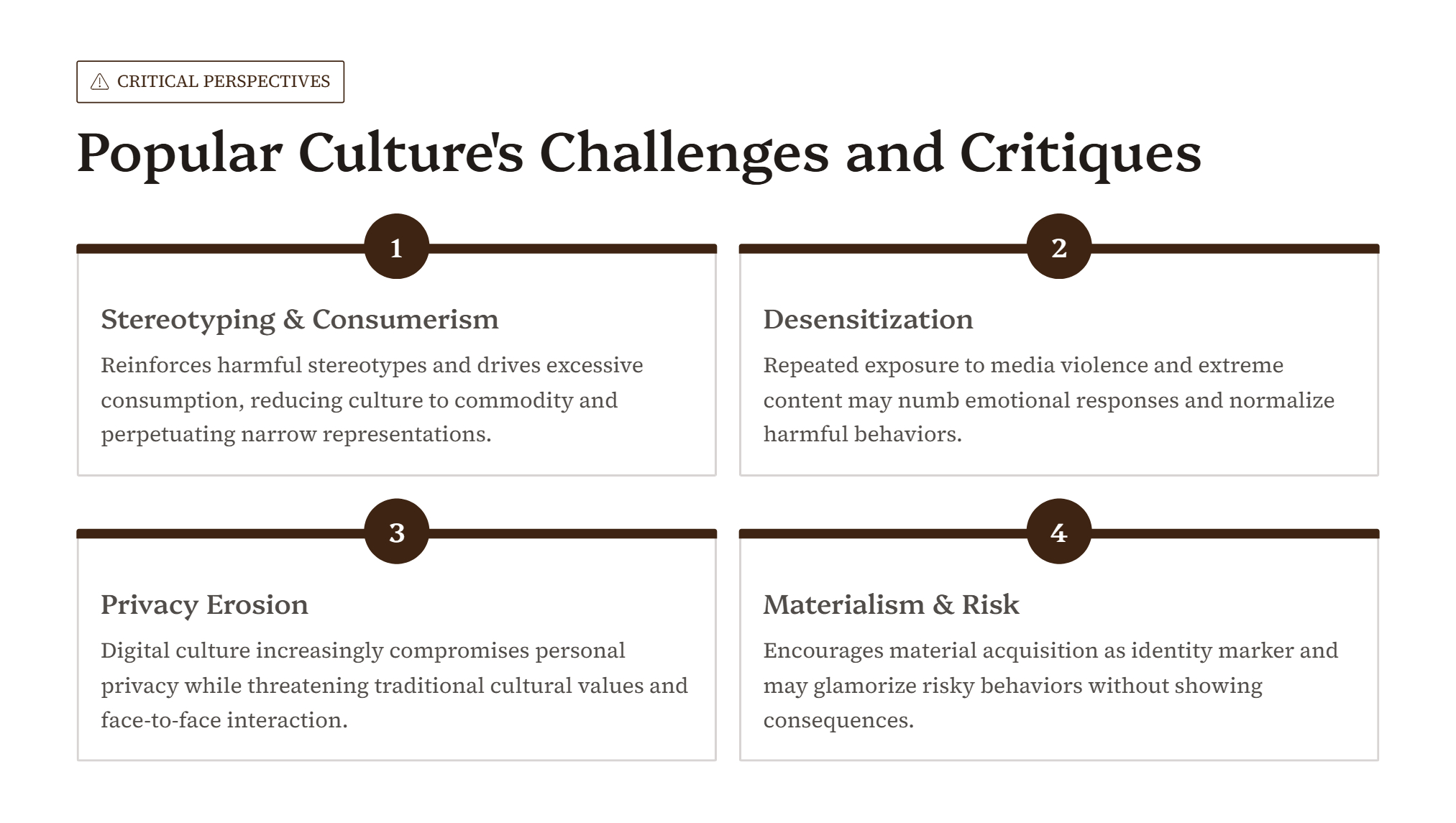
Fill in the blank: Repeated exposure to media violence and extreme content may numb emotional responses and normalize ___ behaviors.
60
Multiple Choice
What are the main challenges and critiques of popular culture as outlined in the image?
Stereotyping & Consumerism
Desensitization
Privacy Erosion
Materialism & Risk
All of the above
61
62
63
Multiple Choice
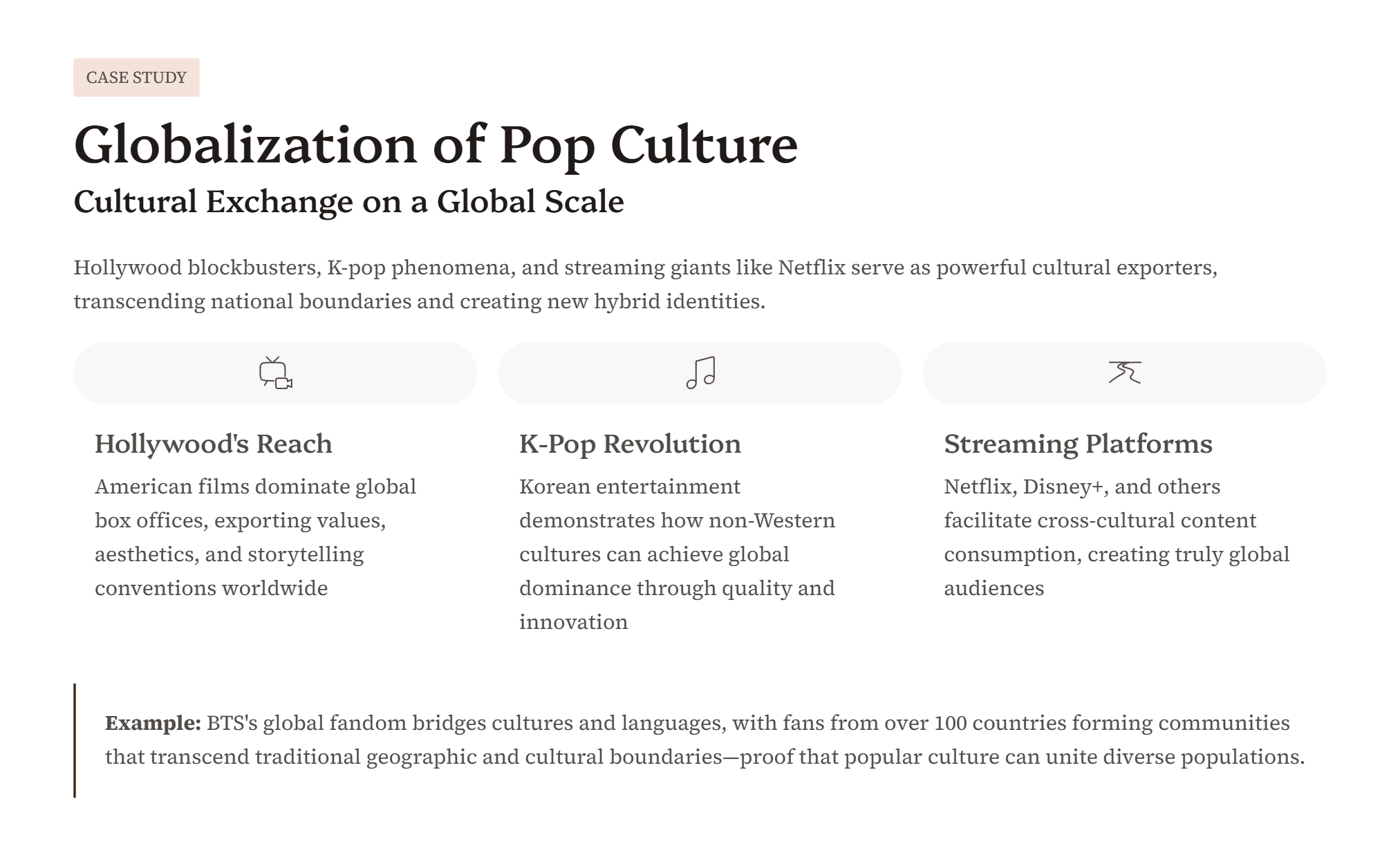
What role do streaming platforms like Netflix play in the globalization of pop culture?
They limit cultural exchange
They facilitate cross-cultural content consumption
They promote only local content
They have no impact on global culture
64
65
Poll
What makes K-Popped feel global rather than local?
Artists from different countries
Mixing musical styles and languages
Streaming platform distribution
All of the above
66
Poll
Without streaming platforms, how likely is it that a show like this would reach a global audience?
Very likely
Somewhat likely
Not very likely
Not at all
67
Poll
Who benefits most from globalization through streaming in this example?
Artists
Platforms
Audiences
All of the above
68
Global Pop Culture & Screaming
Streaming platforms make pop culture global by default, allowing different cultures to circulate, mix, and gain visibility at the same time.
Do you currently follow any pop culture that comes from outside the United States? If yes, can you remember where you first encountered it?
69
Global Pop Culture
What’s important here is that none of this culture reaches you on its own.
It travels because audiences choose it, share it, talk about it, and build communities around it.
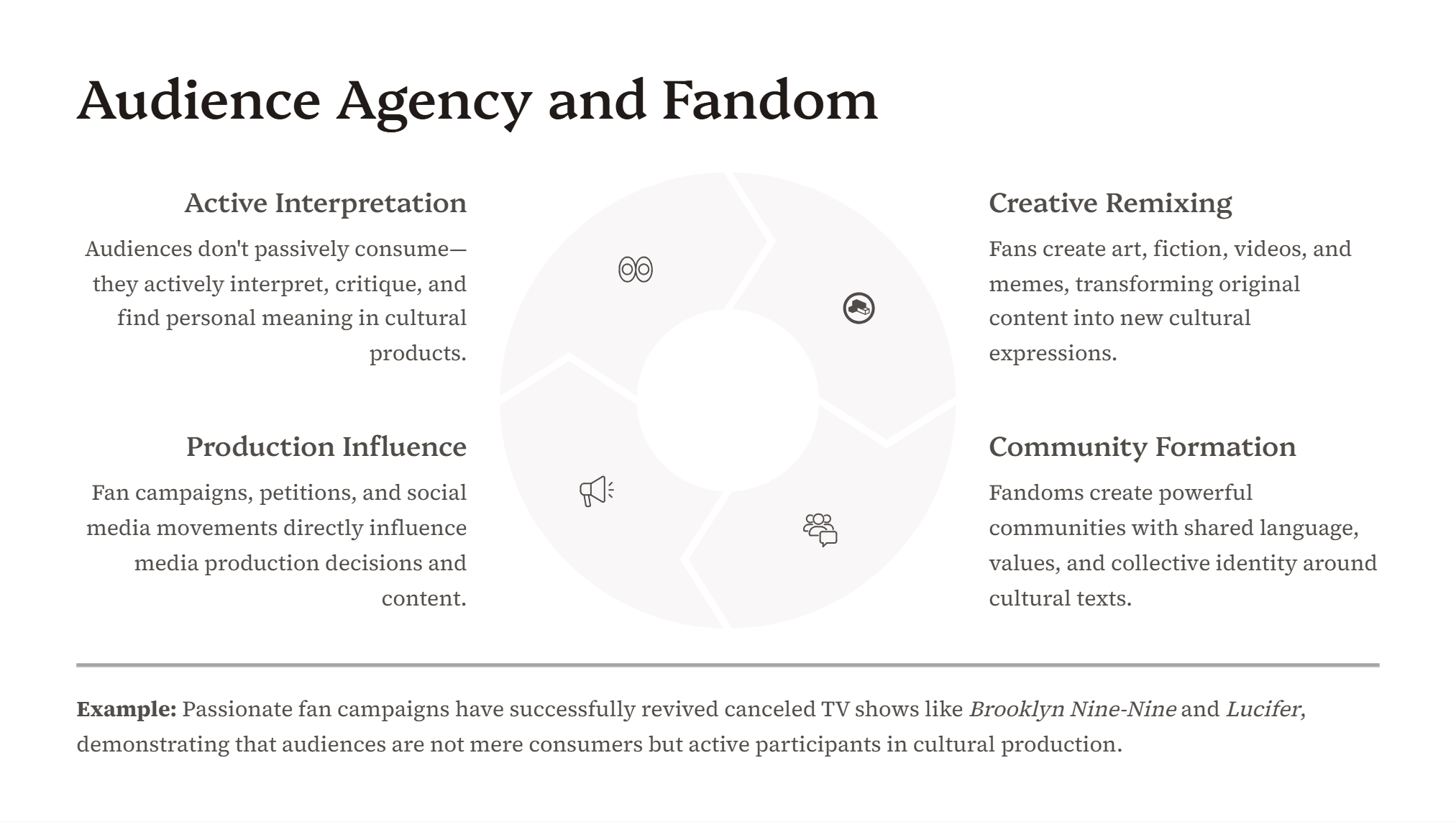
That’s where audience agency and fandom come in.
70
71
Multiple Select
What are the four aspects of audience agency and fandom as illustrated in the image?
Active Interpretation
Production Influence
Creative Remixing
Community Formation
72
73
Multiple Choice
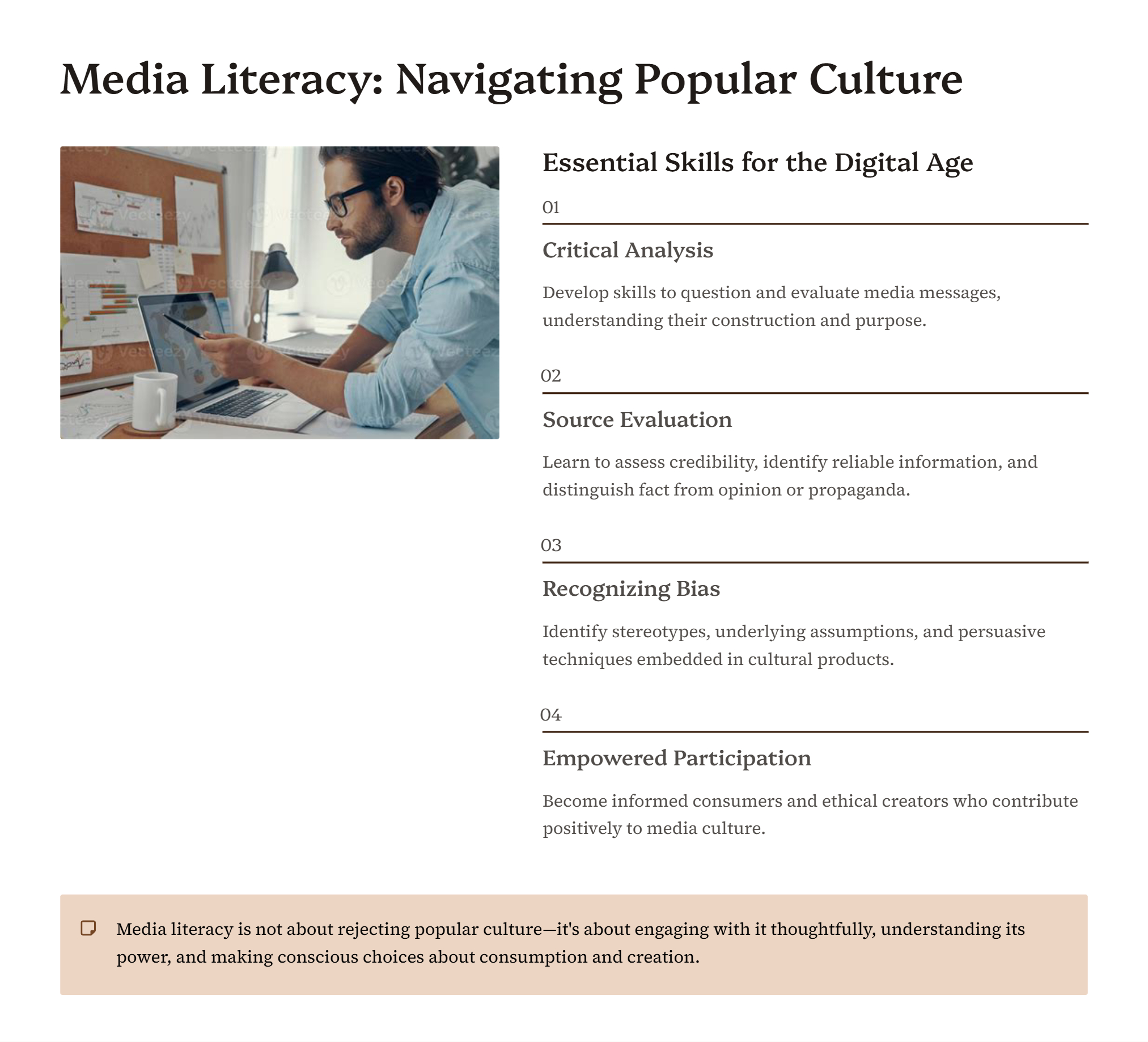
What are the essential skills for navigating popular culture in the digital age?
Critical Analysis
Source Evaluation
Recognizing Bias
Empowered Participation
All of the above
74
75
76
Multiple Select
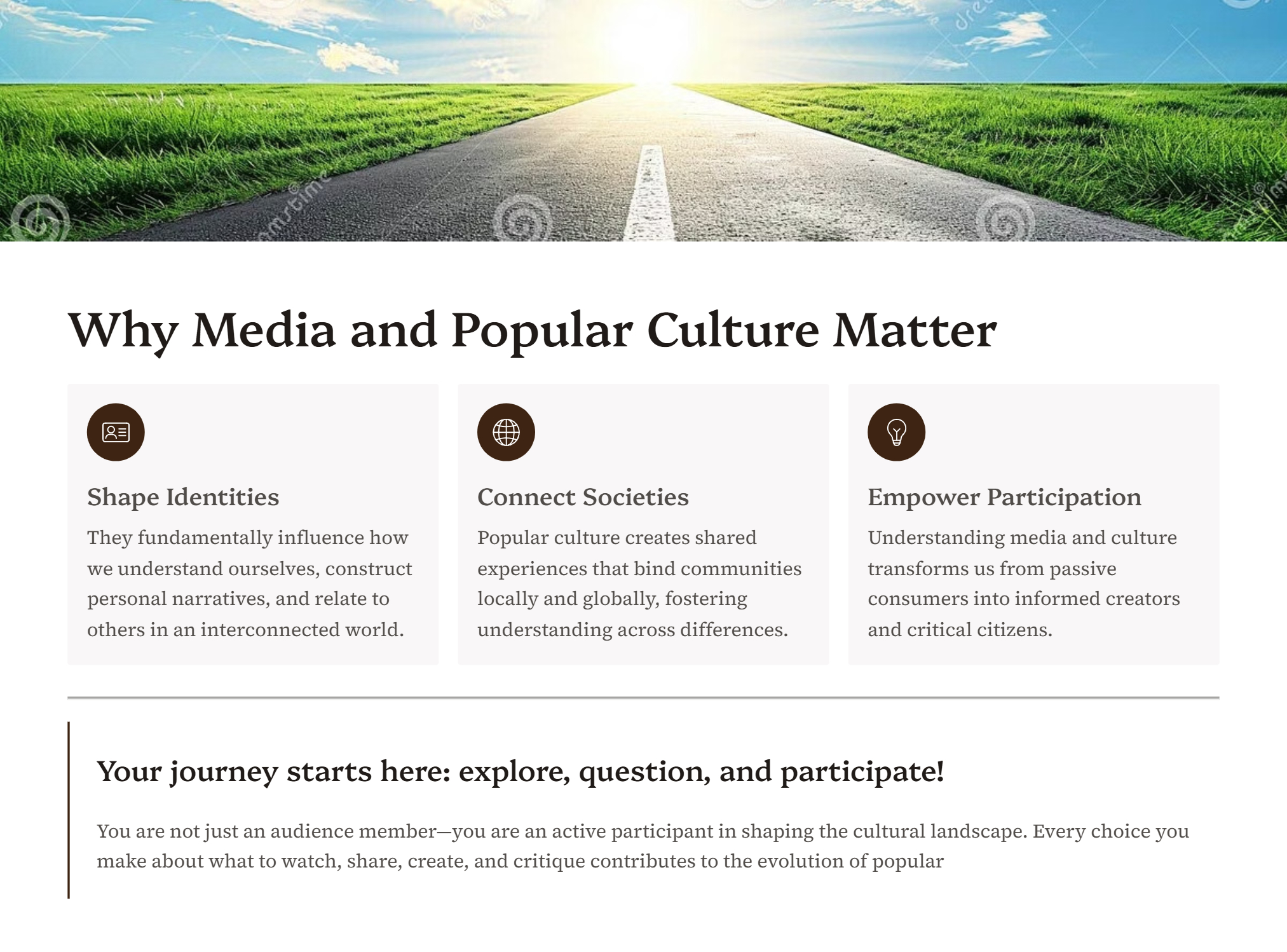
What are the three main reasons why media and popular culture matter?
Shape Identities
Connect Societies
Empower Participation
None of the above
77

Show answer
Auto Play
Slide 1 / 77
SLIDE
Similar Resources on Wayground

73 questions
Accounting 101 Terminologies
Lesson
•
University
72 questions
Geometry Angle Review Evening
Lesson
•
KG - University
72 questions
Subject and Verb
Lesson
•
University
71 questions
securitty chapter 1
Lesson
•
University
73 questions
Lesson 6- Business sustainability
Lesson
•
University
76 questions
AP Macroeconomics Review
Lesson
•
12th Grade
72 questions
MS WORD
Lesson
•
University
67 questions
MT Lesson 2
Lesson
•
University
Popular Resources on Wayground
10 questions
5.P.1.3 Distance/Time Graphs

Quiz
•
5th Grade
10 questions
Fire Drill
Quiz
•
2nd - 5th Grade
20 questions
Equivalent Fractions
Quiz
•
3rd Grade
15 questions
Hargrett House Quiz: Community & Service
Quiz
•
5th Grade
20 questions
Main Idea and Details
Quiz
•
5th Grade
20 questions
Context Clues
Quiz
•
6th Grade
20 questions
Inferences
Quiz
•
4th Grade
15 questions
Equivalent Fractions
Quiz
•
4th Grade
Discover more resources for Other
18 questions
Informative or Argumentative essay
Quiz
•
5th Grade - University
20 questions
Disney Trivia
Quiz
•
University
20 questions
8.II_Review_TEACHER
Quiz
•
University
39 questions
Unit 7 Key Terms
Quiz
•
11th Grade - University
20 questions
Subject verb agreement practice
Quiz
•
University
20 questions
Quadrilaterals
Quiz
•
KG - University
5 questions
Examining Theme

Interactive video
•
4th Grade - University
25 questions
WWI, Great Depression, WWII
Quiz
•
KG - University