SP - Session 7
Presentation
•
English
•
KG
•
Medium
Grace Bui
Used 1+ times
FREE Resource
53 Slides • 45 Questions
1
2
Multiple Choice
what is the hyponymy of utensil?
book
knife
fan
chair
3
Multiple Choice
"Tubers" is a hyponym of:
Potatoes
Carrots
Roots
Vegetables
4
Multiple Choice
Which of the following is an example of hyponymy?
furniture- sofa
school-patients
5
Multiple Choice
What is the definition of HYPHONYMY?
A word or phrase that means exactly or nearly the same as another word.
A word of more specific meaning than a general or superordinate term applicable to it.
A word opposite in meaning to another.
Each of two or more words having the same pronunciation but different meanings, origins, or spelling.
6
Multiple Choice
a set of words that denotes a subcategory of a more general class
hyponymy
meronymy
polysemy
clines
7
Open Ended
In the picture above, which one is a hyponym?
8
Multiple Choice
Give the Hypernym of the following
SHIRT
DRESS
JACKET
FRUITS
CLOTHES
FURNITURE
9
Multiple Select
What are the co-hyponyms of superordinate of insects?
Butterfly
Bug
Flowers
Trees
10
Multiple Choice
Add one more hyponym of the following list:
coffee, milk, tea, ______.
Apple Juice
Banana
Cake
Rice
11
Multiple Choice
'Silver, Iron, Copper, Gold and Nickel' are hyponymns of which word?
Steel
Metal
Mineral
Chemistry
12
13
14
Multiple Choice
What is Pragmatics?
It is the study of the use of natural language in communication.
It refers to word order and depends on lexical categories (parts of speech).
It is the study of the use of natural language in communication.
All of the above
15
Multiple Choice
What is the difference between Semantics and Pragmatics?
Semantics determine the literal meaning of the text while Pragmatics looks the context of the language.
Semantics looks the context of the language while Pragmatics determine the literal meaning of the text .
Semantics analyzes words according to their affixes and the words that follow or precede them Pragmatics determine the literal meaning of the text .
Semantics and Pragmatics have no difference at all.
16
Multiple Choice
What is focused on what happens beyond saying?
Conversational implicatures
Conventional implicatures
Near-side Pragmatics
Far-side Pragmatics
17
Multiple Choice
Which of the following is NOT considered as Pragmatics according to Jenny Thomas?
It is the negotiation of meaning between speaker and listener.
It is the context of the utterance.
It is the meaning potential of an utterance.
None of the above
18
Multiple Choice
What will happen if there will be no Pragmatics?
There would be very little understanding of intention and meaning.
A language always need to have a Pragmatics, otherwise, it will be meaningless.
It will not explain why the sentence may have this meaning and not that one.
Pragmatics acquire a direct mapping between printed words and their meanings which is vital in Language.
19
20
21
22
23
24
25
26
27
28
29
30
31
32
33
34
35
36
37
38
39
40
41
42
43
44
45
46
47
48
49
50
Multiple Choice
The science of language use, the study of context-dependent meaning, and the study of speaker intended meaning.
Semantics
Linguistics
Pragmatics
Discourse Analysis
51
Multiple Choice
"I am here, you are there; no wonder we can't see eye to eye".
The underlined words are an instance of...
Deixis
Anaphora
Pronouns
Ellipsis
52
Multiple Choice
News reporter from Ha Tinh, Viet Nam reports of the following:
Ha Tinh has witnessed a flood as a result of the heavy rain.
Ha Tinh refers to?
Person Deixis
Temporal Deixis
Spatial Deixis
None of them
53
Multiple Choice
"Whenever I see Kristen, she wears that same coat."
She and that refers to?
Temporal and Person Deixis
Person and Spatial Deixis
Temporal and Spatial Deixis
Person Deixis
54
Multiple Choice
I’ll put it here later, ok?”
I, here and later refer to?
Temporal Deixis
Person Deixis
Spatial Deixis
All of them
55
Multiple Choice
“here”, “there”, “now”, and “then” are Spacial Deixis.
true
false
56
Multiple Choice
“Come home!” is used to mark movement towards the speaker.
true
false
57
Multiple Choice
Which is temporal
deictic expressions?
today
there
you, I
58
Multiple Choice
What is the potential ambiguity concerning the pronoun 'we'?
There is an exclusive 'we' => speaker plus others, excluding the
addressee
An inclusive 'we' => speaker and addressee involved.
Both
59
Multiple Choice
...... is a linguistic part of the environment in which a referring expression is used.
Physical context
Co-text
Referent
60
Multiple Choice
According to Yule, reference is an act in which a speaker, or writer, uses linguistic forms to enable a listener, or reader, to identify something.
true
false
61
Multiple Choice
Attributive use is regarding to a specific person who is referred to, although his/her name or some other description is not used.
true
false
62
Multiple Choice
The reference appears to work between all members of a community who share an unfamiliar language and culture.
true
false
63
Multiple Choice
In terms of anaphoric reference, the second or subsequent expression is the anaphor. What is the anaphor in the example below?
In conclusion, we have no right to decide whether or not wild animals should exist, and I believe that we should do everything we can to protect them.
wild animals
them
we
everything
64
Multiple Choice
Learning anaphoric reference can avoid ambiguity. Which word(s) should we use to replace the word "them" in the example below?
Some famous people usually write about life lessons on Facebook, so people who follow them can learn from them.
those lessons
famous people
life lessons
65
Multiple Choice
What are the correct subcategories of social deixis?
Relational and Actual deixis
Relational and Absolute deixis
Formal and Casual dexis
66
Multiple Choice
How many types of deixis were presented in the findings of the study "The functions of deixis used by EFL teacher in classroom interaction"
4 ( social deixis, temporal deixis, spatial deixis, and person deixis)
3 (temporal deixis, spatial deixis, and person deixis)
5 (social deixis, temporal deixis, spatial deixis, discourse, and person deixis)
67
68
69
70
71
72
73
74
75
76
77
78
79
80
81
82
83
84
85
Multiple Choice
Identify the deixis in the following sentence: 'I will meet you here tomorrow.'
yesterday
I, you, here, tomorrow
there
us
86
Multiple Choice
Analyze the context of deixis in this sentence: 'That was the best day of my life.' What does 'that' refer to?
A day that was particularly bad for the speaker.
A random day in the past without significance.
A specific day that the speaker considers the best in their life.
The speaker's birthday.
87
Multiple Choice
Differentiate between person deixis and time deixis with examples.
Person deixis is about actions (e.g., 'run', 'jump')
Person deixis involves participants in discourse (e.g., 'I', 'you'), while time deixis involves temporal references (e.g., 'now', 'later').
Time deixis includes participants in discourse (e.g., 'we', 'they')
Person deixis refers to locations in discourse (e.g., 'here', 'there')
88
Multiple Choice
Create a sentence using spatial deixis and explain its context.
The cat is under the bed in the corner.
She walked to the store down the street.
The painting is hanging on the wall behind the couch.
The book is on the table next to the window.
89
Multiple Choice
In the sentence 'She is going to the store,' identify the deixis and discuss its implications.
The deixis in the sentence is 'she' and 'going to'
The deixis in the sentence is 'going' and 'to'.
The deixis in the sentence is 'store' and 'is'.
The deixis in the sentence is 'she' and 'the store.'
90
Fill in the Blanks
91
Multiple Choice
It is likely that:
92
Multiple Choice
93
Multiple Choice
We can infer that…
94
Multiple Choice
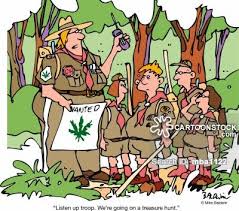
The scout leader looked at the sky and muttered something under his breath. Then he looked at the map. "Let's get moving." He called to the group of tired boys. "The faster the better." Why do you think the scout leader started rushing the boys?
They were going to be late for dinner
They were going to miss their ride that was waiting for them
It was about to rain
The sun was about to cause it to be too hot for them to stay out much longer
95
Multiple Choice
It was 8:30 on Thursday night. Emily stared at the large, empty poster board on her bed. Then she looked at the stack of books about Abraham Lincoln on her desk. Emily began to cry. Why do you think Emily was crying?
She wanted a different color poster
It was late and she had a lot of schoolwork to complete before she could end her night
She did not want to go to sleep
She wanted a book about George Washington instead
96
Multiple Choice
Ana and Sophie sat in their chairs staring straight ahead for nearly two hours. They did not talk or hardly even move, but they were not bored at all. Where were Ana and Sophie?
At the movies
In class
At church
At a football game
97
Multiple Choice
98
Show answer
Auto Play
Slide 1 / 98
SLIDE

Similar Resources on Wayground
95 questions
Edward Tulane Chapters 21-27 & Vocab
Presentation
•
3rd - 5th Grade
95 questions
Everyday Use Full Lesson Cycle
Presentation
•
9th - 12th Grade
96 questions
Properties of Operations on the set of Integers
Presentation
•
7th Grade
93 questions
Weather Review
Presentation
•
5th Grade
90 questions
S3U1 Indirect & Double Object Pronouns
Presentation
•
9th - 12th Grade
93 questions
Grade 9 Module 11 Lesson 1 Gases
Presentation
•
9th Grade
89 questions
Verbals Review Activity
Presentation
•
9th Grade
89 questions
F5 Shopping Therapy L23
Presentation
•
9th - 10th Grade
Popular Resources on Wayground
20 questions
STAAR Review Quiz #3
Quiz
•
8th Grade
20 questions
Equivalent Fractions
Quiz
•
3rd Grade
6 questions
Marshmallow Farm Quiz
Quiz
•
2nd - 5th Grade
20 questions
Main Idea and Details
Quiz
•
5th Grade
20 questions
Context Clues
Quiz
•
6th Grade
20 questions
Inferences
Quiz
•
4th Grade
19 questions
Classifying Quadrilaterals
Quiz
•
3rd Grade
12 questions
What makes Nebraska's government unique?
Quiz
•
4th - 5th Grade
Discover more resources for English
20 questions
Capitalization in sentences
Quiz
•
KG - 4th Grade
10 questions
GMAS ELA Review
Quiz
•
KG - University
10 questions
How to Catch a Dinosaur
Quiz
•
KG - 5th Grade
12 questions
Alliteration Practice
Quiz
•
KG - 5th Grade
63 questions
Sight Words
Quiz
•
KG
20 questions
Rhyming Words
Quiz
•
KG - 3rd Grade
20 questions
High Frequency Words
Quiz
•
KG