
- Resource Library
- Social Studies
- Civics & Government
- The Constitution
- Understanding The Constitution:foundations Of A New Nation Teach

Understanding the Constitution:Foundations of a New Nation Teach

Presentation
•
Social Studies
•
10th Grade
•
Easy

Rhonda Willey
Used 1+ times
FREE Resource
30 Slides • 29 Questions
1
2
Match

Match the goal of the Preamble with the best description.
“form a more perfect union”
“establish justice”
“insure domestic tranquility”
The states will work together as a team.
Citizens are treated fair under the law.
To keep peace among the American people.
The states will work together as a team.
Citizens are treated fair under the law.
To keep peace among the American people.
3
Match
Preamble
establish justice
provide common defence
ensure domestic tranquilty
secure liberty
Introduction to the Constitution
equality by law
protect citizens
promise peace
hold onto freedoms
Introduction to the Constitution
equality by law
protect citizens
promise peace
hold onto freedoms
4
Open Ended
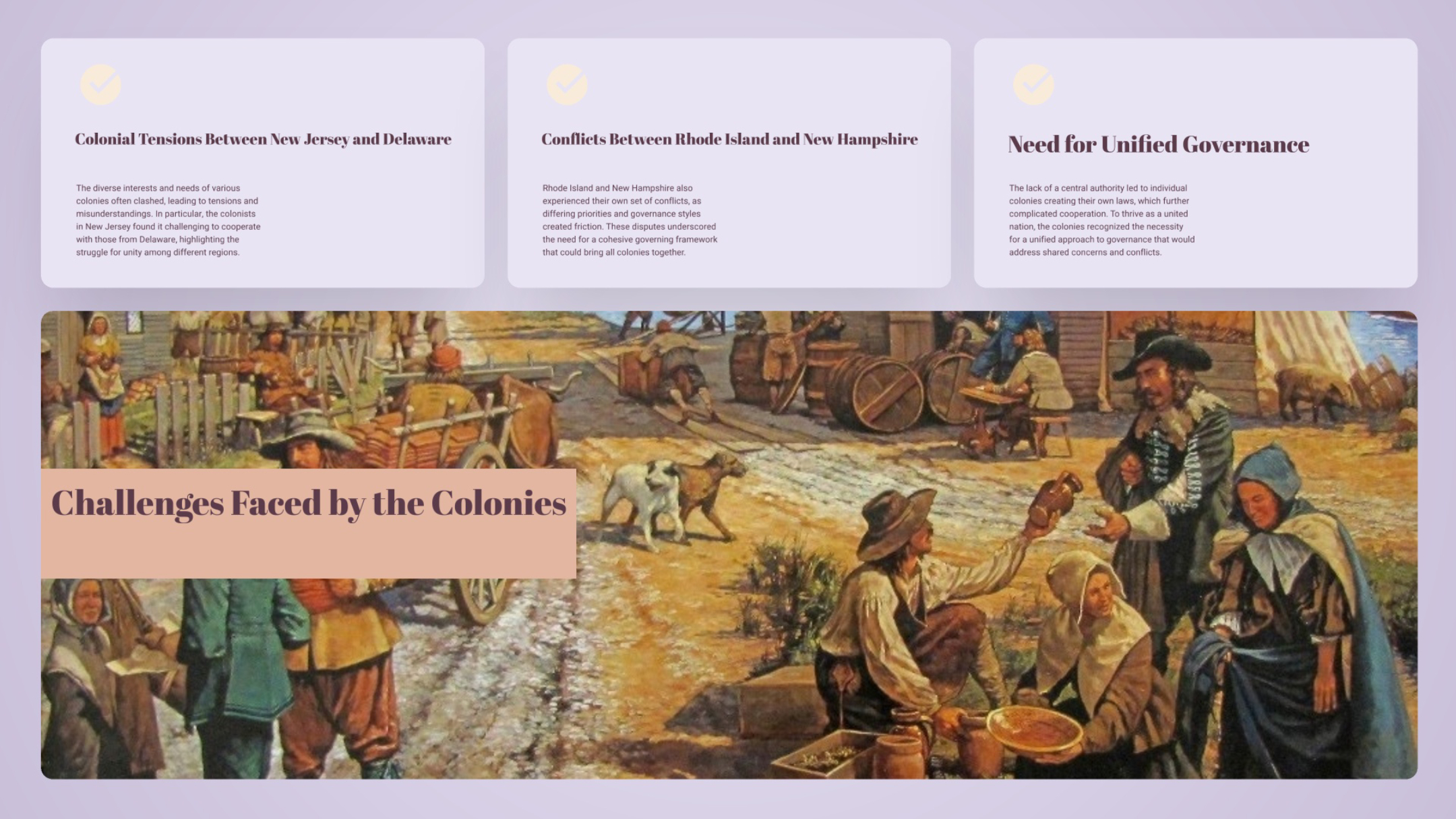
Describe the impact of colonial tensions between New Jersey and Delaware on unity among the colonies.
5
6
Open Ended
How do you think the creation of the Constitution helped shape the identity of the new nation?
7
Multiple Choice
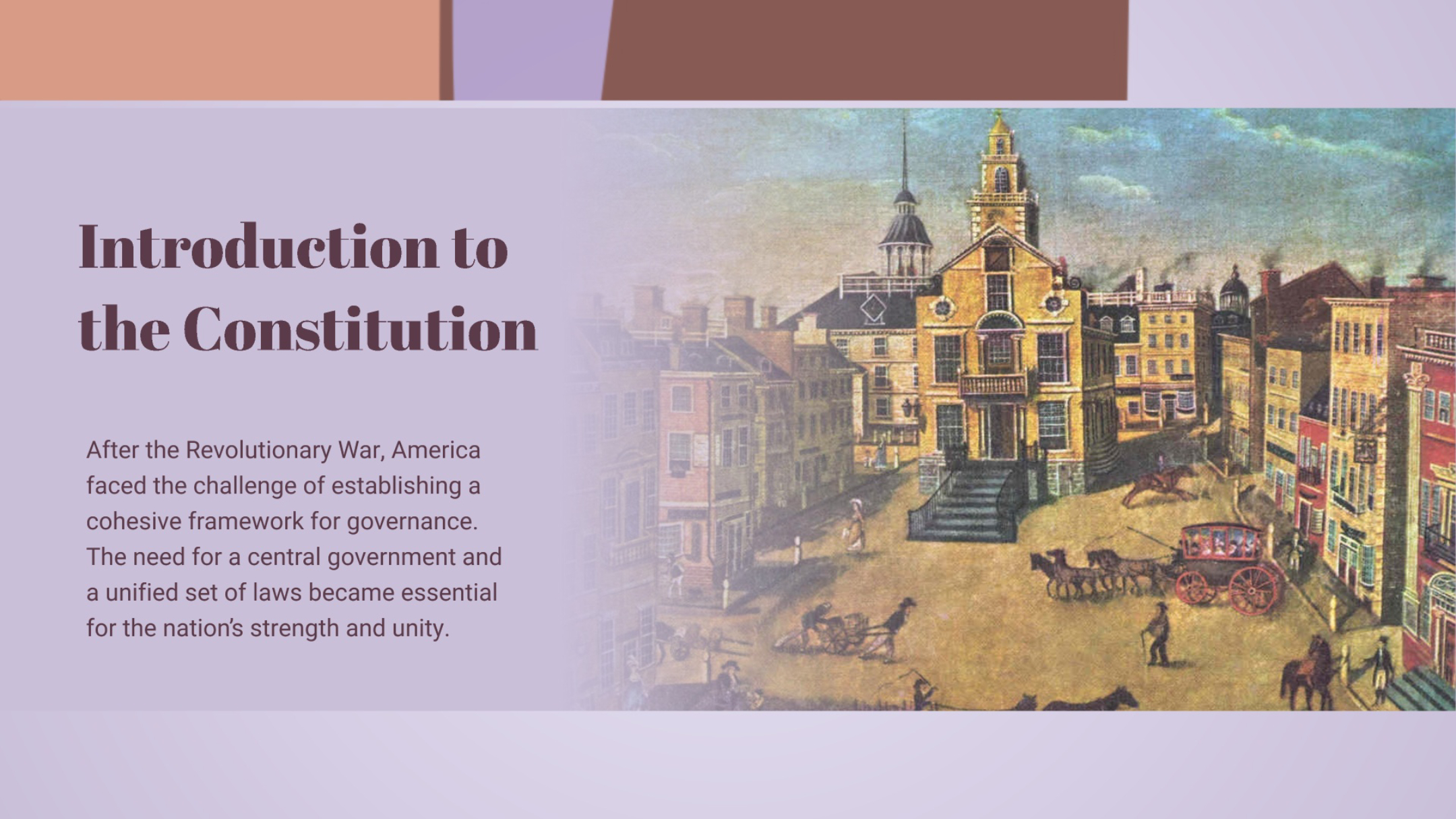
Why was it important for the United States to establish a unified set of laws after the Revolutionary War?
To ensure the nation’s strength and unity
To allow each state to have its own rules
To avoid international trade
To limit the power of the government
8
9
Multiple Choice
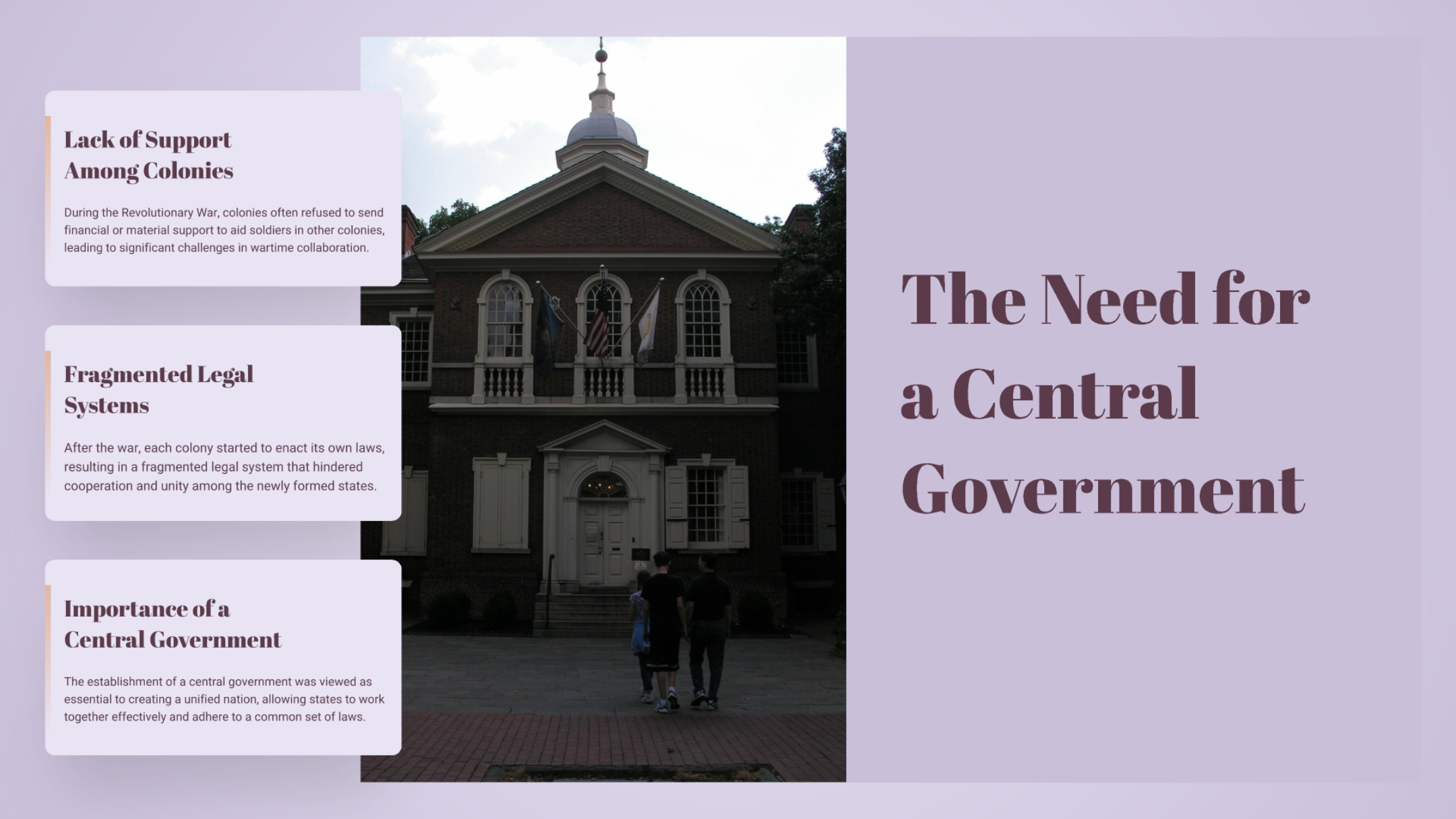
Why was the establishment of a central government considered important after the Revolutionary War?
It allowed colonies to maintain their independence.
It helped unify the nation and create a common set of laws.
It reduced the need for cooperation among states.
It encouraged colonies to enact their own laws.
10
11
Fill in the Blanks
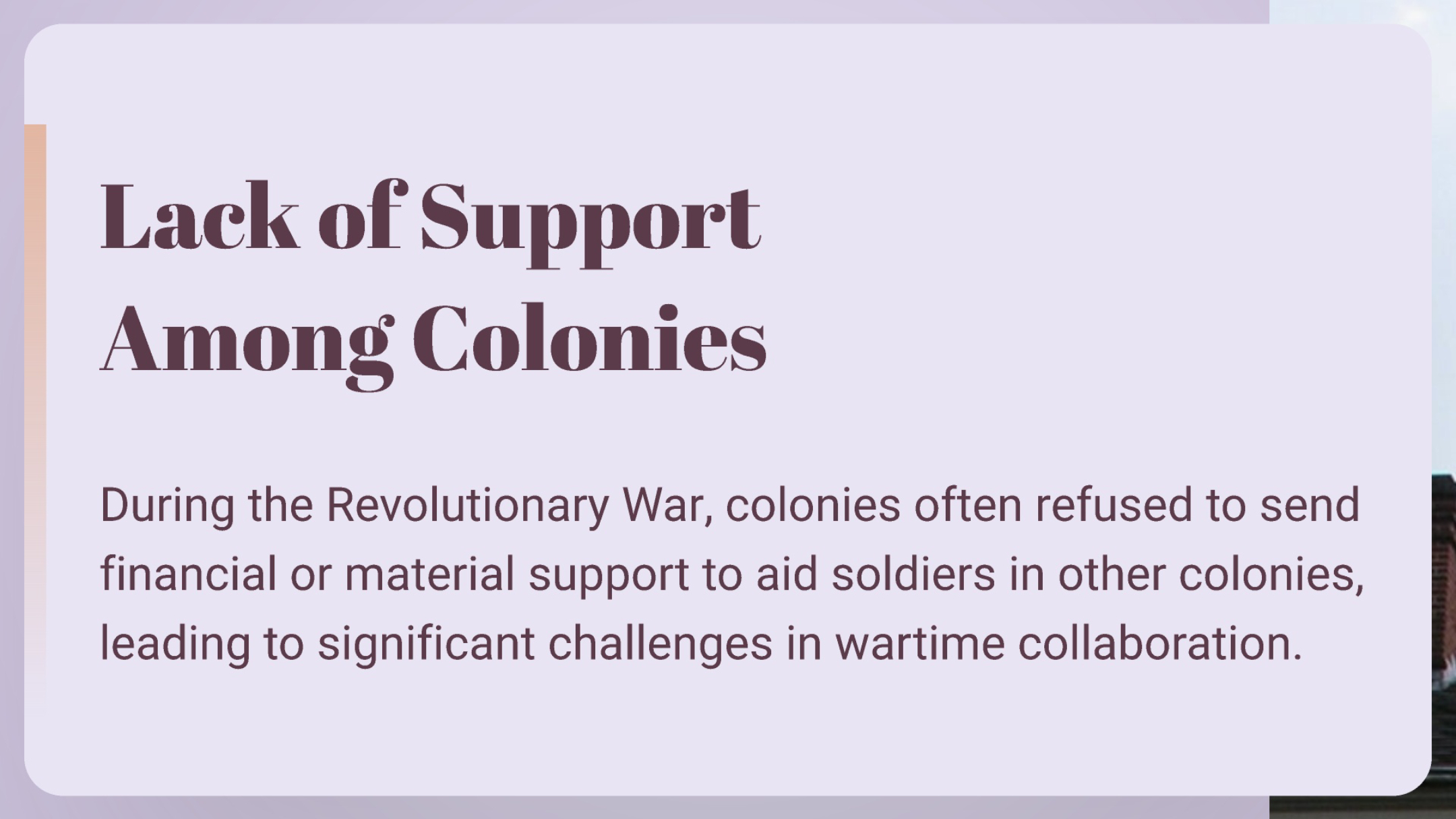
During the Revolutionary War, colonies often refused to send financial or material support to aid soldiers in other colonies, leading to significant challenges in wartime collaboration. This is known as lack of
Type answer...
12
13
Open Ended
Explain how fragmented legal systems affected cooperation among the newly formed states after the Revolutionary War.
14
15
16
17
Multiple Choice
What was one consequence of the lack of a central authority among the colonies?
Increased unity among colonies
Fragmented legal systems
Stronger military collaboration
Uniform governance
18
Multiple Choice
Which of the following were challenges faced by the colonies that highlighted the need for a central government?
Lack of support among colonies
Fragmented legal systems
Colonial tensions between New Jersey and Delaware
All of the above
19
20
Multiple Choice
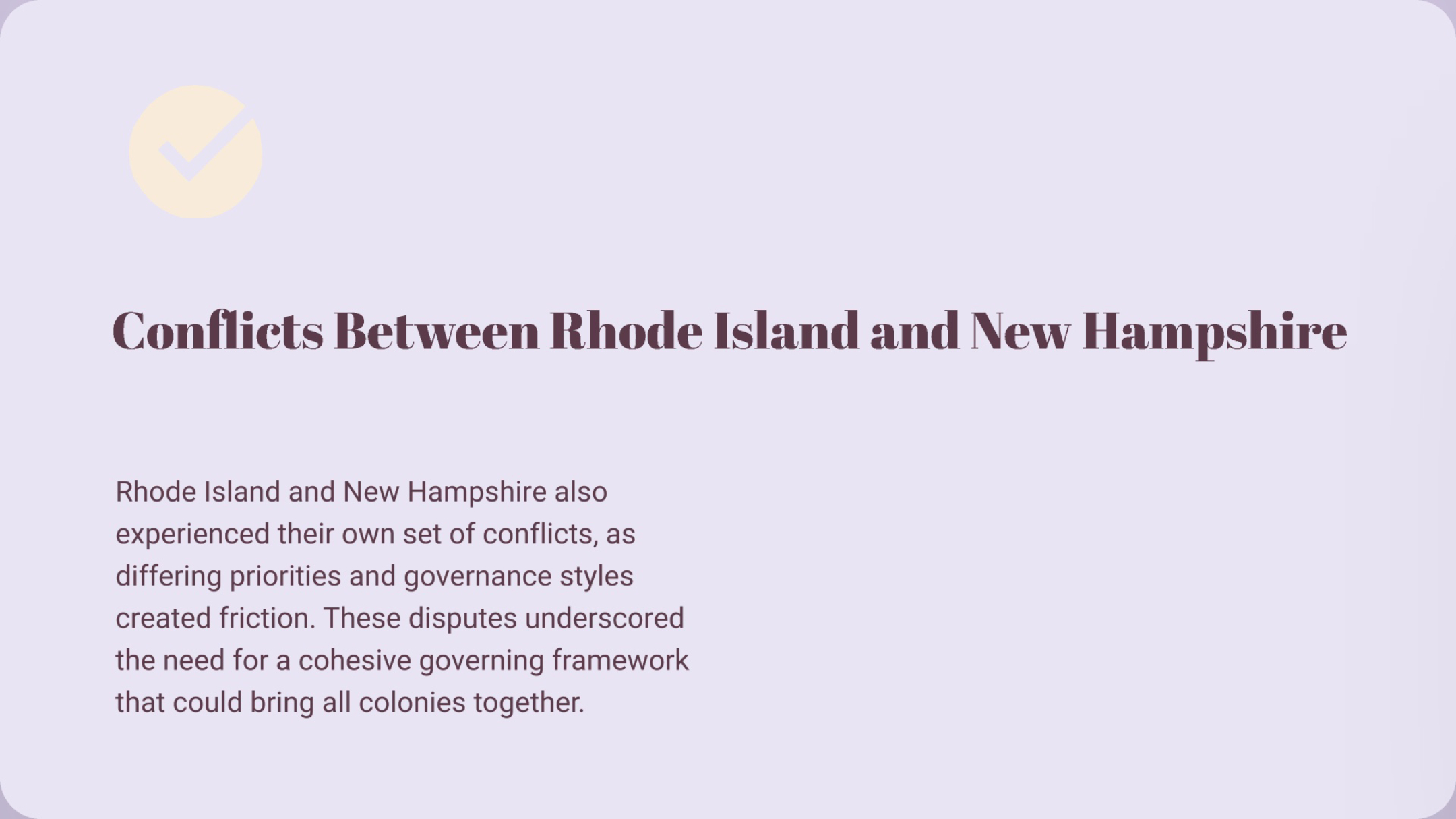
What was one of the main reasons for the conflicts between Rhode Island and New Hampshire?
Differing priorities and governance styles
Religious differences
Economic competition
Geographical disputes
21
22
Open Ended
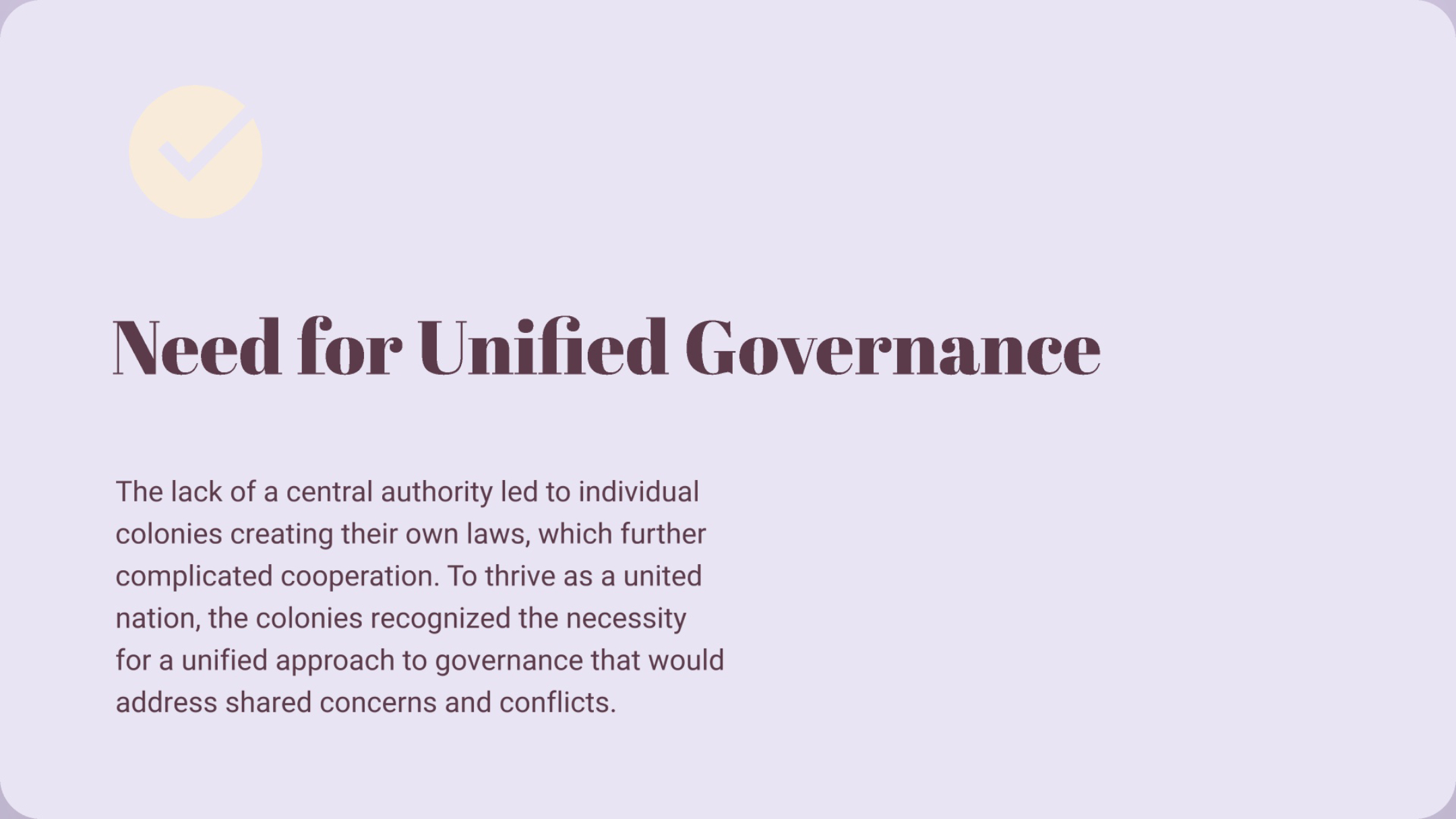
Explain why the colonies recognized the necessity for a unified approach to governance.
23
Multiple Choice
How did the lack of a central authority affect the colonies' ability to cooperate?
It led to the creation of individual laws, complicating cooperation
It made the colonies more unified
It reduced the number of conflicts
It encouraged economic growth
24
25
Fill in the Blanks
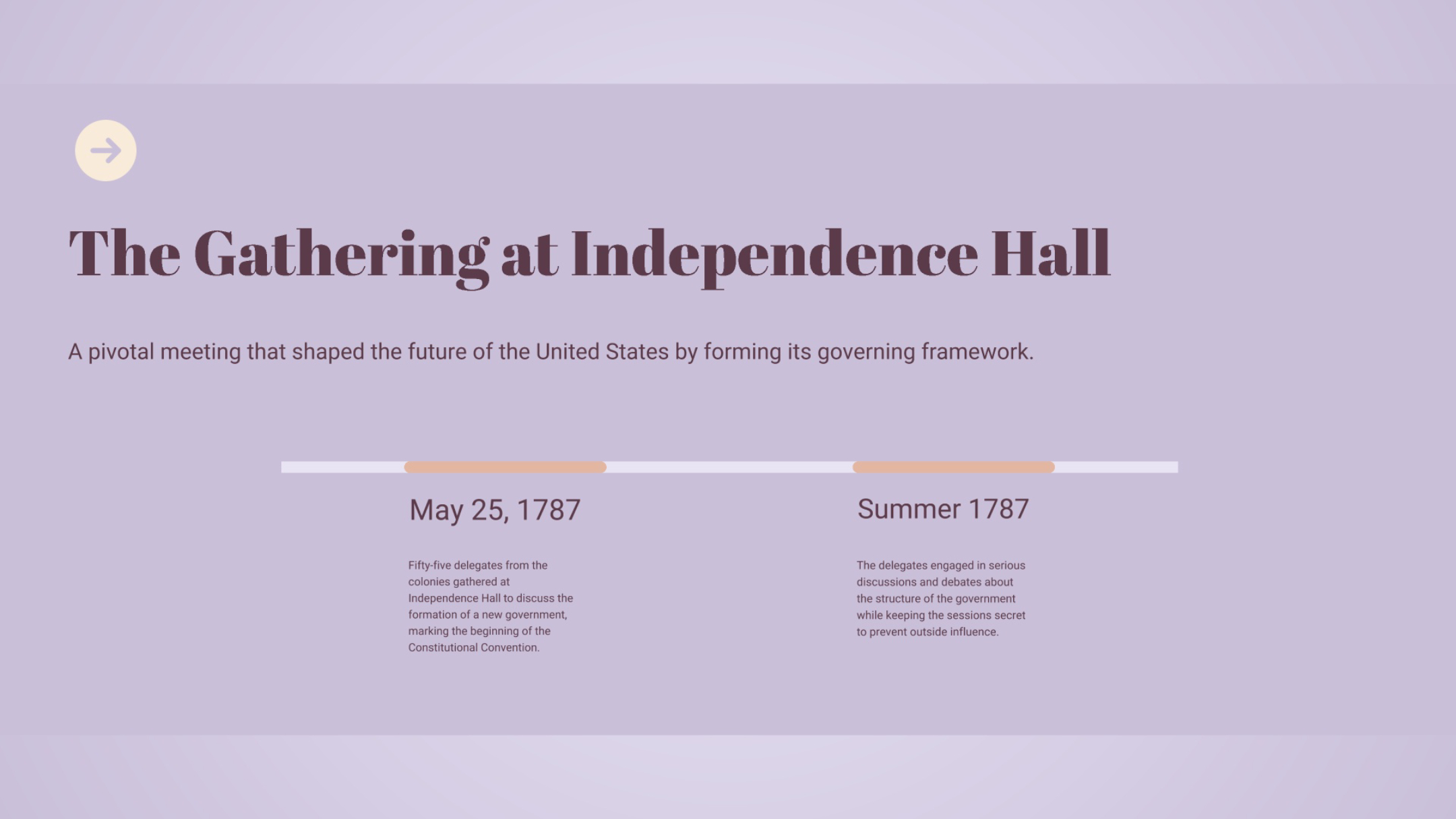
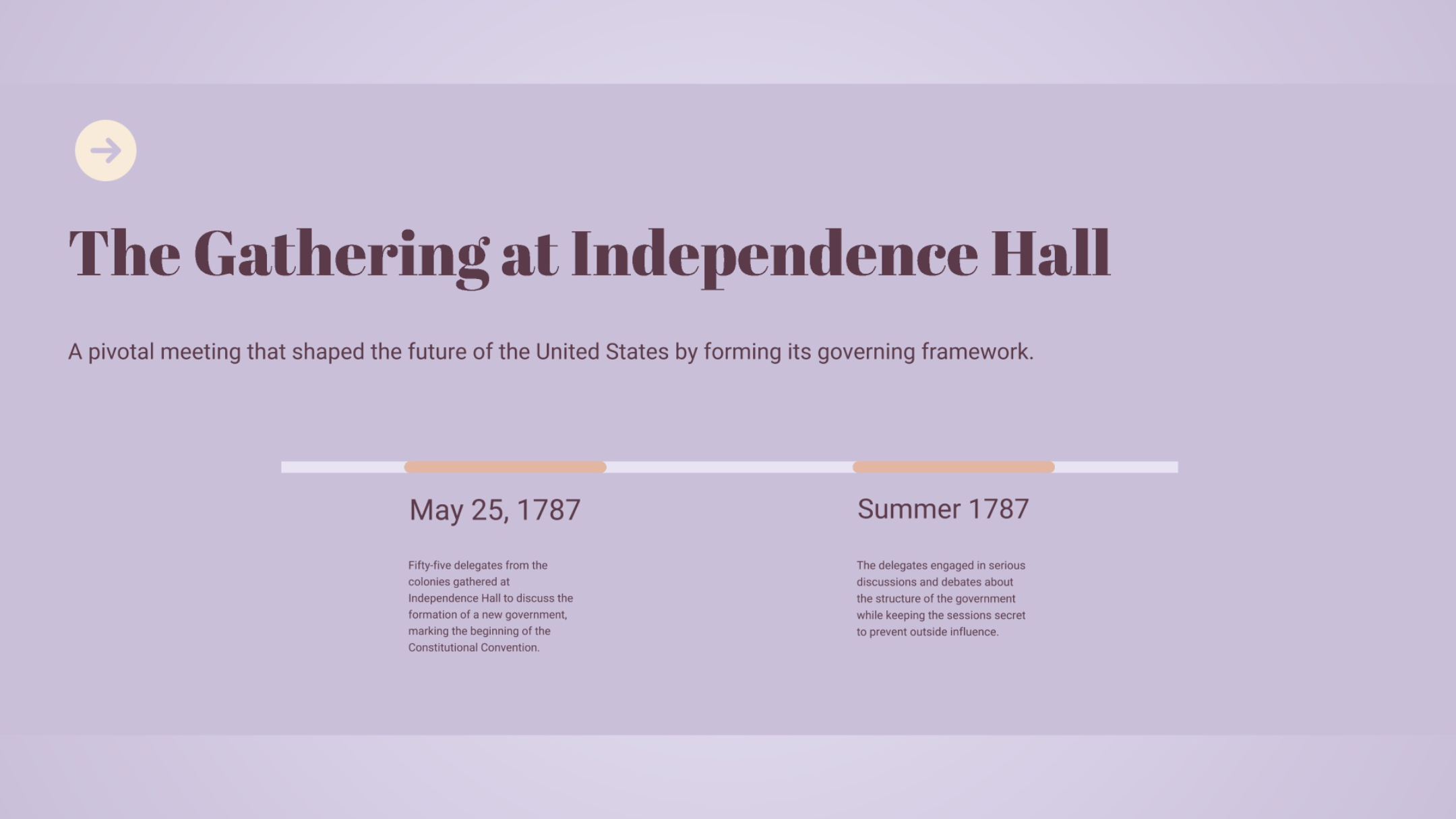
The pivotal meeting at Independence Hall in 1787 shaped the future of the United States by forming its governing
Type answer...
26
27
Multiple Choice
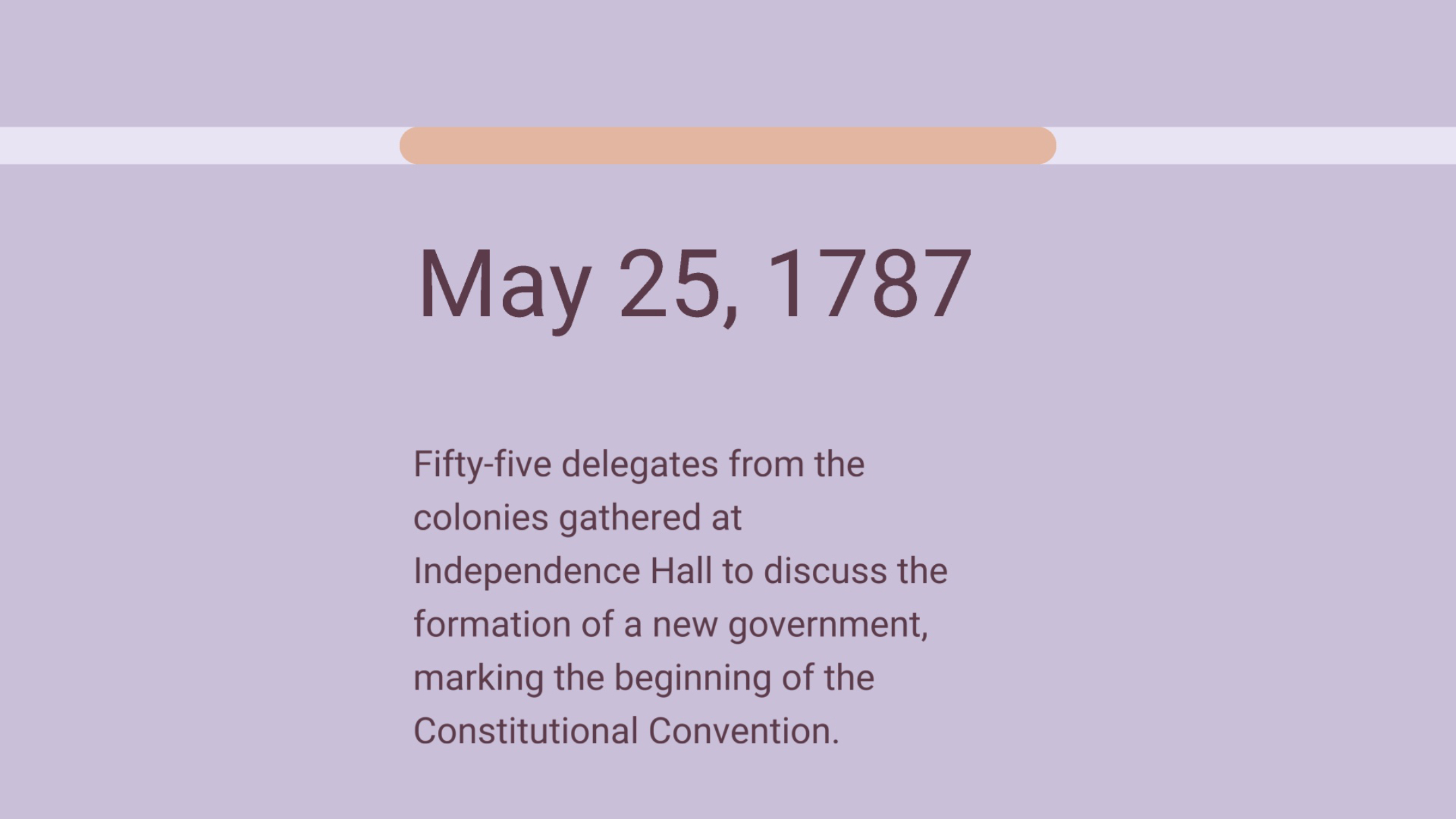
What significant event took place at Independence Hall on May 25, 1787?
The signing of the Declaration of Independence
The beginning of the Constitutional Convention
The end of the Revolutionary War
The drafting of the Bill of Rights
28
29
Multiple Choice
During the summer of 1787, what was a key reason for keeping the sessions at Independence Hall secret?
To prevent outside influence
To avoid public protests
To speed up the process
To reduce costs
30
31
32
Multiple Choice
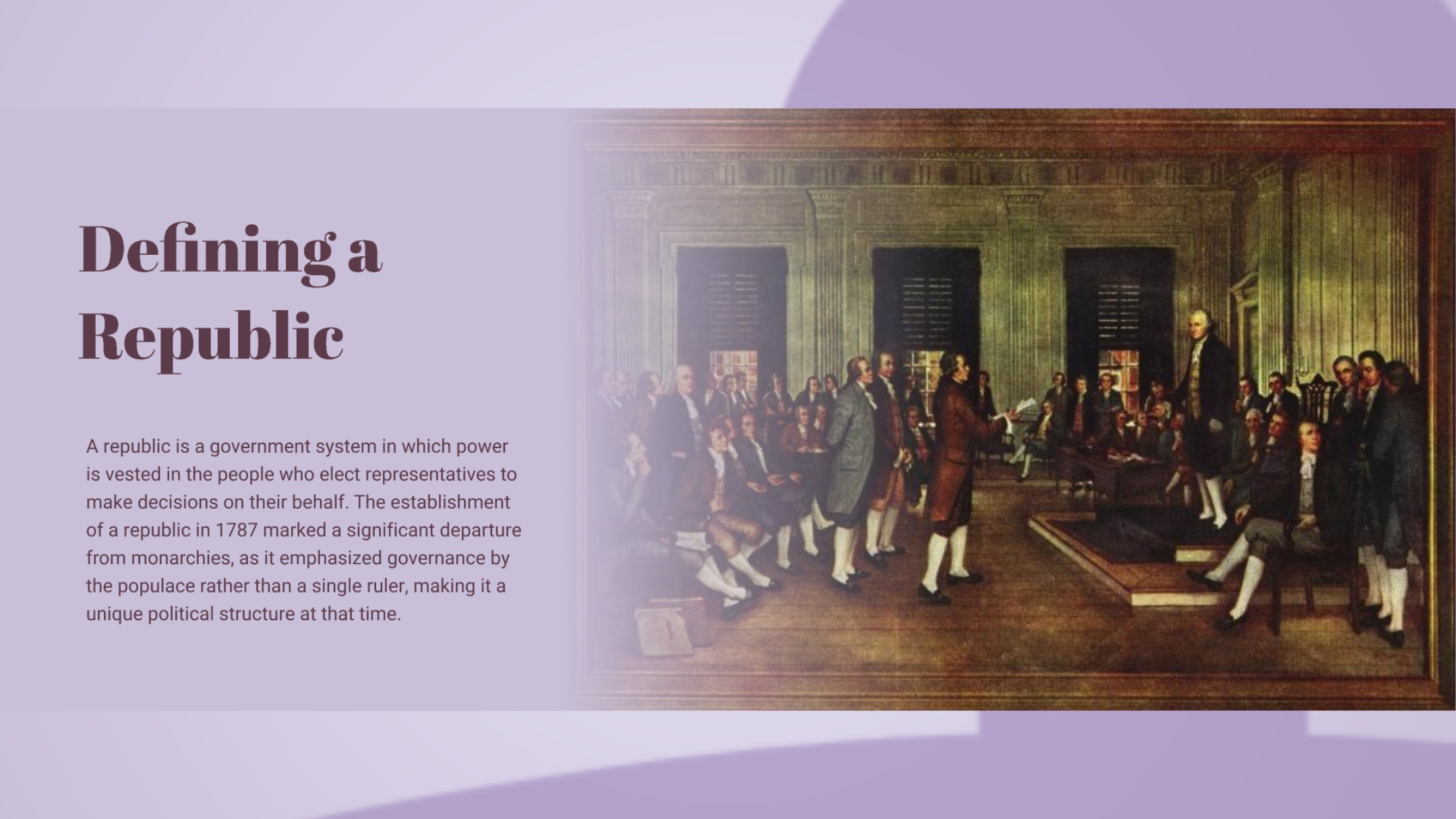
What is the main difference between a republic and a monarchy as described in the lesson?
A republic is governed by elected representatives, while a monarchy is ruled by a single ruler.
A republic has no laws, while a monarchy has strict laws.
A republic is always larger than a monarchy.
A republic is based on religion, while a monarchy is secular.
33
34
Multiple Select
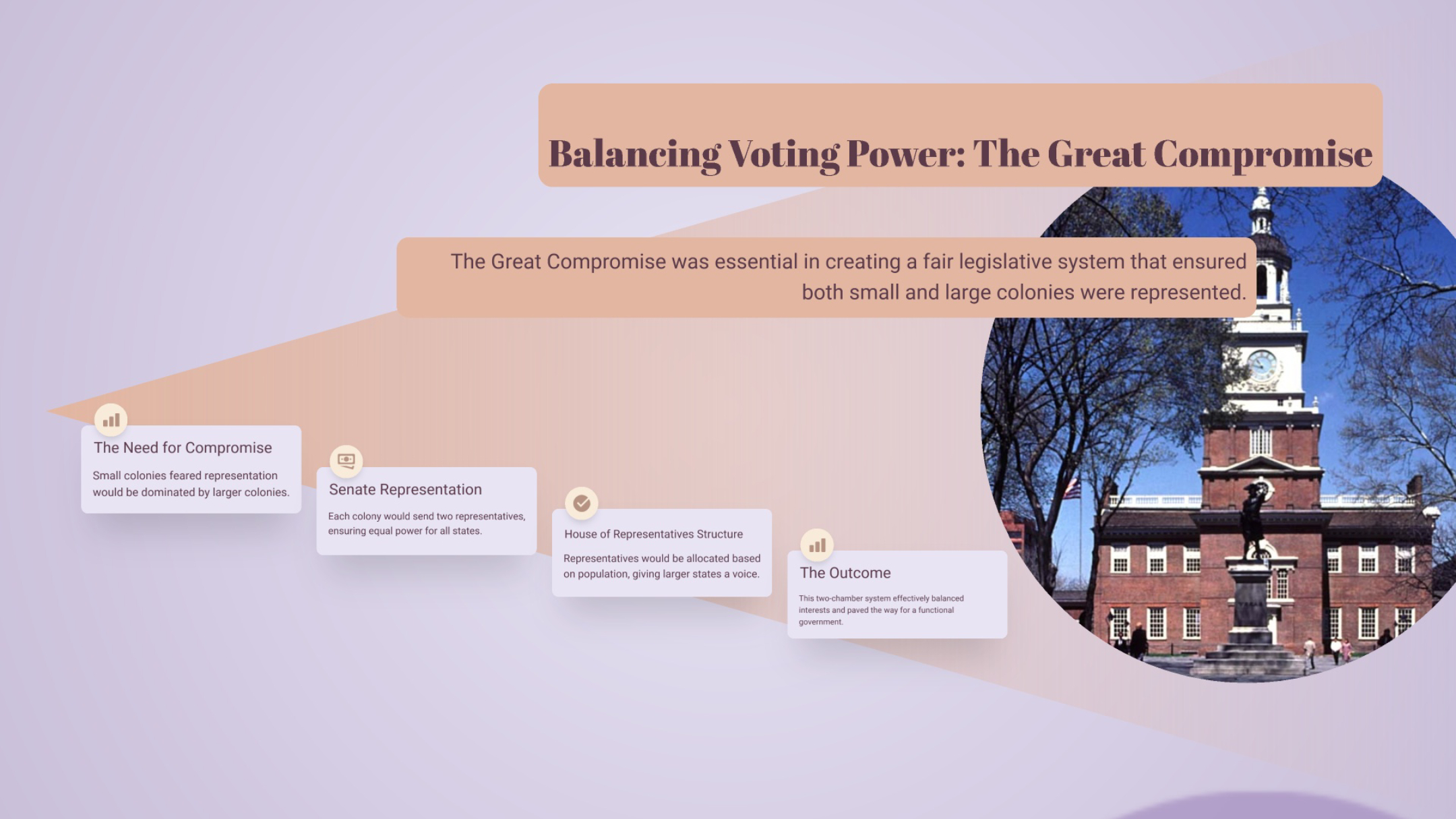
Which of the following were key elements of the Great Compromise?
Equal representation in the Senate
Representation in the House based on population
A single-chamber legislature
Balanced interests of small and large states
35
Open Ended
Explain why the Great Compromise was necessary for the formation of the United States government.
36
37
Fill in the Blanks
Small colonies feared representation would be dominated by
Type answer...
38
39
40
Open Ended
How did the structure of the House of Representatives address the concerns of larger states?
41
42

43
44
Open Ended
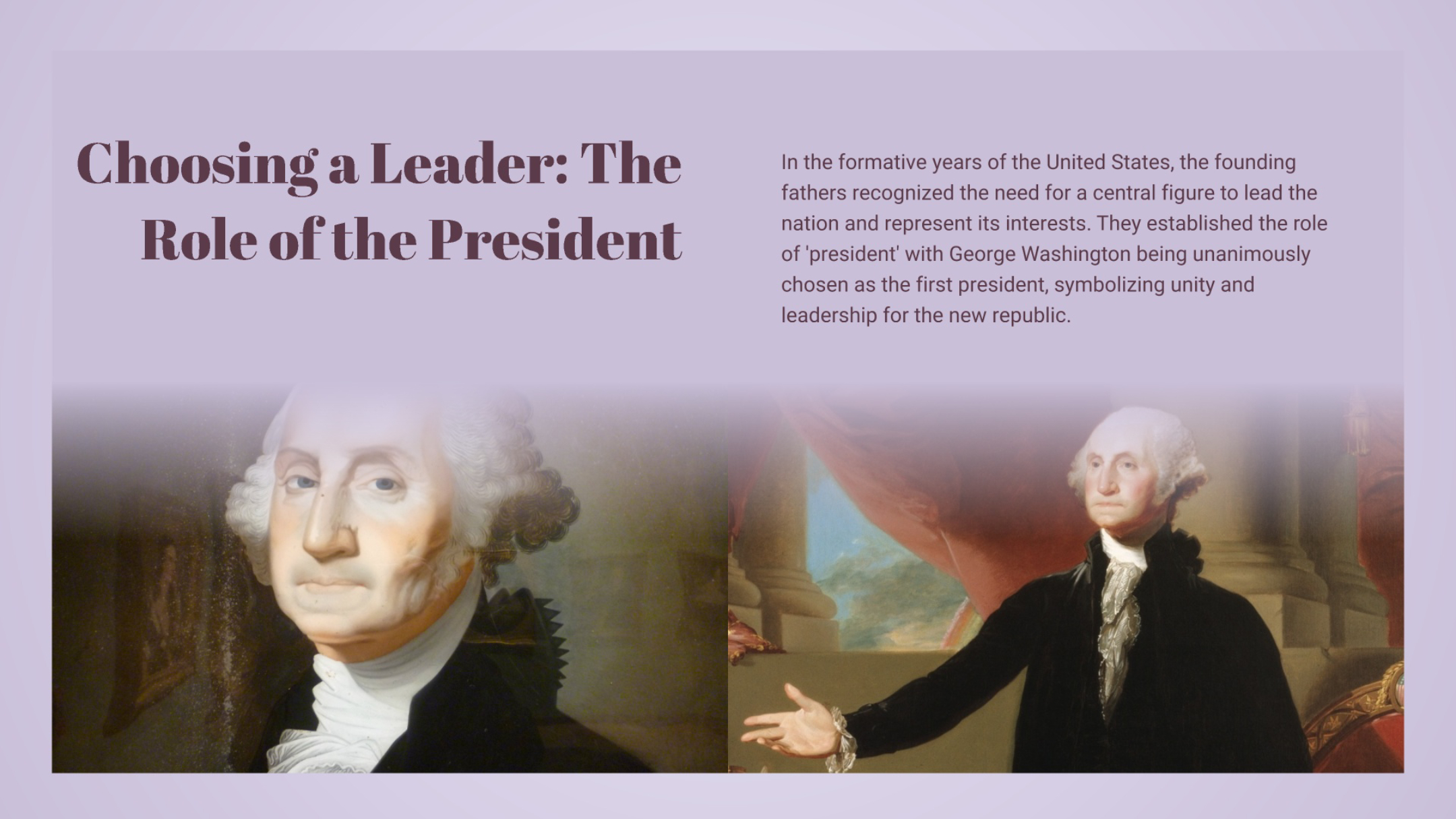
Explain how the founding fathers' decision to establish the role of president impacted the unity of the new republic.
45
Multiple Choice
Why was the role of president established in the early years of the United States?
To symbolize unity and leadership for the new republic
To create a monarchy
To avoid having any central figure
To represent only the interests of one state
46
47
Open Ended
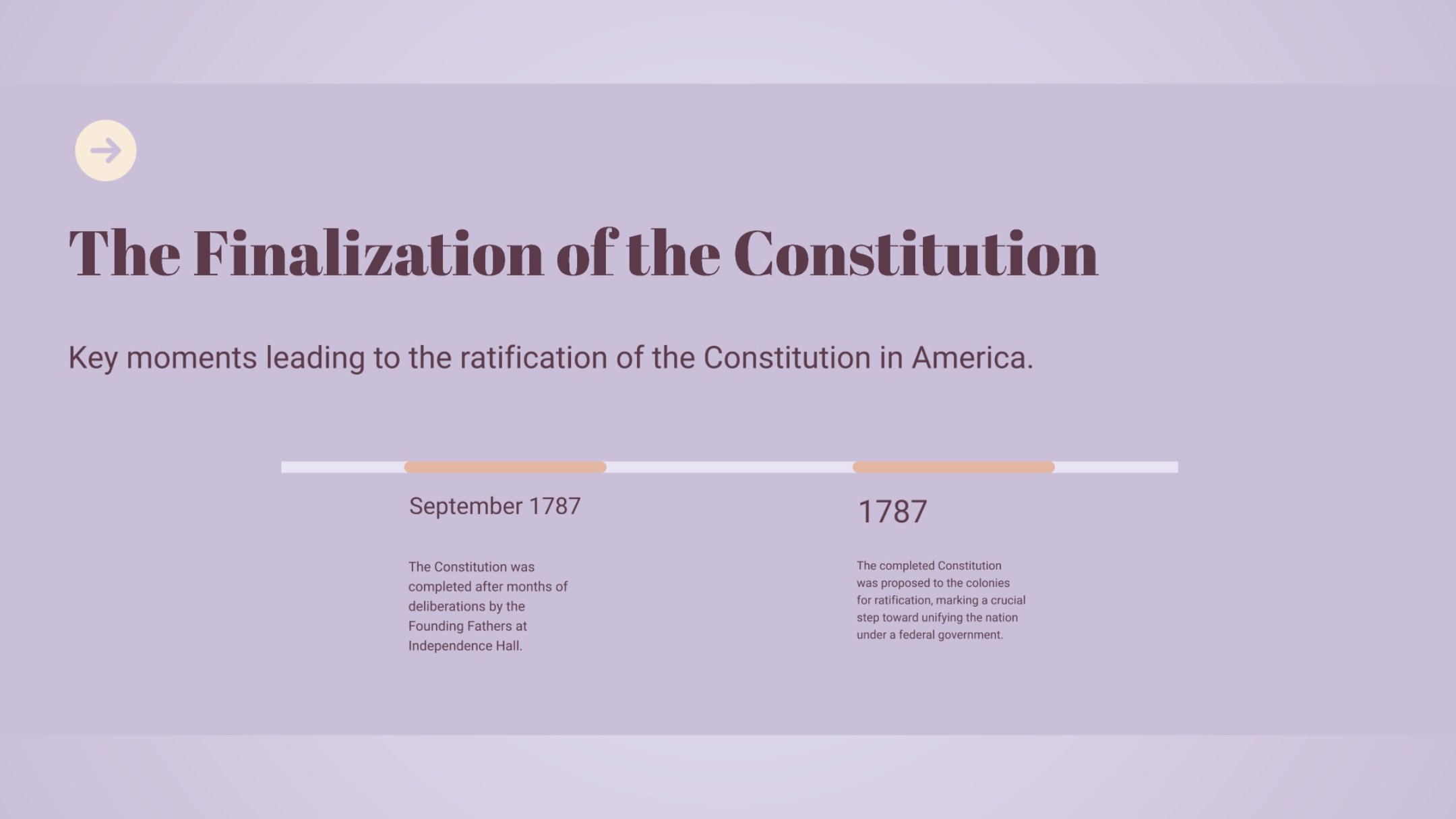
Describe the relationship between the establishment of the presidency and the ratification of the Constitution in shaping the early United States government.
48
Multiple Select
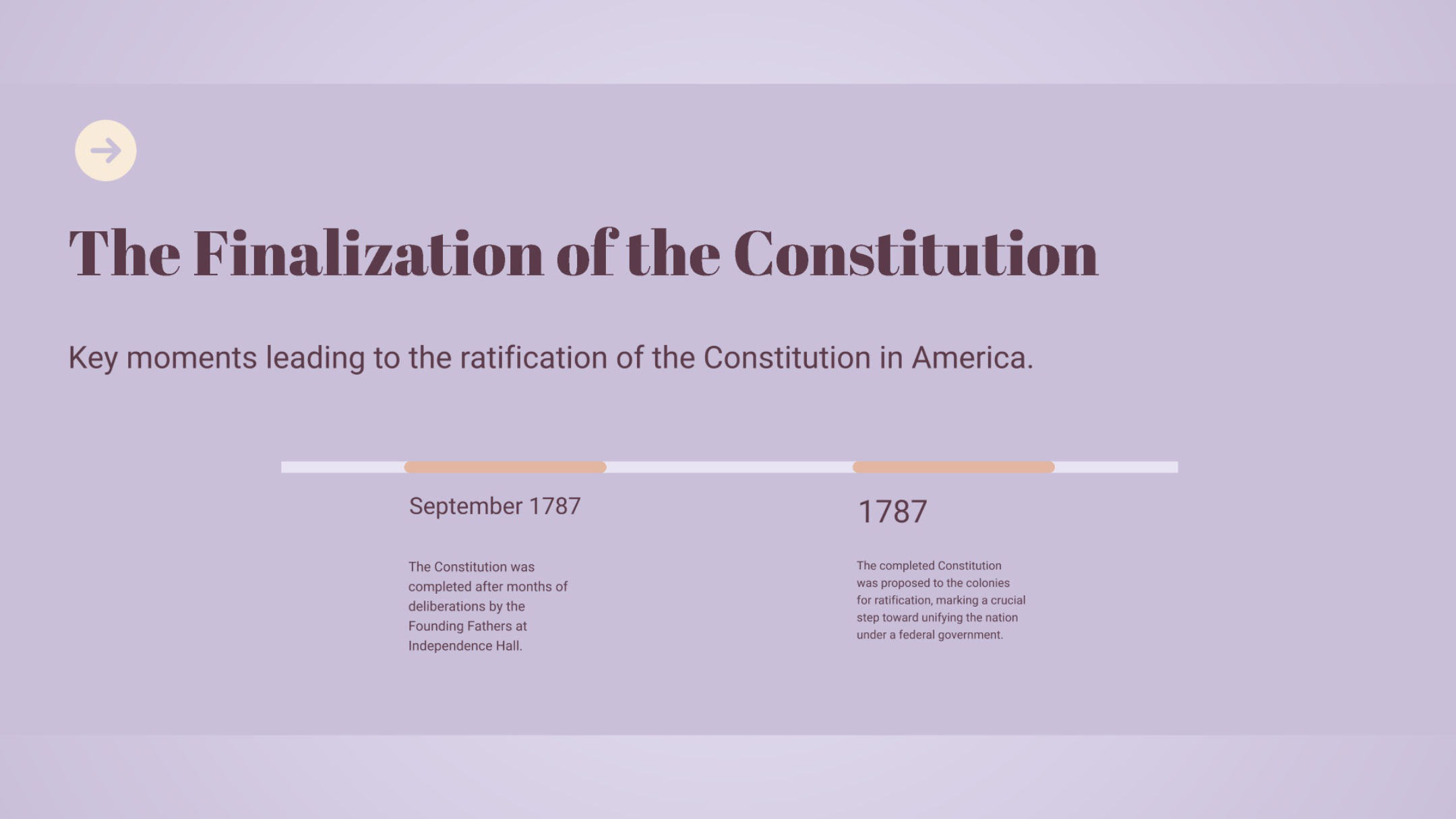
Which of the following were key moments leading to the ratification of the Constitution in America?
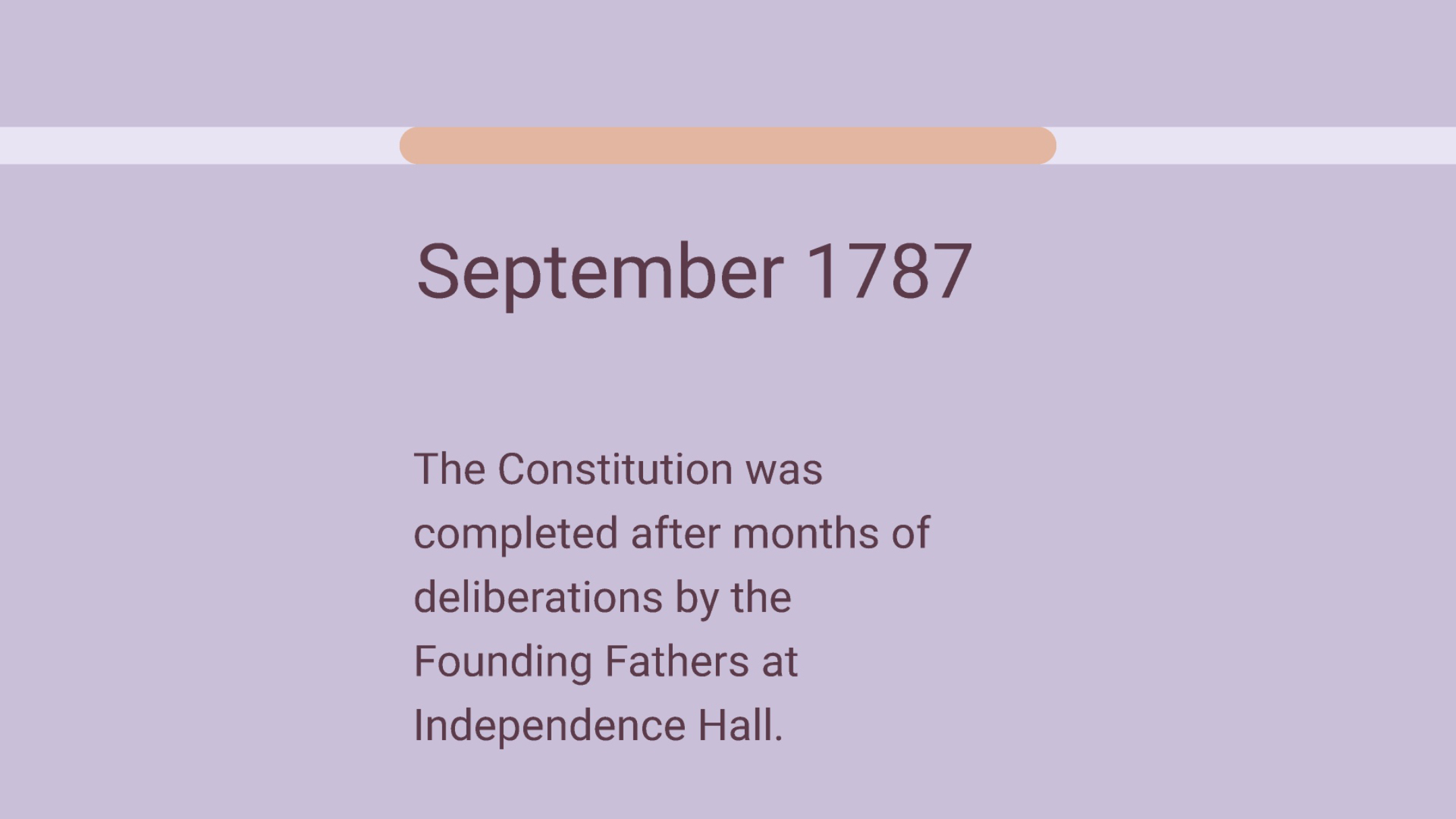
September 1787
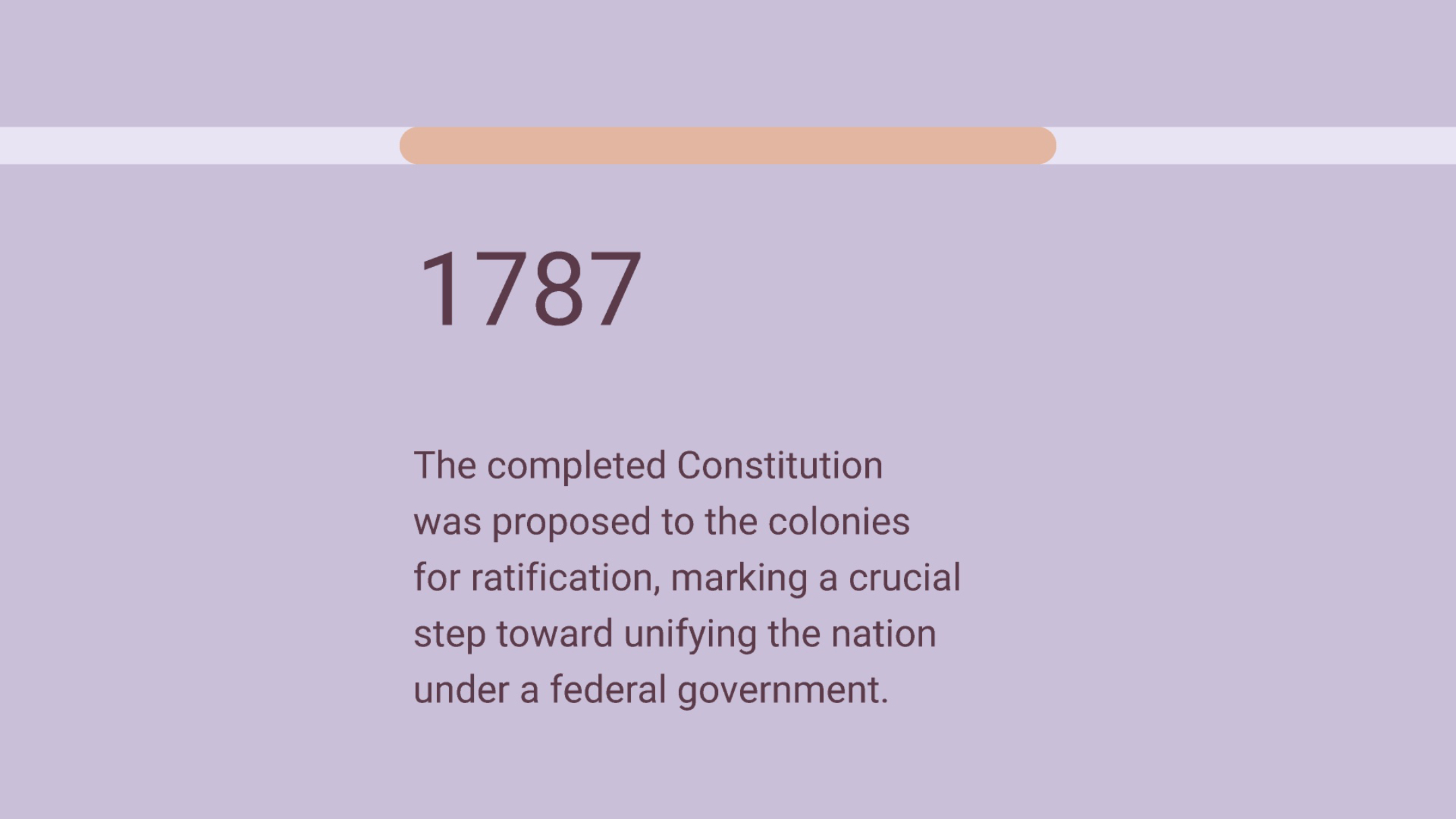
1787
1776
1800
49
50
Fill in the Blanks
The Constitution was completed after months of deliberations by the Founding Fathers at
Type answer...
51
52
Open Ended
What crucial step did the proposal of the completed Constitution to the colonies represent for the United States?
53
54
55
56
57
58
Open Ended
Reflecting on what you have learned about the origins and impact of the United States Constitution, what questions do you still have or what aspects would you like to explore further?
59
Multiple Choice
Why was the establishment of a central government and a unified set of laws important for America after the Revolutionary War?
To ensure the nation's strength and unity
To allow states to act independently
To avoid any form of governance
To maintain colonial rule
Show answer
Auto Play
Slide 1 / 59
SLIDE
Similar Resources on Wayground

51 questions
Negosiasi-Bahasa Indonesia
Presentation
•
10th Grade
58 questions
Africa Map 1
Presentation
•
9th Grade
55 questions
US1C3.3: Struggling Toward Saratoga
Presentation
•
10th Grade
55 questions
Logical Fallacies
Presentation
•
10th - 11th Grade
54 questions
Unit 6: Progressives Part 3 & 4
Presentation
•
11th Grade
59 questions
Progressive Era Presidents: Roosevelt, Taft and Wilson
Presentation
•
10th Grade
52 questions
Colonization and The British Colonies
Presentation
•
11th Grade
55 questions
Civil Rights Achievements - Day 2
Presentation
•
11th Grade
Popular Resources on Wayground
10 questions
How much do you know about our Portrait of an Eagle?

Quiz
•
10th Grade
10 questions
Fast Food Slogans
Quiz
•
6th - 8th Grade
21 questions
Continents and Oceans
Quiz
•
6th Grade
20 questions
Parts of Speech
Quiz
•
5th Grade
16 questions
Subject & Predicate
Quiz
•
5th Grade
25 questions
Multiplication Facts
Quiz
•
5th Grade
12 questions
Map Skills
Quiz
•
3rd Grade
22 questions
Continents and Oceans
Quiz
•
5th Grade
Discover more resources for Social Studies
10 questions
Exploring the Age of Exploration: Key Events and Figures

Interactive video
•
6th - 10th Grade
10 questions
Exploring the 13 Colonies Regions
Interactive video
•
6th - 10th Grade
46 questions
Unit 1 Test REVIEW Ancient Greece and Rome
Quiz
•
9th - 12th Grade
10 questions
Exploring Ancient Mesopotamia Through Song
Interactive video
•
6th - 10th Grade
12 questions
supply and demand shifters
Quiz
•
9th - 12th Grade
9 questions
Exploring Ancient Mesopotamia and Its Civilizations
Interactive video
•
10th Grade
16 questions
Unit 3 Personal Finance Guided Notes
Presentation
•
9th - 12th Grade
16 questions
Enlightenment Review
Quiz
•
10th Grade