

Energy Resources Review

Presentation
•
Science
•
9th - 12th Grade
•
Practice Problem
•
Easy
+4
Standards-aligned

Kathy A Friend
Used 1+ times
FREE Resource
19 Slides • 28 Questions
1
2
Multiple Choice
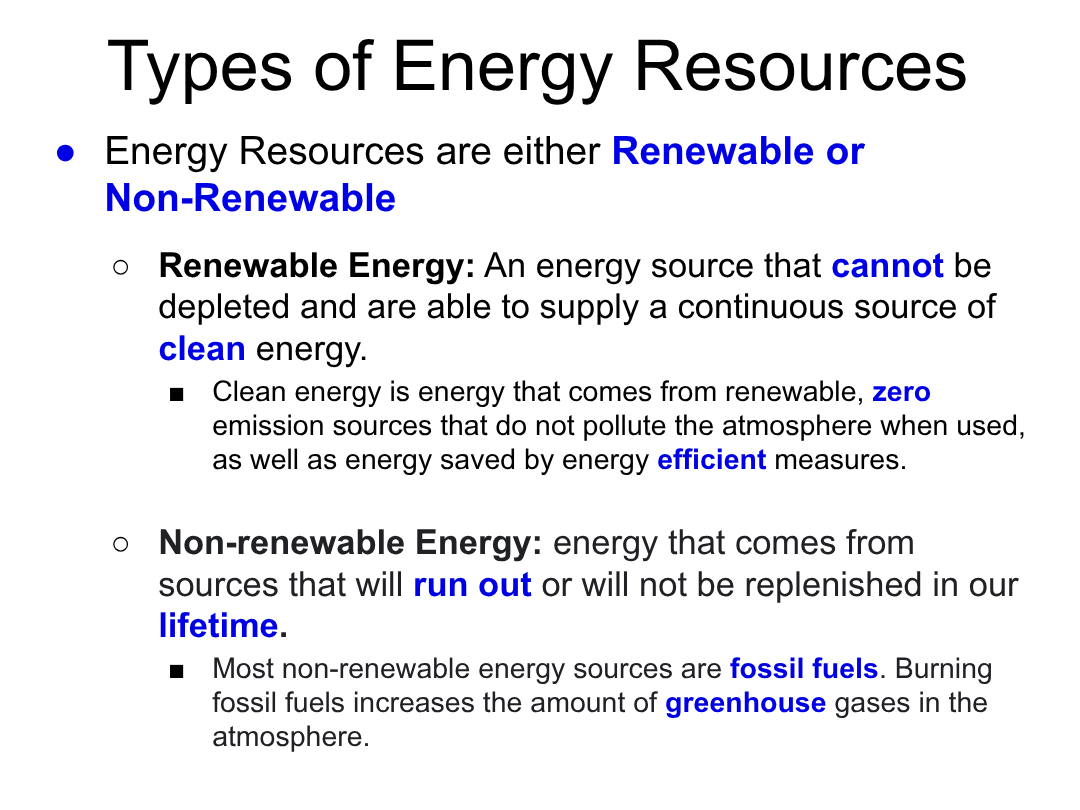
What are the two main categories of energy resources?
Renewable and Non-Renewable
Clean and Dirty
Fossil and Solar
Electric and Thermal
3
Drag and Drop
4
5
Multiple Choice
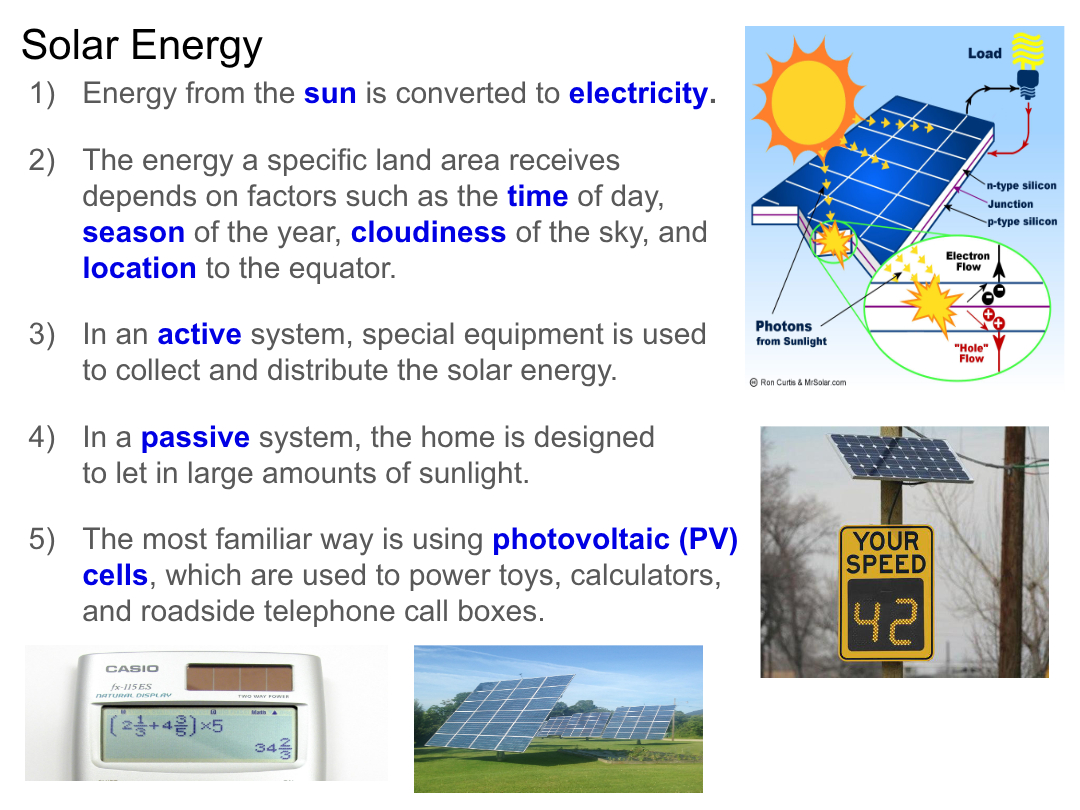
What factors affect the amount of solar energy received by a specific land area?
Time of day
Location to the equator
Season of the year
All of the above
6
7
Multiple Choice
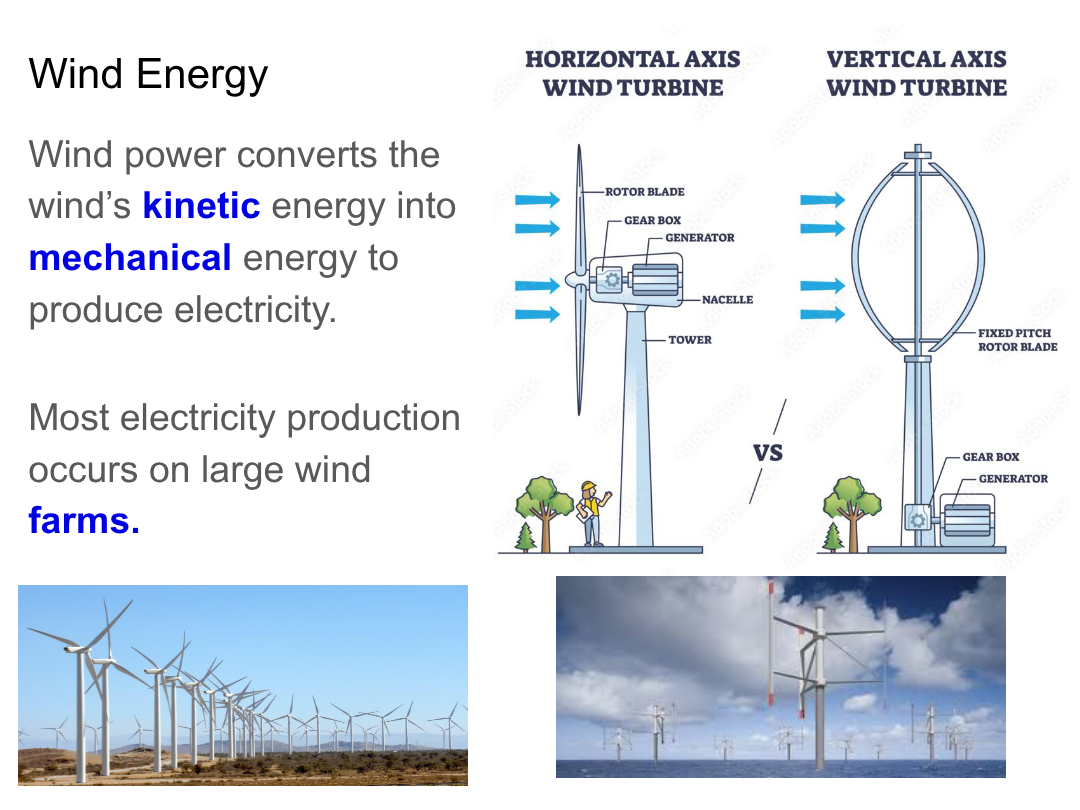
What is the ENERGY TRANSFORMATION for Wind Turbines?
Mechanical Energy to Electrical Energy
Electrical Energy to Mechanical Energy
Thermal Energy to Electrical Energy
Mechanical Energy to Radiant Energy
8
Multiple Choice
What are a group of wind turbines called?
The Sky
Power Plant
Wind Farms
A Fence
9
10
11
Multiple Choice
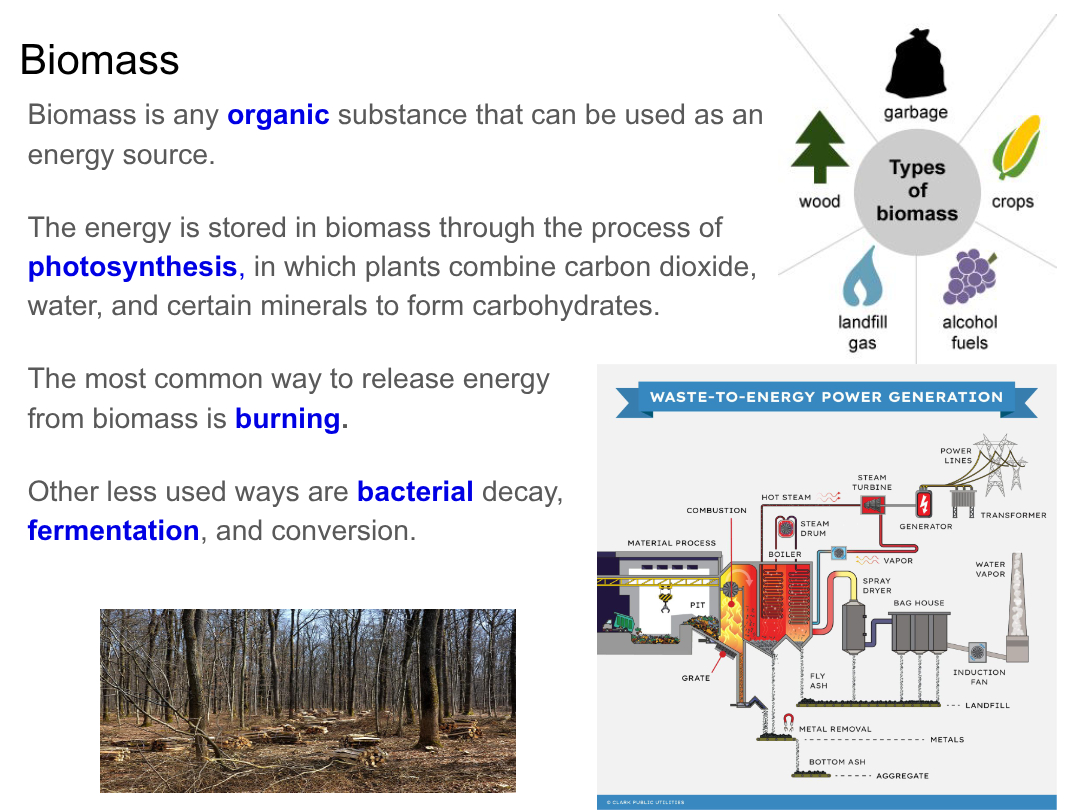
What is biomass in the context of energy production?
Matter from non-living organisms used for energy
Matter from recently living organisms used for bioenergy
Matter from living organisms used for energy
Matter from synthetic materials used for energy
12
Multiple Select
Example of biomass is/are:
wood
grass
animal waste
sand
13
14
Multiple Choice
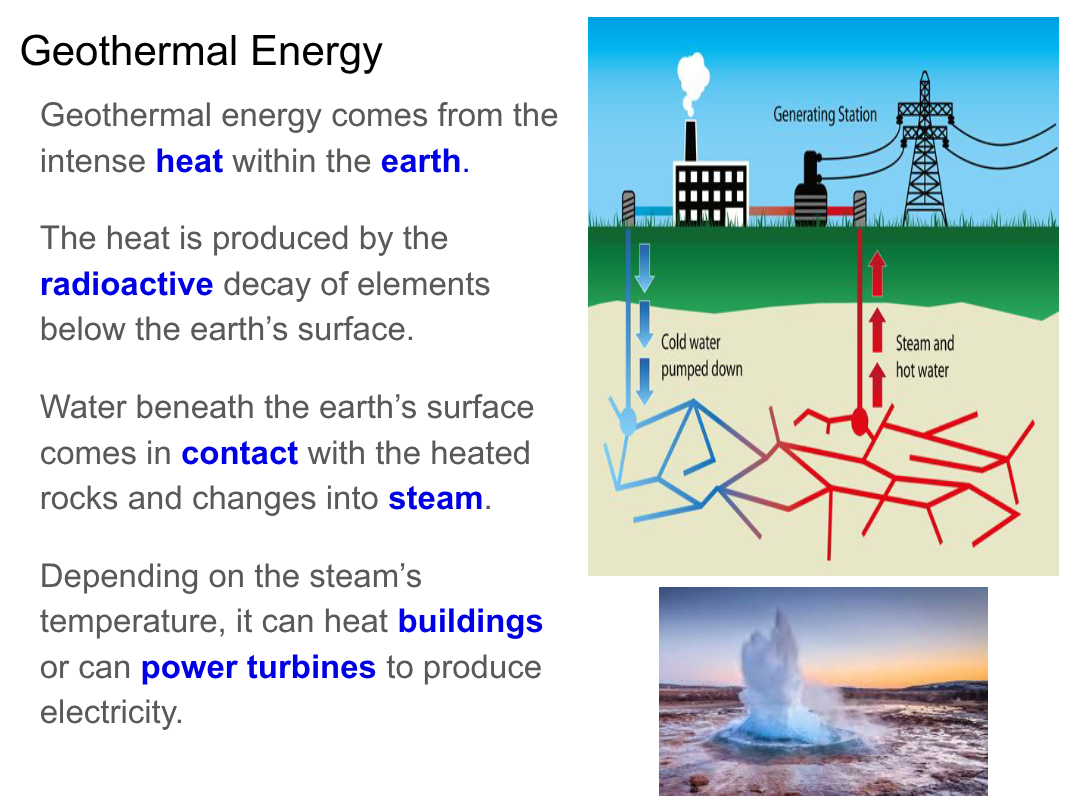
What is the process by which geothermal energy is produced?
Radioactive decay
Photosynthesis
Nuclear fusion
Chemical reaction
15
16
Multiple Choice
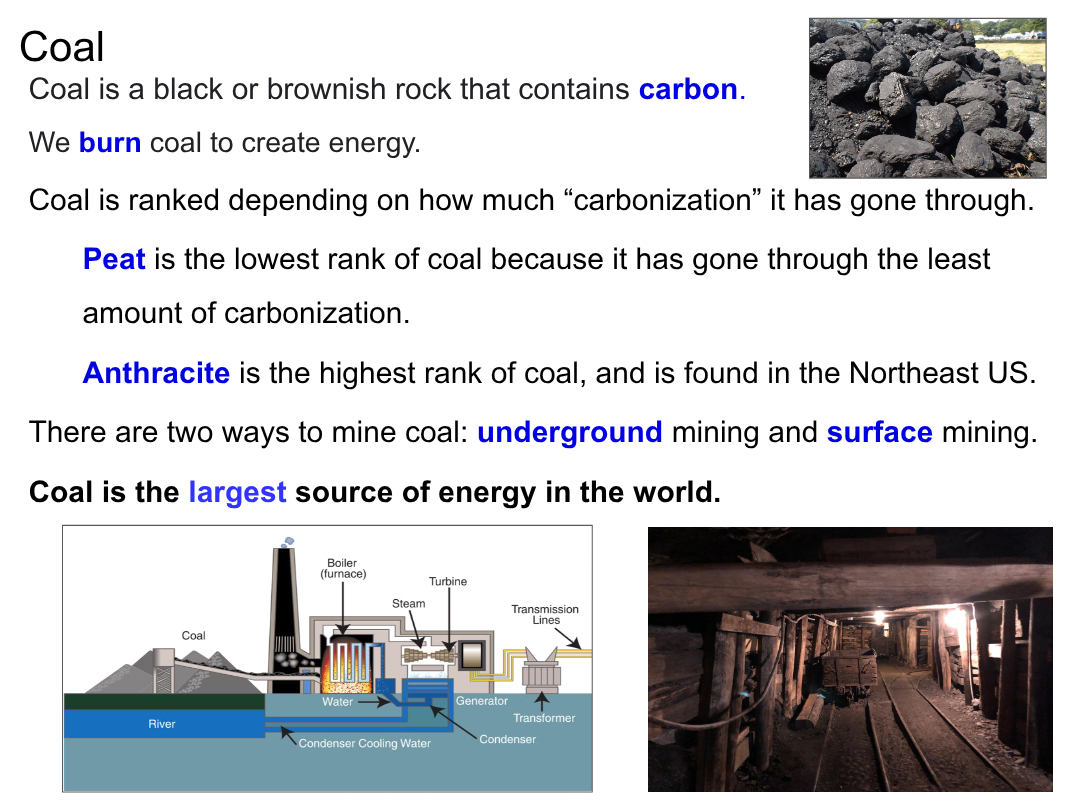
Which answer shows an impact of fossil fuel extraction on local ecosystems.
It has no significant impact.
It promotes biodiversity.
It can lead to habitat destruction and pollution.
It increases water availability in the area.
17
18
Multiple Choice
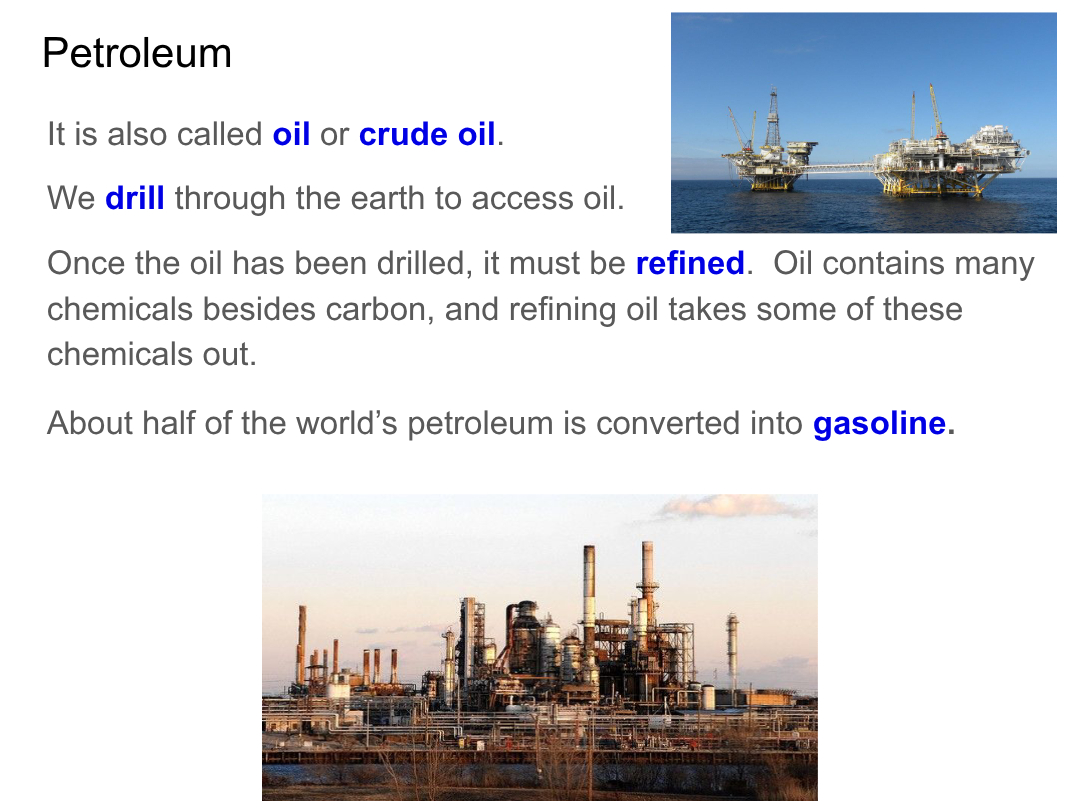
Which of the following is not a product made from Petroleum ?
Diesel Fuel
Plastics
Kerosene
Corn Oil
19
20
Multiple Choice
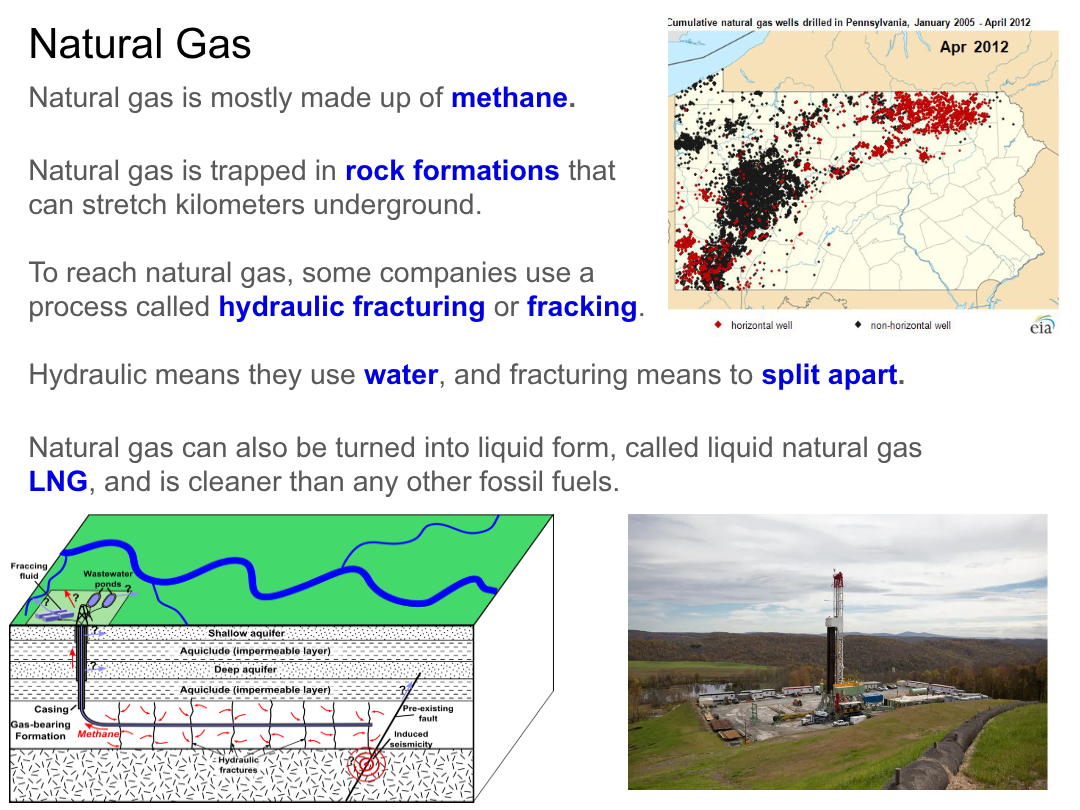
The major downside to hydraulic fracturing (fracking) is that .....
the empty spaces left behind can result in earthquakes.
the equipment used is often falls apart after a single use
the fracking chemicals could get into groundwater
21
Match
Match the following types of energy with their descriptions.
Biomass
Geothermal
Solar
Wind
Hydroelectric
burning plants to create energy
heat from underground aquifers
energy from the sun
uses moving turbines to create energy
building a dam to use flowing water
burning plants to create energy
heat from underground aquifers
energy from the sun
uses moving turbines to create energy
building a dam to use flowing water
22
Categorize
Clean Energy
Reduced Air Pollution
Energy Independence
Lower Energy Costs
Improved Public Health
Sustainable Development
Habitat Loss
Determine if the following is a benefit or challenge of Renewable Energy.
23
24
Multiple Choice

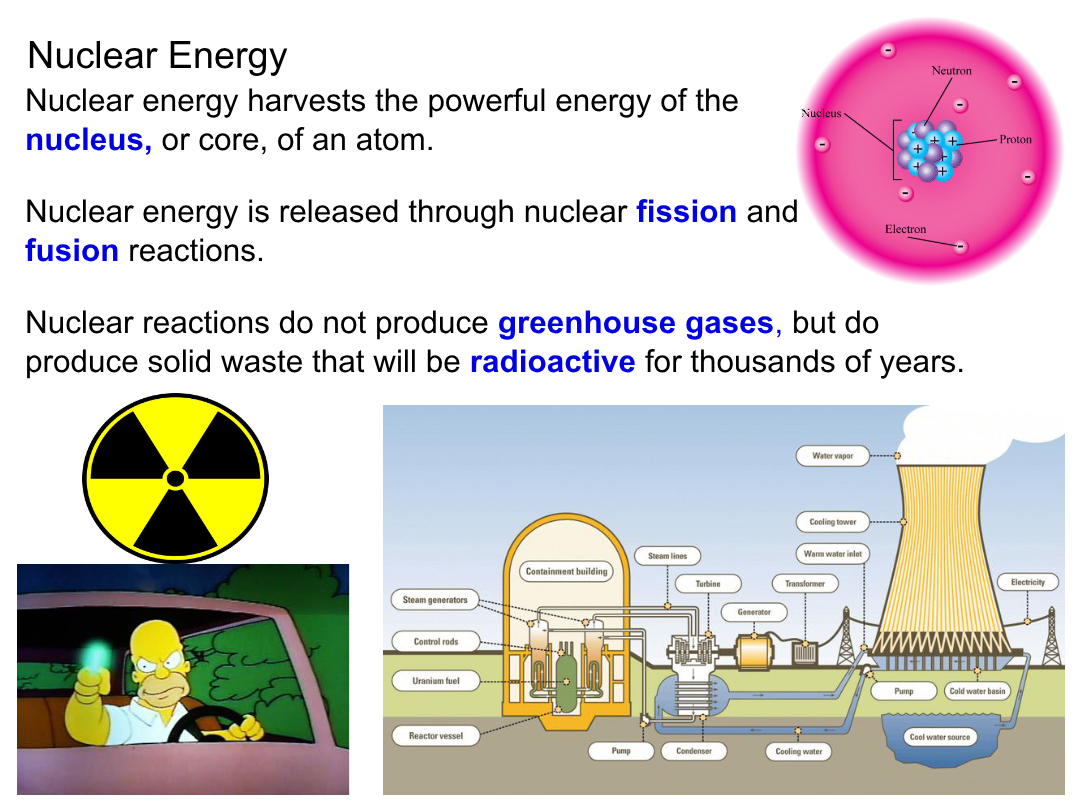
Which of the following best describes the process of nuclear fission?
25
26
Multiple Choice
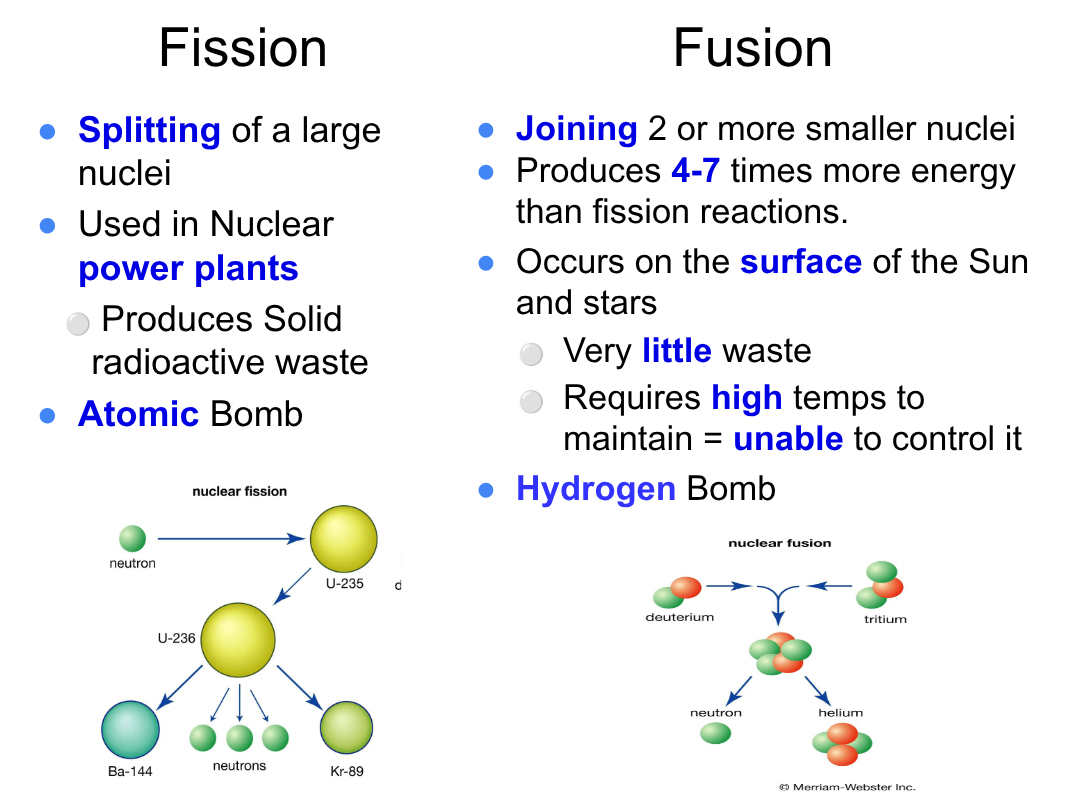
What is the main difference between nuclear fission and fusion in terms of energy production?
Fission produces more energy than fusion
Fusion produces more energy than fission
Both produce the same amount of energy
Fission requires higher temperatures than fusion
27
28
Multiple Choice
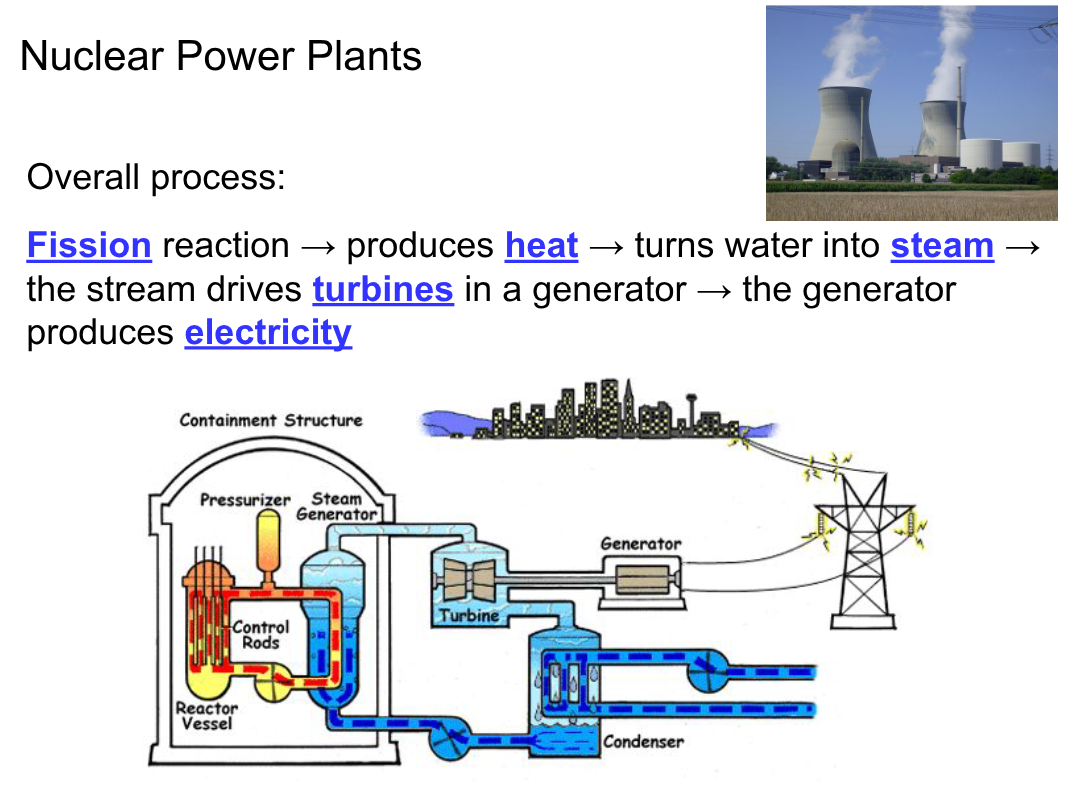
What is the overall process of a nuclear power plant?
Fission reaction produces heat, which turns water into steam, driving turbines to produce electricity.
Fission reaction produces steam, which turns water into heat, driving turbines to produce electricity.
Fission reaction produces electricity directly without any intermediate steps.
Fission reaction produces heat, which is used to cool down the reactor.
29
30
Multiple Choice
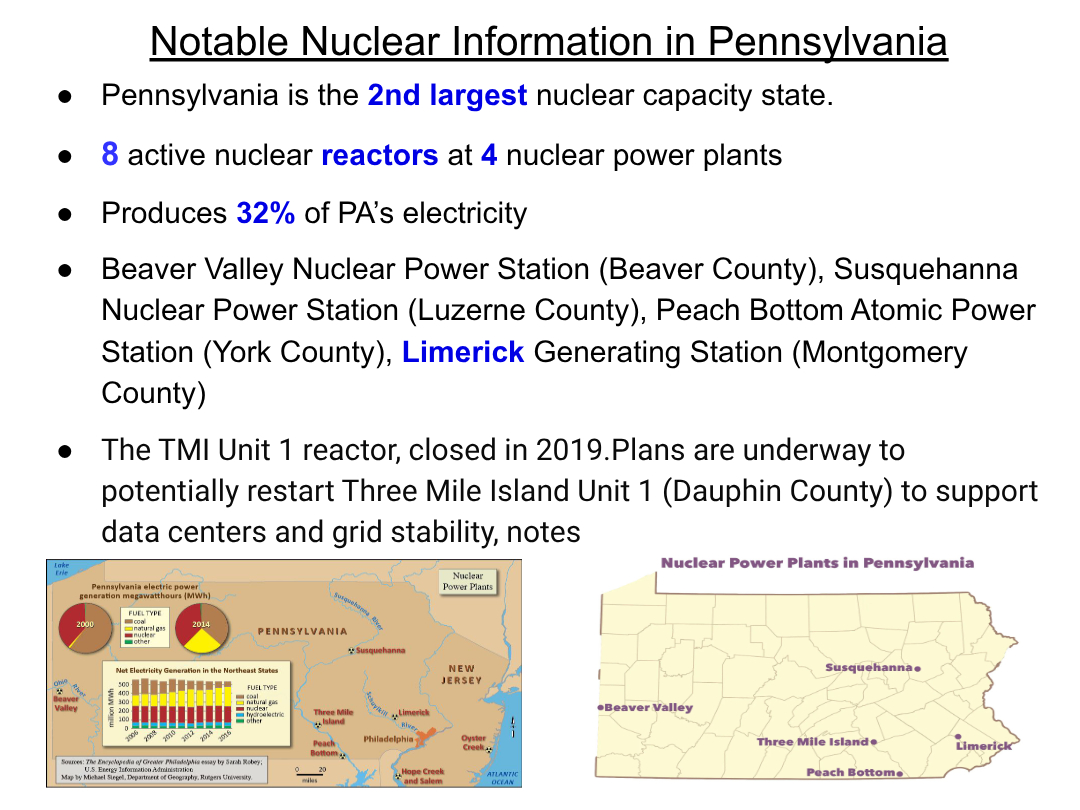
What percentage of Pennsylvania's electricity is produced by nuclear power?
20%
25%
30%
32%
31
Multiple Choice
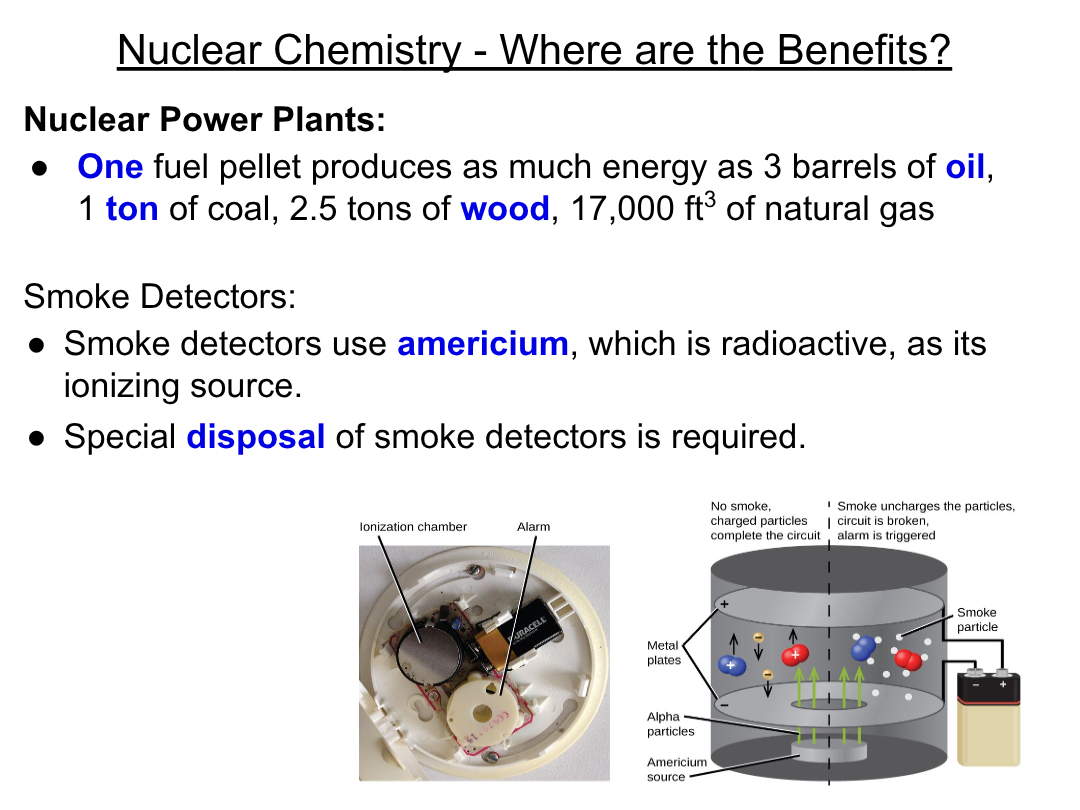
How do nuclear power plants work?
32
Multiple Choice
In a nuclear power plant,
what is used to change water into steam?
the burning of natural gas
heat released from nuclear fission
geothermal energy
solar energy
33
34
35
Multiple Choice
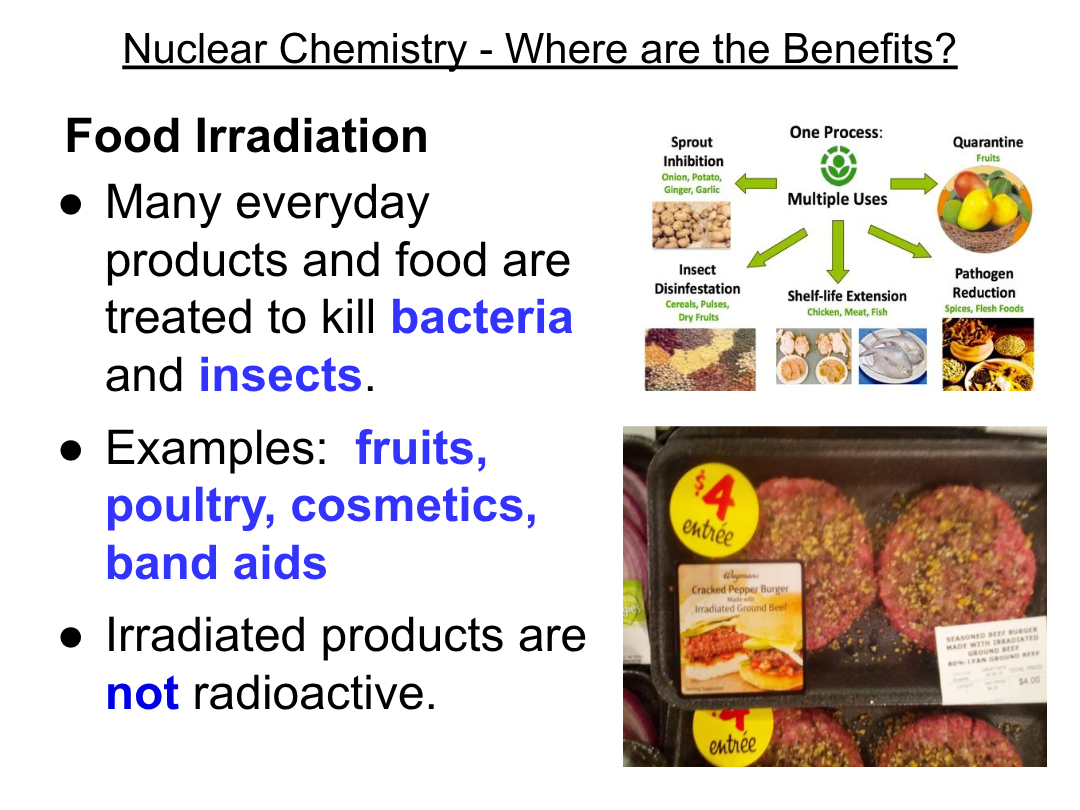
What are some examples of products that undergo food irradiation?
Fruits
Poultry
Cosmetics
All of the above
36
37
Multiple Choice
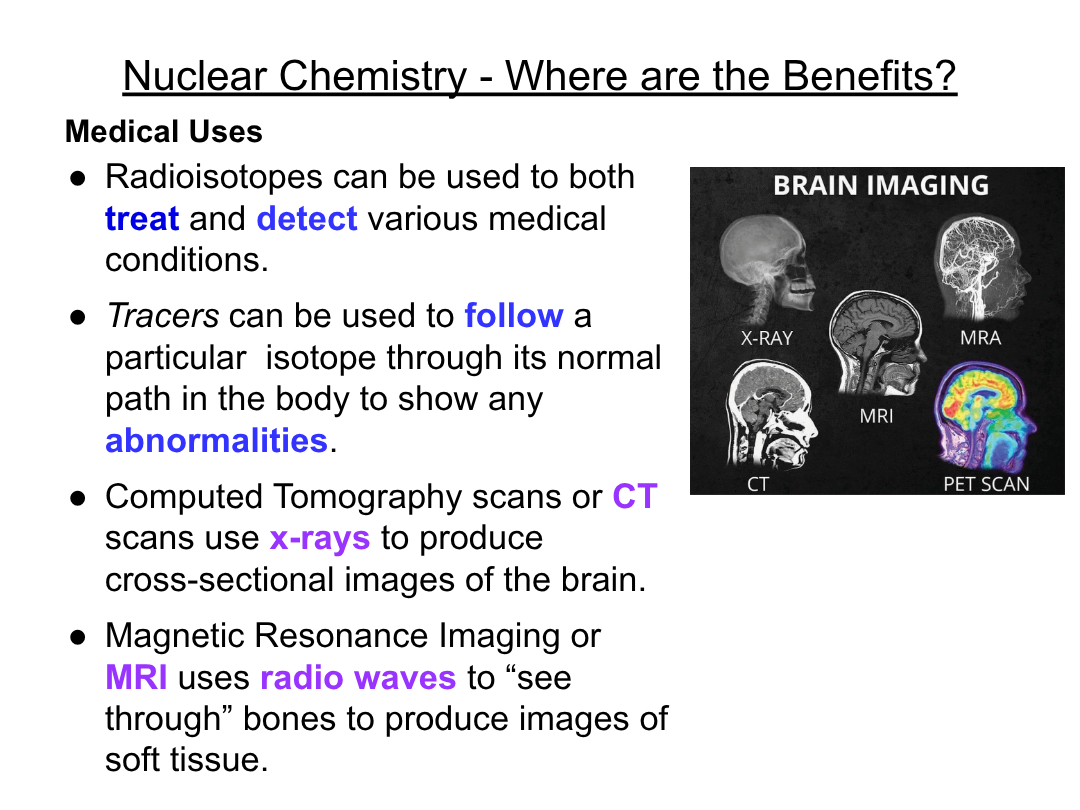
What are the medical uses of radioisotopes in nuclear chemistry?
To treat and detect medical conditions
To only treat medical conditions
To only detect medical conditions
To follow isotopes in the body
38
39
Multiple Choice
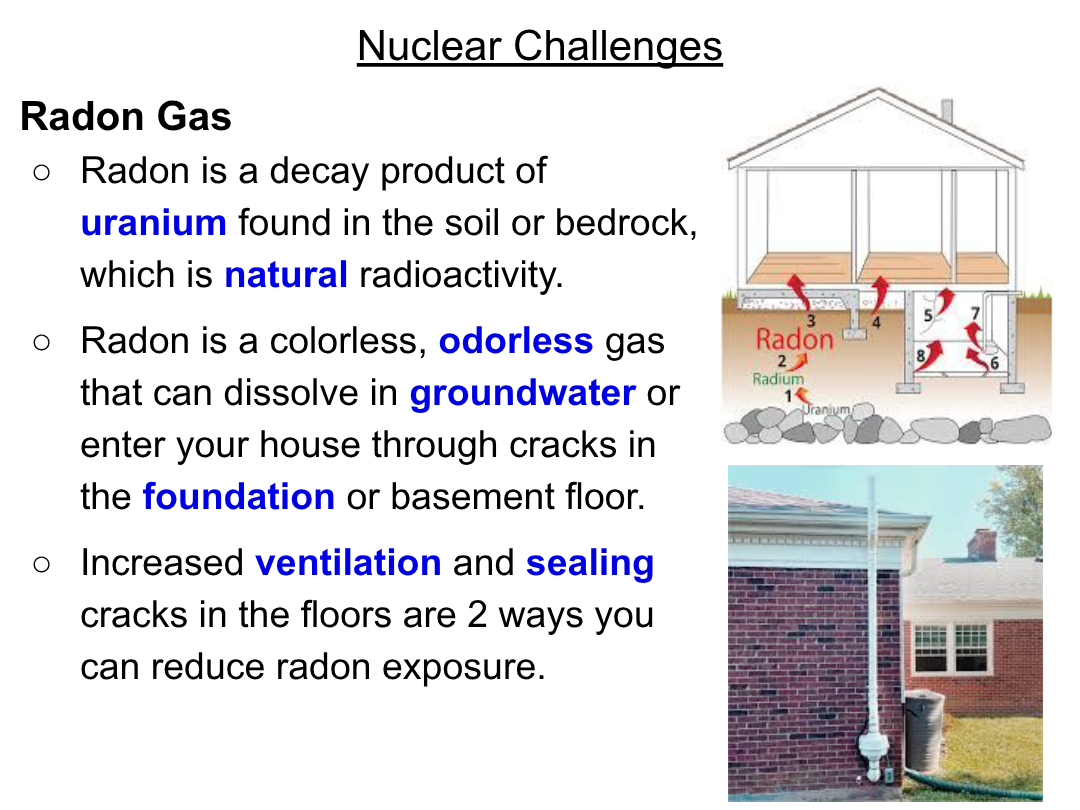
What is radon and how can it enter a house?
A colorless gas that can dissolve in groundwater
A type of uranium found in soil
A radioactive liquid
A gas that smells like sulfur
40
Multiple Choice
Exposure to too much radon gas can cause ....
lung cancer
sun burn
blindness
acne
41
Multiple Choice
Colorless, odorless gas that is a naturally occurring decay product of uranium
asbestos
radon
lead
carbon monoxide
formaldehyde
42
43
Multiple Choice
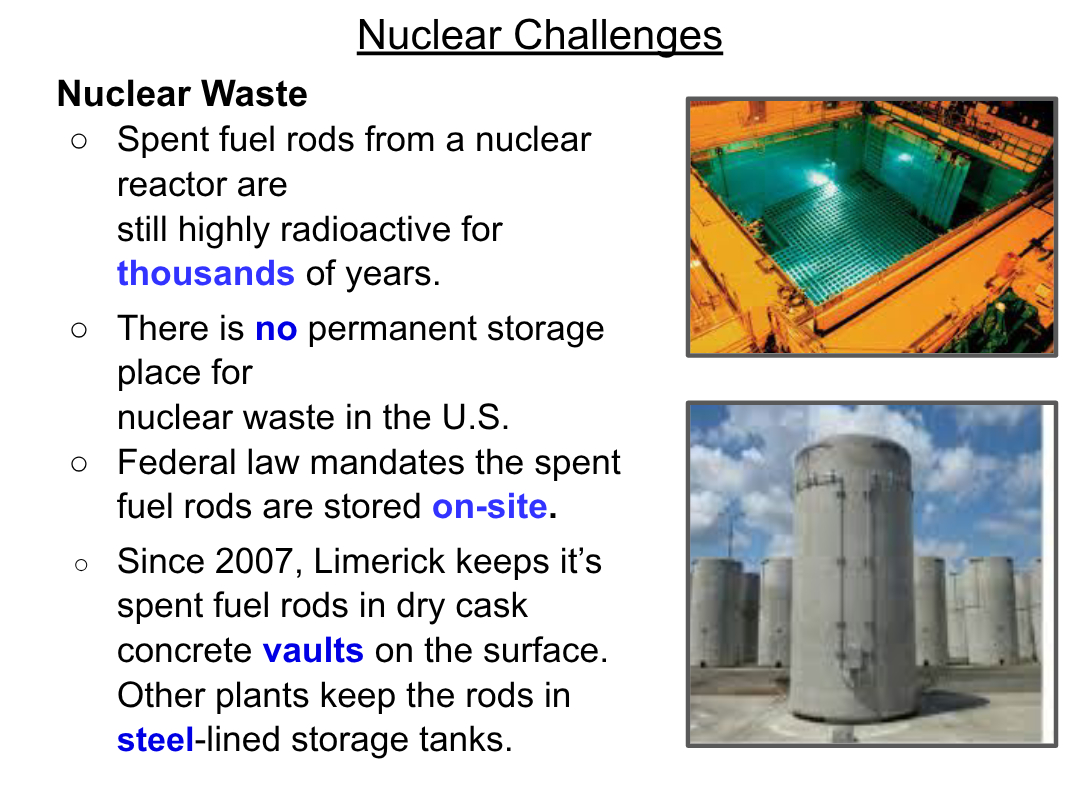
What is the current status of permanent storage for nuclear waste in the U.S.?
There is a permanent storage facility available
There is no permanent storage facility available
Nuclear waste is stored underground
Nuclear waste is stored in residential areas
44
45
Multiple Choice
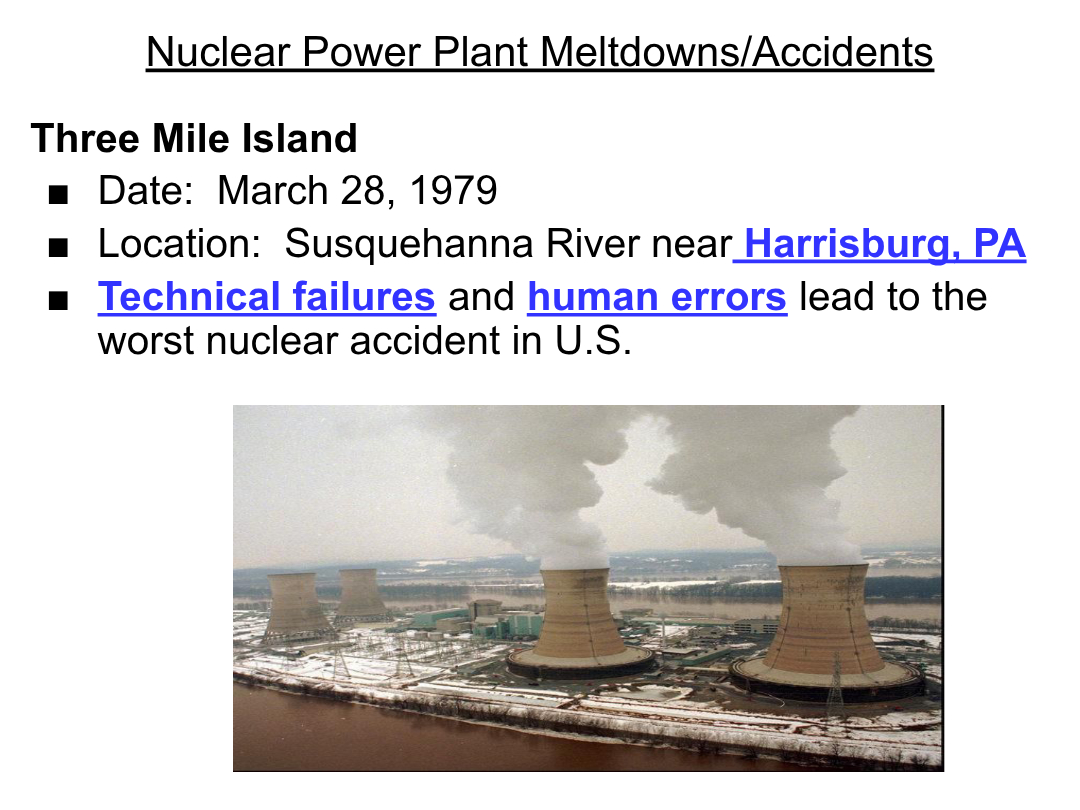
What were the main causes of the Three Mile Island accident?
Technical failures & human error
Human error only
Natural disaster
Technical errors only
46
Multiple Choice

Three Mile Island differed from Chernobyl and Fukushima because...
It wasn't a complete meltdown
The core melted down
Radiation was released
Many people died
47
Poll
How confident do you feel about this topic now?
Show answer
Auto Play
Slide 1 / 47
SLIDE
Similar Resources on Wayground

43 questions
Graphs and Graphing
Presentation
•
9th - 12th Grade
42 questions
7.3 Atmospheric Moisture (Earth Science)
Presentation
•
9th - 12th Grade
42 questions
Canada Map 1
Presentation
•
9th - 12th Grade
43 questions
Day 2 2026 Semester 2
Presentation
•
9th - 12th Grade
41 questions
Lesson 2 Mendel and his peas
Presentation
•
9th - 12th Grade
42 questions
The Carbon Cycle and the Oxygen Cycle Lesson
Presentation
•
9th - 12th Grade
42 questions
Pickleball Basics
Presentation
•
9th - 12th Grade
Popular Resources on Wayground
21 questions
Continents and Oceans

Quiz
•
6th Grade
20 questions
Parts of Speech
Quiz
•
5th Grade
16 questions
Subject & Predicate
Quiz
•
5th Grade
25 questions
Multiplication Facts
Quiz
•
5th Grade
12 questions
Map Skills
Quiz
•
3rd Grade
22 questions
Continents and Oceans
Quiz
•
5th Grade
15 questions
Rounding Decimals
Quiz
•
5th Grade
20 questions
Brand Labels
Quiz
•
5th - 12th Grade
Discover more resources for Science
10 questions
Exploring Chemical and Physical Changes

Interactive video
•
6th - 10th Grade
20 questions
Atomic Structure
Quiz
•
9th Grade
10 questions
Exploring the Periodic Table
Interactive video
•
6th - 10th Grade
14 questions
Periodic Trends
Interactive video
•
11th Grade
10 questions
Exploring Earth's Spheres and Their Interactions
Interactive video
•
6th - 10th Grade
20 questions
The Cell Cycle and Mitosis
Quiz
•
9th Grade
15 questions
Cell Cycle
Quiz
•
9th Grade
10 questions
Exploring Chemical Changes
Interactive video
•
6th - 10th Grade