Search Header Logo
  1. Resource Library
  2. Science
  3. Earth & Space Science
  4. Earth's Atmosphere
  5. Chapter 12 Earth's Atmosphere Part 1 (lessons 1&2)
Chapter 12 Earth's Atmosphere Part 1 (Lessons 1&2)

Chapter 12 Earth's Atmosphere Part 1 (Lessons 1&2)

Assessment

Presentation

•

Science

•

7th Grade

•

Practice Problem

•

Hard

Created by

john thames

FREE Resource

30 Slides • 21 Questions

1
media

2

media

3

media

4

Multiple Choice

Which of the following is a function of Earth's atmosphere as described in the lesson?

1

It increases the temperature of Earth's surface.

2

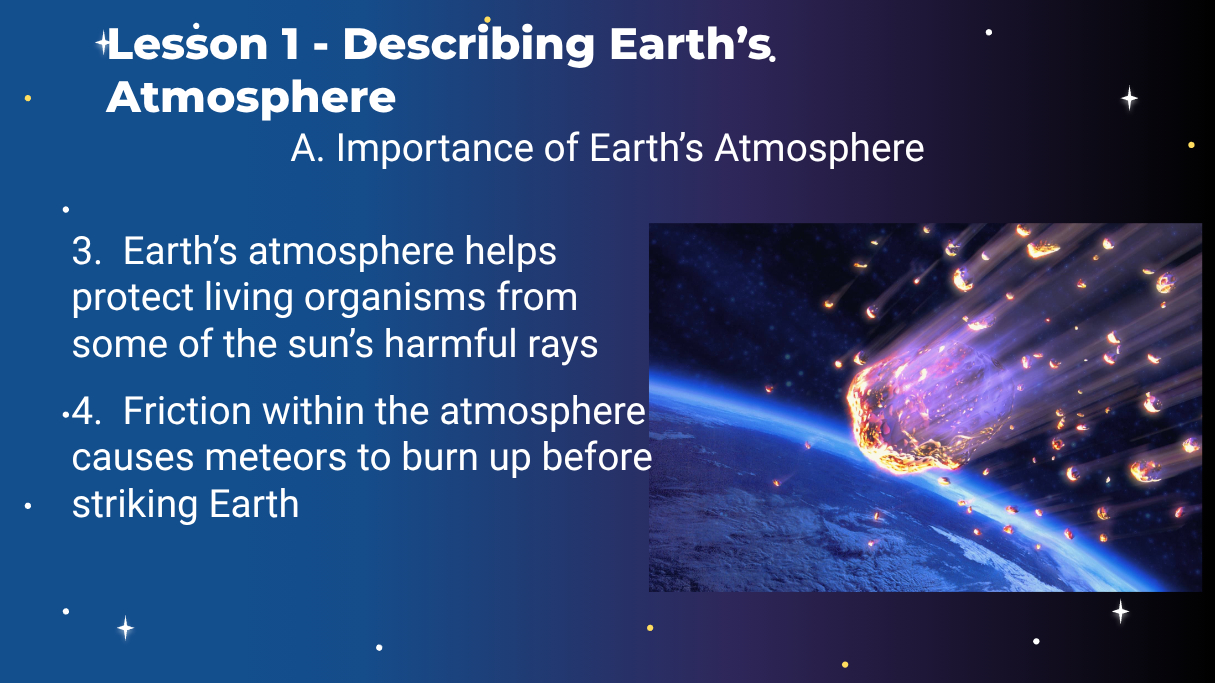
It helps protect living organisms from some of the sun's harmful rays.

3

It makes Earth’s surface harder.

4

It causes meteors to speed up before striking Earth.

5

media

6

media

7

Multiple Choice

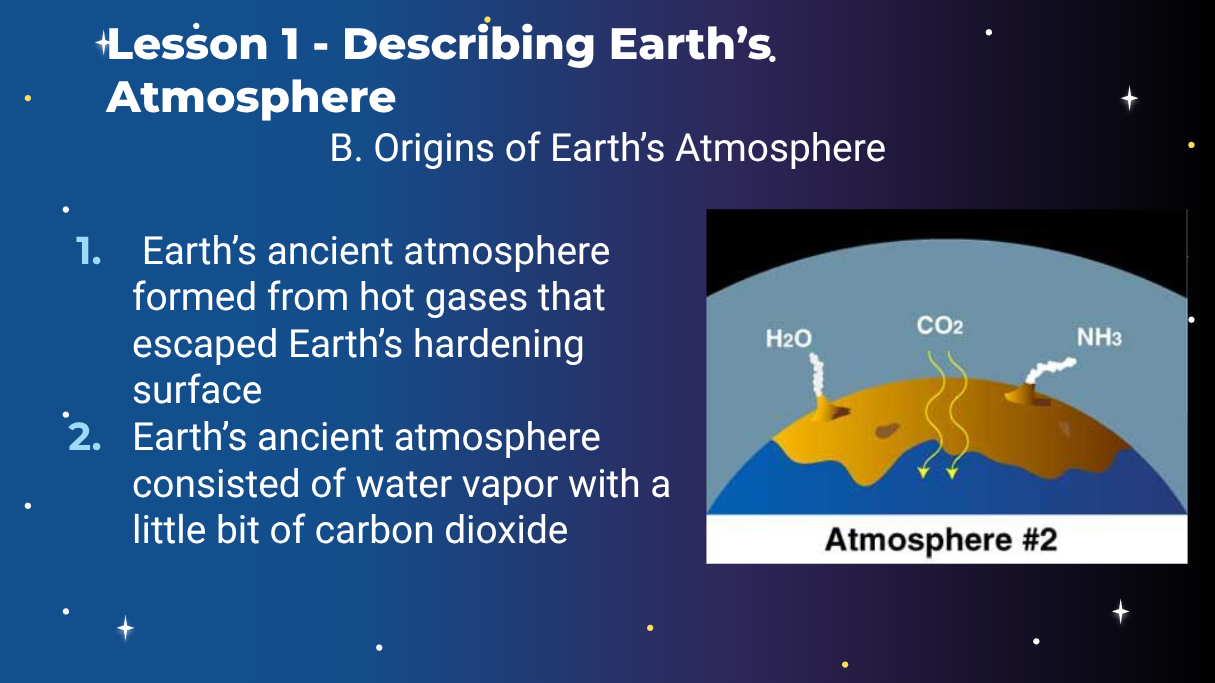
Which gases were present in Earth's ancient atmosphere according to the lesson?

1

Oxygen, Nitrogen, Methane

2

Water vapor, Carbon dioxide, Ammonia

3

Hydrogen, Helium, Neon

4

Argon, Krypton, Xenon

8

media

9

Fill in the Blank

As Earth's atmosphere cooled, water vapor condensed into a liquid and fell into the ___.

10

media

11

Open Ended

Explain the role of photosynthetic organisms in the development of Earth's atmosphere.

12

media

13

Multiple Choice

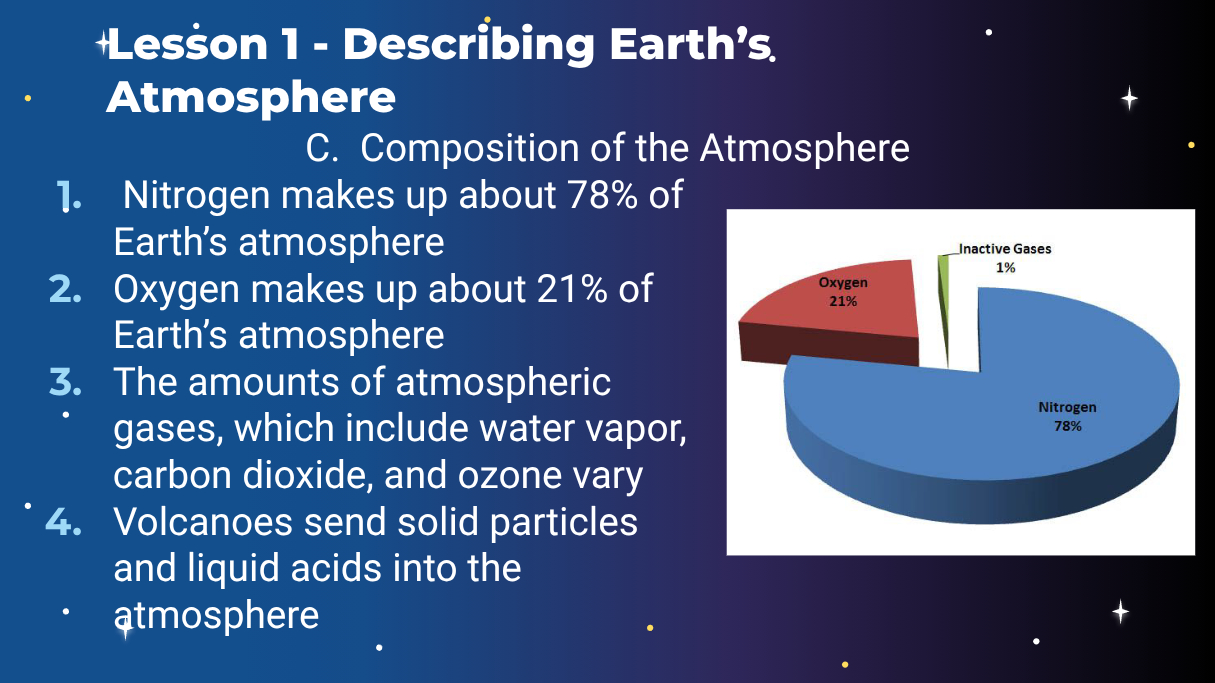
What percentage of Earth's atmosphere is made up of nitrogen?

1

21%

2

50%

3

78%

4

1%

14

media

15

Multiple Choice

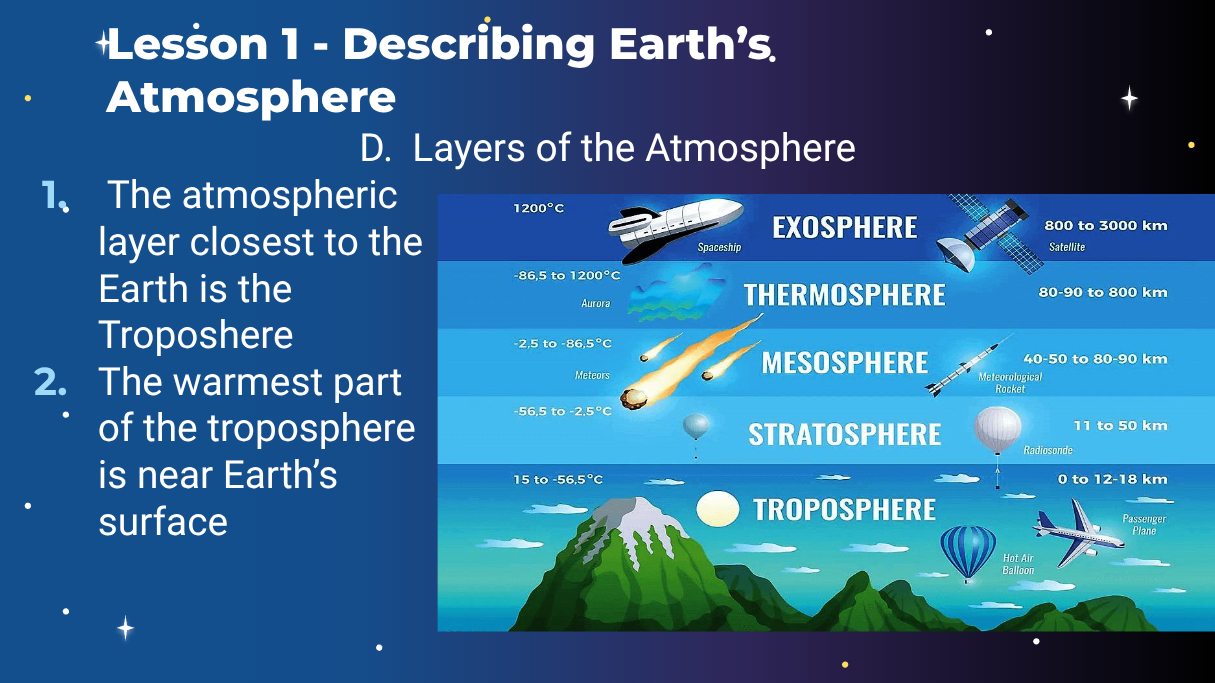
Which atmospheric layer is closest to Earth's surface?

1

Troposphere

2

Stratosphere

3

Mesosphere

4

Exosphere

16

media

17

Fill in the Blank

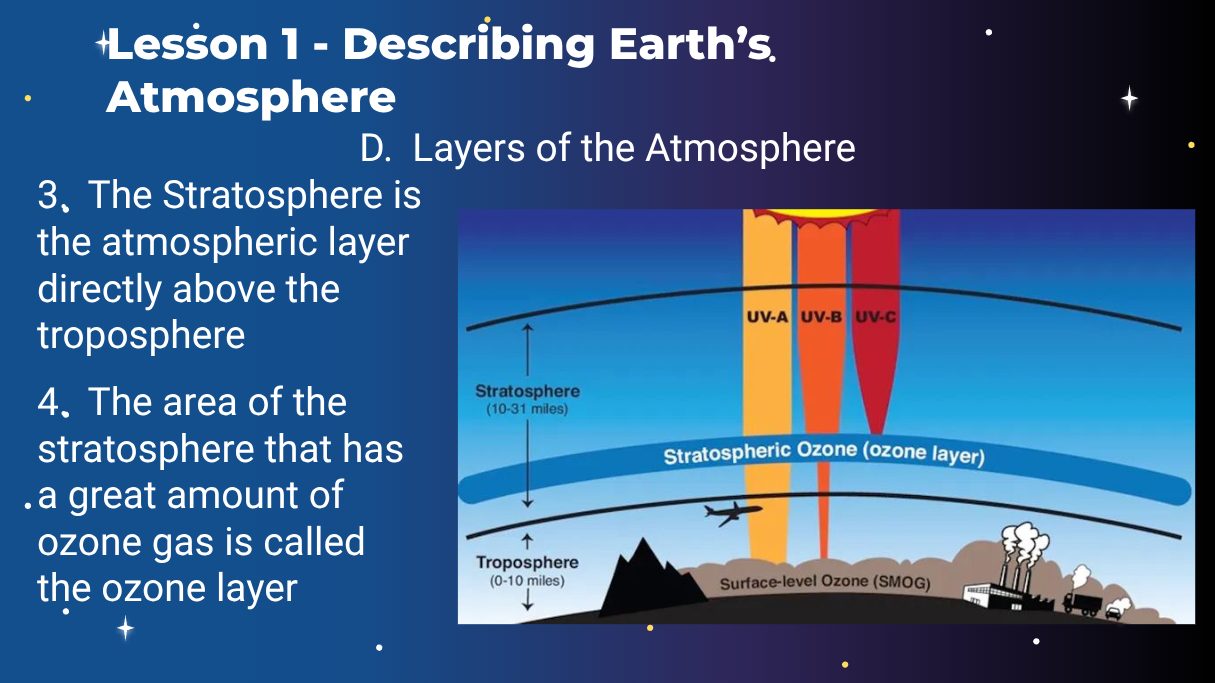
The atmospheric layer directly above the troposphere is the ___.

18

media

19

media

20

media

21

Multiple Choice

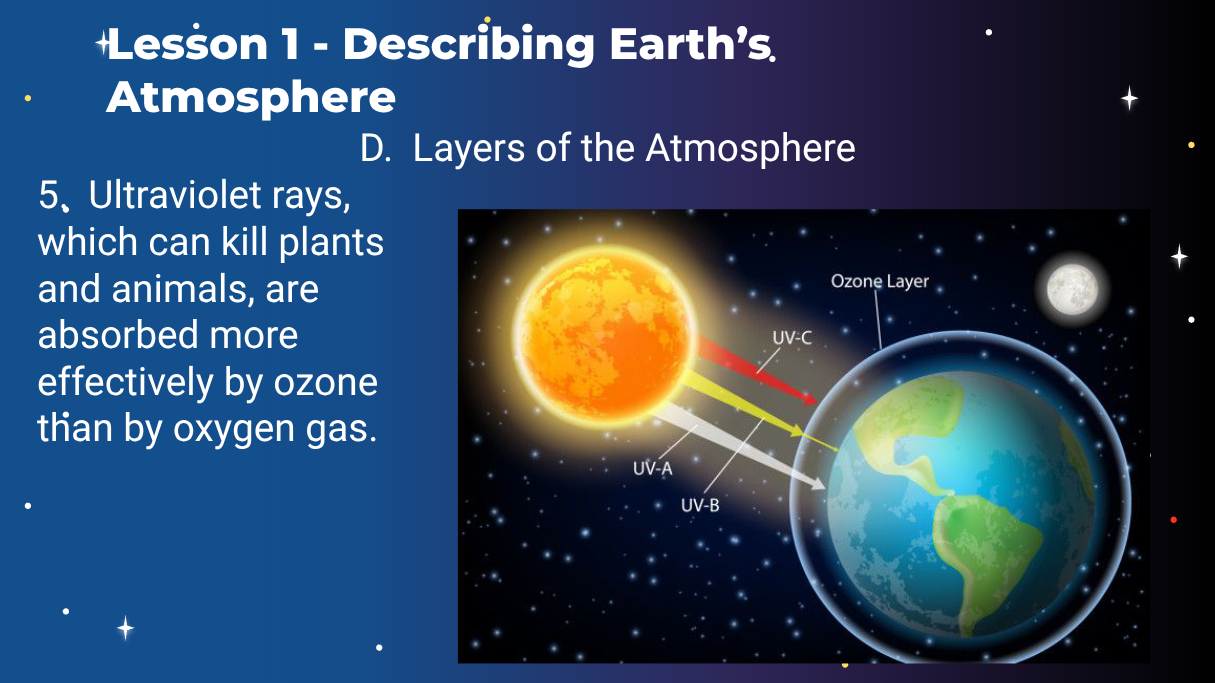
What happens to ultraviolet rays when they reach the ozone layer?

1

They are absorbed by ozone.

2

They pass through unaffected.

3

They are reflected back to space.

4

They are absorbed by nitrogen.

22

Open Ended

Explain the importance of the ozone layer in protecting life on Earth.

23

media

24

Multiple Select

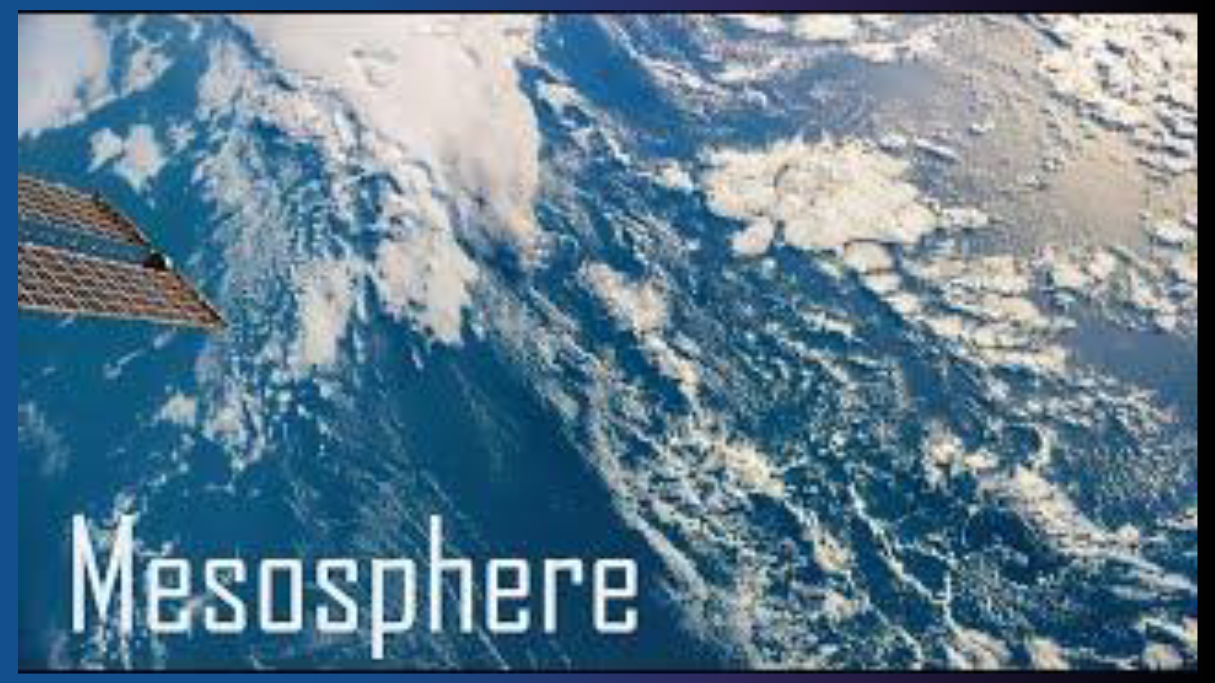
Which of the following statements are true about the Mesosphere and Thermosphere?

1

They have a low density of gases.

2

They are broader than the Troposphere and Stratosphere.

3

They are the warmest layers of the atmosphere.

4

They are closest to Earth's surface.

25

media

26

Multiple Choice

Which layer of Earth's atmosphere contains ions and is known for displays of colored lights called auroras?

1

Troposphere

2

Stratosphere

3

Ionosphere

4

Exosphere

27

media

28

Open Ended

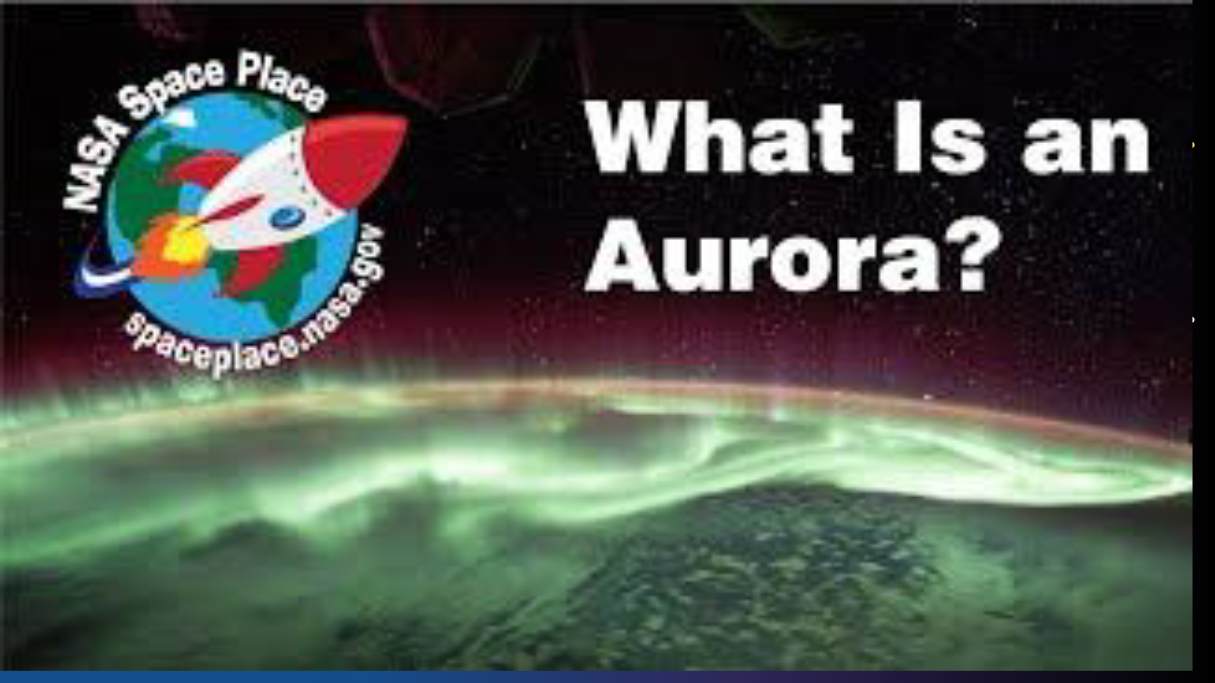
What is an aurora?

29

media

30

media

31

Multiple Choice

Which of the following statements about the Exosphere is correct?

1

Gas molecules are tightly packed together.

2

Gas molecules are so spread out that they rarely strike one another.

3

It is the lowest layer of the atmosphere.

4

It contains the ozone layer.

32

media

33

Fill in the Blank

Air pressure is greatest near Earth's surface because all the molecules of the atmosphere push downward on the lowest layer of ___

34

media

35

Multiple Select

Select all the layers of Earth's atmosphere where temperature decreases as altitude increases.

1

Troposphere

2

Stratosphere

3

Mesosphere

4

Thermosphere

36

media

37

media

38

Multiple Choice

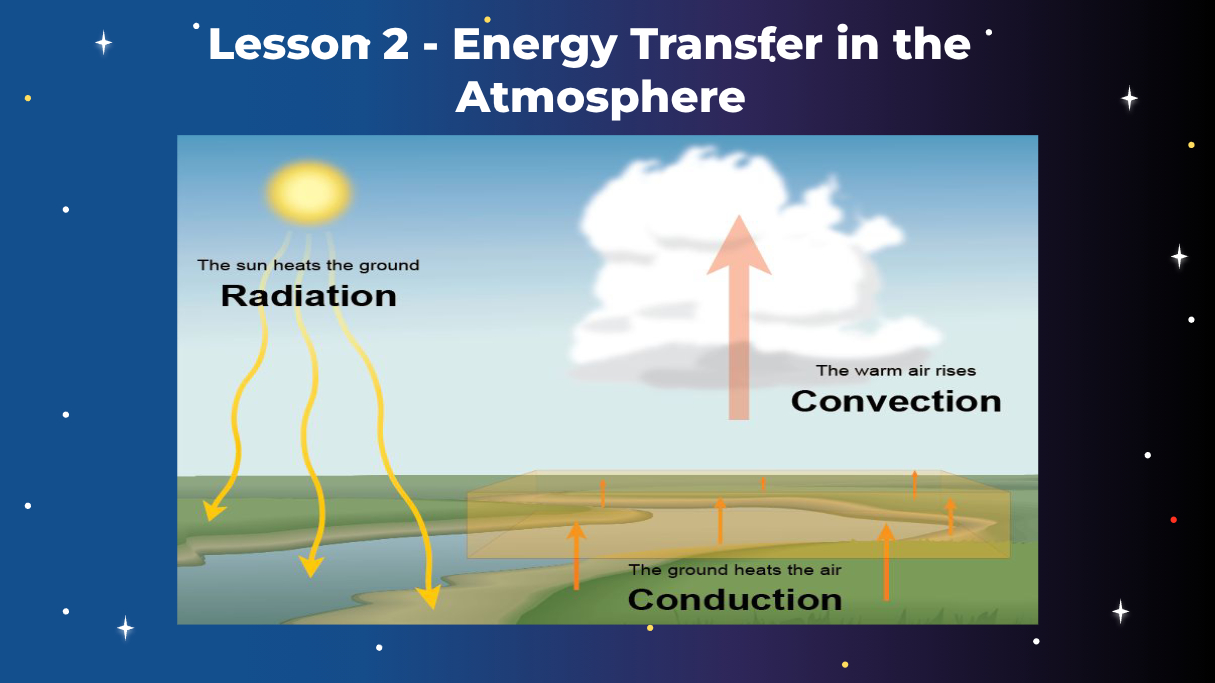
Which process is responsible for the transfer of energy from the sun to the ground in the atmosphere?

1

Conduction

2

Convection

3

Radiation

4

Evaporation

39

media

40

media

41

media

42

media

43

Multiple Choice

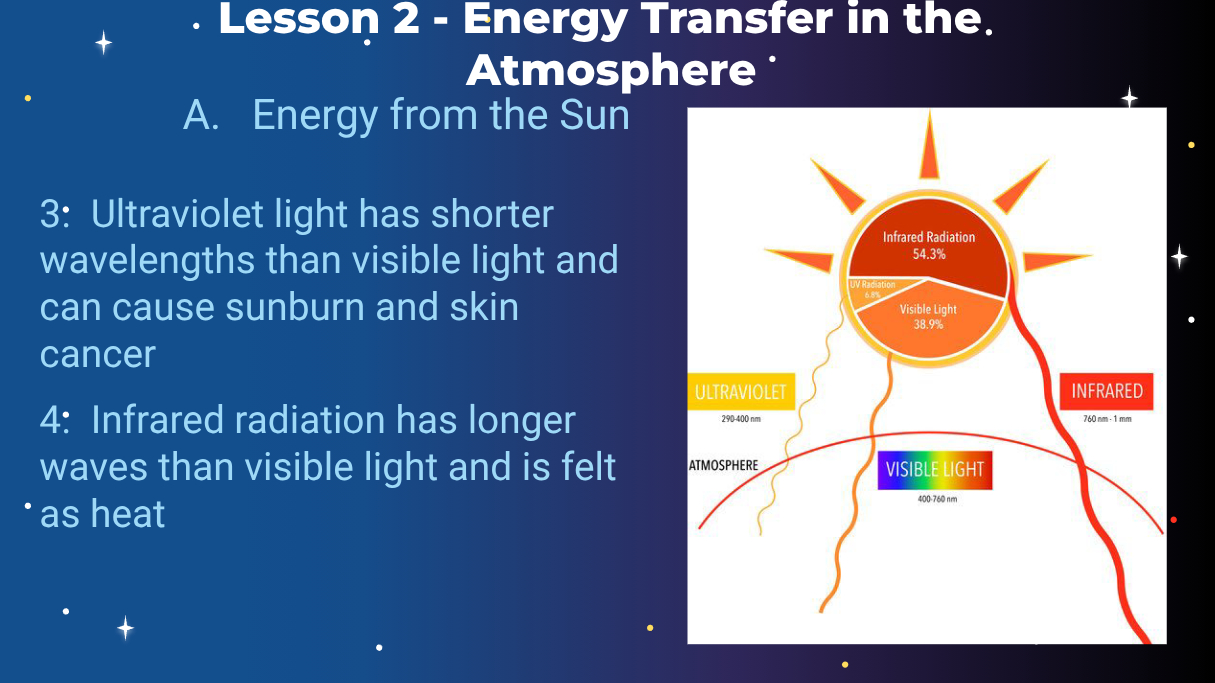
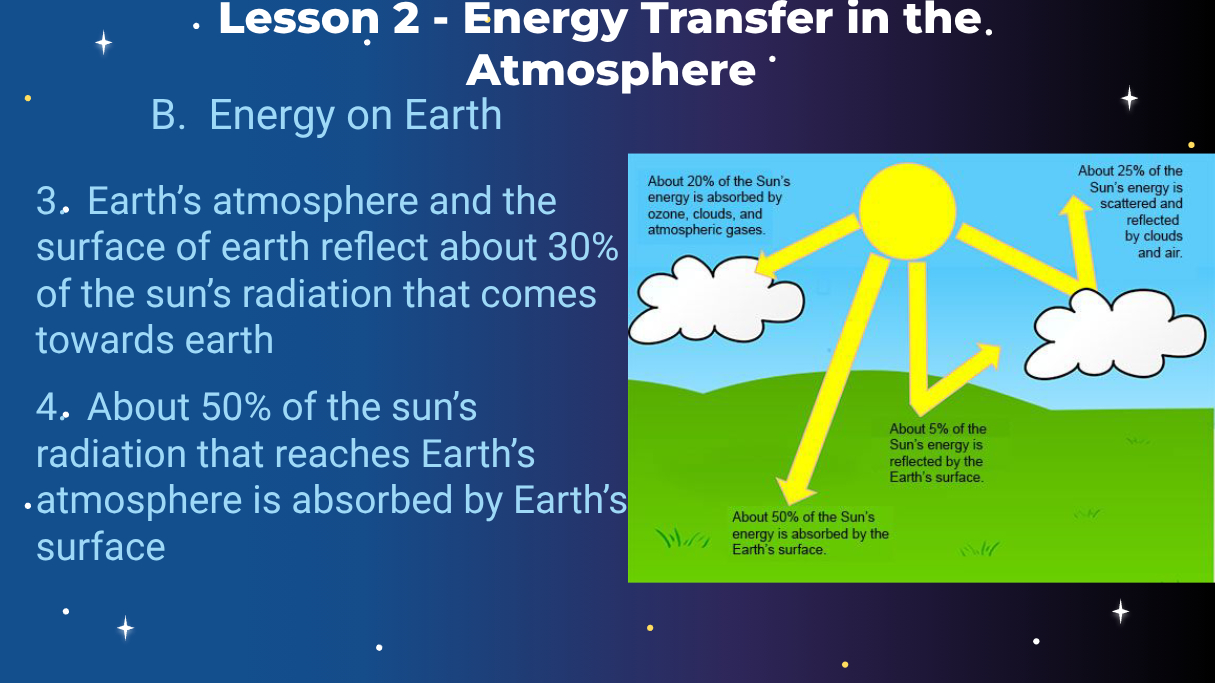
What percentage of the Sun's radiation is visible light?

1

6.6%

2

38.9%

3

54.3%

4

29.4%

44

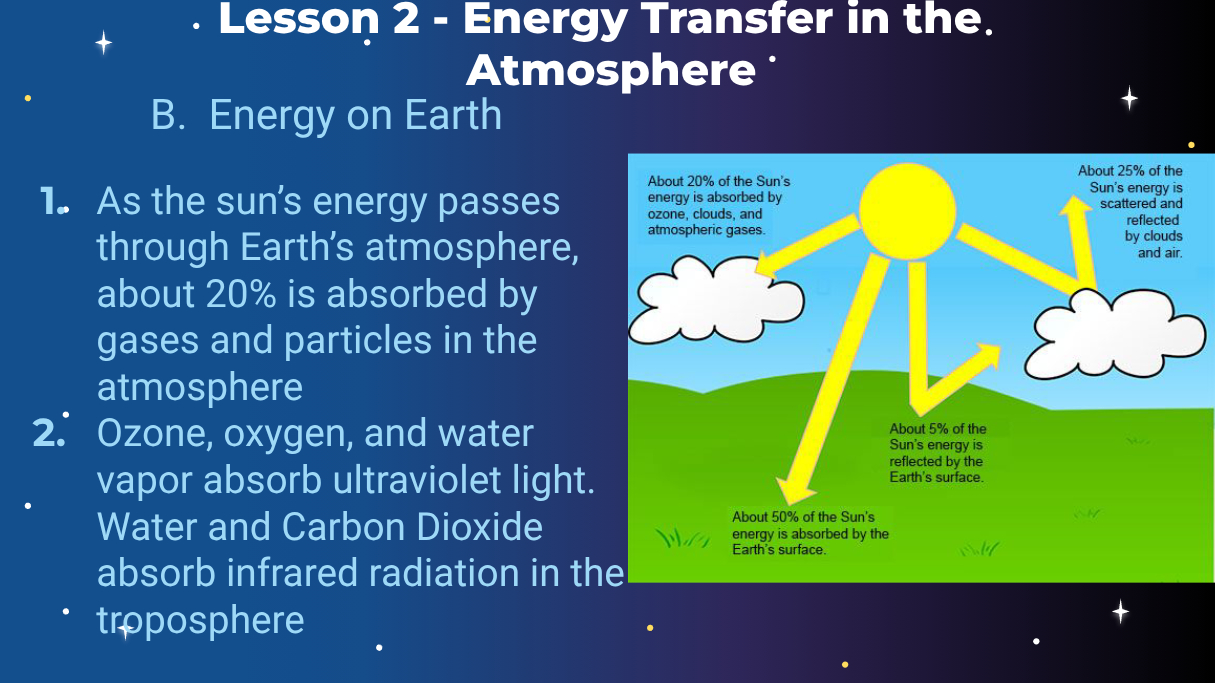
Fill in the Blank

About ___% of the Sun's energy is absorbed by the Earth's surface.

45

Multiple Choice

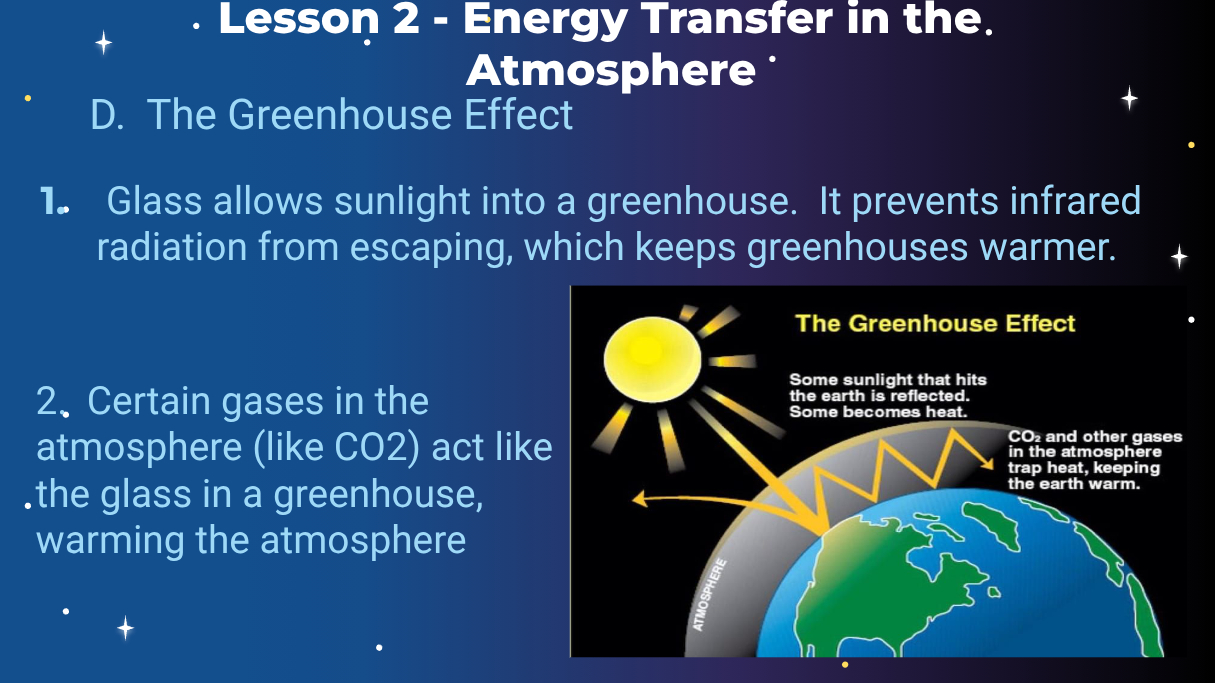
Which of the following gases absorb ultraviolet light in the Earth's atmosphere?

1

Ozone

2

Nitrogen

3

Carbon Dioxide

4

Methane

46

media

47

media

48

media

49

media

50

Open Ended

What questions do you still have about Earth's atmosphere or its importance to life on Earth?

51

Multiple Choice

Why is Earth's atmosphere important for life on our planet?

1

It provides insulation to keep temperatures suitable for life

2

It is a solid layer protecting Earth from meteors

3

It is made entirely of oxygen

4

It is only a few meters thick

media

Show answer

Auto Play

Slide 1 / 51

SLIDE