Search Header Logo
Midterm Review

Midterm Review

Assessment

Presentation

•

Biology

•

9th - 12th Grade

•

Hard

•
NGSS
MS-LS1-7, MS-LS1-2, MS-LS1-1

+25

Standards-aligned

Created by

Holly McNair

FREE Resource

0 Slides • 180 Questions

1

Multiple Choice

Question image

A possible explanation to a problem that has not yet been tested.

1

data

2

theory

3

hypothesis

4

fact

2

Multiple Choice

Question image

This variable in an experiment is the one being deliberately changed by the scientist.

1

dependent variable

2

independent variable

3

data

4

control group

3

Multiple Choice

Question image

Should experiments be repeated over and over to see if the results are the same each time?

1

yes

2

no

4

Multiple Choice

Question image

A series of steps used by scientists to solve a problem or answer a question.

1

scientific method

2

recipe

3

data collection

4

metric system

5

Multiple Choice

Question image

In a controlled experiment, how many variables can be worked with at a time?

1

one

2

none

3

two or more

4

how ever many makes sense.

6

Multiple Choice

Question image

The part of the experiment that remains the same for the control and experimental group.

1

constants

2

control

3

independent

4

dependent

7

Multiple Choice

Question image

Mr. S. sets up an experiment to see how the mass of a ball affects the distance it rolls off a ramp. Identify the independent variable.

1

distance traveled by the ball

2

height of the ramp

3

mass of the ball

4

weight of the ball

8

Multiple Choice

Question image

Mr. S. sets up an experiment to see how the mass of a ball affects the distance it rolls off a ramp. Identify the dependent variable.

1

height of the ramp

2

distance traveled by the ball

3

mass of the ball

4

weight of the ball

9

Multiple Choice

Question image

Why do scientist use the scientific method?

1

To make sure they get credit for their discoveries.

2

To make sure their results are valid and can be performed by other scientists.

3

So that other scientist don't get mad at them

10

Multiple Choice

Question image
The information you record in an experiment is called your ____________.
1
data
2
conclusions
3
notebook
4
inquiry

11

Multiple Choice

Question image
After a scientific experiment is performed, data is recorded, and conclusions are drawn, what should be done next?
1
Share your research with other scientists
2
Keep your research a secret
3
Destroy all evidence of your experiment

12

Multiple Choice

This part of the experiment serves as a basis of comparison; the one variable being tested has been omitted. 
1
experimental group
2
control group
3
data
4
variables

13

Multiple Choice

What step does every scientific experiment begin with?
1
hypothesis
2
question/problem
3
procedures
4
conclusion

14

Multiple Choice

On what axis should the independent variable always be?
1
X
2
Y

15

Multiple Choice

An organelle that takes in sunlight energy, carbon dioxide, and water to make food

1

cell membrane

2

cell wall

3

mitochondria

4

chloroplast

16

Multiple Choice

An organelle that builds proteins

1

ribosomes

2

mitochondria

3

nucleus

4

cell membrane

17

Multiple Choice

An organelle that directs all cell activities and stores DNA

1

ribosomes

2

mitochondria

3

nucleus

4

cell membrane

18

Multiple Choice

This structure allows materials to enter and exit the cell

1

cell wall

2

mitochondria

3

nucleus

4

cell membrane

19

Multiple Choice

These structures are found in plant cells only

1

cell wall, cell membrane

2

mitochondria, chloroplast

3

cell wall, cytoplasm

4

chloroplast, cell wall

20

Multiple Choice

A fluid that fills the cell and holds the organelles in place

1

chloroplast

2

chloroplasm

3

cytoplasm

4

cell membrane

21

Multiple Choice

If organisms need to get and use energy as a life function, which cell organelle would be most involved with this process?

1

nucleus

2

mitochondria

3

cytoplasm

4

ribosomes

22

Multiple Choice

A heterotroph is an organism that

1

gets nutrients from other organisms

2

gets nutrients from the sun

3

gets nutrients from chemicals

23

Multiple Choice

An autotroph is an organism that

1

gets nutrients from other organisms

2

gets nutrients from the sun

3

gets nutrients from chemicals

24

Multiple Choice

Question image

What is the function of the vacuole?

1

Sac that stores water, nutrients, and waste products

2

Jelly-like substance within the plasma membrane

3

Sac filled with digestive chemicals

4

Stack of membranes that packages chemicals

25

Multiple Choice

Question image

A rigid layer that lies outside the cell's membrane is...

1

cytoskeleton

2

cilia

3

flagella

4

cell wall

26

Multiple Choice

Question image
The two kinds of cells are Prokaryotes and Eukaryotes. How are they different?
1
Prokaryotes have a nucleus.
2
Eukaryotes have a nucleus.
3
Prokaryotes are plant cells.
4
There is no difference.

27

Multiple Choice

Only eukaryotic cells have....
1
membrane-bound organelles 
2
DNA
3
ribosomes
4
cell membranes 

28

Multiple Choice

Question image
Which of these is NOT a part of the Cell Theory?
1
All cells are independent.
2
Cells are the basic unit of living things. 
3
All living things are one or more cells.
4
Cells come from cells.

29

Multiple Choice

Maya, Luna, and Rohan are training for a marathon. They need to keep their body temperatures stable during the run. What is this ability called?

1

The ability to maintain balance in the body

2

The movement of molecules

3

The process of diffusion

4

The pH scale

30

Multiple Choice

William, Scarlett, and Samuel are learning about the human body in their biology class. Their teacher asks, 'What is the function of the circulatory system/transport in our bodies?'

1

To transport oxygen, nutrients, and waste in the blood

2

To regulate the release of hormones

3

To remove waste from the body

4

To break down food and absorb nutrients

31

Multiple Choice

Sophia, Noah, and Samuel had a big meal for lunch. What is their nutrition's function after this meal?

1

To regulate the release of hormones

2

To remove waste from the body

3

To inhale oxygen and exhale carbon dioxide

4

To break down the food they ate and absorb nutrients

32

Multiple Choice

Samuel, Harper, and Emma are learning about the human body in their biology class. They are discussing the function of the excretory system. What do they conclude is the primary function of the excretory/excretion system?

1

To break down food and absorb nutrients

2

To remove waste from the body

3

To inhale oxygen and exhale carbon dioxide

4

To regulate the release of hormones

33

Multiple Choice

Tissue that works together to perform a function
1
organ
2
cell
3
organ system
4
organism

34

Multiple Choice

What is the difference between a cell and a tissue?
1
cell is basic unit of life; tissue is group of cells that work as one
2
cell is group of tissues; tissue is basic unit of life
3
cell is basic unit of life; tissue is groups of different cells
4
cell is group of organs; tissue is group of different cells

35

Multiple Choice

The network of passageways carries materials from one part of the cell to another.
1
endoplasmic reticulum
2
golgi bodies
3
vacuole
4
cell

36

Multiple Choice

What part of the microscope is used for focusing the image when the microscope is on high power?
1
Coarse Adjustment Knob
2
Fine Adjustment Knob
3
Diaphragm
4
Objective Lens

37

Multiple Choice

All the Physiological activities carried on by an organism

1

metabolism

2

respiratory

3

digestive system

4

synthesis

38

Multiple Choice

Question image

Which statement concerning organism A and organism B is correct?

1

Organism A contains organs, where as organism B lacks organs

2

Organism A and organism B have the same organ systems

3

Organism A and organism B both have structures that perform life processes

4

Organism A lacks structures that help maintain dynamic equilibrium

39

Multiple Choice

Nutrition involves those activities by which organisms

1

remove cellular waste products

2

obtain and process materials needed for other activities

3

exchange gases with their environment

4

absorb and circulate materials

40

Multiple Choice

Which knob CANNOT be turned when observing a specimen using the high-powered objective?

1

coarse adjustment

2

fine adjustment

3

nosepiece adjustment

4

objective adjustment

41

Multiple Choice

What will you notice about an image projected through a light microscope?

1

it is flipped and upside down

2

it is sideways

3

it disappears

4

it is smaller

42

Multiple Choice

Plant cells make energy through respiration.

1

True

2

False

43

Multiple Choice

Question image
Approved eye protection devices (such as goggles) are worn in the laboratory
1
To improve your vision
2
To avoid eye strain
3
Only if you don't wear corrective glasses
4
Anytime chemicals, heat, or glassware are used

44

Multiple Choice

Which life function involves releasing energy from glucose?

1

respiration

2

regulation

3

reproduction

4

synthesis

45

Multiple Choice

Which life function involves getting physically larger?

1

reproduction

2

synthesis

3

growth

4

regulation

46

Multiple Choice

Which life function controls and coordinates the body?

1

respiration

2

synthesis

3

growth

4

regulation

47

Multiple Choice

Which life function obtains and uses food?

1

excretion

2

synthesis

3

growth

4

nutrition

48

Multiple Choice

The life function synthesis involves...

1

building or making molecules

2

growing

3

reproducing

4

an increase in cell size

49

Multiple Choice

The life function Transport involves...

1

absorbing and distributing materials

2

building or making molecules

3

an increase in the number of cells

4

things that are harmful stay out of the cell

50

Multiple Choice

Which life function is related to homeostasis?

1

reproduction

2

regulation

3

growth

4

metabolism

51

Multiple Choice

Which life function is related to the cell membrane and the circulatory system?

1

regulation

2

transport

3

sythesis

4

respiration

52

Multiple Choice

Question image

Streptococcus, a round cell, is the bacteria that causes strep throat.


Which characteristic of life does this refer to?

1

Living things need energy

2

Living things are composed of one or more cells

3

Living things respond to their environment

4

Living things grow and reproduce

5

Living things maintain a stable internal environment

53

Multiple Choice

Question image

Cells in your body divide to create new cells.


Which characteristic of life does this refer to?

1

Living things need energy

2

Living things are composed of one or more cells

3

Living things respond to their environment

4

Living things grow and reproduce

5

Living things maintain a stable internal environment

54

Multiple Choice

Which is the only life function you do not have to do to stay alive?

1

Reproduction

2

Excretion

3

Nutrition

4

Transport

55

Multiple Choice

What life function that removes metabolic waste from an organism?

1

transport

2

excretion

3

synthesis

4

respiration

56

Multiple Choice

What are the 8 levels of classification of living things from most general to most specific?
1
domain, kingdom, phylum, class, order, family, genus, species
2
domain, kingdom, phylum, class, order, family, genius, species
3
domain, kingdom, phamily, class, order, family, genus, species
4
domain, king, phillip, class, order, family, genus, species

57

Multiple Choice

Question image
The scientific name for water bear is Hypsibius dujardini.  What is its genus?
1
Hypsibius 
2
dujardini
3
water 
4
tardigrade

58

Multiple Choice

Question image
The scientific name for water bear is Hypsibius dujardini.  What is its species?
1
Hypsibius 
2
dujardini
3
water 
4
tardigrade

59

Multiple Choice

How do scientists organize living things?
1
by looks
2
by shared characteristics
3
by size
4
by differences

60

Multiple Choice

What is the science of organizing, classifying and naming living things.
1
taxonomy
2
taxadermy
3
taxicab
4
toxicology

61

Multiple Choice

If two species share the same class, they also share the same______.
1
phylum
2
order
3
genus
4
species

62

Multiple Choice

Question image
The 2-part naming system developed by Linneus is known as:
1
dichotomous key
2
taxonomy
3
binomial nomenclature
4
classification

63

Multiple Choice

What type of microscope do we use in this science classroom?

1

compound light microscope

2

scanning electron microscope

3

tunneling electron microscope

4

magnifying glass

64

Multiple Choice

Question image
If you move the slide left while viewing, in which direction will it appear to move?
1
right 
2
left
3
up 
4
down

65

Multiple Choice

Question image
Which part of the microscope controls the amount of light available?
1

coarse focus

2
diaphragm
3
objective lens
4
revolving nosepiece

66

Multiple Choice

Question image
What is part 1?
1

eye piece/ocular lens

2
body tube
3
arm
4
coarse adjust

67

Multiple Choice

The greater the ___________________, the smaller the field you are actually viewing.

1

detail

2

objective

3

magnification

4

body

68

Multiple Choice

What will be the total magnification if ocular lens is 10X and objective lens is 4X?
1
4X
2
40X
3
10X
4
100X

69

Multiple Choice

What will be the total magnification if the ocular lens is 10X and the objective lens is 40X?
1
40X
2
10X
3
100X
4
400X

70

Multiple Select

What are examples of passive transport? Choose all that apply

1

Simple Diffusion

2

Cold Blood

3

Facilitated Diffusion

4

Scavenger

71

Multiple Choice

What is diffusion?
1
when molecules move 
2
when molecules move from a high concentration to a low.
3
no movement 
4
molecules move everywhere

72

Multiple Choice

What a cell needs to transport particles by active transport?
1
Sun
2
Wind
3
Energy
4
Channels

73

Multiple Choice

Low to High
1
Passive Transport
2
Active Transport

74

Multiple Choice

Question image
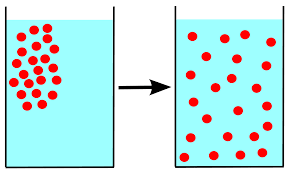
The picture below is an example of _________________.
1
osmosis
2
isotonic
3
diffusion
4
active transport

75

Multiple Choice

In a hypertonic solution, water travels ____________________ the cell.

1

Out of

2

Into

3

Equally through

4

No water movement

76

Multiple Choice

Osmosis is the movement of ______from an area of low concentrated solute to an area of high concentrated solute.

1

molecules

2

oxygen

3

water

4

sugar

77

Multiple Choice

Some molecules can move in and out of the cell freely through the cell membrane, others are too large and cannot. The membrane is said to be ________________

1

ridig

2

transparent

3

selectively permeable

4

a rubberband

78

Multiple Choice

In an isotonic solution, _____________is reached because the cell remains and movement of water remain constant.

1

water

2

equilibrium

3

the same

4

hypertonic

79

Multiple Choice

A hypotonic solution is one in which there is a ______ concentration of solute outside the cell than inside the cell.

1

higher

2

lower

3

equilibrium

80

Multiple Choice

Which is not a part of cell theory?
1
All organisms are made of cells
2
All existing cells come from preexisting cells
3
All matter is composed of living cells
4
The cell is the most basic unit of life

81

Multiple Choice

Monosaccharides are the building blocks of which group of biomolecules?

1

protein

2

lipid

3

carbohydrate

4

nucleic acid

82

Multiple Choice

Which biomolecules contains your genetic information?

1

Proteins

2

Lipids

3

Carbohydrates

4

Nucleic Acids

83

Multiple Choice

Amino Acids are the monomers of __________.

1

Nucleic Acids

2

Proteins

3

Carbohydrates

4

Lipids

84

Multiple Choice

Glycerol and fatty acids are the monomers of _________.

1

Lipids

2

Carbohydrates

3

Proteins

4

Nucleic Acids

85

Multiple Choice

The monomer of Nucleic Acids is known as _________.

1

Amino Acid

2

Fatty Acid

3

Nucleotide

4

Saccharide

86

Multiple Choice

Question image

What type of biomolecule contains carbon, hydrogen, oxygen, and nitrogen?

1

carbohydrate

2

lipid

3

nucleic acid

4

protein

87

Multiple Choice

Which of the following is the correct pair of biomolecules and their monomers?

1

Carbohydrate: Fatty Acids

2

Protein: Amino acid

3

Lipid: Nucleotide

4

Nucleic Acid: DNA

88

Multiple Choice

Enzyme is a/an...

1

carbohydrate

2

lipid

3

protein

4

nucleic acid

89

Multiple Choice

1. The four most common elements found in biomolecules are __________.

1

Sulfur, Phosphorus, Carbon, Oxygen

2

Carbon, Oxygen, Nitrogen, Hydrogen

3

Sulfur, Nitrogen, Carbon, Iron

4

Carbon, Nitrogen, Hydrogen, Sulfur

90

Multiple Choice

What is a substance called if it speeds up a chemical reaction?
1
reusable
2
catalyst
3
specific
4
fragile

91

Multiple Choice

With what 3 letters do enzymes typically end?
1
-ose
2
-ase
3
-ese
4
-tic

92

Multiple Choice

Question image
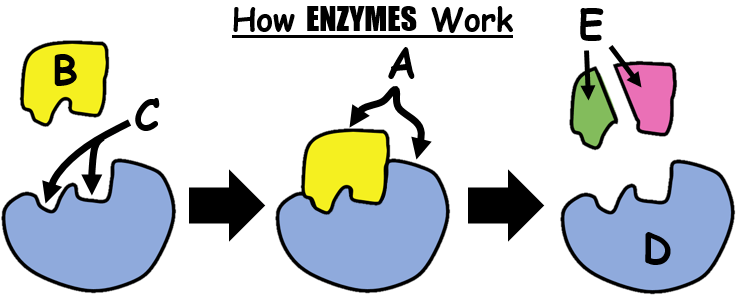
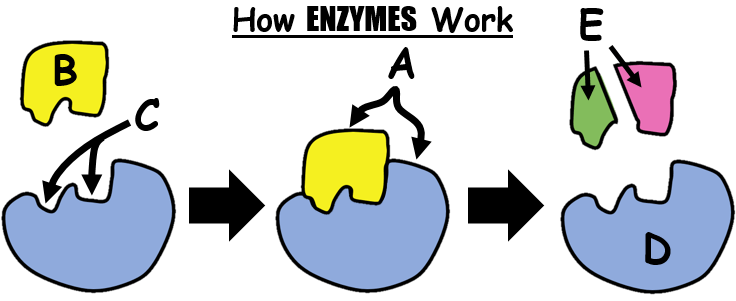
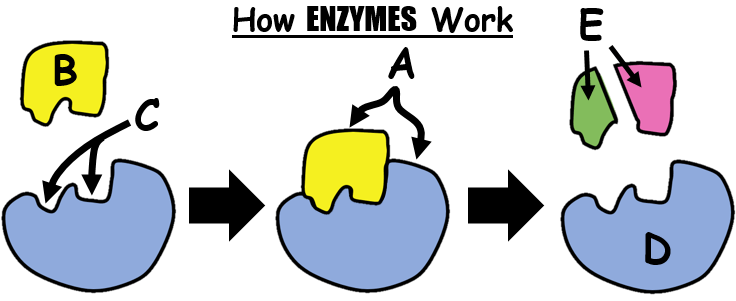
Letter D...
1
active site
2
enzyme
3
substrate
4
products

93

Multiple Choice

Question image
Letter B...
1
active site
2
enzyme
3
substrate
4
products

94

Multiple Choice

Question image
Letter C...
1
active site
2
enzymes
3
substrate
4
products

95

Multiple Choice

What happens when enzymes are heated to a high temperature?

1

The enzymes die.

2

The shape of the enzyme are changed and it denatures

3

The enzymes' amino acid sequence changes.

4

The enzymes remain the same

96

Multiple Choice

Question image

What is the optimum temperature for this enzyme?

1

20 degrees Celsius

2

45 degrees Celsius

3

52 degrees Celsius

4

64 degrees Celsius

97

Multiple Choice

Question image

What can be inferred using the graph?

1

Cells can function equally as well at all pH values.

2

Cells do not function well at pH values that are too high or too low.

3

Cells function best at high pH values.

4

Cells function best at low pH values.

98

Multiple Choice

Which of the following two factors affect an enzyme's operation the most?

1

amount of light and temperature

2

blood glucose and pH

3

temperature and pH

4

amount of light and pressure

99

Multiple Choice

In the lock-and-key model of enzyme action, the __________ fits into the __________ of the enzyme.

1

product; substrate

2

active site; product

3

substrate; active site

4

active site; substrate

100

Multiple Select

What are the TWO inputs of photosynthesis?

1

ATP

2

carbon dioxide

3

glucose

4

oxygen gas

5

water

101

Multiple Select

What are the TWO outputs of photosynthesis?

1

ATP

2

carbon dioxide

3

glucose

4

oxygen gas

5

water

102

Multiple Select

What are the TWO inputs of cellular respiration?

1

ATP

2

carbon dioxide

3

glucose

4

oxygen gas

5

water

103

Multiple Select

What are the THREE outputs of cellular respiration?

1

ATP

2

carbon dioxide

3

glucose

4

oxygen gas

5

water

104

Multiple Choice

What is the correct equation for cellular respiration?

1

oxygen + sugar -> carbon dioxide + water + Energy

2

carbon dioxide + sugar + Energy -> carbon dioxide + water

3

carbon dioxide + water -> oxygen + sugar + Energy

4

carbon dioxide + water + Energy -> oxygen + sugar

105

Multiple Choice

What is important about cellular respiration?

1

It produces energy from the sun.

2

It forms sugar.

3

It transforms sugar into a usable form of energy (ATP)

4

Only plants perform this process.

106

Multiple Choice

What type of respiration requires oxygen?
1
Aerobic
2
Anaerobic

107

Multiple Choice

Fermentation occurs in the cell's 
1
cytoplasm
2
nucleus
3
cell membrane
4
cristae

108

Multiple Choice

What is a disadvantage of fermentation as a process? 
1
It produces too much ATP
2
It only produces 2 ATP
3
It occurs in the absence of oxygen
4
It is only for quick bursts of energy

109

Multiple Choice

Which compounds are produced by the two main types of fermentation? 
1
NAD+ or ATP
2
alcohol or lactic acid
3
glucose or carbon dioxide
4
ADP or ATP

110

Multiple Choice

Where in the cell does aerobic respiration take place?
1
Nucleus
2
Cytoplasm
3
Mitochondria
4
Cell membrane

111

Multiple Choice

Question image

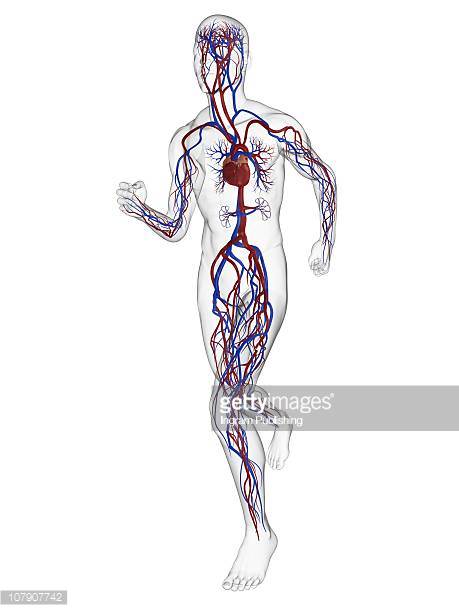
What is the main organ of the circulatory system?

1

small intestine

2

bone

3

lungs

4

heart

112

Multiple Choice

Arteries carry oxygen rich blood away from the heart.

1

True

2

False

113

Multiple Choice

Veins carry oxygen poor blood back to the heart.

1

False

2

True

114

Multiple Choice

______________ are the smallest blood vessels.
1
Arteries
2
Veins
3
Capillaries

115

Multiple Choice

The circulatory system works with the ___________ system to provide our body with oxygen.
1
respiratory
2
digestive
3
muscular
4
skeletal

116

Multiple Choice

The main function of the circulatory system is 
1
To give the body structure and support
2
Excrete waste
3
transport blood, nutrients, and gases throughout the body
4
to transport messages from the body to the brain

117

Multiple Choice

The heart has ___ chambers.
1
1
2
2
3
3
4
4

118

Multiple Choice

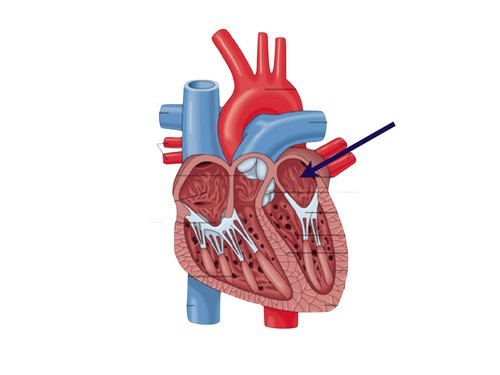
Question image
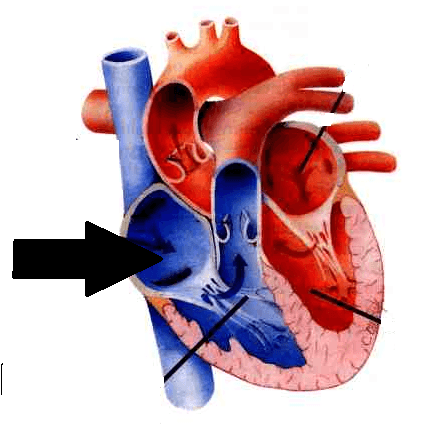
Identify
1
Left atrium
2
Right atrium
3
Left ventricle
4
Right ventricle

119

Multiple Choice

Question image
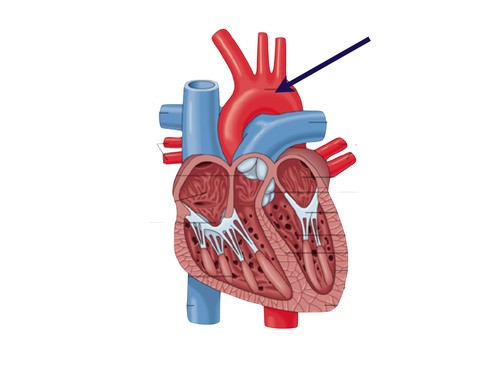
Identify
1
Pulmonary veins
2
Pulmonary artery
3
Aorta
4
Vena cava

120

Multiple Choice

Question image
Identify
1
Left atrium
2
Right atrium
3
Left ventricle
4
Right ventricle

121

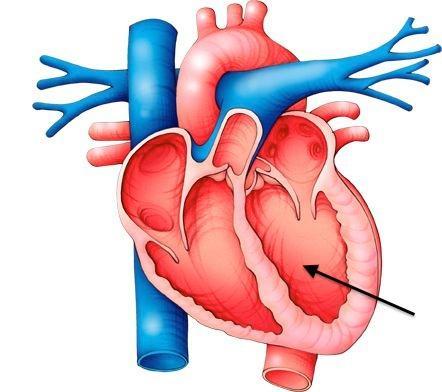
Multiple Choice

Question image
Identify
1
Left atrium
2
Right atrium
3
Left ventricle
4
Right ventricle

122

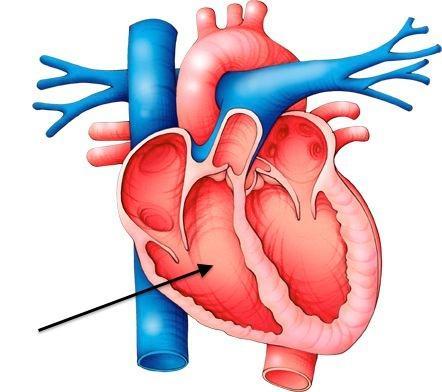
Multiple Choice

Question image
Identify
1
Left atrium
2
Right atrium
3
Left ventricle
4
Right ventricle

123

Multiple Choice

This chamber of the heart RECEIVES blood returning from the body
1
Right Atrium
2
Right Ventricle
3
Left Atrium
4
Left Ventricle

124

Multiple Select

Which of the following (2) are the largest veins in the body?

1

superior vena cava

2

inferior vena cava

3

anterior vena cava

4

posterior vena cava

125

Multiple Choice

There are four components that make up blood. This is the component in which fluid and other cells are suspended.

1

leukocyte

2

thrombocyte

3

plasma

4

erythrocyte

126

Multiple Choice

What carries oxygen around the body?

1

Plasma

2

Red Blood Cells

3

Platelets

4

White Blood Cells

127

Multiple Choice

What is the function (job) of the platelets?

1

To form clots (i.e. scabs) when you have cuts and grazes.

2

To transport oxygen to the muscles

3

To carry dissolved sugars.

4

To produce antibodies

128

Multiple Choice

What is the role of white blood cells in the blood?

1

They are responsible for carrying oxygen and carbon dioxide.

2

They are responsible for blood clotting.

3

They are part of the immune system and function in immune response.

4

They transport nutrients and hormones.

129

Multiple Choice

Which of the following is a role of white blood cells?

1

Transporting oxygen throughout the body.

2

Recognizing and neutralizing invaders such as bacteria and viruses.

3

Forming clots to prevent blood loss.

4

Carrying carbon dioxide to the lungs.

130

Multiple Choice

When a new viral infection appears in a population scientists usually try to develop a vaccine against the virus. Which substance would most likely be contained in the new vaccine?


1

(1) live bacteria that ingest viruses

2

(2) white blood cells from an infected individual

3

(3) weakened viruses associated with the infection

4

(4) a variety of microbes that will attack the virus

131

Multiple Choice

It is recommended that people at risk for serious flu complications be vaccinated so that their bodies will produce


1

(1) antigens to fight the flu virus

2

(2) antibodies against the flu virus

3

(3) toxins to fight the infection caused by the flu virus

4

(4) antibiotics to reduce symptoms caused by the flu virus

132

Multiple Choice

8. The failure of the human body to effectively

maintain dynamic equilibrium can result in


1

(1) reproductive success

2

(2) gene manipulation

3

(3) differentiation

4

(4) disease

133

Multiple Choice

An infection in the body might result in a sudden

1

(1) decrease in the activity of antigens produced by the

mitochondria

2

(2) decrease in the amount of DNA present in the nuclei of

cells

3

(3) increase in the activity of white blood cells

4

(4) increase in the number of red blood cells

134

Multiple Choice

Which disorder could develop in the human body when the immune system attacks a usually harmless environmental substance?


1

(1) cancer

2

(2) AIDS

3

(3) an allergy

4

(4) an infection

135

Multiple Choice

Cells of the immune system are able to respond to the presence of invading organisms because they recognize the

1

(1) antigens present on the invaders

2

(2) antibodies present in invading pathogens

3

(3) DNA pattern in the nuclei of viruses

4

(4) antibiotics released from microbes

136

Multiple Choice

Question image
Pathogens are recognized by their...
1
antigens
2
antibodies
3
killer t-cells
4
B-cells

137

Multiple Choice

Y shaped proteins that may mark pathogens for destruction are
1
antigens
2
T cells
3
antibodies
4
neutrophils

138

Multiple Choice

Question image

What is the function of antibodies within the immune system?

1

Antibodies kill off any antigen that enters the body.

2

Antibodies are only made when you are given a vaccination for specific antigens.

3

Antibodies bind to specific antigens to flag for destruction.

4

Antibodies are part of an external defense mechanism.

139

Multiple Choice

what does HIV do to our immune system?
1
It makes our immune system more stronger
2
It attacks red blood cells 
3
It attacks our brain to stop working
4
It attacks our white blood cells and weakens our immune system to the point where our body cannot fight pathogens 

140

Multiple Select

What are the functions of the digestive system?

1

digestion, absorption, elimination

2

ingestion, congestion, elimination

3

congestion, digestion, elimination

141

Multiple Choice

Where does most absorption of nutrients take place?

1

Stomach

2

Small intestine

3

Large intestine

4

Gall bladder

142

Multiple Choice

Where is bile produced?

1

Kidney

2

Pancreas

3

Liver

4

Small intestine

143

Multiple Choice

Which organ churns food and uses acid and enzymes to break down food?

1

stomach

2

esophagus

3

mouth

4

epiglottis

144

Multiple Choice

What is the function of the teeth and tongue

1

chemical digestion

2

break down food

3

mechanical digestion

4

they only chew food

145

Multiple Choice

Enzymes in your saliva help break down food, this is an example of ...

1

Mechanical digestion

2

Chemical digestion

146

Multiple Choice

This organ absorbs water from digested food

1

small intestine

2

stomach

3

villi

4

large intestine

147

Multiple Choice

This organ produces several enzymes that chemically break down food, food does not pass through this organ

1

liver

2

pancreas

3

gall bladder

4

stomach

148

Multiple Choice

What stores bile?
1
Colon
2
Gall Bladder
3
Small Intestine

149

Multiple Choice

The muscular tube that moves food from the pharynx to the stomach?

1

esophagus

2

small intestine

3

stomach

4

mouth

150

Multiple Choice

If the liver is not functioning properly, what would most likely be the result?
1
food would not be able to move into the small intestsine
2
fats would not be digested
3
water would not be absored
4
it would not affect digestion

151

Multiple Choice

After dinner, you have a bad case of diarrhea. Which organ is most likely not functioning properly?
1
stomach
2
small intestine
3
large intestine
4
liver

152

Multiple Choice

Where does the process of digestion begin?

1

mouth

2

esophagus

3

stomach

4

small intestine

153

Multiple Choice

What enzyme is found in saliva that starts digesting carbohydrates?

1

amylase

2

chyme

3

pepsin

4

bile

154

Multiple Choice

What are the rhythmic muscular contractions of your esophagus called to help food move along?

1

swallowing

2

peristalsis

3

inertia contractions

4

paralysis

155

Multiple Choice

Most chemical digestion takes place in which organ?
1
Stomach
2
Small intestine
3
Rectum
4
Esophagus

156

Multiple Choice

What elements are in Carbohydrates?

1

CHO

2

CHON

3

CHONP

4

CARB

157

Multiple Select

Which of the following enzymes breaks down fats?

1

Lipase

2

Bile

3

Pancreatic Amylase

4

Trypsin

5

Glucoamylase and Dextrinase

158

Multiple Choice

Which of the following organs contains vili?

1

Mouth

2

Esophagus

3

Stomach

4

Small Intestine

5

Large Intestine

159

Multiple Choice

Which of the following enzymes breaks down protein into small polypeptides in the stomach?

1

Hydrochloric Acid

2

Pepsin

3

Peptidase

4

Amylase

160

Multiple Choice

What is a substance that gives a visible sign, usually by a color change, of the presence or absence of a specific molecule or compound?

1

standard

2

indicator

3

catalyst

4

reactant

5

product

161

Multiple Choice

Which indicator changes from red-orange to blue black in the presence of starch?

1

Biuret

2

Benedict

3

Sudan IV

4

Iodine

162

Multiple Choice

The element _______is found in all of the organic compounds.
1
Iron
2
Nitrogen
3
Carbon
4
Oxygen

163

Multiple Choice

What are the four macromolecules?
1
proteins, nucleic acids, carbohydrates, and lipids
2
monosaccharides, lipids, polysaccaharides, and proteins
3
RNA, DNA, proteins, and carbohydrates
4
proteins, DNA, RNA, and steroids

164

Multiple Choice

Which of the following organic compounds is the main source of energy for living things?
1
carbohydrates
2
lipids
3
nucleic acids
4
proteins

165

Multiple Choice

Which chemical indicator tests for simple carbohydrates (sugars)?

1

Iodine

2

Buriet Solution

3

Brown paper

4

Benedicts solution

166

Multiple Choice

Question image

The diagram below shows how a coverslip should be lowered onto some single-celled organisms during the preparation of a wet mount.

Why is this a preferred procedure?

1

The coverslip will prevent the slide from breaking.

2

The organisms will be more evenly distributed.

3

The possibility of breaking the coverslip is reduced.

4

The possibility of trapping air bubbles is reduced.

167

Multiple Choice

After switching from the high-power to the low-power objective lens of a compound light microscope, the area of the low-power field will appear

1

larger and brighter

2

smaller and brighter

3

larger and darker

4

smaller and darker

168

Multiple Choice

Question image

A cell in the field of view of a compound light microscope is shown in the diagram below.

In which direction should the slide be moved to center the cell in the microscopic field?

1

to the right and up

2

to the right and down

3

to the left and up

4

to the left and down

169

Multiple Choice

Question image

The diagram at the right represents a strand of algae

viewed under the low-power objective of this

microscope. Under the high-power objective, how

would this same slide appear?

1
2
3
4

170

Multiple Choice

A specimen was viewed under the high-power objective of a compound light microscope. Its length was estimated to be 0.75 millimeter. What is the approximate length of the specimen in micrometers?

(HINT: K H D B D C M _ _ u)

1

0.00075

2

0.75

3

75

4

750

171

Multiple Choice

Question image

Which laboratory procedure is represented in the diagram below?

1

placing a coverslip over a specimen

2

removing a coverslip from a slide

3

adding stain to a slide without removing the coverslip

4

reducing the size of air bubbles under a cover-slip

172

Multiple Choice

Question image

Two views of the same onion epidermal cells, as seen with a compound light microscope, are shown in the diagram below.

What was most likely done to change the view from A to B?

1

A stain (Lugol's iodine solution) was added to the cells.

2

The 40x objective was switched to the 10x objective.

3

The IOx objective was switched to the 40x objective.

4

Salt water was added to the cells.

173

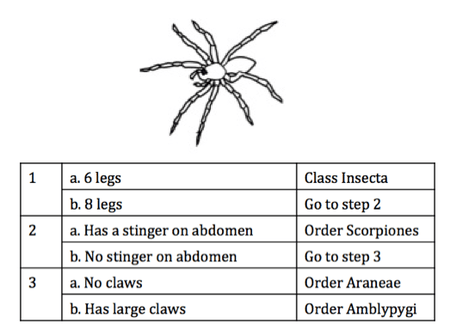
Multiple Choice

Question image
An illustration and a dichotomous key are given. What is the correct classification for this organism?
1
Class Insecta
2
Order Amblygygi
3
Order Araneae
4
Order Scorpiones

174

Multiple Choice

Question image
A dichotomous key for trees is provided. Hikers found a tree that has large brown cones and single sharp needles. What species of tree have the hikers found?
1
Juniper
2
Pine
3
Spruce
4
Fir

175

Multiple Choice

Which variable always goes on the y-axis (vertical)?

1

Independent

2

Dependent

3

Constant

4

Control

176

Multiple Choice

Question image

What is the independent variable on this graph?

1

Year

2

Number of Visitors

3

Visitors to a Park

4

none of these

177

Multiple Choice

Question image

What is the dependent variable on this graph?

1

Year

2

Number of Visitors

3

none of these

178

Multiple Choice

A detailed explanation of some aspect of the natural world, based on a body of facts that have been repeatedly confirmed through observation and experiment is called a scientific ______.

1

the scientific method

2

a scientific theory

3

a scientific law

4

an experiment

5

a hypothesis

179

Multiple Choice

When one variable on a graph INCREASES and the other variable also INCREASES, it's called a(n) ____ relationship.

1

Direct

2

Indirect

3

Inverse

4

Linear

180

Multiple Choice

When one variable on a graph INCREASES and the other variable DECREASES, it's called a(n) ____ relationship.

1

Indirect

2

Direct

3

Linear

4

Negative

Question image

A possible explanation to a problem that has not yet been tested.

1

data

2

theory

3

hypothesis

4

fact

Show answer

Auto Play

Slide 1 / 180

MULTIPLE CHOICE