Search Header Logo
  1. Resource Library
  2. Science
  3. Earth & Space Science
  4. Earthquake
  5. 7.10 B Plate Tectonics Earthquakes Research Notes Lesson
7.10 B Plate Tectonics-Earthquakes Research Notes Lesson

7.10 B Plate Tectonics-Earthquakes Research Notes Lesson

Assessment

Presentation

Science

8th Grade

Practice Problem

Hard

NGSS
MS-ESS3-2, HS-ESS2-1, HS-ESS1-5

+4

Standards-aligned

Created by

Everetta Carew

Used 2+ times

FREE Resource

14 Slides • 16 Questions

1

media

2

Open Ended

How do you think plate tectonics impact the formation of features like mountains, ocean basins, and volcanoes on Earth?

3

media

4

Open Ended

Question image

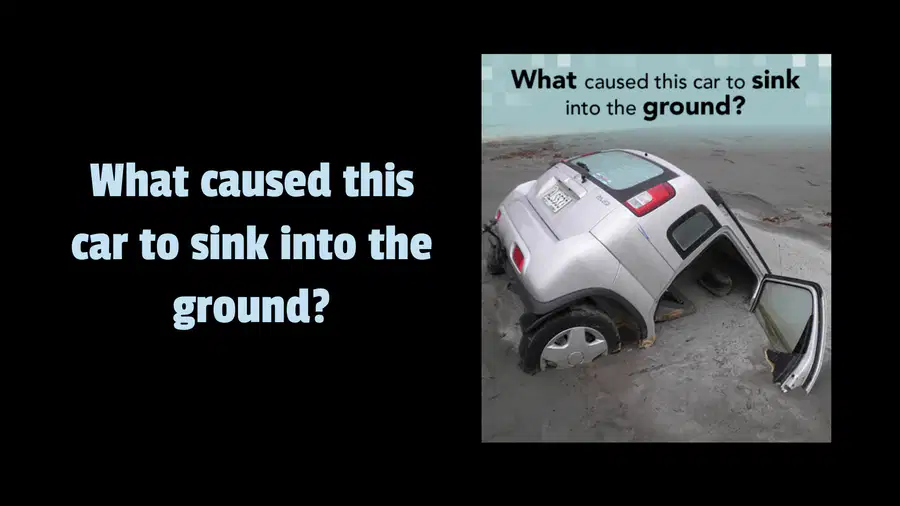
What caused this car to sink into the ground?

5

media

6

media

7

Hotspot

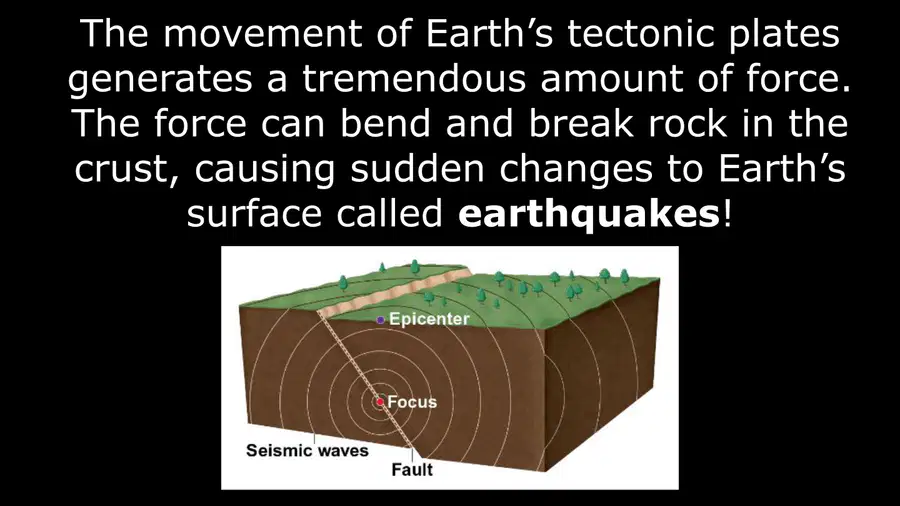
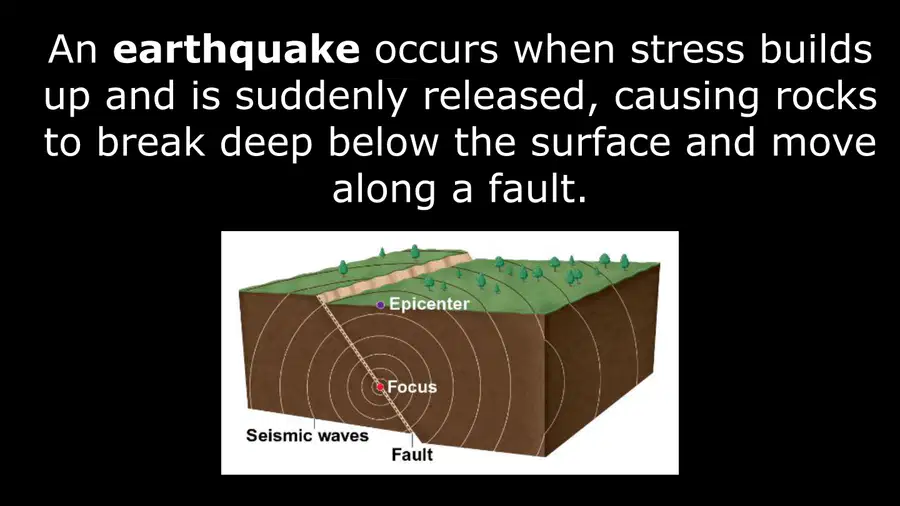
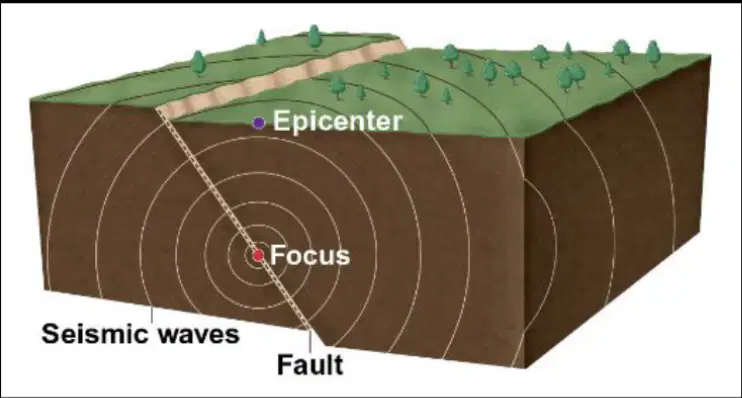
Where is the focus causing the earthquake?

8

Multiple Choice

What can bend and break rock in the crust, causing sudden changes to Earth's surface?

1

shaking

2

colliding

3

earthquakes

4

division

9

media

10

Multiple Choice

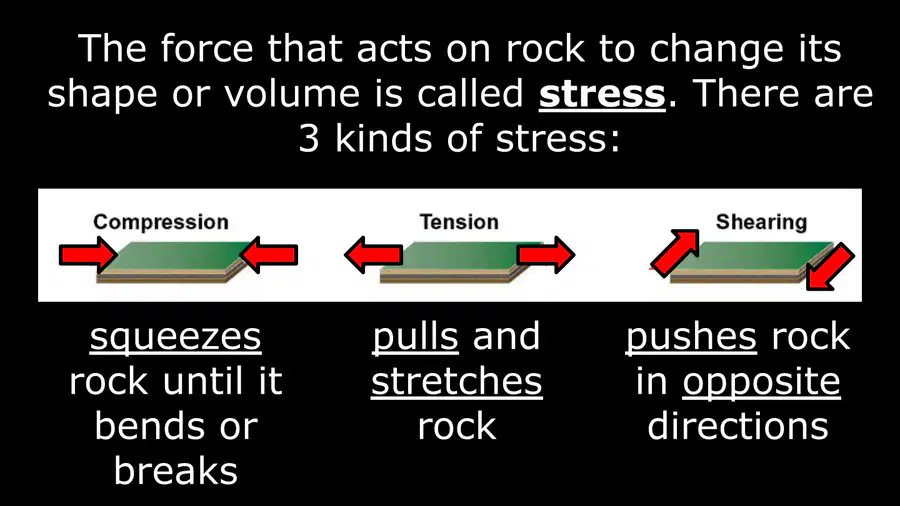
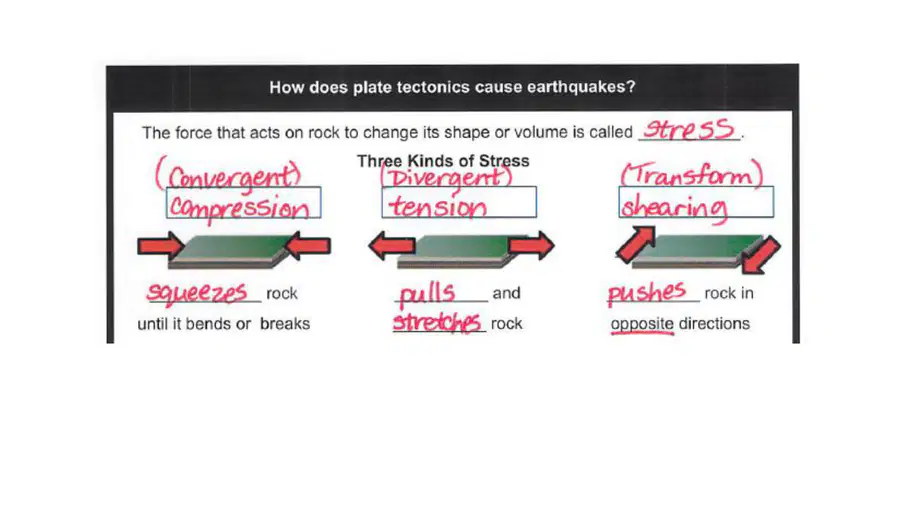
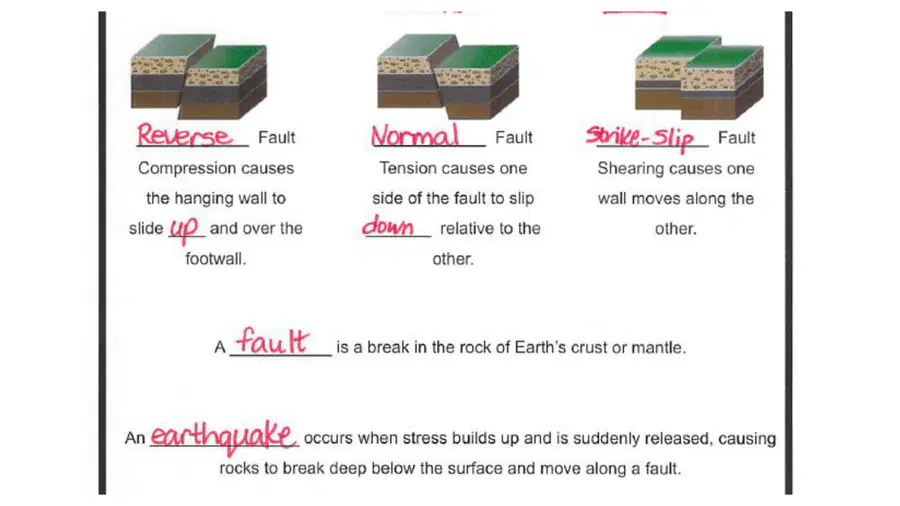
What is the force that acts on rock to change its shape or volume called?

1

Stress

2

Compression

3

Tension

4

Shearing

11

media

12

Multiple Select

Which of the following are types of stress that act on rocks in Earth's crust? Select ALL that apply.

1

Compression

2

Tension

3

Shearing

4

Folding

13

media

14

Open Ended

Explain how stress leads to the formation of faults and earthquakes in Earth's crust.

15

Fill in the Blanks

16

media

17

Multiple Choice

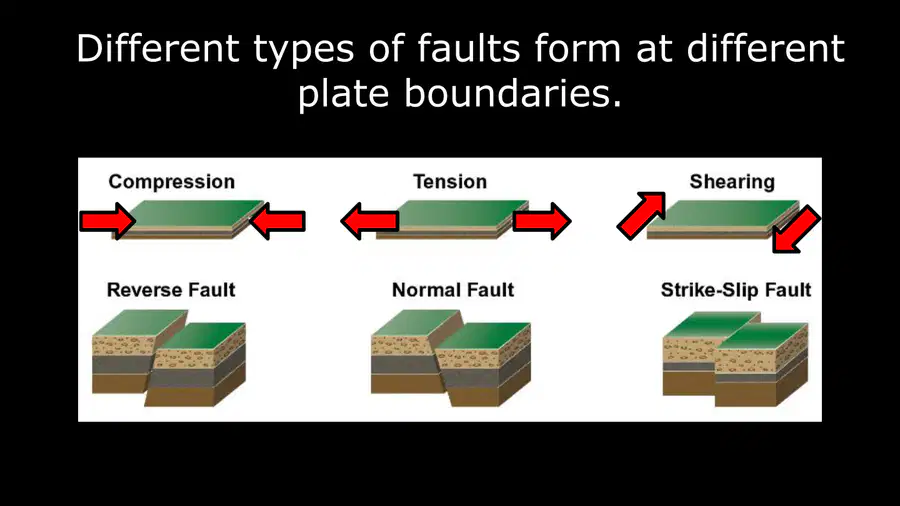
Match the type of stress with the fault it forms: Compression, Tension, Shearing.

1

Reverse Fault, Normal Fault, Strike-Slip Fault

2

Normal Fault, Reverse Fault, Strike-Slip Fault

3

Strike-Slip Fault, Reverse Fault, Normal Fault

4

Normal Fault, Strike-Slip Fault, Reverse Fault

18

media

19

Multiple Choice

Which type of fault is associated with compression at convergent boundaries, causing the hanging wall to slide up and over the footwall?

1

Reverse fault

2

Normal fault

3

Strike-slip fault

4

Transform fault

20

media

21

media

22

Multiple Select

Which of the following statements correctly matches the type of stress, plate boundary, and fault motion? Select ALL that apply.

1

Compression - Convergent - Hanging wall slides up

2

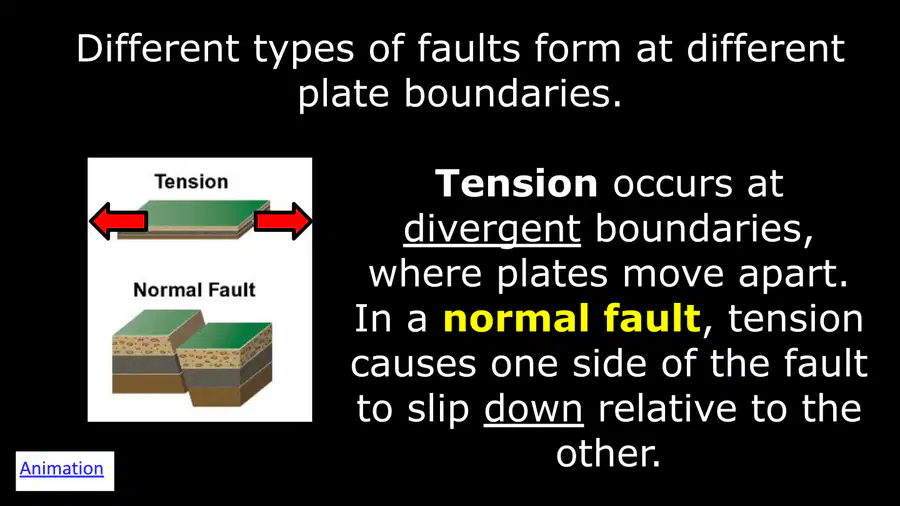
Tension - Divergent - One side slips down

3

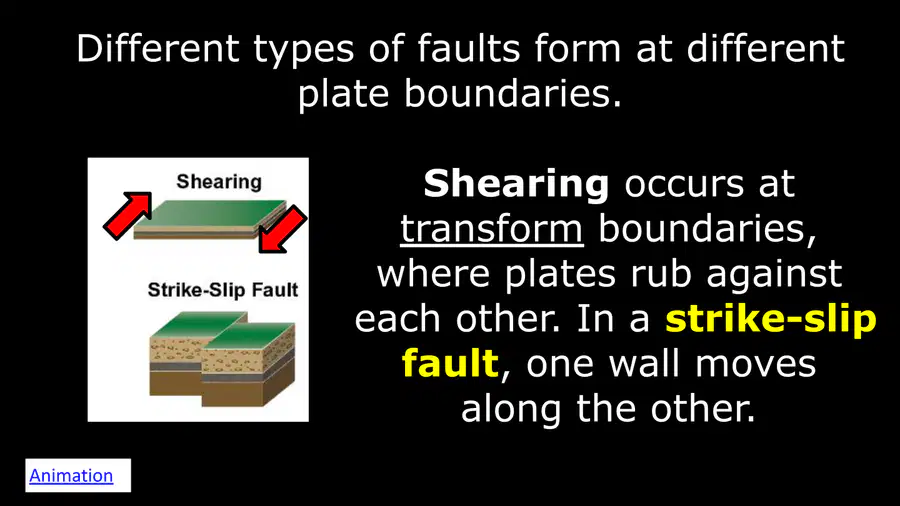
Shearing - Transform - Walls move along each other

4

Tension - Convergent - Hanging wall slides up

23

Open Ended

Compare and contrast the types of faults that form at convergent, divergent, and transform plate boundaries. Include the type of stress and the resulting fault motion for each boundary type.

24

media

25

Open Ended

Question image

What is the difference between the focus and the epicenter of an earthquake?

26
media

27

Draw

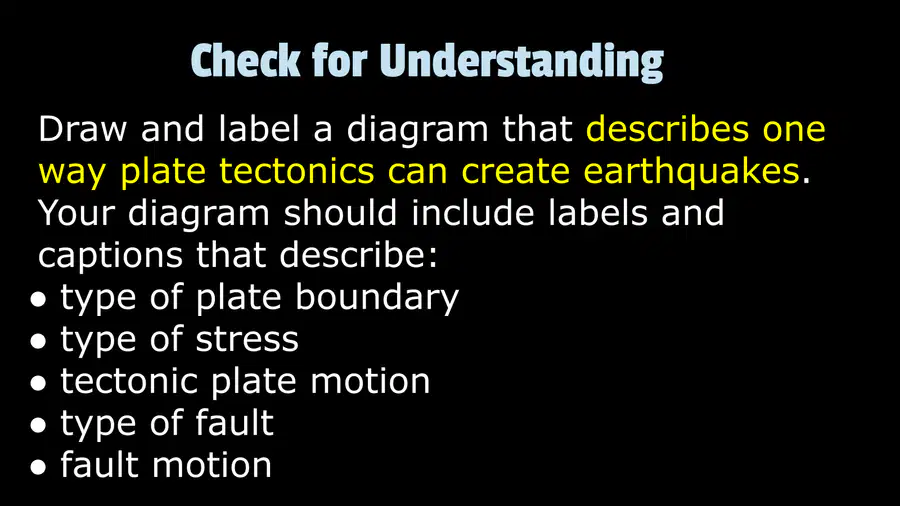
Draw and label a diagram that describes one way plate tectonics can create earthquakes. Your diagram should include labels and captions that describe:

  • type of plate boundary

  • type of stress

  • tectonic plate motion

  • type of fault

  • fault motion

28

media

29

Fill in the Blanks

30

Fill in the Blanks

media

Show answer

Auto Play

Slide 1 / 30

SLIDE