

Introduction to Legal Foundations

Presentation
•
Education
•
University
•
Practice Problem
•
Easy

Angel Bergado
Used 1+ times
FREE Resource
34 Slides • 24 Questions
1

2

3

4
Multiple Choice
Which of the following is NOT a way education shapes national development according to the lesson?
Fostering critical thinking
Promoting innovation
Creating a skilled workforce
Limiting access to information
5
6
7

8
Open Ended
Explain why education is considered a right and not a privilege. Use examples from the lesson to support your answer.
9
Multiple Choice
How does the Constitution guarantee education rights and equal access for all citizens?
By providing free textbooks to students
By mandating accessible and equitable education for all demographics
By requiring students to wear uniforms
By limiting education to privileged groups
10

11
Fill in the Blanks
The Constitution of the Philippines establishes the framework for the education system, emphasizing the right to education for all citizens. It mandates the State to provide quality education, ensuring access,
Type answer...
12

13
Open Ended
Compare and contrast the roles of Batas Pambansa Blg. 232 and Republic Act No. 9155 in shaping the Philippine education system.
14
Multiple Select
Which of the following are key provisions of major education laws in the Philippines?
Decentralization of education management
Promotion of a conducive learning environment
Emphasis on equitable access
Restriction of education to urban areas
15

16
Multiple Choice
Which of the following is a responsibility of parents according to Batas Pambansa Blg. 232?
Ensuring students have access to quality education
Providing a safe and supportive learning environment
Taking an active role in their child's education
Formulating educational policies
17
18
Multiple Choice
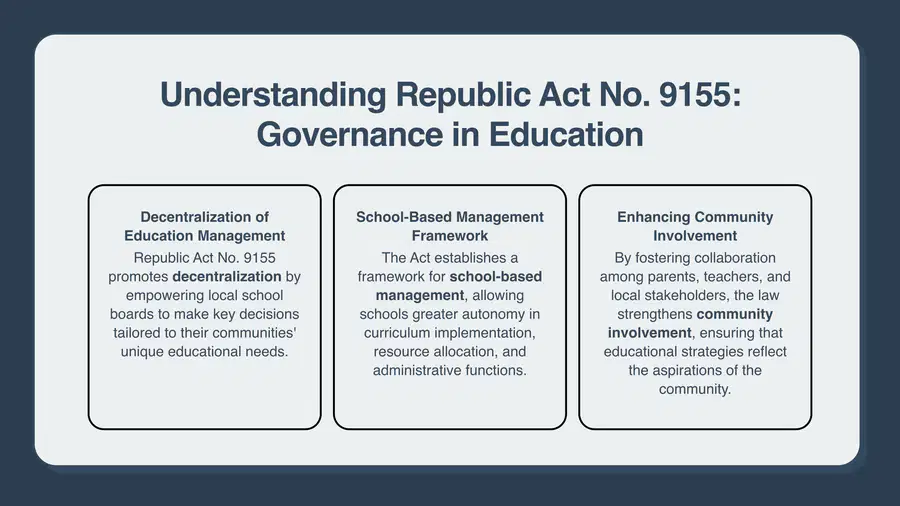
How does Republic Act No. 9155 promote governance in education?
By centralizing decision-making in the national government
By empowering local school boards through decentralization
By limiting community involvement in schools
By removing autonomy from schools
19

20
Open Ended
Explain how the Commission on Higher Education (CHED) contributes to the quality of higher education in the Philippines.
21

22
Fill in the Blanks
The TESDA Act aims to enhance
Type answer...
23
Multiple Select
Which of the following are key objectives of the TESDA Act of 1994?
Strengthening technical vocational education and training
Promoting workforce development
Enhancing community involvement
Partnerships for success
24
25

26
Open Ended
What are the main features of the K-12 Program, MTB-MLE, and Inclusive Education policies, and how do they support diverse learners?
27

28
Open Ended
Explain how teacher development contributes to the overall improvement of education systems.
29
Multiple Choice
Which of the following is NOT a key educational policy mentioned in the presentation?
Free Tuition
Teacher Development
Alternative Learning
Standardized Testing
30

31
Multiple Select
Which strategies are included in assessment and improvement according to the presentation?
Assessment
Management
Improvement
Free Tuition
32

33

34
Fill in the Blanks
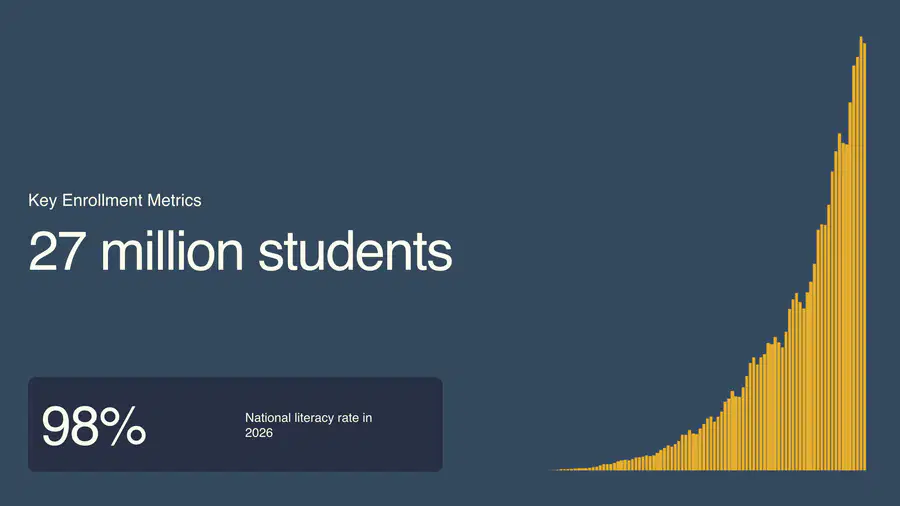
The Philippine education system shows improving trends in enrollment rates and educational attainment across various levels, demonstrating progress and
Type answer...
35
36
Multiple Choice
What is the national literacy rate projected for 2026 in the Philippines?
95%
98%
90%
85%
37
38
Open Ended
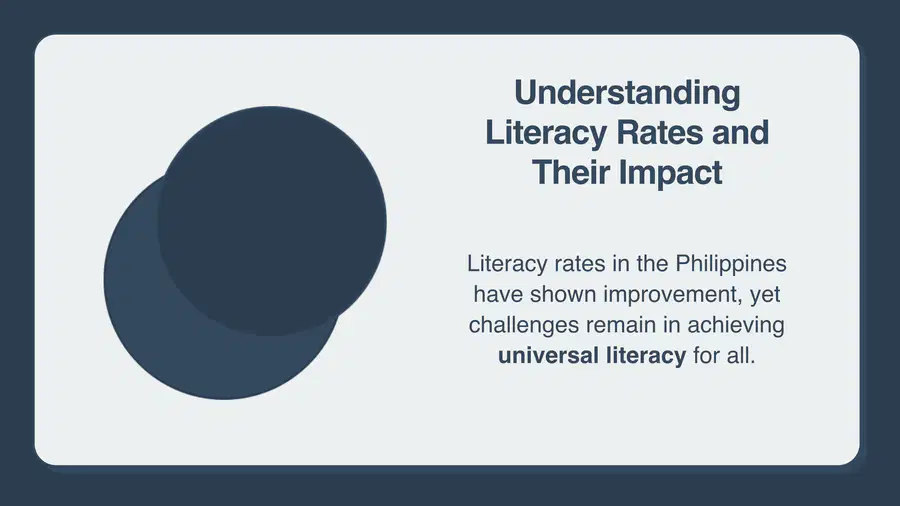
Discuss the challenges that remain in achieving universal literacy in the Philippines, despite improvements in literacy rates.
39

40
Open Ended
Based on the data presented, what are some major concerns for national development related to literacy in the Philippines?
41
Multiple Choice
What is the difference between basic literacy rate and functional literacy rate according to the 2024 FLEMMS data?
Basic literacy rate includes reading, writing, and computing, while functional literacy rate includes high-level comprehension.
Basic literacy rate includes only reading, while functional literacy rate includes writing and computing.
Basic literacy rate is lower than functional literacy rate.
Functional literacy rate is only about math skills.
42

43

44
Multiple Choice
What are some differences between the classroom environments shown in the second and third images?
One classroom is crowded while the other is spacious and modern.
Both classrooms have the same number of students.
The classrooms are in different countries.
One classroom is outdoors.
45
46

47
Multiple Select
Which of the following are identified as challenges facing the Philippine education system?
Resource constraints
Teacher shortages
Quality concerns
High student motivation
48
49
Open Ended
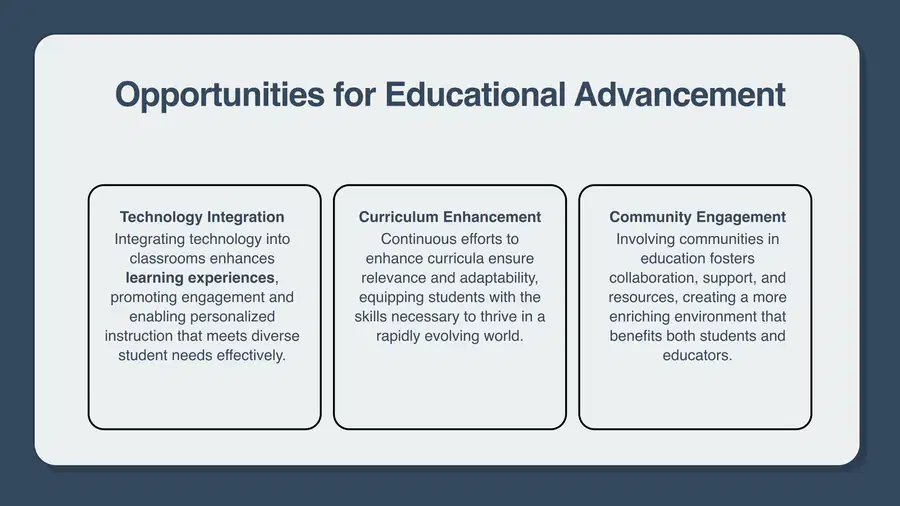
How might community engagement contribute to educational advancement in the Philippines?
50
Fill in the Blanks
One opportunity for educational advancement mentioned is
Type answer...
51
52
53

54

55

56
57

58

Show answer
Auto Play
Slide 1 / 58
SLIDE
Similar Resources on Wayground

55 questions
Tutorial 1 - Internet, Cloud and E-mail
Presentation
•
University
56 questions
Game Balancing
Presentation
•
University
55 questions
FDNS1301: Chapter 20: Fish & Shellfish
Presentation
•
University
53 questions
Classroom management - Online training
Presentation
•
KG - University
52 questions
Poverty & Inequality
Presentation
•
University
51 questions
Drive Safety Quiz
Presentation
•
KG - University
Popular Resources on Wayground
10 questions
Safety Day 2026 – Student Review

Quiz
•
9th Grade
21 questions
Continents and Oceans
Quiz
•
6th Grade
20 questions
Parts of Speech
Quiz
•
5th Grade
16 questions
Subject & Predicate
Quiz
•
5th Grade
25 questions
Multiplication Facts
Quiz
•
5th Grade
12 questions
Map Skills
Quiz
•
3rd Grade
22 questions
Continents and Oceans
Quiz
•
5th Grade
15 questions
Rounding Decimals
Quiz
•
5th Grade