Lição sem título
Presentation
•
Chemistry
•
University
•
Practice Problem
•
Hard
Standards-aligned
ELAINE ESPER
FREE Resource
51 Slides • 23 Questions
1
2
Multiple Choice
3
4
Multiple Choice
What are the key differences between the atomic models proposed by Dalton, Thomson, Rutherford, Bohr, Sommerfeld, and Schrödinger?
They differ in the number of particles
They differ in the arrangement of particles
They differ in the energy levels of electrons
They differ in the existence of the nucleus
5
6
Multiple Choice
What does the term "átomo" signify according to Leucippus and Democritus?
Indivisible particle
Divisible particle
Elemental substance
Compound substance
7
8
Multiple Choice
What are the main points of John Dalton's atomic theory as described in the image?
Atoms are indivisible and indestructible
Atoms of different substances are identical
Atoms can be created and destroyed
Atoms are not spherical
9
10
Multiple Choice
Dalton's model of the atom failed because it could not explain :
electric charges between matter
how atoms could form molecules
how particles could be so small
11
12
Multiple Choice
What scientist proposed this atomic model?
Dalton
Thomson
Rutherford
Bohr
13
14
Multiple Choice
What are the relative charges and masses of protons, neutrons, and electrons according to Thomson's atomic theory?
Proton: +1, Neutron: 0, Electron: -1
Proton: +1, Neutron: 1, Electron: 0
Proton: 0, Neutron: +1, Electron: -1
Proton: +1, Neutron: -1, Electron: 0
15
16
Multiple Choice
What is the conclusion drawn from the experiment involving cathode rays?
There are positively charged particles
There are negatively charged particles
There are no charged particles
There are only neutrons
17
18
Multiple Choice
What does the diagram illustrate about Thomson's atomic theory?
The structure of an atom
The behavior of electrons in a vacuum tube
The discovery of protons
The concept of atomic mass
19
Multiple Choice
Experiments with the use of cathode ray tubes led to the discovery of the
electron
protons
nucleus
orbital
20
21
Multiple Choice
22
23
Multiple Choice
What did W. Röentgen discover about X-rays in 1895?
They can be deflected by magnetic fields
They can pass through opaque materials
They are visible to the naked eye
They are composed of charged particles
24
25
26
27
Multiple Choice
What did Rutherford interpret about the structure of the atom based on his experiments?
Most alpha particles passed through without deflection
The nucleus is negatively charged
Electrons are located in the nucleus
Alpha particles are positively charged
28
29
Multiple Choice
What are the main differences between the Thomson and Rutherford models of the atom?
Thomson model has a positive charge spread throughout the atom
Rutherford model has electrons orbiting a dense nucleus
Thomson model depicts electrons as negative particles
Rutherford model shows a solid sphere structure
30
31
Multiple Choice
What is the flaw in Rutherford's model as described by the Theory of Electromagnetism?
It does not account for electron emission
It suggests electrons are stationary
It ignores nuclear forces
It claims particles do not emit energy
32
33
Multiple Choice
What is the relationship between the colors observed in the flames and the atomic structure?
They indicate the temperature of the flame
They are related to the energy levels of electrons
They show the presence of different metals
They have no relation to atomic structure
34
35
Multiple Choice
In his model of the atom, Bohr proposed that electrons move at fixed distances from the nucleus and that the energy of the electron is related to its orbit. What discovery contributed to the development of this atomic model?
Electrons can flow freely through metals making metals good conductors.
Elements have characteristic wavelengths of light emission and absorption.
Noble gas elements are much less reactive than most other elements.
Electrons exhibit properties of both particles and waves.
36
37
38
Fill in the Blanks
Type answer...
39
40
Multiple Choice
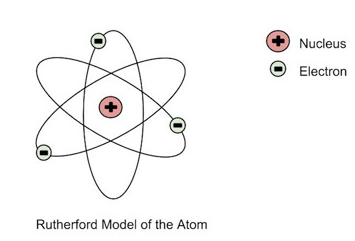
Which scientist developed the model of the atom shown?
Chadwick
Thomson
Rutherford
Bohr
41
42
43
44
Multiple Choice
Qual é a correlação correta entre os cientistas e suas ideias sobre a composição do átomo?
apenas nos itens I e II
apenas no item II
apenas nos itens I e III
apenas nos itens II e III
apenas no item III
45
46
Multiple Choice
47
48
Multiple Choice
Which model of the atom describes the location of electrons as probable within a dense "cloud" surrounding the nucleus of an atom?
The Cannonball
Model
The Plum Pudding Model
The Planetary Model
The Quantum Mechanical Model
The Nuclear Model
49
50
51
52
53
54
55
56
57
58
59
60
61
62
63
64
65
66
67
68
69
70
71
72
73
74
Poll
Quão confiante você se sente sobre este assunto agora?
Show answer
Auto Play
Slide 1 / 74
SLIDE

Similar Resources on Wayground
67 questions
Quiz 2
Presentation
•
University
67 questions
Cleft Sentences and auxiliary verbs for emphasis
Presentation
•
University
70 questions
Chapter 5 Molecules and Compounds Review
Presentation
•
University
68 questions
WEEK 5 - PACKAGING 4 GD
Presentation
•
University
68 questions
The Umbilical Cord
Presentation
•
University
70 questions
ความรู้เบื้องต้นเกี่ยวกับหลักสูตร
Presentation
•
University
71 questions
Volleyball
Presentation
•
University
71 questions
TS-C 3.5 Lecture Slides - General Surgery
Presentation
•
KG - University
Popular Resources on Wayground
20 questions
STAAR Review Quiz #3
Quiz
•
8th Grade
20 questions
Equivalent Fractions
Quiz
•
3rd Grade
6 questions
Marshmallow Farm Quiz
Quiz
•
2nd - 5th Grade
20 questions
Main Idea and Details
Quiz
•
5th Grade
20 questions
Context Clues
Quiz
•
6th Grade
20 questions
Inferences
Quiz
•
4th Grade
19 questions
Classifying Quadrilaterals
Quiz
•
3rd Grade
12 questions
What makes Nebraska's government unique?
Quiz
•
4th - 5th Grade