

TWIG 4. DQ1 Fast Track

Presentation
•
Science
•
4th Grade
•
Practice Problem
•
Hard

Susan Little
FREE Resource
30 Slides • 27 Questions
1
2
3
Multiple Choice
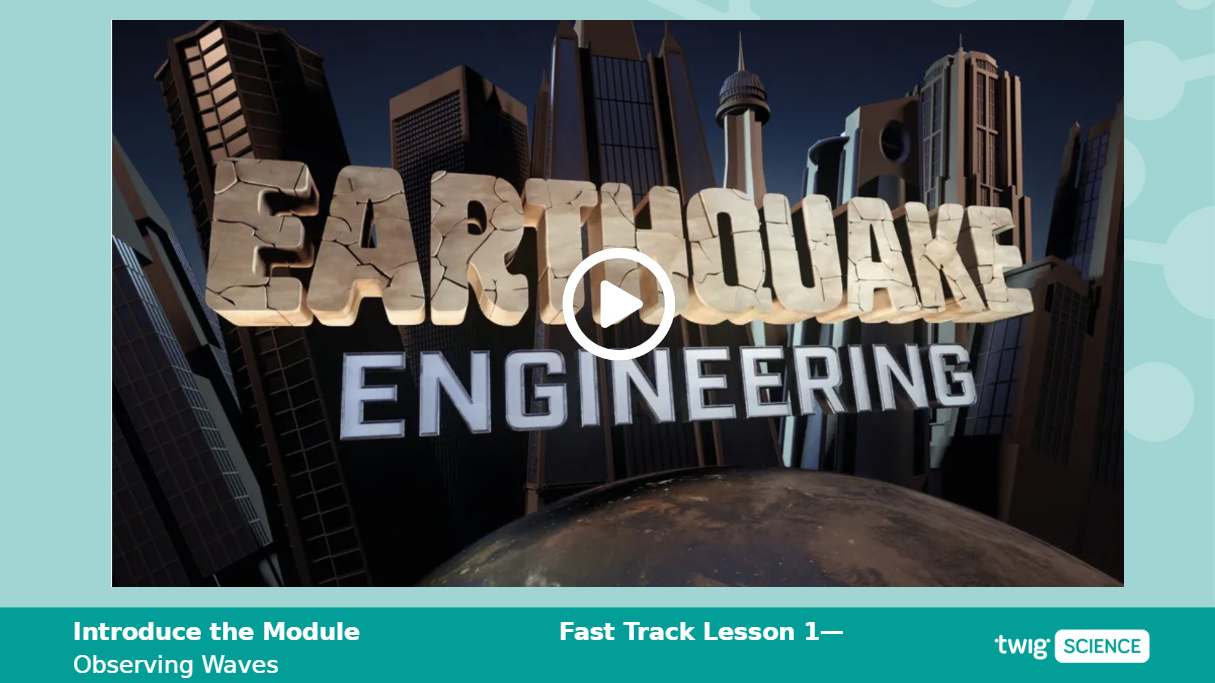
Why is it important for engineers to study earthquakes when designing buildings?
To make buildings look more attractive
To ensure buildings can withstand shaking and damage
To reduce the cost of construction
To make buildings taller
4
Open Ended
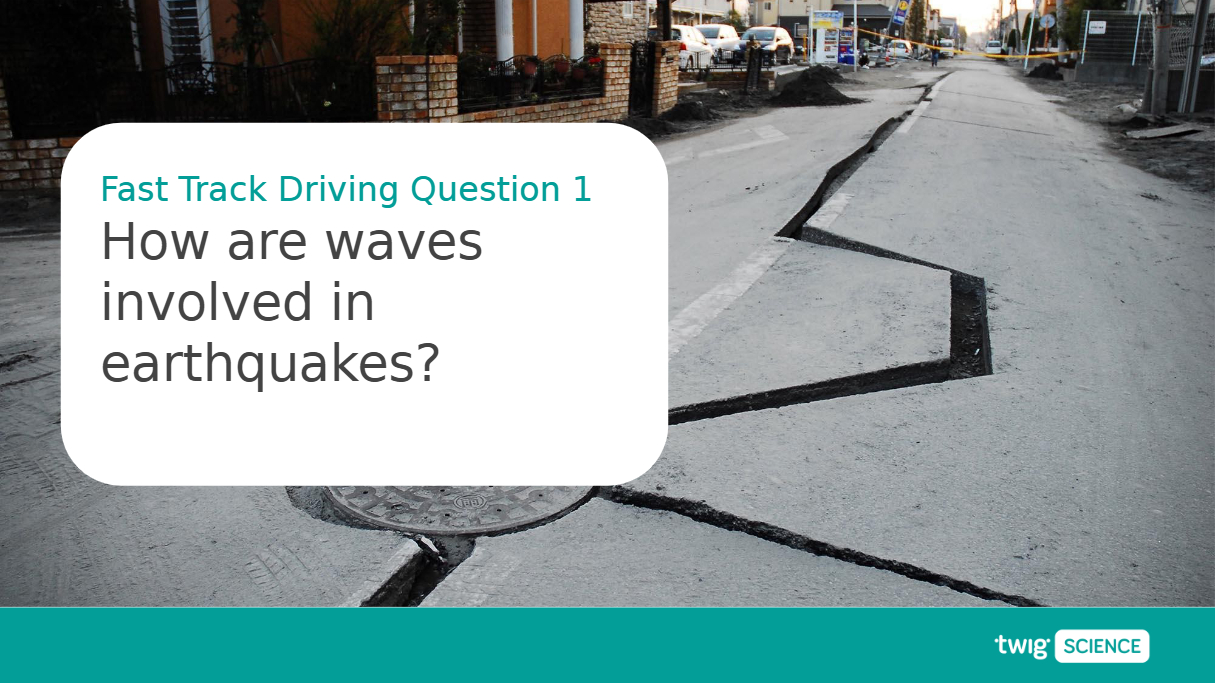
How are waves involved in earthquakes?
5
6
7
8
Multiple Choice
Which of the following is NOT a reason to study waves in nature?
Understanding natural disasters
Improving engineering designs
Learning about animal behavior
Making paper from trees
9
Open Ended
How might earthquake engineering help reduce the impact of earthquakes on buildings and cities?
10
11
Multiple Choice
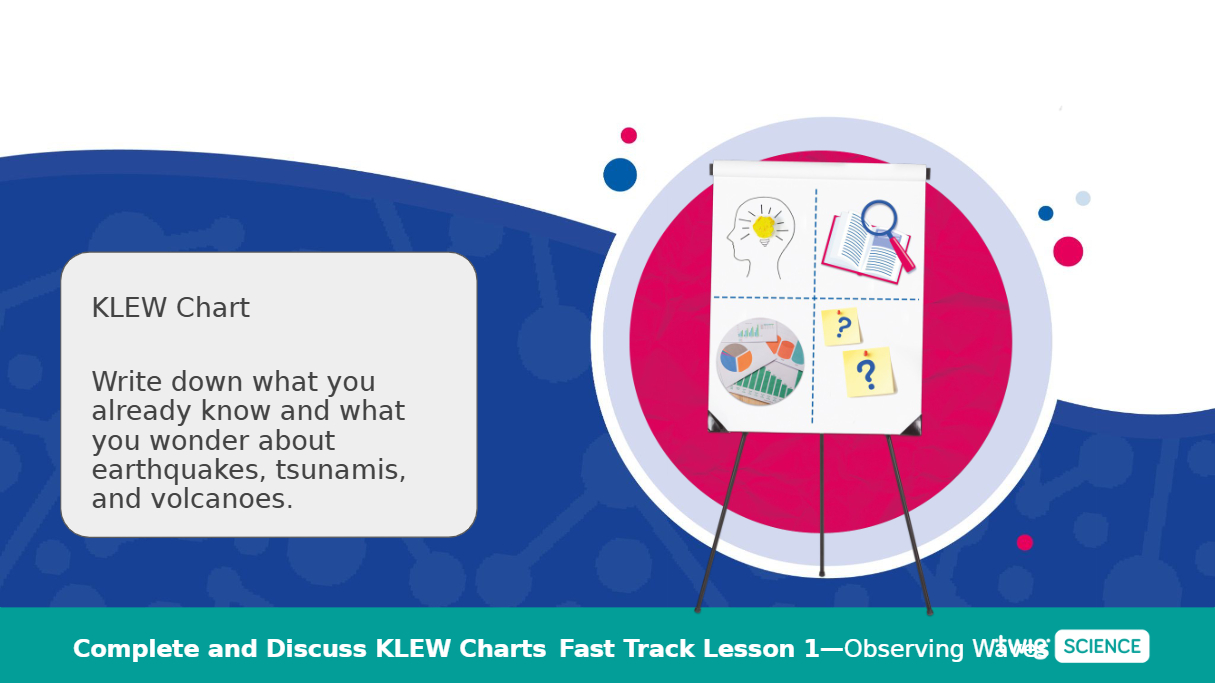
Which natural disasters are mentioned as topics to explore in the module 'Observing Waves'?
Earthquakes, tsunamis, and volcanoes
Floods, hurricanes, and tornadoes
Wildfires, droughts, and landslides
Blizzards, avalanches, and cyclones
12
13
Multiple Choice
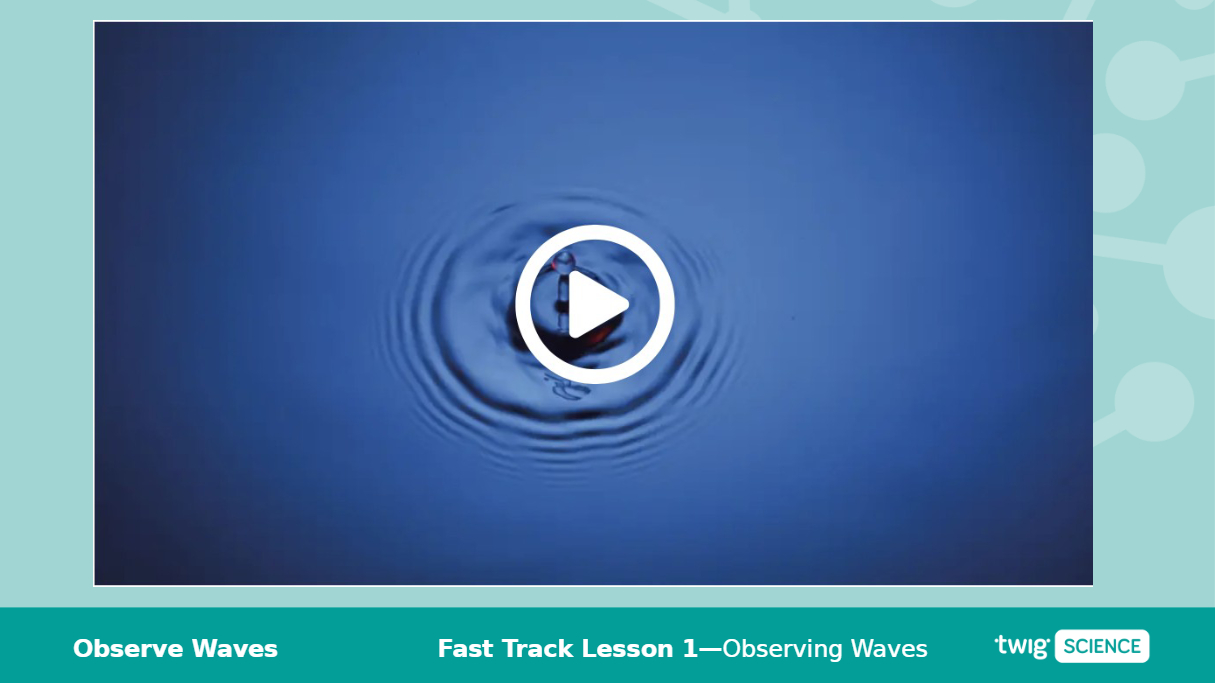
What observations can you make when a rock is dropped into water?
Ripples form and spread outward
The rock floats on the surface
The water changes color
No visible change occurs
14
15
Open Ended
Compare the effects of dropping a rock into water and the impact of raindrops on water. What similarities and differences can you identify in the waves produced?
16
Fill in the Blanks
Raindrops can create
Type answer...
17
18
Fill in the Blanks
Waves in water move outward in a
Type answer...
19
Open Ended
How can observing waves in water help us understand the properties of waves in general?
20
Multiple Choice
What do you observe happening when an object is dropped into water, as shown in the image?
Waves spread out in circles from the object
The object sinks immediately without any waves
The water turns a different color
Nothing happens to the water
21
22
23
24
Open Ended
Where have you developed and used models before, and how did those models help you understand a concept?
25
26
Multiple Choice
Read the article about the two buildings in San Francisco. What patterns are you asked to find?
Patterns in the buildings' heights
Patterns in how the buildings respond to waves
Patterns in the color of the buildings
Patterns in the number of windows
27
28
Multiple Choice
Think of questions you have about the article. Which of the following is a good question to ask after reading about the two buildings in San Francisco?
How do waves affect the stability of buildings?
What color are the buildings?
Who built the buildings?
How old are the buildings?
29
30
Multiple Choice
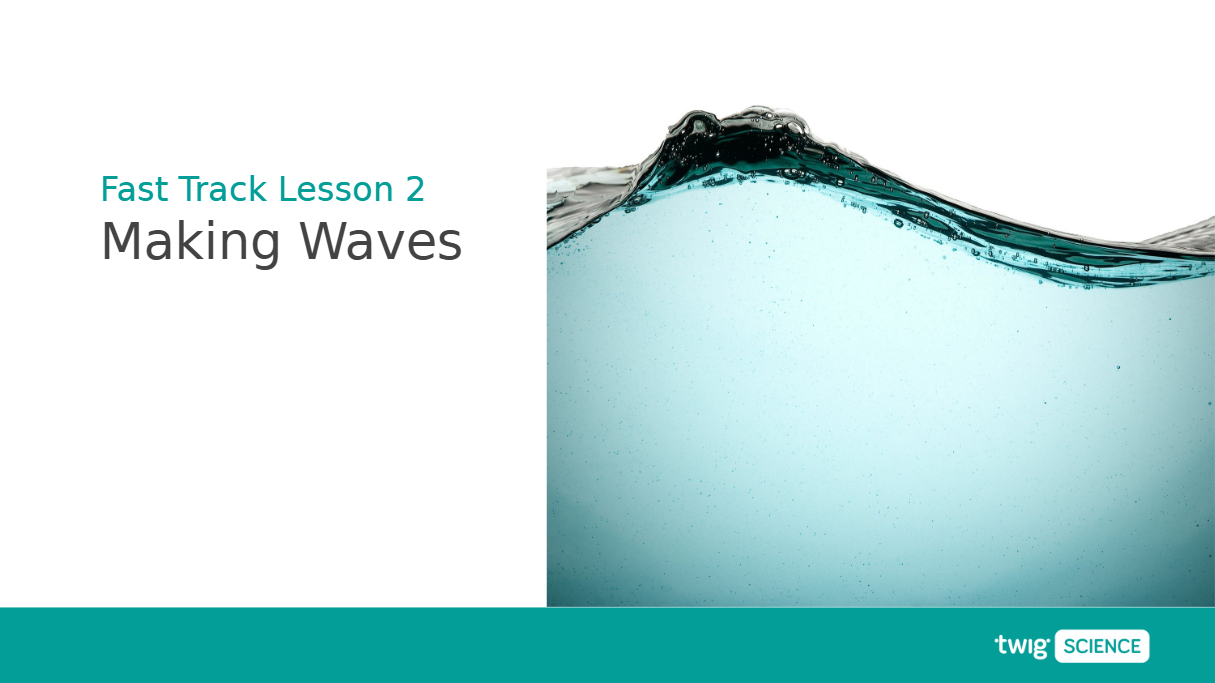
Which of the following best describes the main topic of Fast Track Lesson 2?
Making Waves
Plant Growth
Chemical Reactions
Animal Behavior
31
32
33
Open Ended
What are some causes and effects you observed when you used a rope to investigate waves?
34
35
Multiple Select
Which of the following actions are part of a digital investigation to explore waves?
Using an interactive tool
Collecting data
Planting seeds
Observing animal behavior
36
37
Multiple Choice
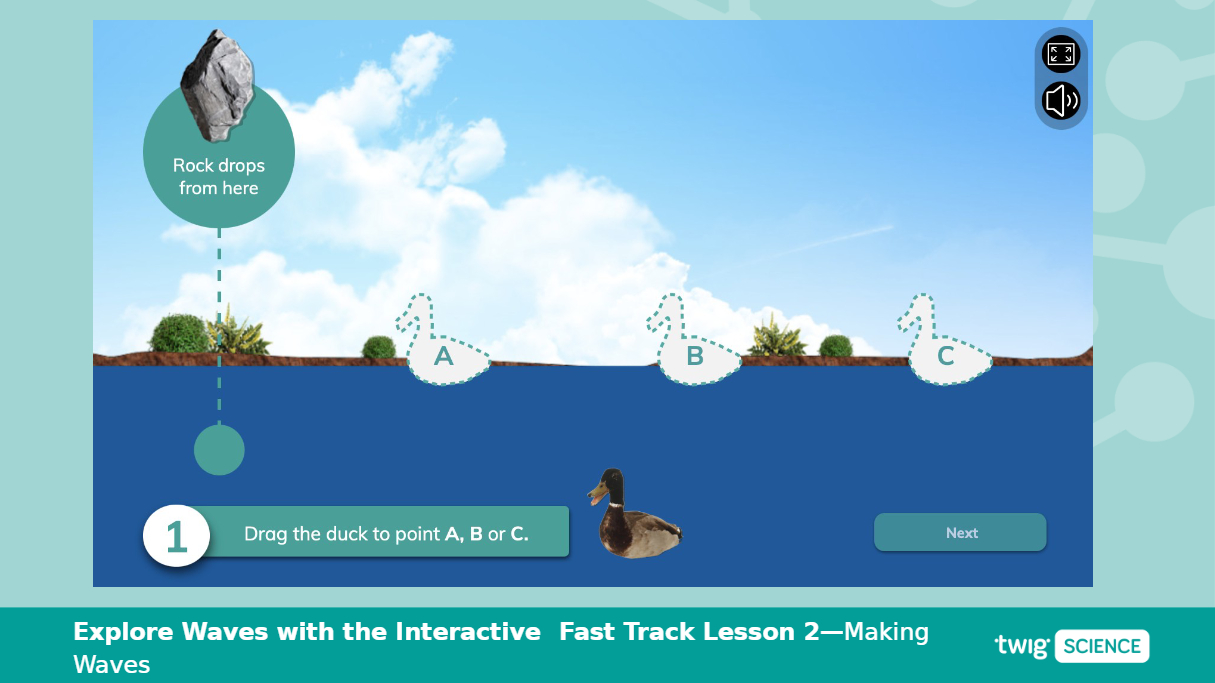
What is the correct position to drag the duck to if you want to observe the effect of a rock dropping into water?
Point A
Point B
Point C
Point D
38
Fill in the Blanks
Fill in the blank: When a rock drops into water, it creates
Type answer...
39
40
Open Ended
After exploring waves with the interactive, what findings did you discuss with your partner?
41
42
43
44
45
46
47
Open Ended
How does a seismometer app help in understanding earthquakes?
48
Multiple Choice
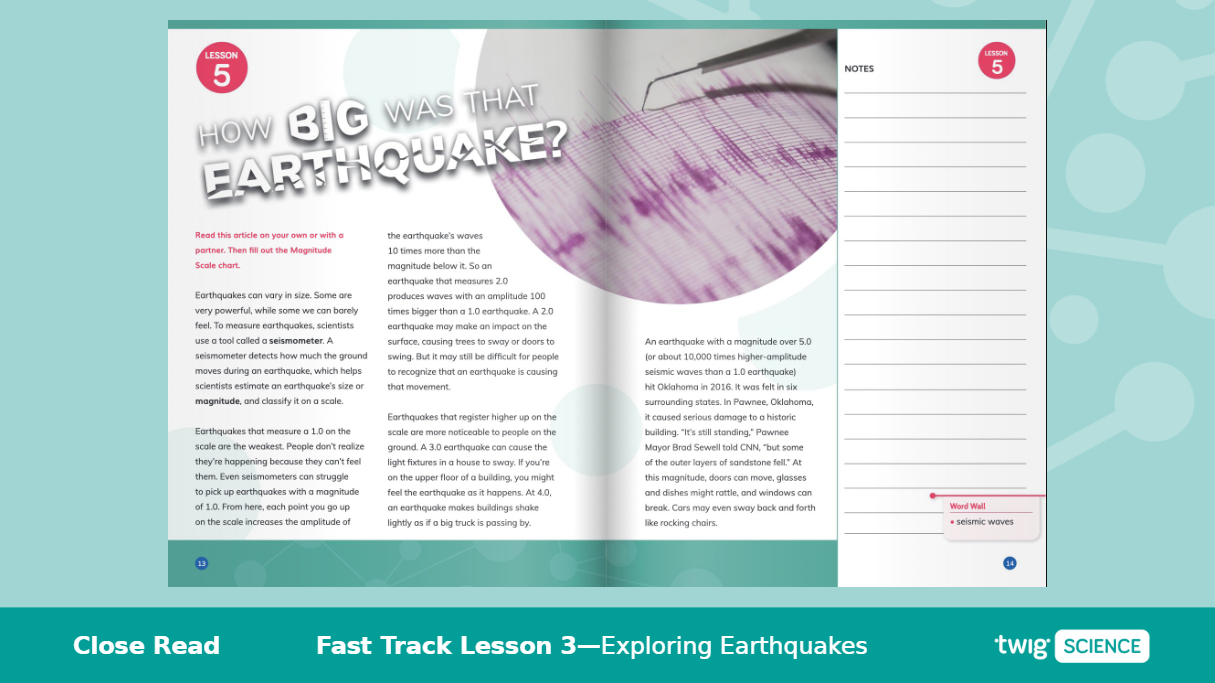
Why might people not notice an earthquake with a magnitude of 1.0?
Because it is too weak to feel.
Because it only happens at night.
Because it only affects animals.
Because it only happens in the ocean.
49
Multiple Choice
What is the relationship between earthquake magnitude and the amplitude of seismic waves?
Each increase of 1.0 in magnitude multiplies the amplitude by 10.
Each increase of 1.0 in magnitude multiplies the amplitude by 2.
Each increase of 1.0 in magnitude multiplies the amplitude by 100.
Each increase of 1.0 in magnitude has no effect on amplitude.
50
Open Ended
Describe the impact of an earthquake with a magnitude over 5.0, based on the reading.
51
Multiple Choice
Which of the following statements about earthquake magnitude is correct?
A 2.0 earthquake produces waves with an amplitude 10 times more than a 1.0 earthquake.
A 3.0 earthquake cannot be felt by people.
A 1.0 earthquake causes serious damage to buildings.
A 5.0 earthquake is weaker than a 2.0 earthquake.
52
Fill in the Blanks
What tool do scientists use to measure earthquakes, and what does it detect?
Type answer...
53
54
55
56
57
Open Ended
What is one thing you learned about earthquake engineering today?
Show answer
Auto Play
Slide 1 / 57
SLIDE
Similar Resources on Wayground

49 questions
WED Lesson and Quiz
Presentation
•
4th Grade
49 questions
SC UDCH8L2
Presentation
•
4th Grade
53 questions
6th Wise Citizen and Arts 2nd Period 2nd Partial
Presentation
•
4th Grade
50 questions
Sedimentary Rock & Fossil Fuels
Presentation
•
5th Grade
53 questions
Science 5 Ecosystems
Presentation
•
5th Grade
52 questions
Y4C4 Magnet
Presentation
•
4th Grade
52 questions
Science 4 Quiz Oct 24 (Monday)
Presentation
•
4th Grade
49 questions
Thursday_04.31_4.11A
Presentation
•
4th Grade
Popular Resources on Wayground
10 questions
How much do you know about our Portrait of an Eagle?

Quiz
•
10th Grade
10 questions
Fast Food Slogans
Quiz
•
6th - 8th Grade
21 questions
Continents and Oceans
Quiz
•
6th Grade
20 questions
Parts of Speech
Quiz
•
5th Grade
16 questions
Subject & Predicate
Quiz
•
5th Grade
25 questions
Multiplication Facts
Quiz
•
5th Grade
12 questions
Map Skills
Quiz
•
3rd Grade
22 questions
Continents and Oceans
Quiz
•
5th Grade
Discover more resources for Science
10 questions
Mixtures and Solutions
Quiz
•
4th Grade
20 questions
Force and Motion
Quiz
•
3rd - 4th Grade
14 questions
Scientific Method
Quiz
•
4th Grade
10 questions
Mixtures and Solutions
Quiz
•
4th Grade
10 questions
Identifying Physical and Chemical Changes

Interactive video
•
1st - 5th Grade
22 questions
Properties of Matter
Quiz
•
4th Grade
11 questions
Energy Transferring
Quiz
•
4th Grade
10 questions
Discovering the Properties of Matter
Interactive video
•
1st - 5th Grade