

Stained Glass

Presentation
•
Arts
•
9th - 12th Grade
•
Practice Problem
•
Hard

Kaylyn Shockey
FREE Resource
10 Slides • 0 Questions
1
Stained Glass:
Art History
A brief history

2
Today we are:
describing the historical origins of stained glass
analyzing how color, light, and imagery are used to tell stories
comparing stained glass from different time periods
I can explain how stained glass reflects cultural, religious, or social values.

3
Content Purpose:
Students will learn how stained glass developed as an art form and how it reflects the beliefs, technology, and needs of different societies.
Language Purpose:
Students will use art vocabulary (symbolism, lead lines, transparency, composition) to discuss and write about stained glass.
Social Purpose:
Students will collaborate in discussion and analysis, respecting multiple interpretations and cultural perspectives.
What's the purpose?
4
Standards:
5
What is Stained Glass?
“Stained glass” refers to glass that has been colored by metallic oxides during the manufacturing process. Different additives produce different hues, allowing artisans to strategically produce glass of specific colors. For example, adding copper oxides to molten glass will culminate in green and blue tones.
6
Early Origins: Ancient Rome/Byzantine
Glass blowing revolutionized Roman glass production, allowing for faster, more versatile creation of vessels and window panes.
Usage: Early wealthy Romans used stained glass in homes.
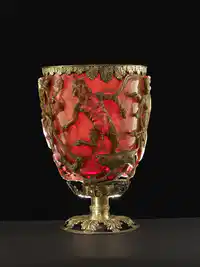
Innovations: Romans developed techniques for opaque glass (using antimony) and remarkable dichroic glass (like the Lycurgus Cup), which changed color with light, showcasing advanced skill, though often limited in production.
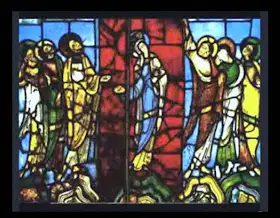
primarily a vehicle for profound religious storytelling and spiritual symbolism.
Artistic Emphasis: While Romans excelled in technical feats like dichroic glass, Byzantines emphasized symbolic color and iconic figures, moving towards the iconic, glowing imagery seen in later medieval stained glass.
7
Subheader
Subheader
8
Medieval Europe (12th–15th Century)
Gothic cathedrals (Chartres, Notre-Dame)
Windows used to teach Bible stories to illiterate populations
Use of bold colors, simplified figures, and symbolic imagery!
9
Renaissance & Baroque Periods
Increased realism and perspective
Painted glass techniques
Decline in popularity due to changes in architecture and religion
10
19th Century Reviva
Stained Glass:
Art History
A brief history
Show answer
Auto Play
Slide 1 / 10
SLIDE
Similar Resources on Wayground

9 questions
CERAMIC RATTLES
Presentation
•
9th - 12th Grade
7 questions
Soft furnishing
Presentation
•
9th - 11th Grade
10 questions
Energy and Art
Presentation
•
9th - 12th Grade
10 questions
Author's Purpose
Presentation
•
8th - 12th Grade
10 questions
Hispanic Heritage Month
Presentation
•
10th - 12th Grade
10 questions
Element of Line
Presentation
•
9th - 12th Grade
7 questions
Food Mall - Induction Module 1
Presentation
•
KG - University
8 questions
Yukiko Nishimura
Presentation
•
9th - 12th Grade
Popular Resources on Wayground
20 questions
Math Review

Quiz
•
3rd Grade
15 questions
Fast food
Quiz
•
7th Grade
20 questions
Context Clues
Quiz
•
6th Grade
20 questions
Inferences
Quiz
•
4th Grade
19 questions
Classifying Quadrilaterals
Quiz
•
3rd Grade
20 questions
Figurative Language Review
Quiz
•
6th Grade
20 questions
Equivalent Fractions
Quiz
•
3rd Grade
10 questions
Identify Fractions, Mixed Numbers & Improper Fractions
Quiz
•
3rd - 4th Grade
Discover more resources for Arts
10 questions
Fact Check Ice Breaker: Two truths and a lie
Quiz
•
5th - 12th Grade
10 questions
Video Games
Quiz
•
6th - 12th Grade
10 questions
Logos
Quiz
•
6th - 9th Grade
10 questions
Test Your Knowledge with 15 Fun Trivia Questions

Interactive video
•
6th - 10th Grade
15 questions
Memorial Day Trivia
Quiz
•
KG - 12th Grade
21 questions
Factoring Trinomials (a=1)
Quiz
•
9th Grade
12 questions
Name that Candy
Quiz
•
KG - 12th Grade
22 questions
Regular Preterite -AR-ER-IR-
Quiz
•
12th Grade