

ServSafe Pt4 - Temperature & Cross-contamination

Presentation
•
Hospitality and Catering
•
9th Grade
•
Practice Problem
•
Hard

Gracie Benz
FREE Resource
30 Slides • 41 Questions
1

2
Multiple Choice
Which hamburger is cooked to the wrong temperature
155 F
145 F
3
4
Open Ended
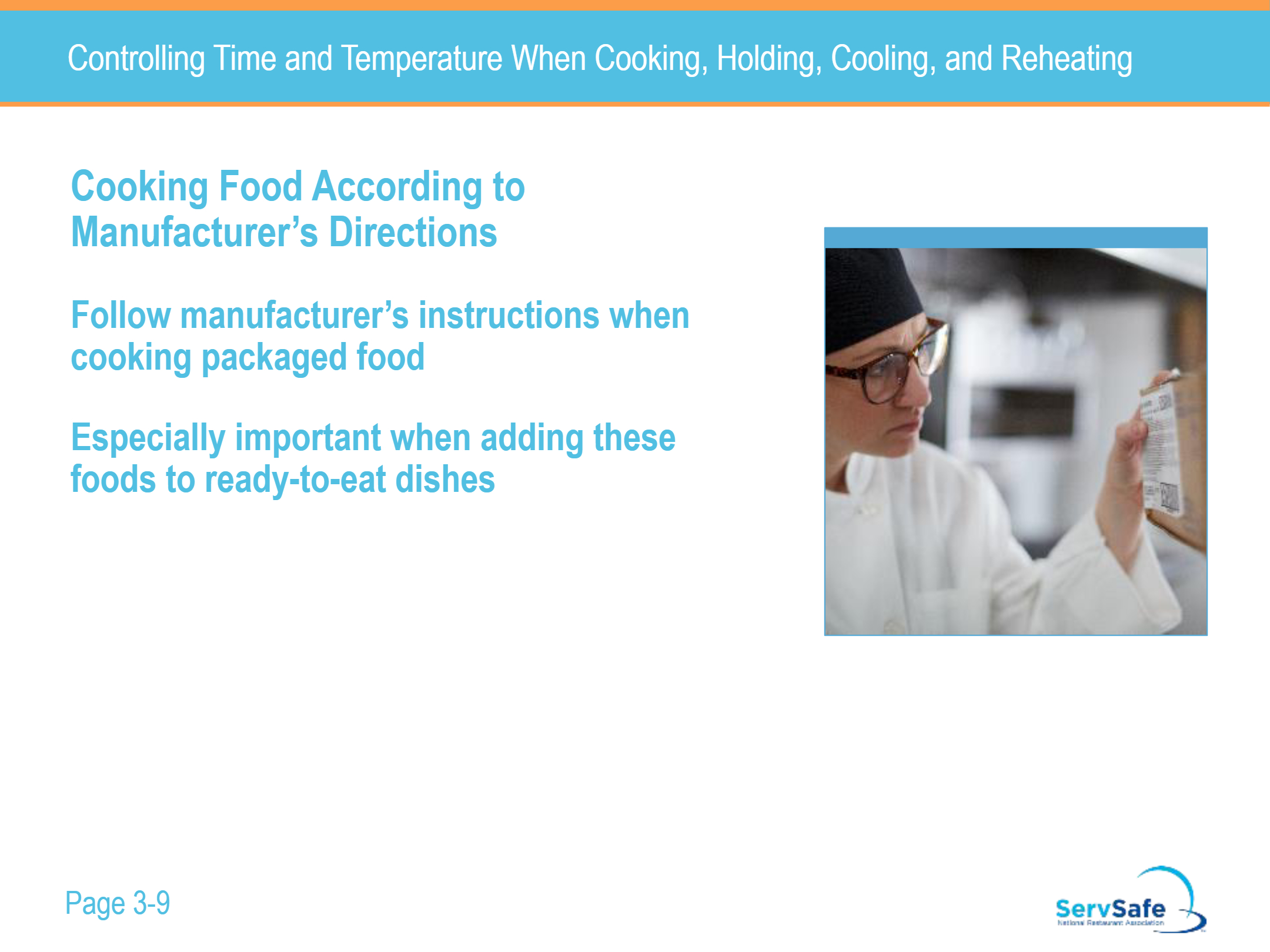
Why is it important to follow the manufacturer's instructions when cooking packaged food, especially when adding these foods to ready-to-eat dishes?
5

6
Multiple Choice
Which of the following groups is considered at higher risk for foodborne illness?
Elderly people
Teenagers
Healthy adults
Athletes
7
Open Ended
Why are these people of higher risk?
8
9
Multiple Choice
What does TCS mean?
Temperature Check, Clock Awareness, & Safety Zones
Time/temperature & Control for Safety
Think, Clean, & Sanitize
Tools, Cleanliness, & Sanitation
10
Multiple Select
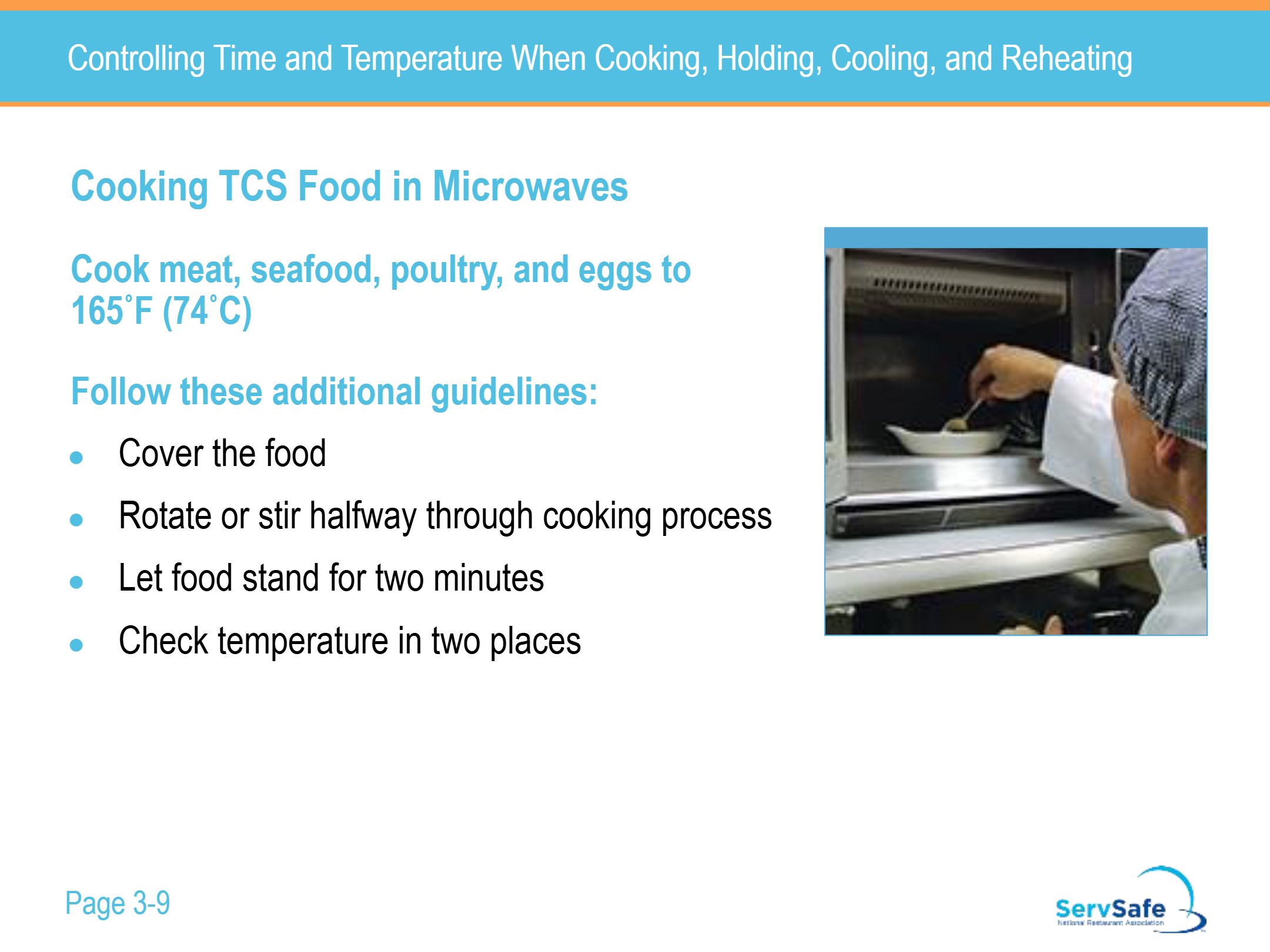
Which of the following are guidelines for cooking TCS food in microwaves?
Cover the food
Rotate or stir halfway through cooking
Let food stand for two minutes
Check temperature in two places
11
Multiple Choice
What is the minimum internal temperature to which meat, seafood, poultry, and eggs should be cooked in a microwave?
165°F (74°C)
145°F (63°C)
155°F (68°C)
125°F (52°C)
12
13
Multiple Choice
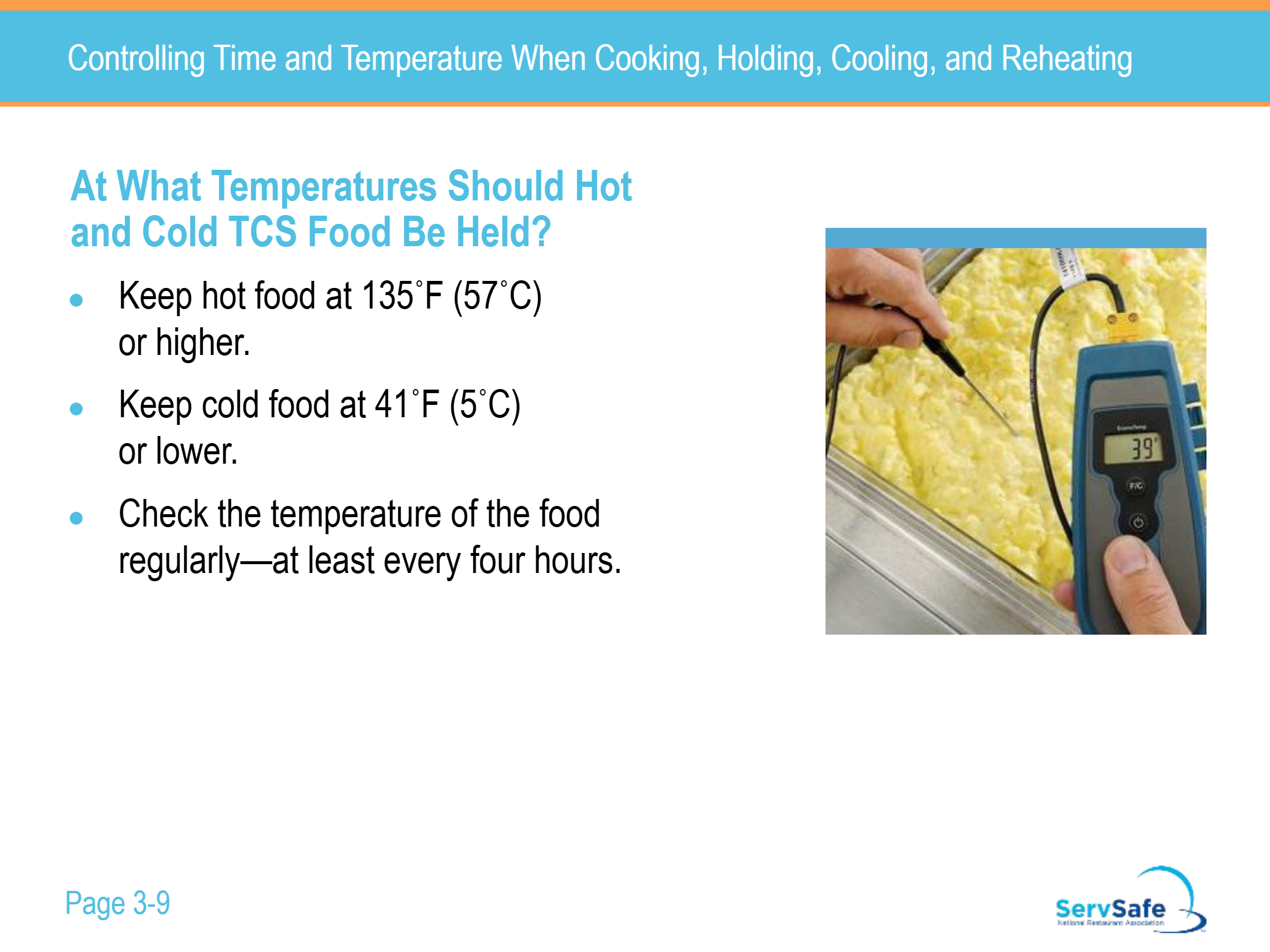
At what temperature should hot TCS food be held?
135°F (57°C) or higher
120°F (49°C) or higher
100°F (38°C) or higher
150°F (66°C) or higher
14
15
Open Ended
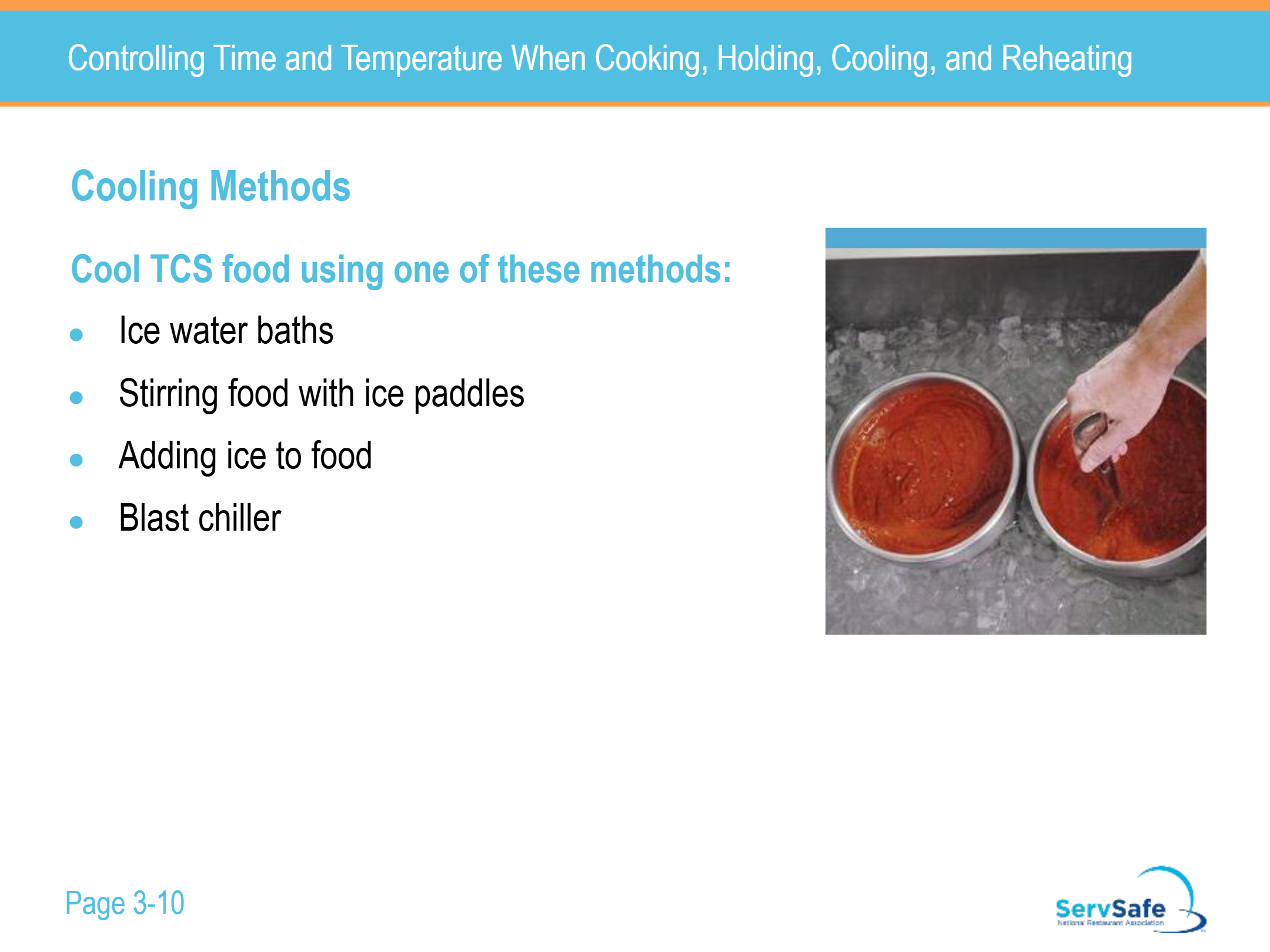
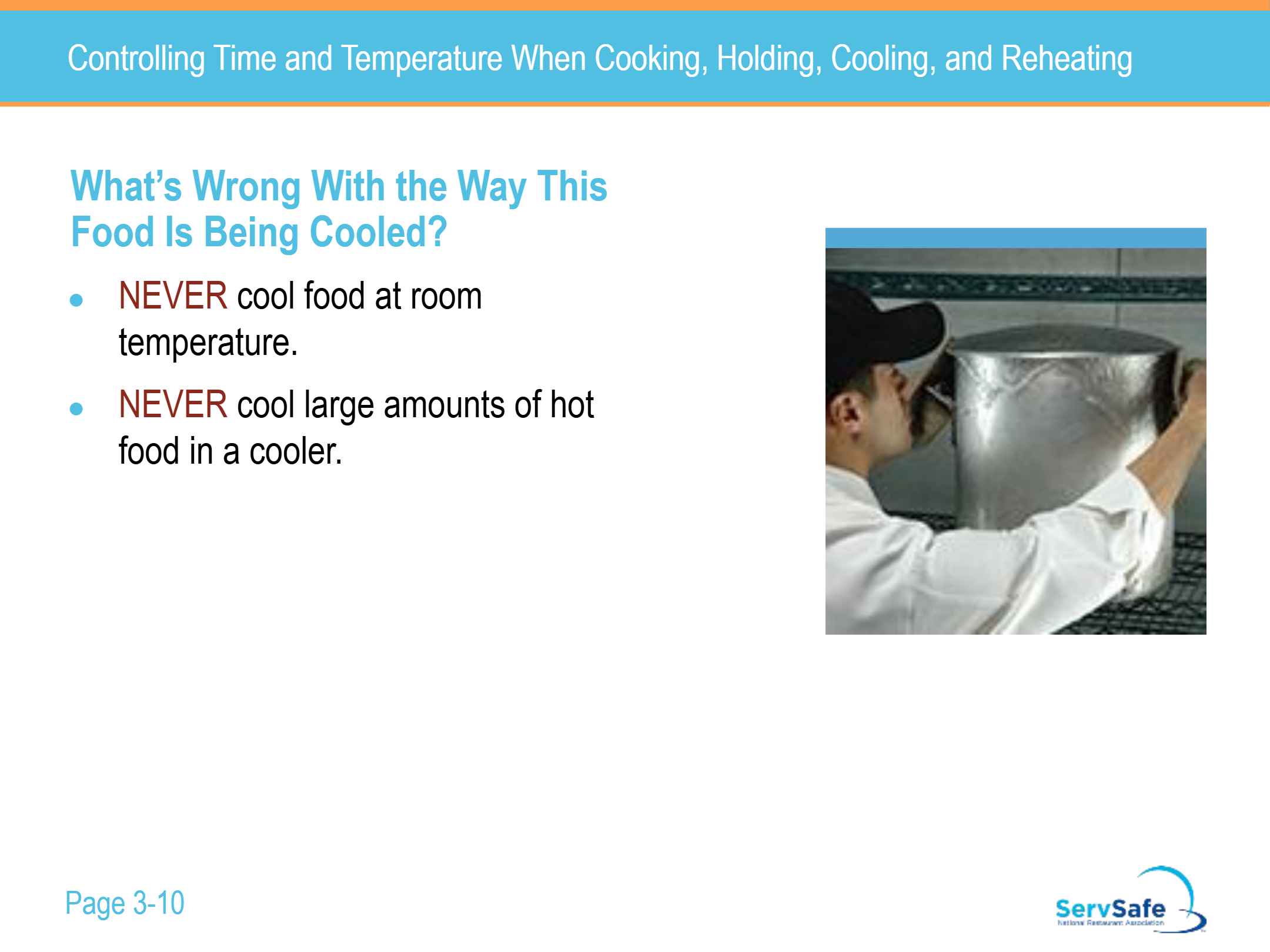
Explain why it is important to avoid cooling large amounts of hot food in a cooler and describe a safer alternative method.
16
17
Open Ended
What is wrong with the way the food is being cooled in the previous image?
18
19
Fill in the Blanks
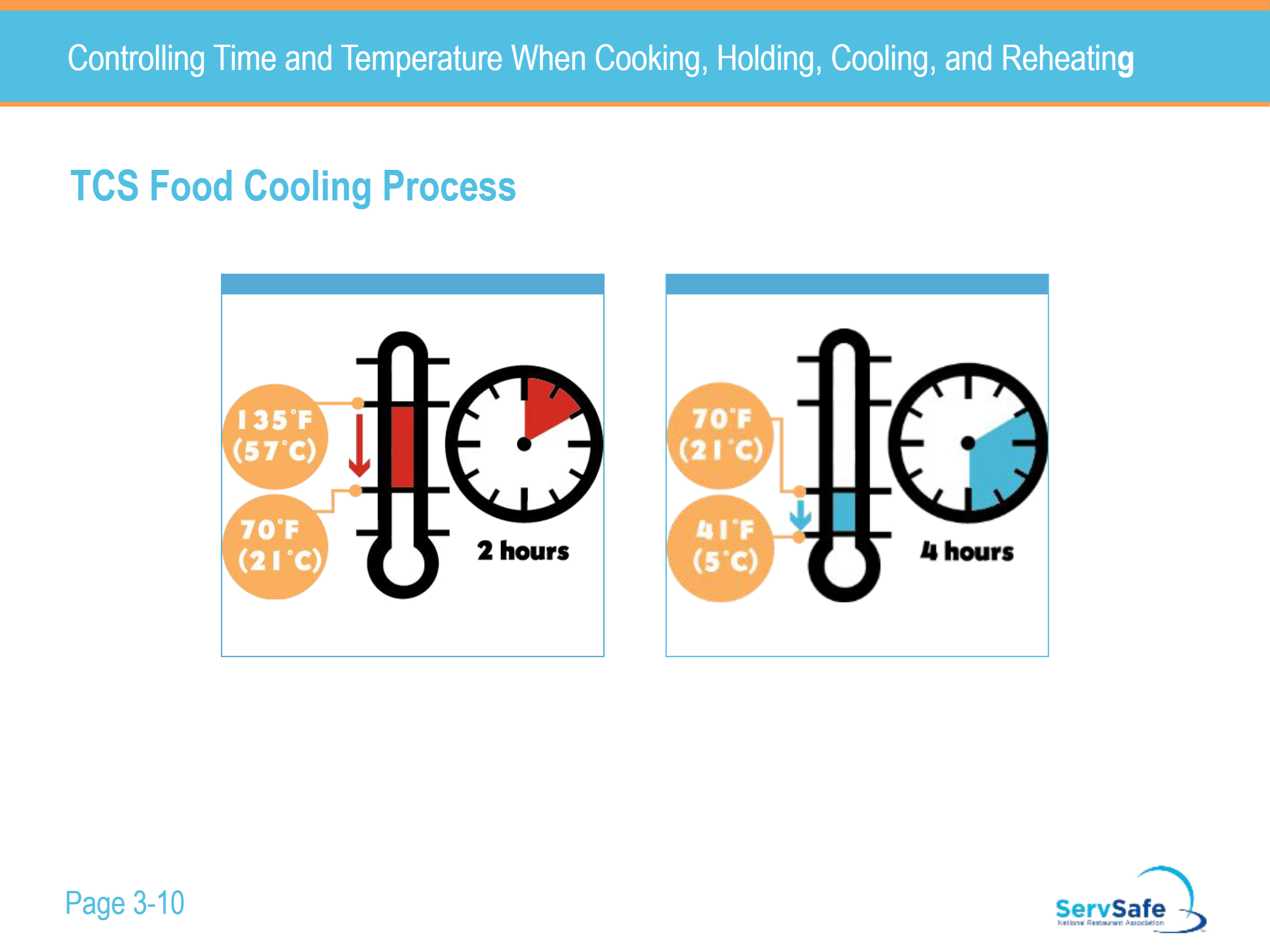
TCS food must be cooled from 135°F (57°C) to 70°F (21°C) within
20
21
Multiple Choice
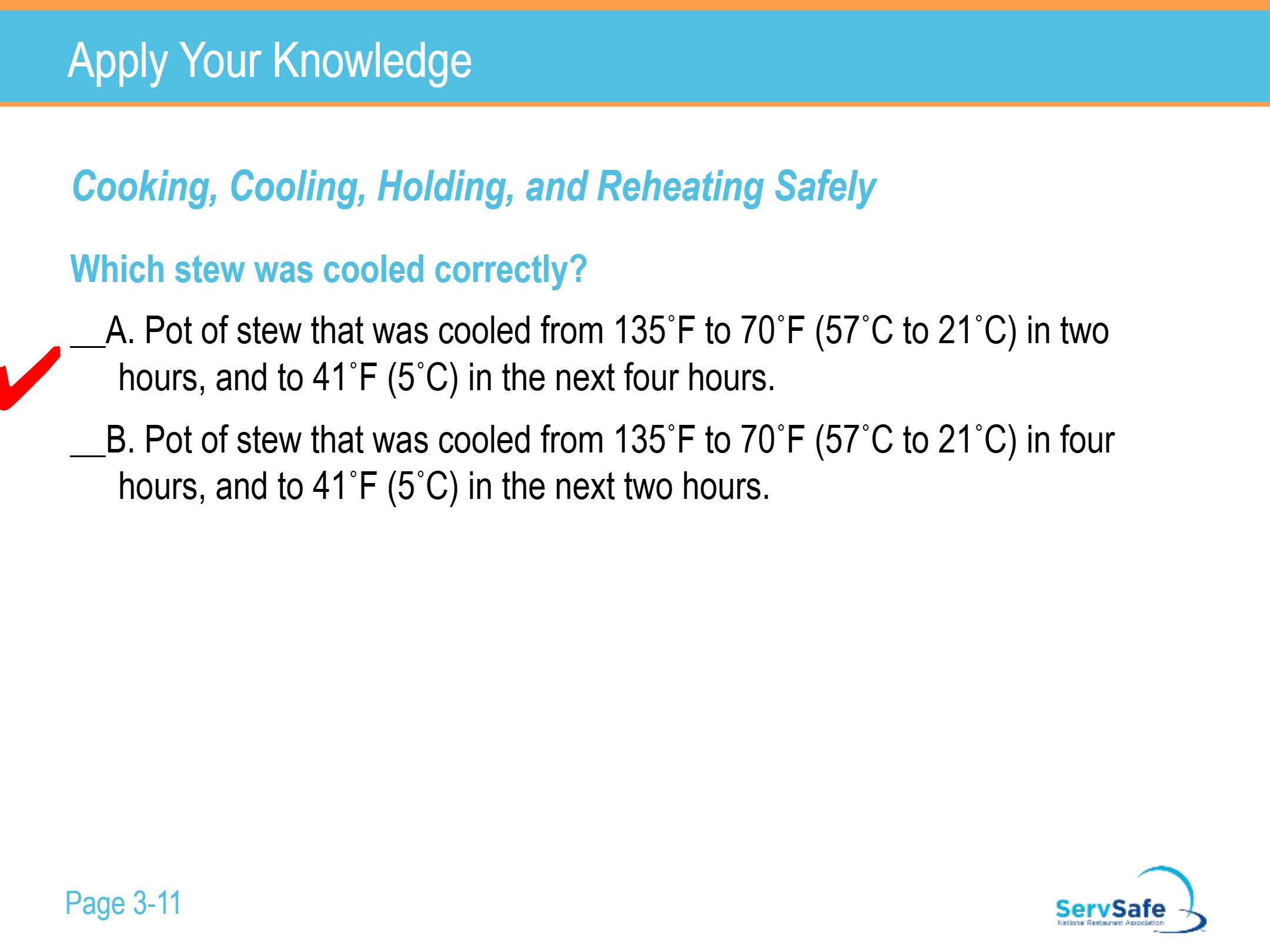
Which stew was cooled correctly?
A. Pot of stew that was cooled from 135°F to 70°F (57°C to 21°C) in two hours, and to 41°F (5°C) in the next four hours.
B. Pot of stew that was cooled from 135°F to 70°F (57°C to 21°C) in four hours, and to 41°F (5°C) in the next two hours.
C. Pot of stew that was cooled from 135°F to 41°F (57°C to 5°C) in six hours.
D. Pot of stew that was cooled from 135°F to 70°F (57°C to 21°C) in three hours, and to 41°F (5°C) in the next three hours.
22
23
Multiple Select
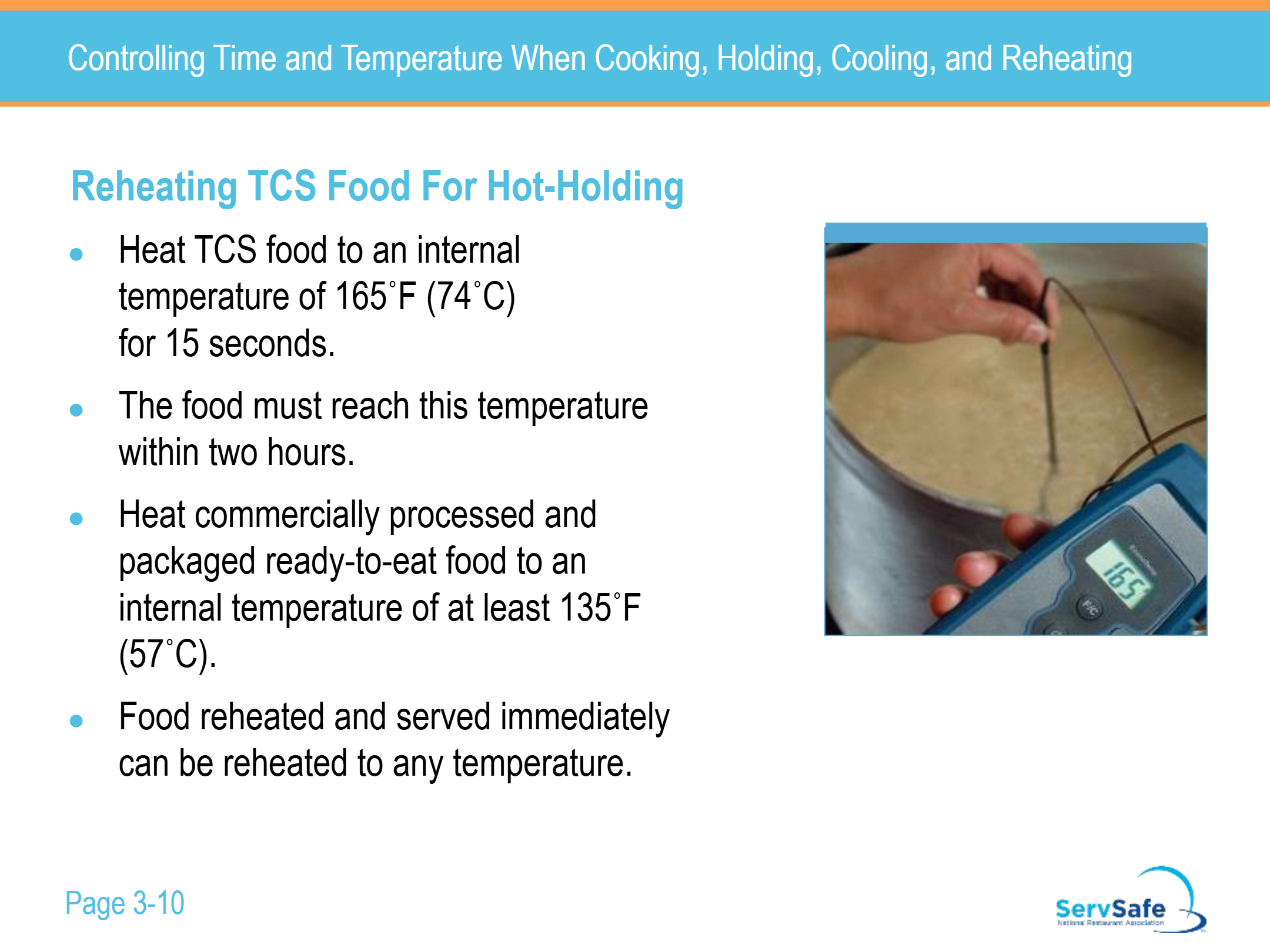
Which of the following are correct procedures for reheating TCS food for hot-holding?
Heat TCS food to an internal temperature of 165°F (74°C) for 15 seconds.
The food must reach 165°F (74°C) within two hours.
Heat commercially processed ready-to-eat food to at least 135°F (57°C).
Food reheated and served immediately can be reheated to any temperature.
24
25
Open Ended
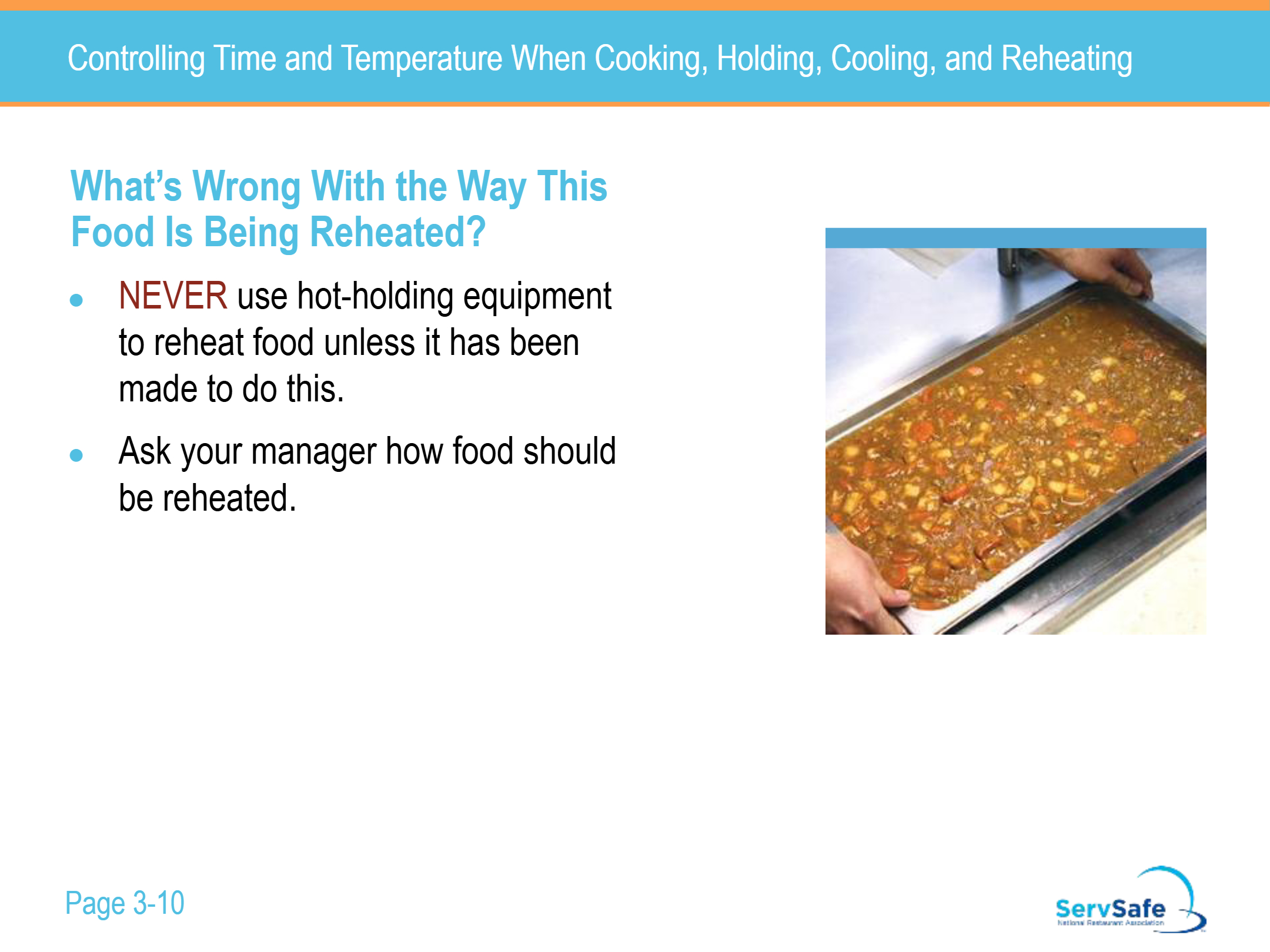
Why is it unsafe to use hot-holding equipment to reheat food, and what should you do instead?
26
27
28
Multiple Choice
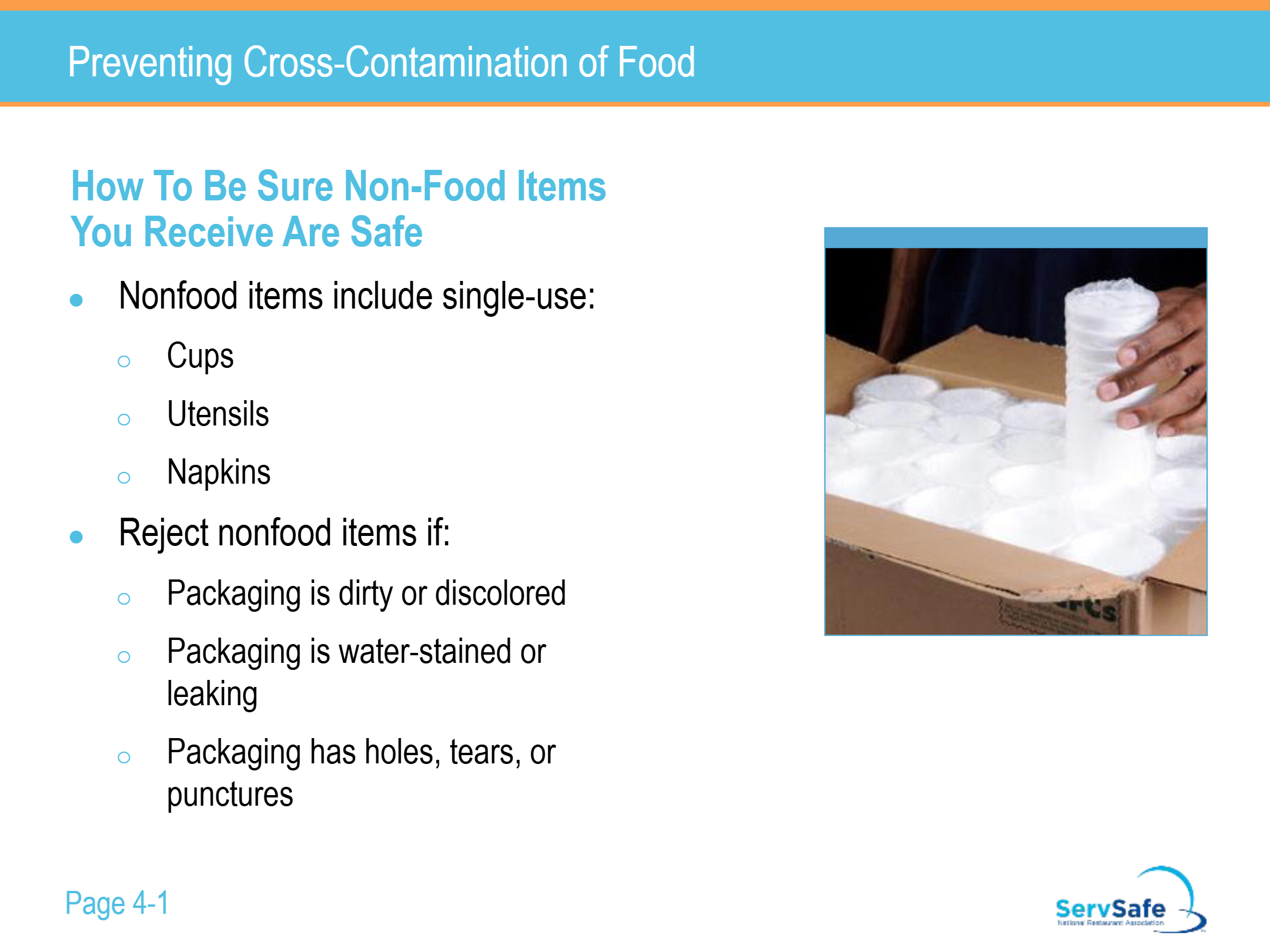
Which of the following is a reason to reject a nonfood item upon delivery?
Packaging is dirty or discolored.
Packaging is brightly colored.
Packaging is labeled correctly.
Packaging is made of plastic.
29
Fill in the Blanks
Single-use nonfood items include cups, utensils, and
30
31
Multiple Select
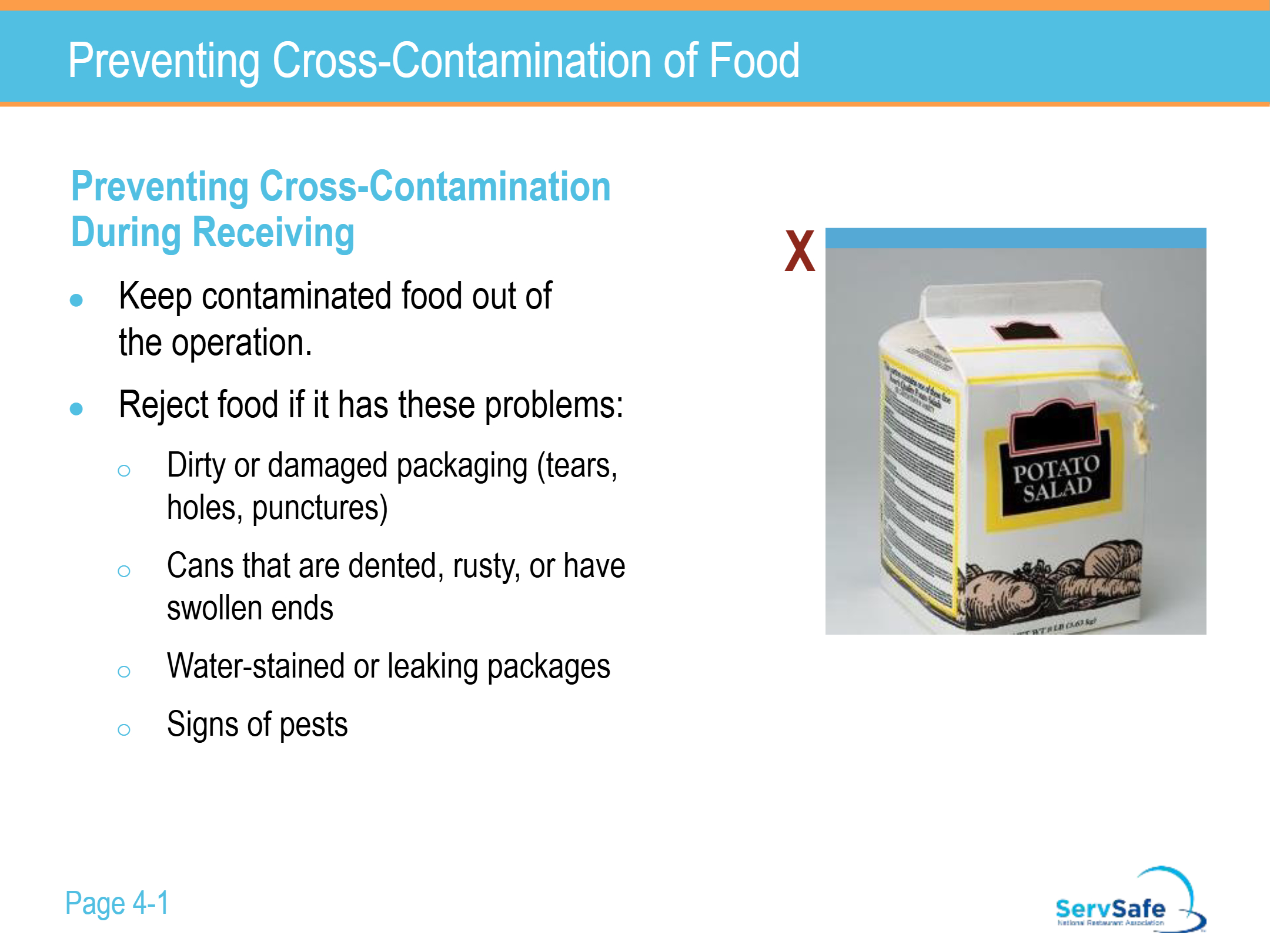
When receiving food, which of the following are reasons to reject the delivery?
Dirty or damaged packaging (tears, holes, punctures)
Cans that are dented, rusty, or have swollen ends
Water-stained or leaking packages
Packaging is colorful
32
33
Open Ended
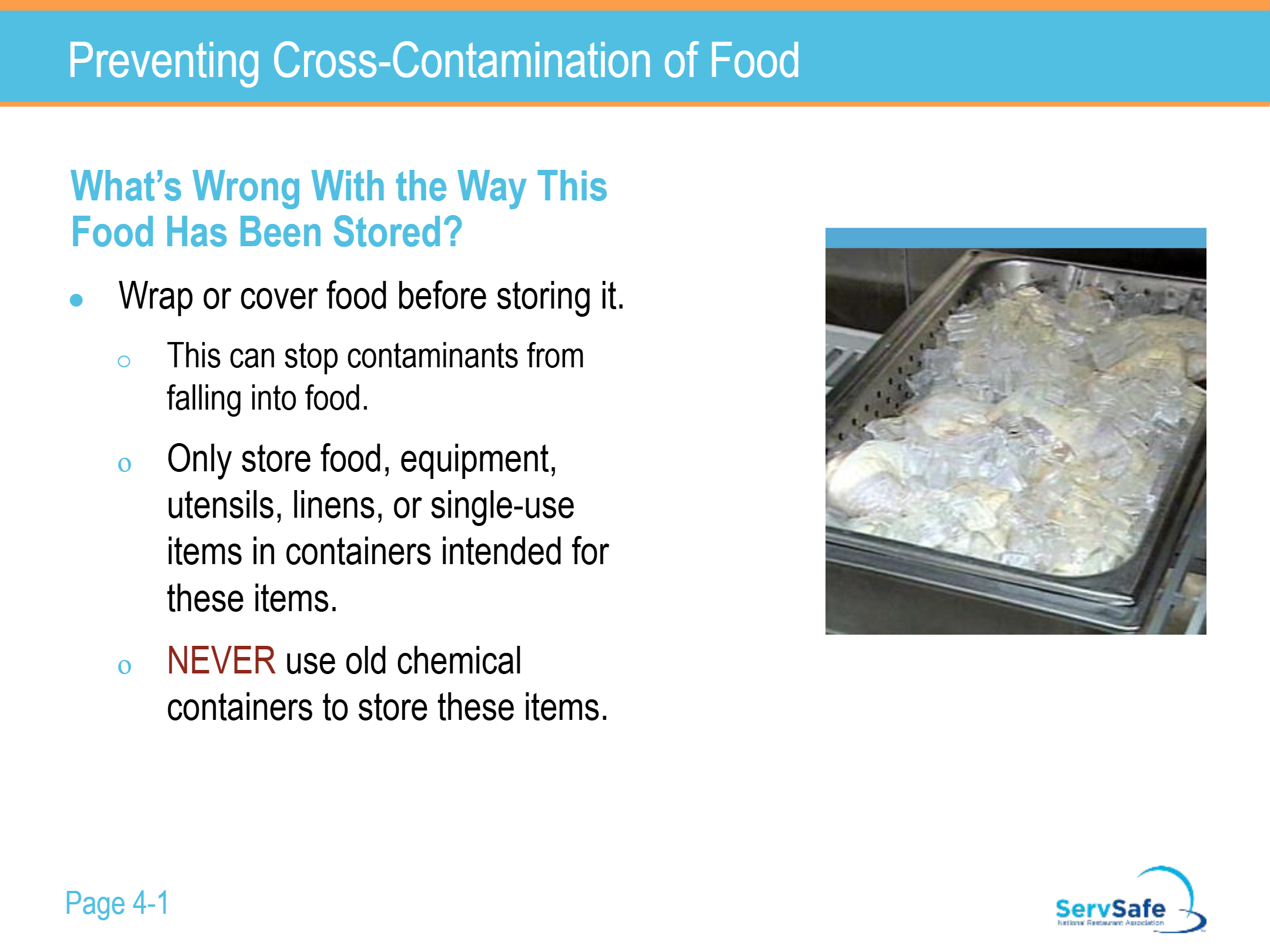
What is wrong with the image on the previous slide?
34
Multiple Choice
What is one reason you should never use old chemical containers to store food?
They are not big enough for food storage.
They may contain harmful residues that contaminate food.
They are too expensive to use for food.
They are difficult to clean.
35
36
Open Ended
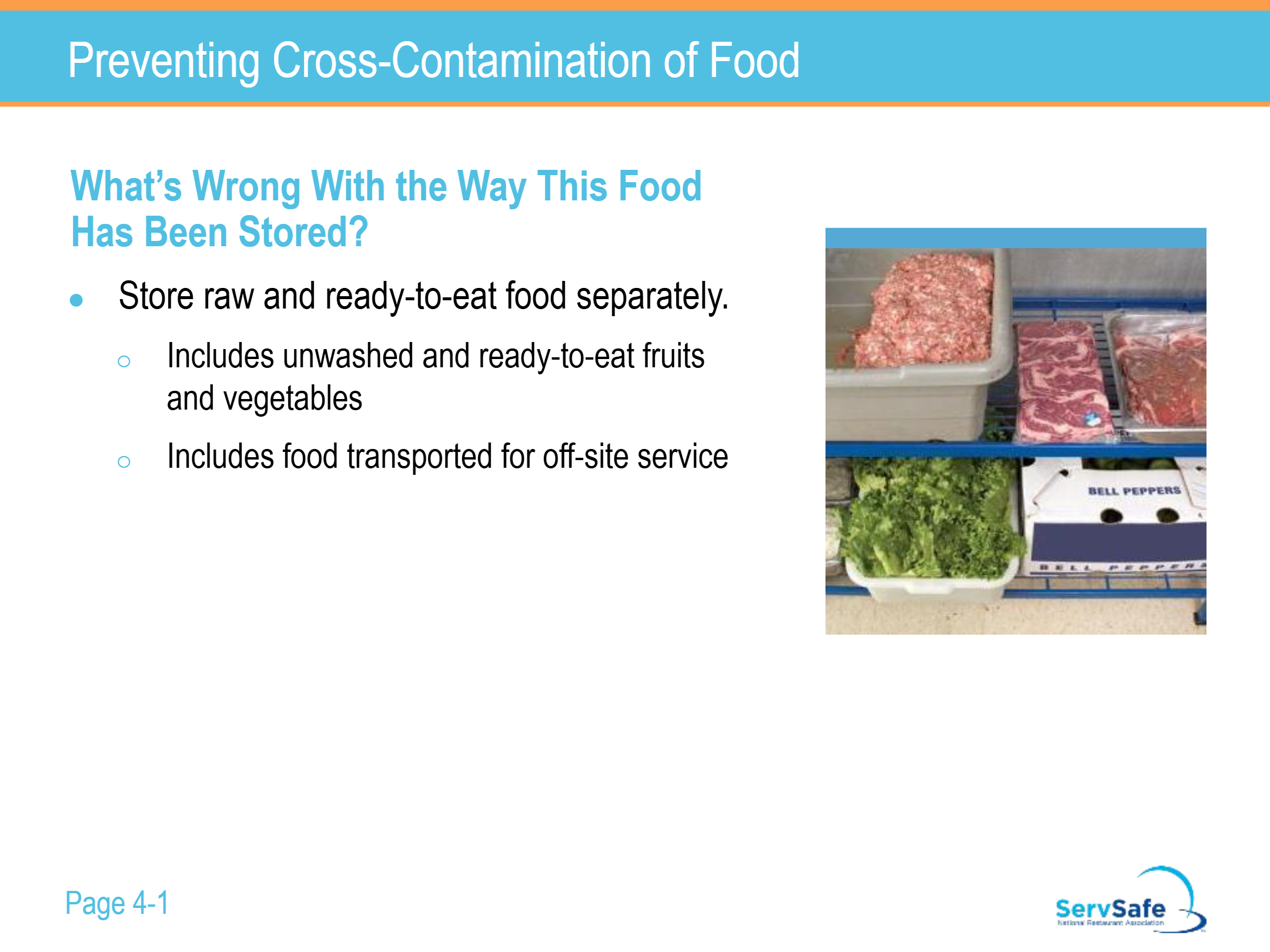
What is wrong with the way the food was stored in the previous image?
37
Multiple Choice
Why is it important to store raw and ready-to-eat foods separately?
To keep the refrigerator organized
To prevent cross-contamination between raw and ready-to-eat foods
To save space in the storage area
To make food easier to find
38
39
Reorder
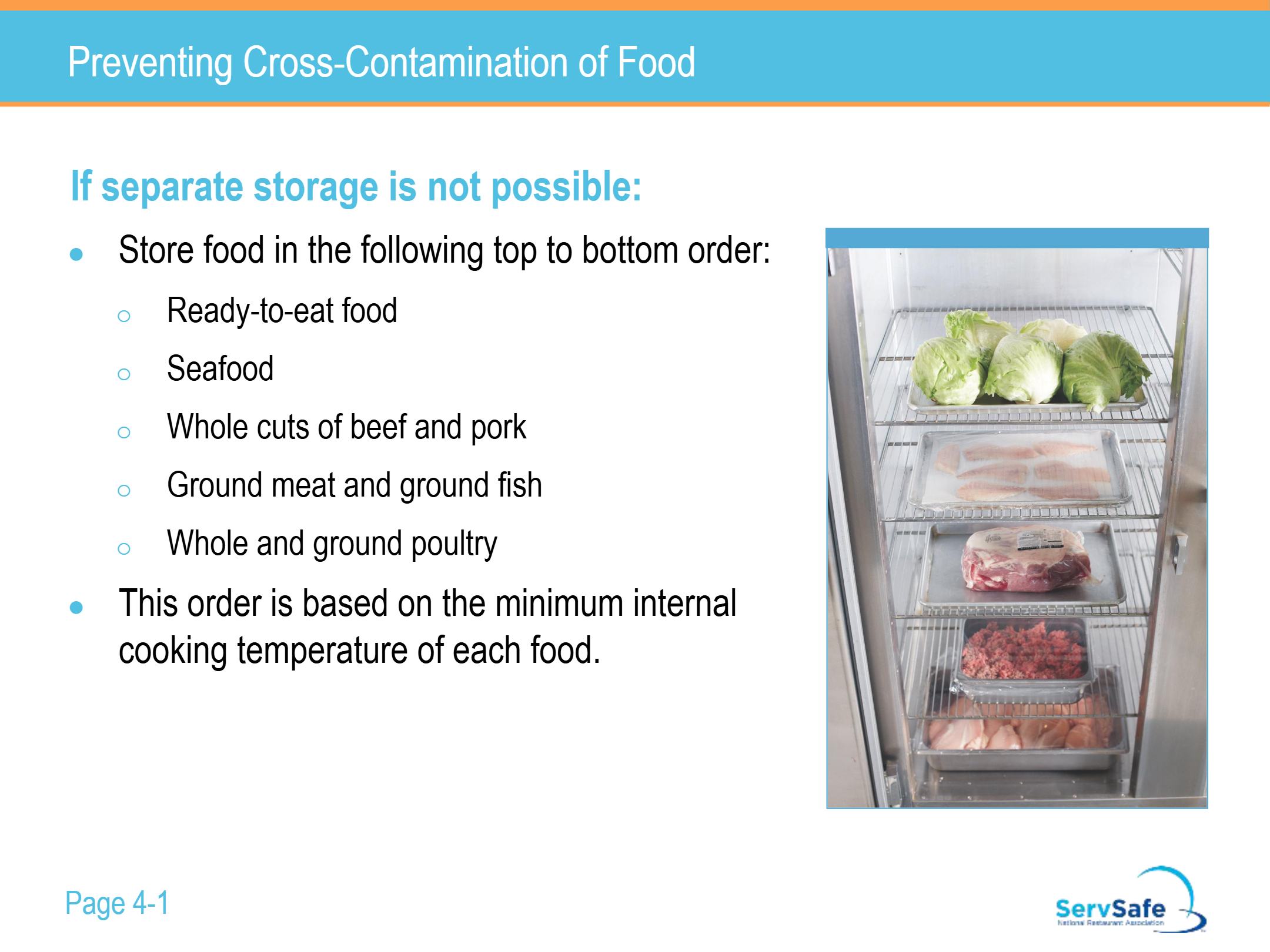
Reorder the following, left to right = Top to bottom
Ready-to-eat foods
Seafood
Whole cuts of beef & pork
Ground meat
Whole poultry
40
41
Open Ended
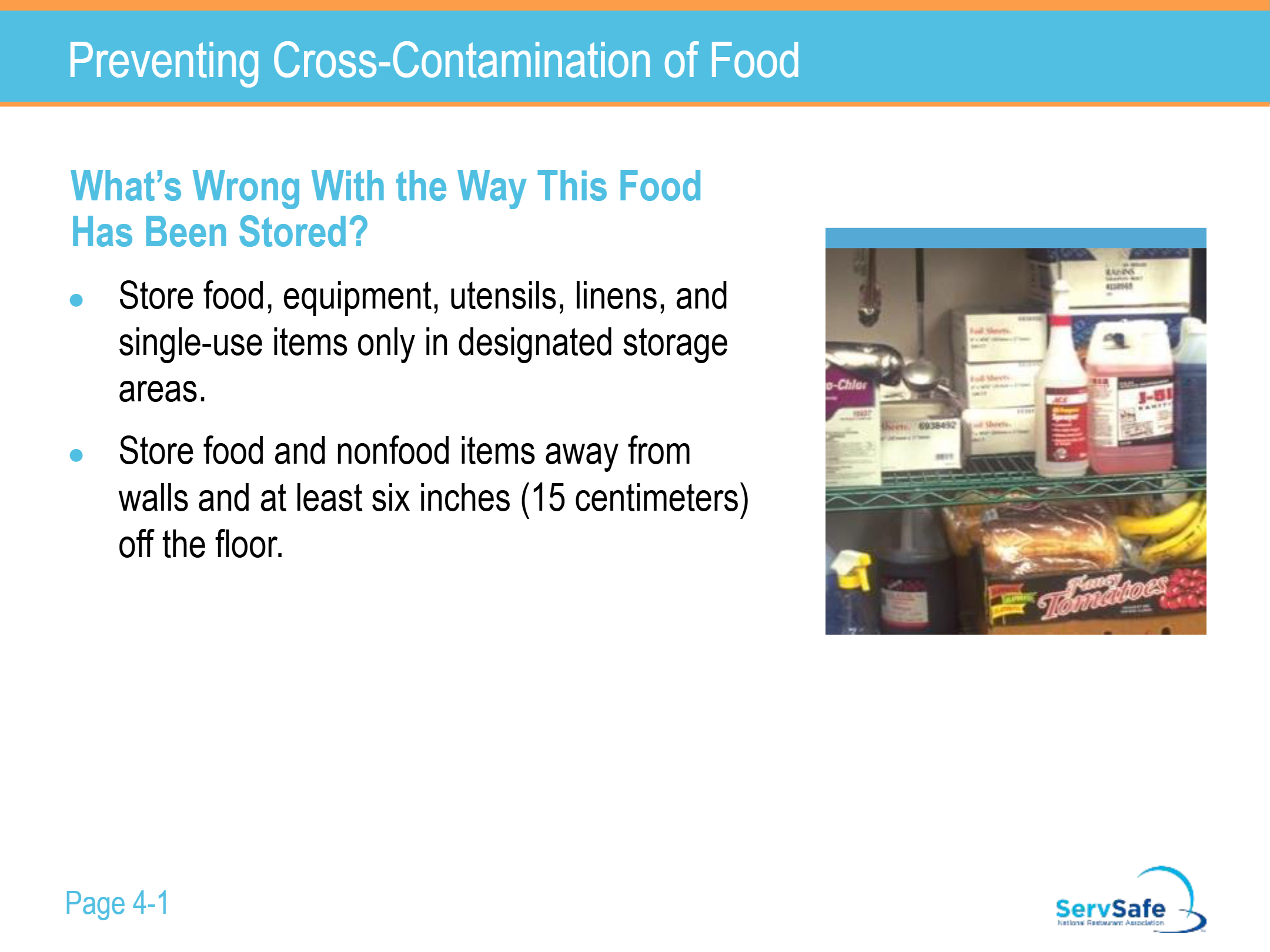
What is wrong with the way the food has been stored on the previous slide.
42
Dropdown
43
44
Multiple Select
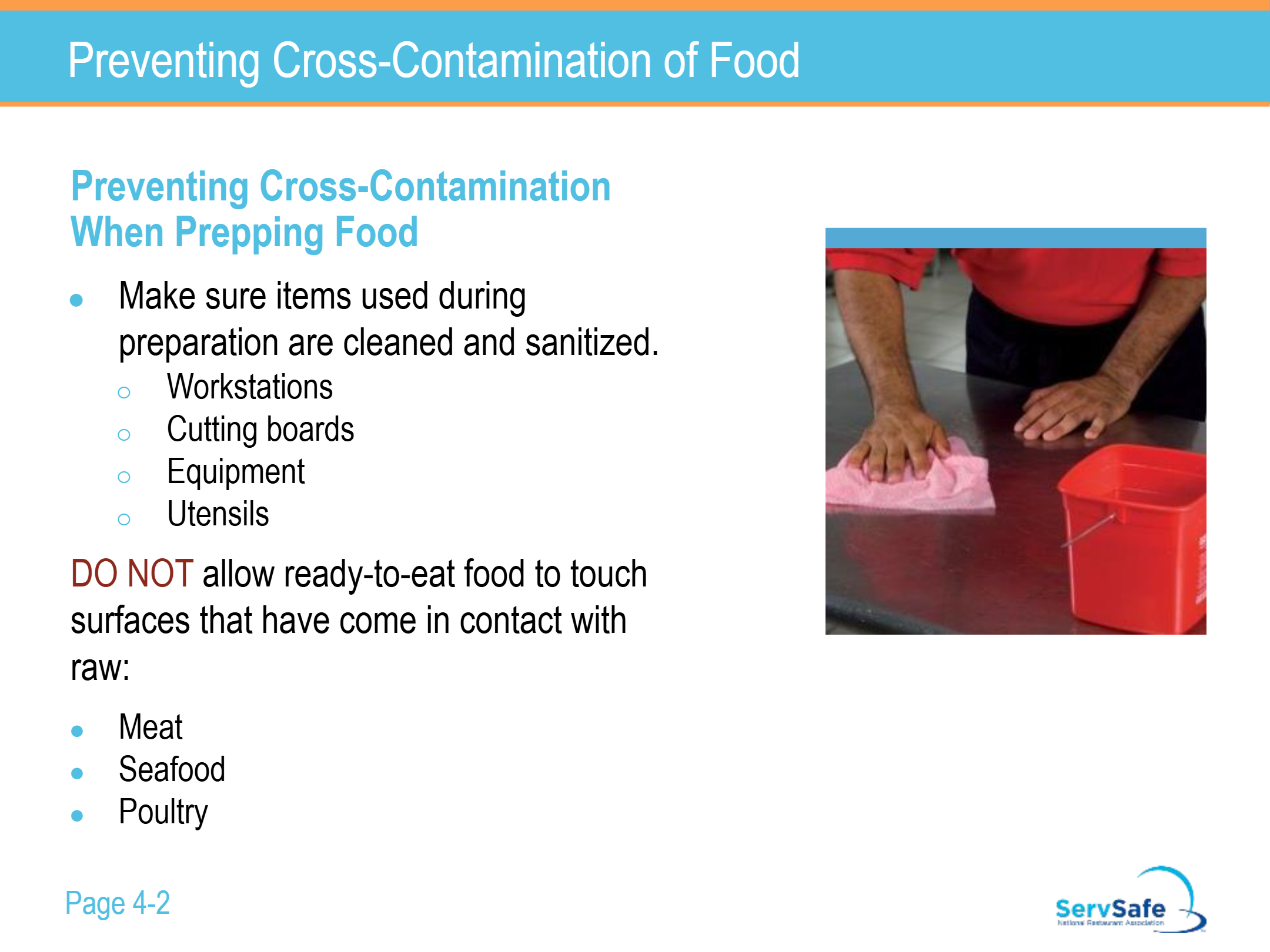
Which of the following items must be cleaned and sanitized to prevent cross-contamination when prepping food?
Workstations
Cutting boards
Utensils
Equipment
45
46
Open Ended
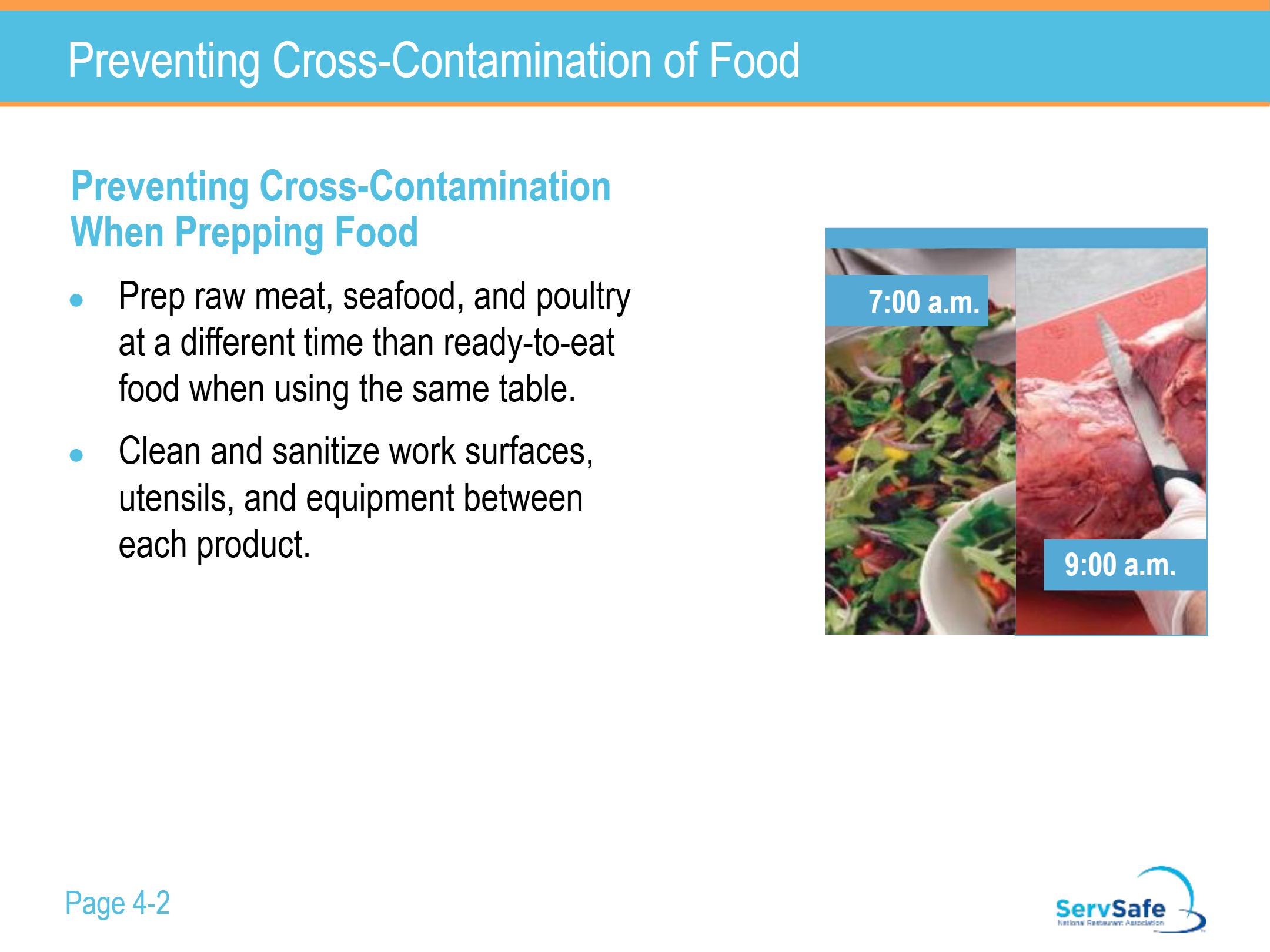
When using the same table, how can you prevent cross-contamination between raw meat and ready-to-eat food?
47

48
Multiple Choice
Which of the following is NOT a recommended practice to prevent cross-contamination of produce?
Keep unwashed and ready-to-eat fruits and vegetables separate from raw meat, poultry, and seafood.
Wash produce before use.
Wash produce in water colder than the food.
Clean and sanitize the prep sink and work area before starting.
49
50
Multiple Choice
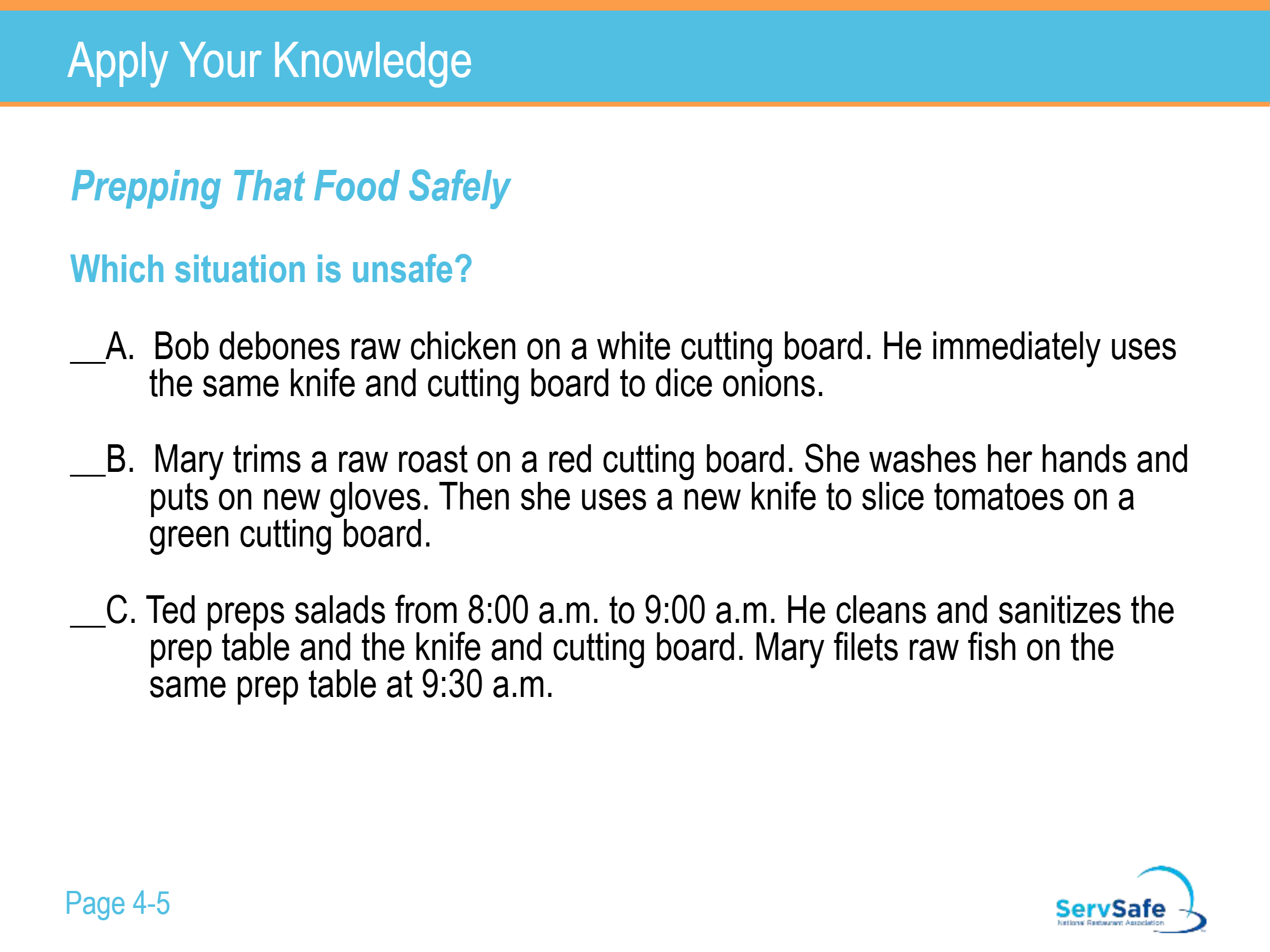
Which situation is unsafe?
A. Bob debones raw chicken on a white cutting board. He immediately uses the same knife and cutting board to dice onions.
B. Mary trims a raw roast on a red cutting board. She washes her hands and puts on new gloves. Then she uses a new knife to slice tomatoes on a green cutting board.
C. Ted preps salads from 8:00 a.m. to 9:00 a.m. He cleans and sanitizes the prep table and the knife and cutting board. Mary filets raw fish on the same prep table at 9:30 a.m.
51
52
Multiple Choice
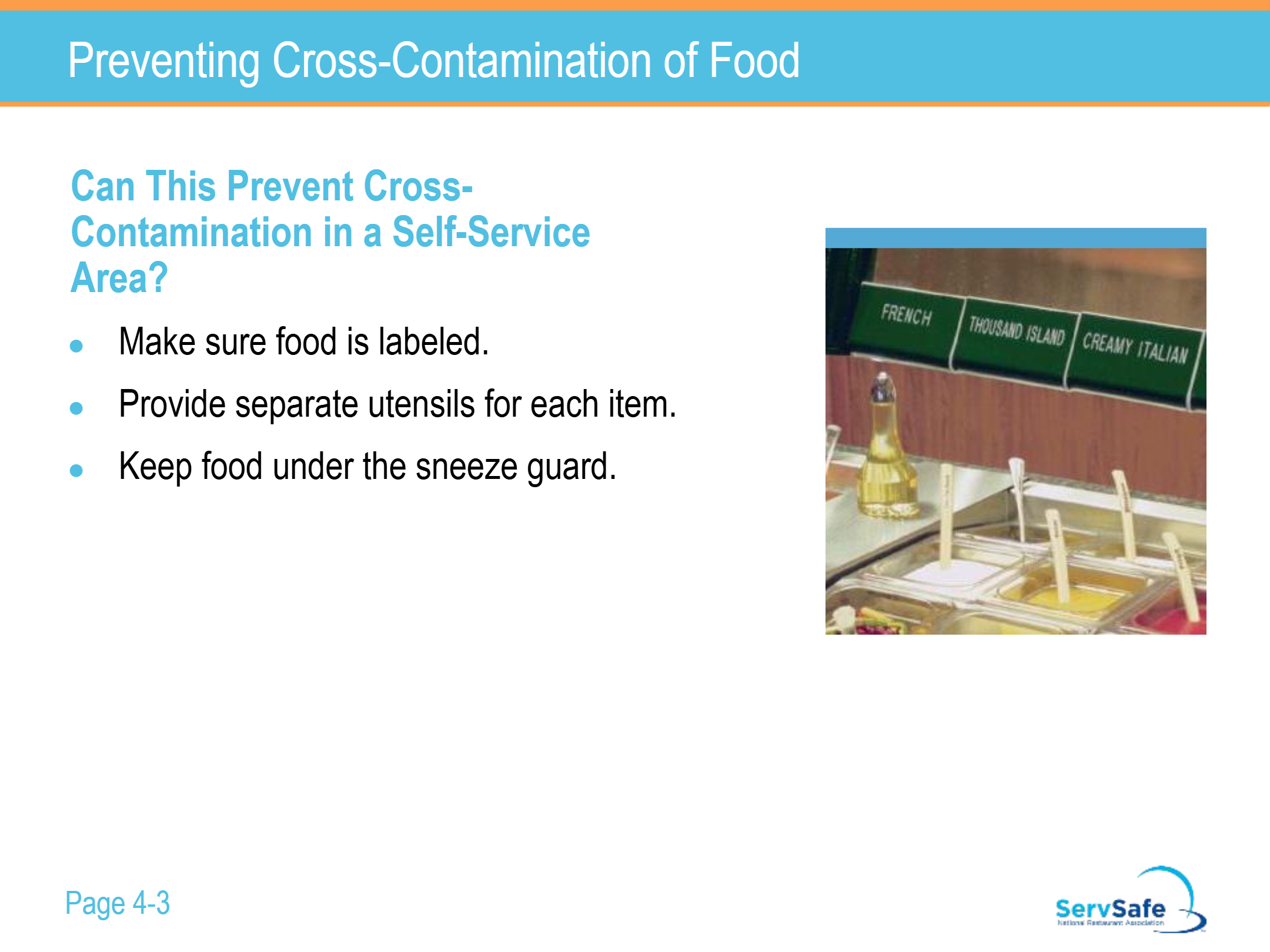
The image before helps prevent cross-contamination
True
False
53
Open Ended
What are three important steps to prevent cross-contamination in a self-service area?
54
55
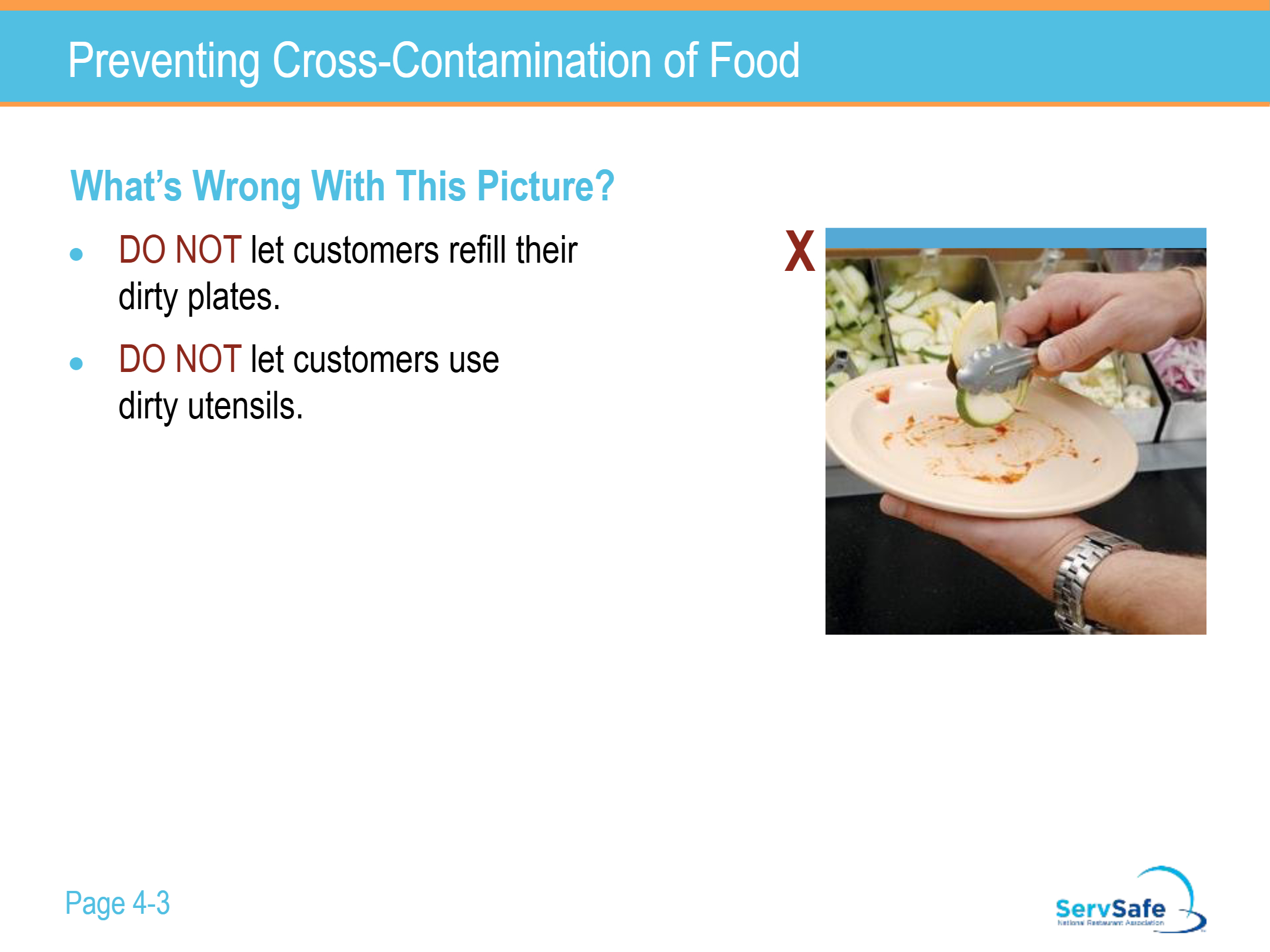
Open Ended
What is wrong with the previous image?
56
Open Ended
Why is it important not to let customers refill their dirty plates or use dirty utensils in a self-service area?
57
58
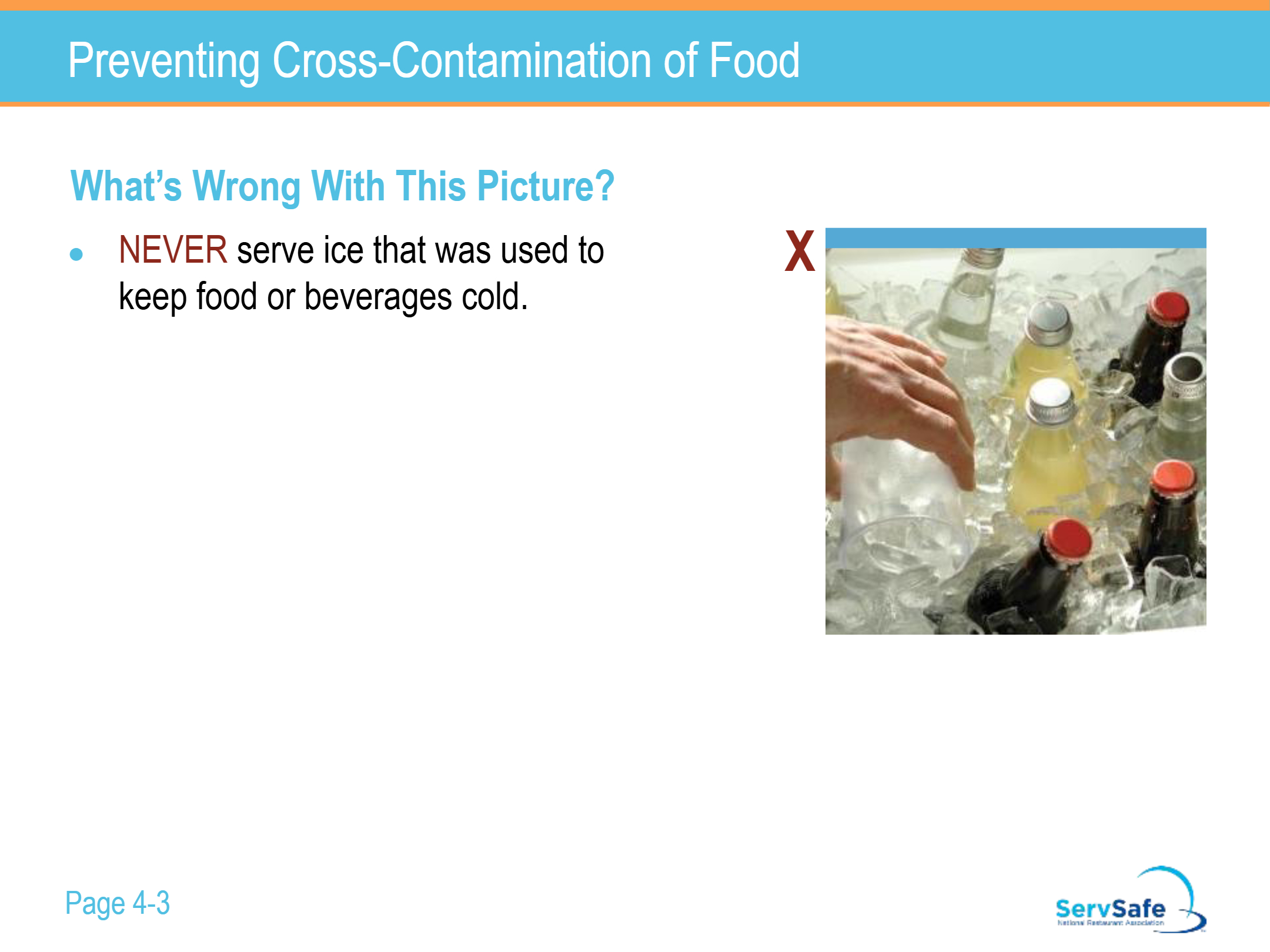
Open Ended
What is wrong with the previous image?
59
60
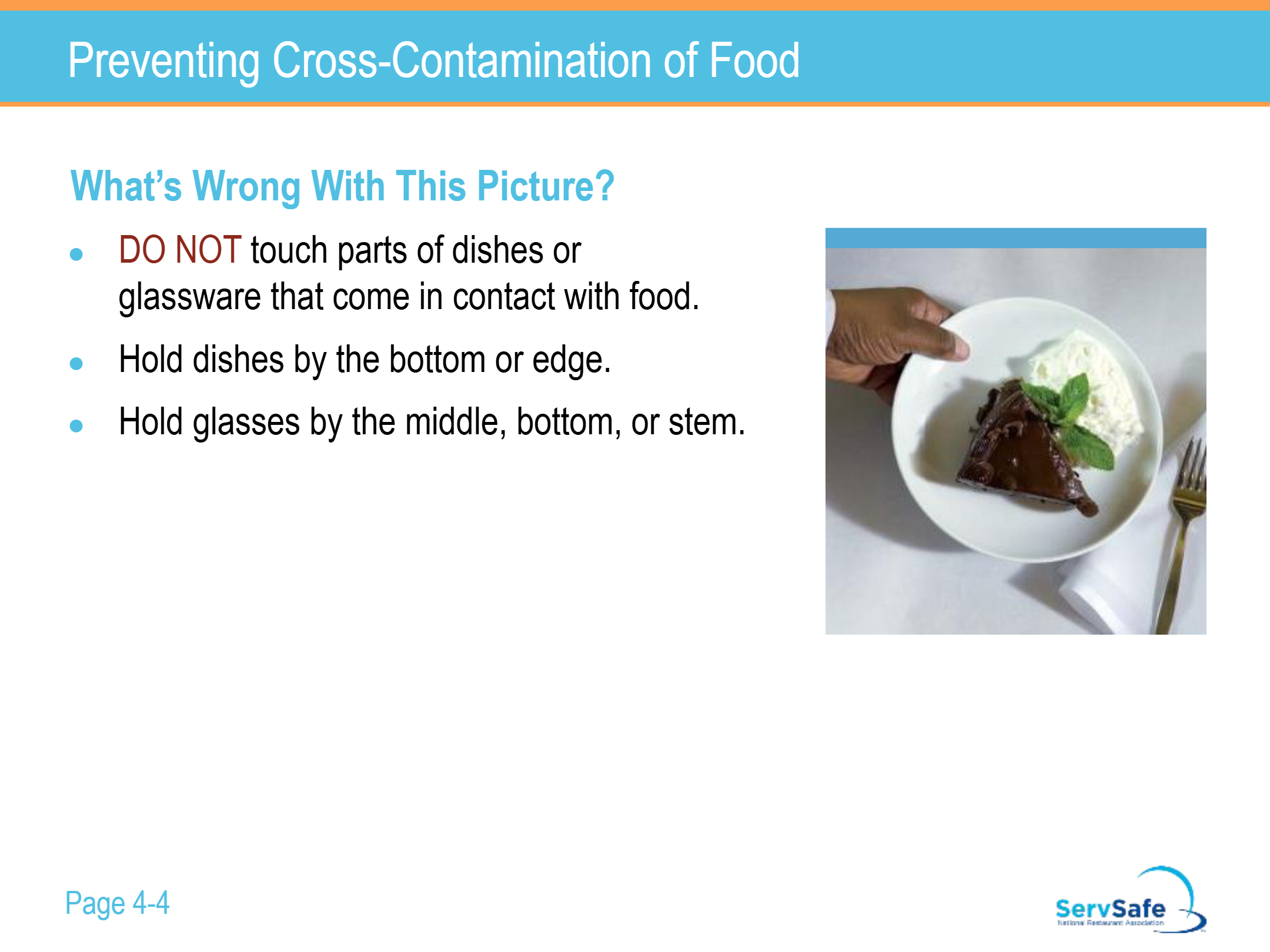
Open Ended
What is wrong with the previous image?
61
Multiple Select
Which of the following are correct practices to prevent cross-contamination when handling dishes and glassware?
Hold dishes by the bottom or edge.
Hold glasses by the rim.
Hold glasses by the stem.
Touch parts of dishes that come in contact with food.
62
63
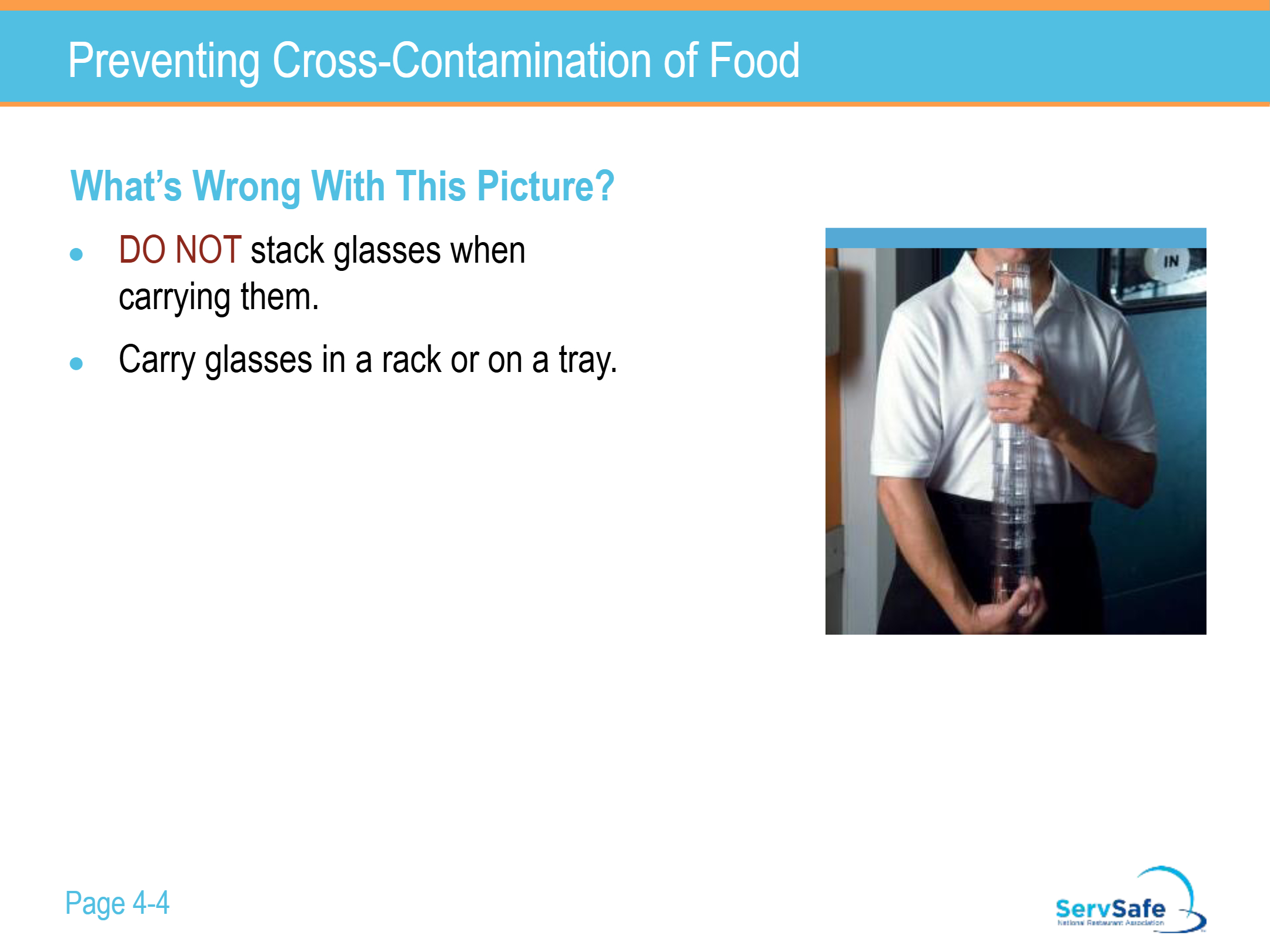
Open Ended
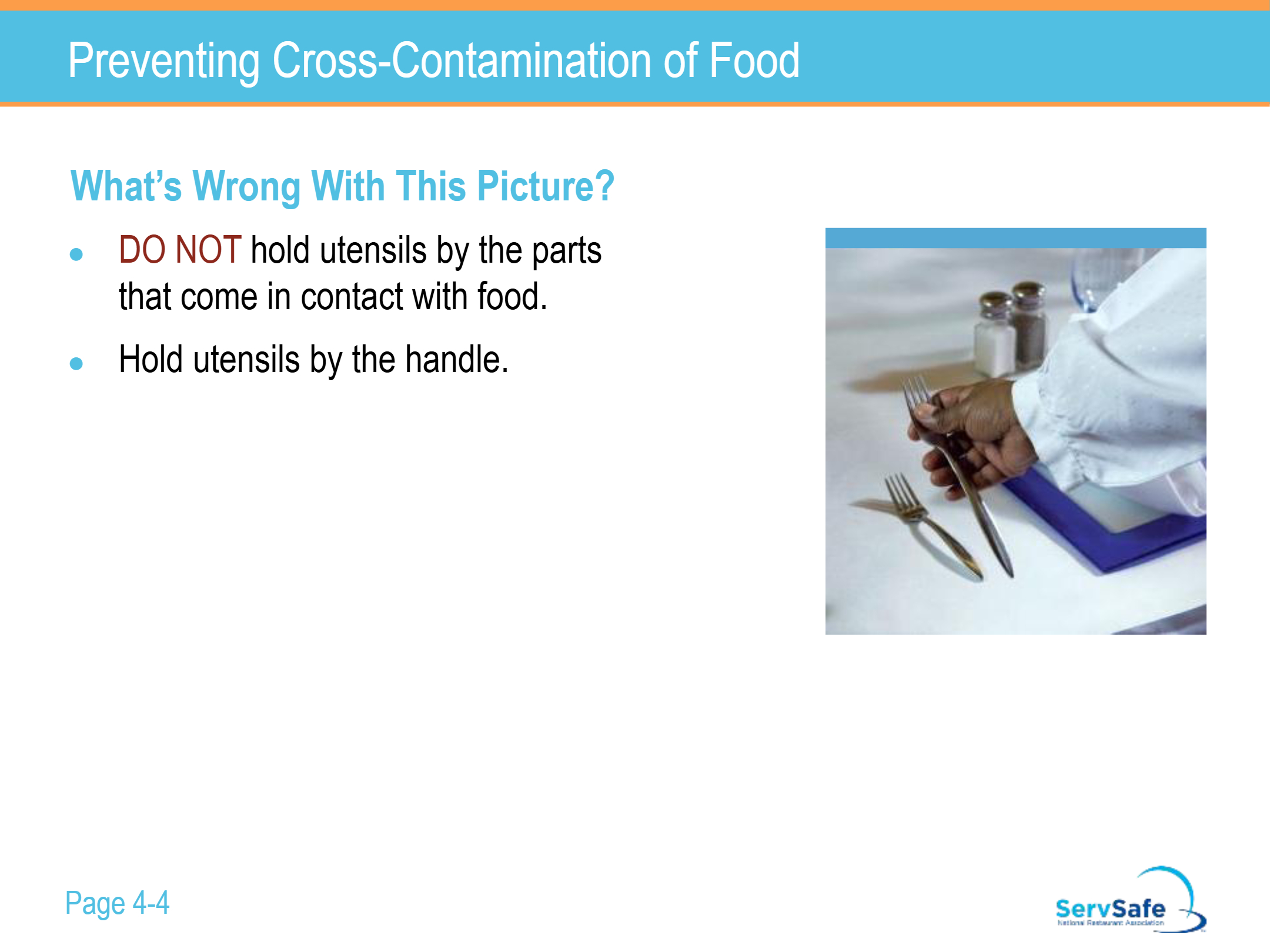
What is wrong with the previous image?
64
65
Open Ended
What is wrong with the previous image and why?
66

67
Open Ended
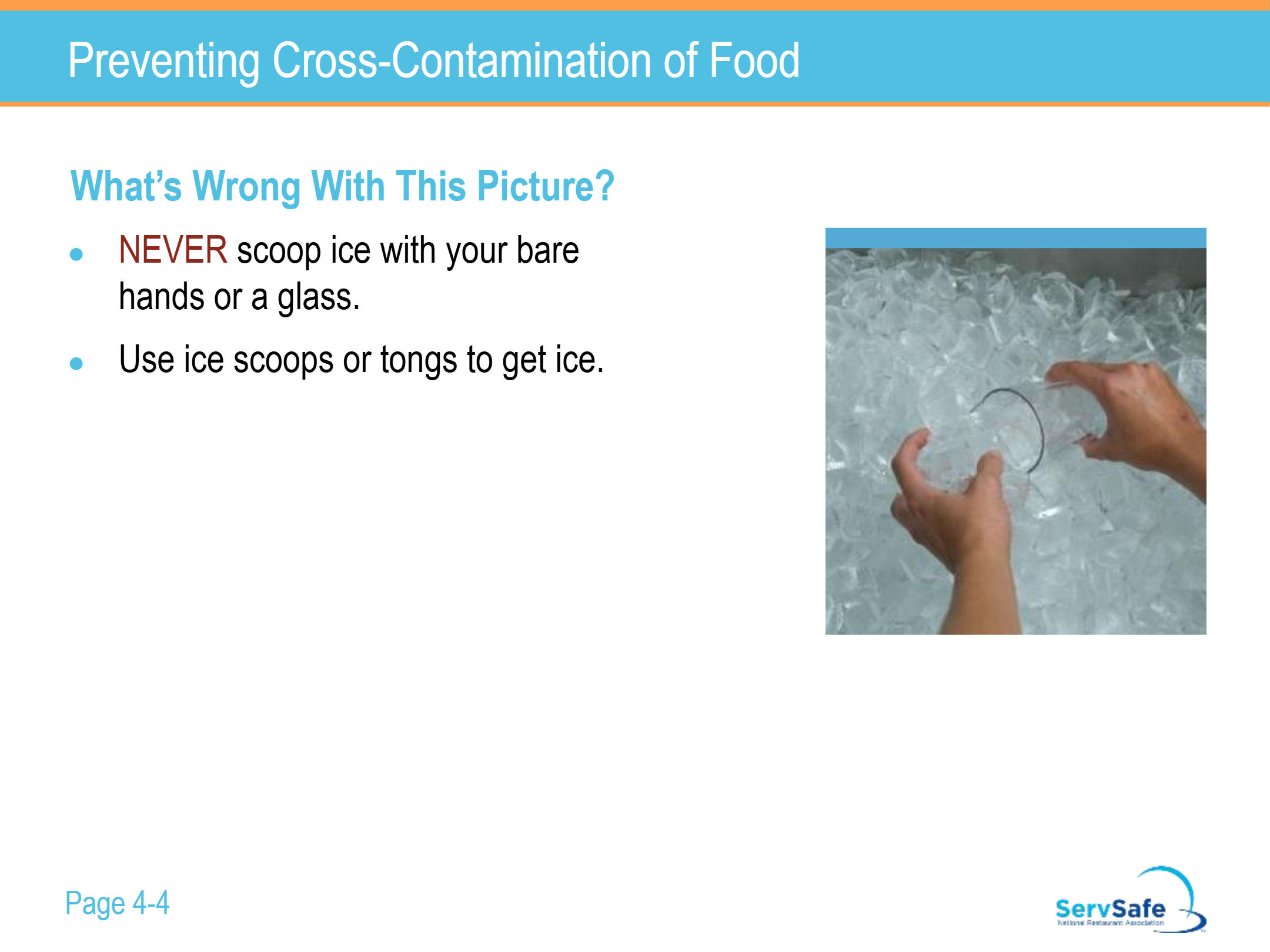
What is wrong with the previous image and why?
68
69
Open Ended
What is wrong with the previous image and why?
70
Open Ended
Why is it important to follow manufacturer’s instructions when cooking packaged food, especially when adding these foods to ready-to-eat dishes?
71
Open Ended
Do you have any questions?
Show answer
Auto Play
Slide 1 / 71
SLIDE
Similar Resources on Wayground

66 questions
Componentes de Excel
Presentation
•
9th Grade
63 questions
Newton's 2nd Law of Motion
Presentation
•
8th Grade
65 questions
TÜRK-İSLAM DEVLETİ
Presentation
•
9th Grade
65 questions
PS12 Colors
Presentation
•
9th Grade
65 questions
Evolution Notes
Presentation
•
9th Grade
63 questions
SCT3 chap11_révision pré-examen chap11_2223
Presentation
•
9th Grade
62 questions
GEOGRAPHY OF RUSSIA 1 PHYSICAL
Presentation
•
9th Grade
66 questions
Python _ IX
Presentation
•
9th Grade
Popular Resources on Wayground
10 questions
How much do you know about our Portrait of an Eagle?

Quiz
•
10th Grade
10 questions
Fast Food Slogans
Quiz
•
6th - 8th Grade
21 questions
Continents and Oceans
Quiz
•
6th Grade
20 questions
Parts of Speech
Quiz
•
5th Grade
16 questions
Subject & Predicate
Quiz
•
5th Grade
25 questions
Multiplication Facts
Quiz
•
5th Grade
12 questions
Map Skills
Quiz
•
3rd Grade
22 questions
Continents and Oceans
Quiz
•
5th Grade
Discover more resources for Hospitality and Catering
20 questions
Brand Labels
Quiz
•
5th - 12th Grade
20 questions
Characteristics of Life
Quiz
•
9th - 10th Grade
20 questions
REGULAR Present tense verbs
Quiz
•
8th - 9th Grade
20 questions
Graphing Inequalities on a Number Line
Quiz
•
6th - 9th Grade
10 questions
Translating Algebraic Expressions
Quiz
•
9th Grade
10 questions
Exploring the 4 Major Macromolecules and Their Functions

Interactive video
•
9th - 12th Grade
20 questions
Exponent Rules
Quiz
•
8th - 9th Grade
20 questions
Position vs. Time Graphs
Quiz
•
9th Grade