Search Header Logo
Presentación sin título

Presentación sin título

Assessment

Presentation

English

9th - 12th Grade

Practice Problem

Medium

Created by

Kary Pedroza

Used 2+ times

FREE Resource

39 Slides • 32 Questions

1

media

2

Multiple Choice

What are the main differences between an animal cell and a plant cell?

1

Animal cells have a cell wall

2

Plant cells have mitochondria

3

Animal cells have chloroplasts

4

Plant cells have a vacuole

3

media

4

Multiple Choice

What is the fundamental unit of life that was first observed by Robert Hooke in 1665?

1

Atom

2

Cell

3

Molecule

4

Tissue

5

Multiple Choice

Question image

¿De qué manera son iguales todos los seres vivos en la Tierra?

1

Todos los seres vivos tienen pelo.

2

Todos los seres vivos están hechos de células y provienen de otras células.

3

Las células de todos los seres vivos tienen cloroplastos.

4

Todos los seres vivos pueden moverse. 

6

Multiple Choice

Question image

Este científico fue el primero en observar células

1

Roberto Hooke

2

Rudolf Virchow

3

Matthias Schleiden

4

Anton Van Leeuwenhoek

7

media

8

Multiple Choice

What is the function of the mitochondrion in a cell?

1

Produces energy by breaking down substances

2

Stores nutrients

3

Controls cell division

4

Packages molecules made in the cell

9

Multiple Choice

¿Por qué es importante el ADN?

1

proporciona las instrucciones/planos para una célula

2

produce energía

3

almacena desechos

4

es responsable de hacer comida

10

Multiple Choice

Question image

¿Cuál es el nombre del material genético que está dentro del núcleo?

1

ER

2

ATP

3

YOLO

4

ADN

11

media

12

Multiple Choice

What are the three main points of the cell theory proposed by Schleiden and Schwann?

1

All living things are made of cells

2

Cells are the smallest unit of life

3

All cells come from pre-existing cells

4

Cells can exist independently of living organisms

13

media

14

Multiple Choice

What are the main components of protoplasm?

1

Water

2

Carbohydrates

3

Lipids

4

Proteins

15

Multiple Choice

Question image

¿Qué parte de la célula NO se encuentra en todas las células?

1

Pared Celular

2

Membrana Celular

3

Citosol

4

Material Genético

16

Multiple Choice

Question image

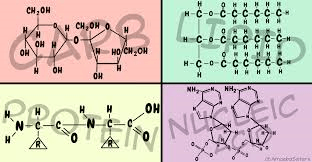
¿Qué elementos son comunes a las 4 biomoléculas?

1

Carbono, hidrógeno, nitrógeno

2

Carbono, nitrógeno, fósforo

3

Carbono, hidrógeno, oxígeno

4

Carbono, hidrógeno, fósforo

17

media

18

Multiple Choice

What are the major structures present in a cell?

1

Cell Membrane

2

Cytoplasm and its Organelles

3

Nucleus

4

Cell Wall

19

media

20

media

21

Multiple Choice

What are the functions of the cell membrane as described in the image?

1

Protective

2

Digestive

3

Selective Permeability

4

All of the above

22

media

23

Multiple Choice

What are the insulating properties of cell membranes?

1

They allow electrical signals to pass through easily

2

They act as dielectric material of a charged condenser

3

They connect adjacent cells together

4

They have low insulating value

24

media

25

Multiple Choice

What is the function of cytoplasm in a cell?

1

To store genetic information

2

To provide structure and support

3

To facilitate cellular processes

4

To produce energy

26

media

27

Multiple Choice

What are the constituent parts of cytoplasm?

1

Cytosol, cell organelles, and cytoplasmic inclusions

2

Nucleus, ribosomes, and mitochondria

3

Plasma membrane, cytosol, and lysosomes

4

Golgi apparatus, vacuole, and peroxisome

28

media

29

Multiple Choice

What is the primary component of the cytosol?

1

Water

2

Cytoskeleton filaments

3

Proteins

4

Salts

30

media

31

Multiple Choice

Which of the following organelles is NOT present in the cytoplasm?

1

Mitochondria

2

Endoplasmic Reticulum

3

Lysosomes

4

Chloroplasts

32

media

33

Multiple Choice

What is the primary function of mitochondria in cells?

1

Energy production

2

Protein synthesis

3

DNA replication

4

Cell division

34

Multiple Choice

___ es necesario para la respiración celular, proviene de los alimentos.

1

glucosa

2

agua

3

oxígeno

4

dióxido de carbono

35

media

36

Multiple Choice

What are the components of mitochondria?

1

Outer Membrane

2

Inner Membrane

3

Intermediate Space

4

Cristae

5

Matrix

37

media

38

Multiple Choice

What are the major metabolic pathways involved in the interior (matrix) of the mitochondria?

1

Citric acid cycle and respiratory chain oxidation

2

Glycolysis and fermentation

3

Photosynthesis and cellular respiration

4

Lipid synthesis and protein synthesis

39

Multiple Choice

What is the function of the outermost membrane of the mitochondria?

1

It allows molecules of 5000 daltons or less to pass

2

It contains enzymes for protein synthesis

3

It is involved in photosynthesis

4

It stores genetic material

40

media

41

Multiple Choice

What is the ultimate purpose of the mechanisms described in the inner membrane of mitochondria?

1

ATP synthesis

2

Protein synthesis

3

Cell division

4

DNA replication

42

media

43

media

44

Multiple Choice

What is the function of the endoplasmic reticulum in the cell?

1

Protein synthesis

2

Energy production

3

Cell division

4

Waste removal

45

media

46

Multiple Choice

What are the main functions of the Smooth Endoplasmic Reticulum and Rough Endoplasmic Reticulum?

1

Synthesis of lipid hormones

2

Protein synthesis

3

Contains ribosomes

4

Mainly present in muscle cells

47

media

48

Multiple Choice

What are the functions of the endoplasmic reticulum (ER)?

1

Synthesis of proteins

2

Protein segregation

3

Unsaturation of fatty acid

4

Muscle contraction

49

media

50

Multiple Choice

What are the four functionally distinct regions of the Golgi Bodies?

1

Cis Golgi network

2

Golgi stack

3

Trans Golgi network

4

All of the above

51

Multiple Choice

Question image

¡Soy una máquina de empaquetado y envío de proteínas! ¿Quién soy?

1

vacuole

2

ribosome

3

ER

4

Golgi

52

media

53

Multiple Choice

What is the primary function of the Golgi apparatus in the cell?

1

Energy production

2

Protein packaging

3

DNA replication

4

Cell division

54

Multiple Choice

¿Qué contienen un lisosoma para digerir los alimentos?

1

una membrana celular

2

enzimas

3

vacuolas

4

partículas de alimento

55

media

56

media

57

Multiple Choice

What are the functions of lysosomes in a cell?

1

Digest macromolecules

2

Store nutrients

3

Produce energy

4

Transport proteins

58

media

59

media

60

media

61

media

62

media

63

media

64

media

65

media

66

media

67

media

68

media

69

media

70

media

71

media
media

Show answer

Auto Play

Slide 1 / 71

SLIDE