Search Header Logo
Relative Age Dating Lesson 2 (Not all slides)

Relative Age Dating Lesson 2 (Not all slides)

Assessment

Presentation

Science

9th Grade

Medium

NGSS
MS-ESS1-4, MS-LS4-1, MS-ESS2-3

Standards-aligned

Created by

Molly Niese

Used 8+ times

FREE Resource

19 Slides • 28 Questions

1
media

2

media

3

Multiple Choice

Question image

Someone took the last cookie in the cookie jar last night. The last person to leave the scene is the culprit. Who was it?


1

The Butler walks to work.

2

The Handyman rides a bike.

3

The Cook rides a motorcycle.

4

The Maid drives a car.

5

The Nephew has a seeing-eye dog.

4

media

5

Open Ended

How might you define your relative age?

6

Reorder

Question image

Which rock is the oldest and youngest? Put in order.

1 = OLDEST 5 = YOUNGEST

Layer D

LAYER A

LAYER E

LAYER B

LAYER C

1
2
3
4
5

7

Multiple Choice

Why is it important to determine the relative ages of rocks when studying Earth's history?

1

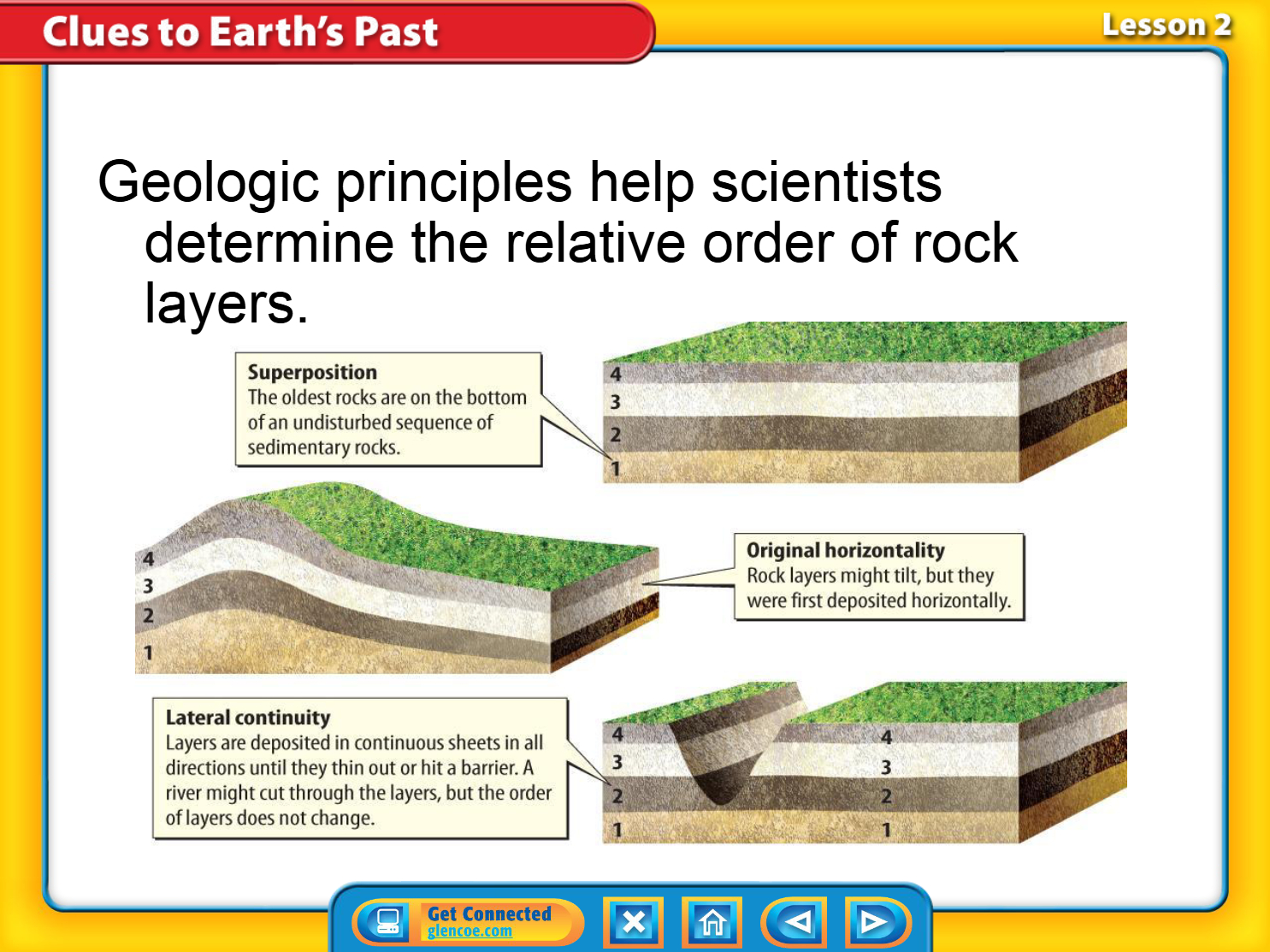
It helps us understand the sequence of geological events.

2

It allows us to identify the types of minerals present.

3

It helps us predict future earthquakes.

4

It is necessary for finding fossil fuels.

8

media

9

Multiple Choice

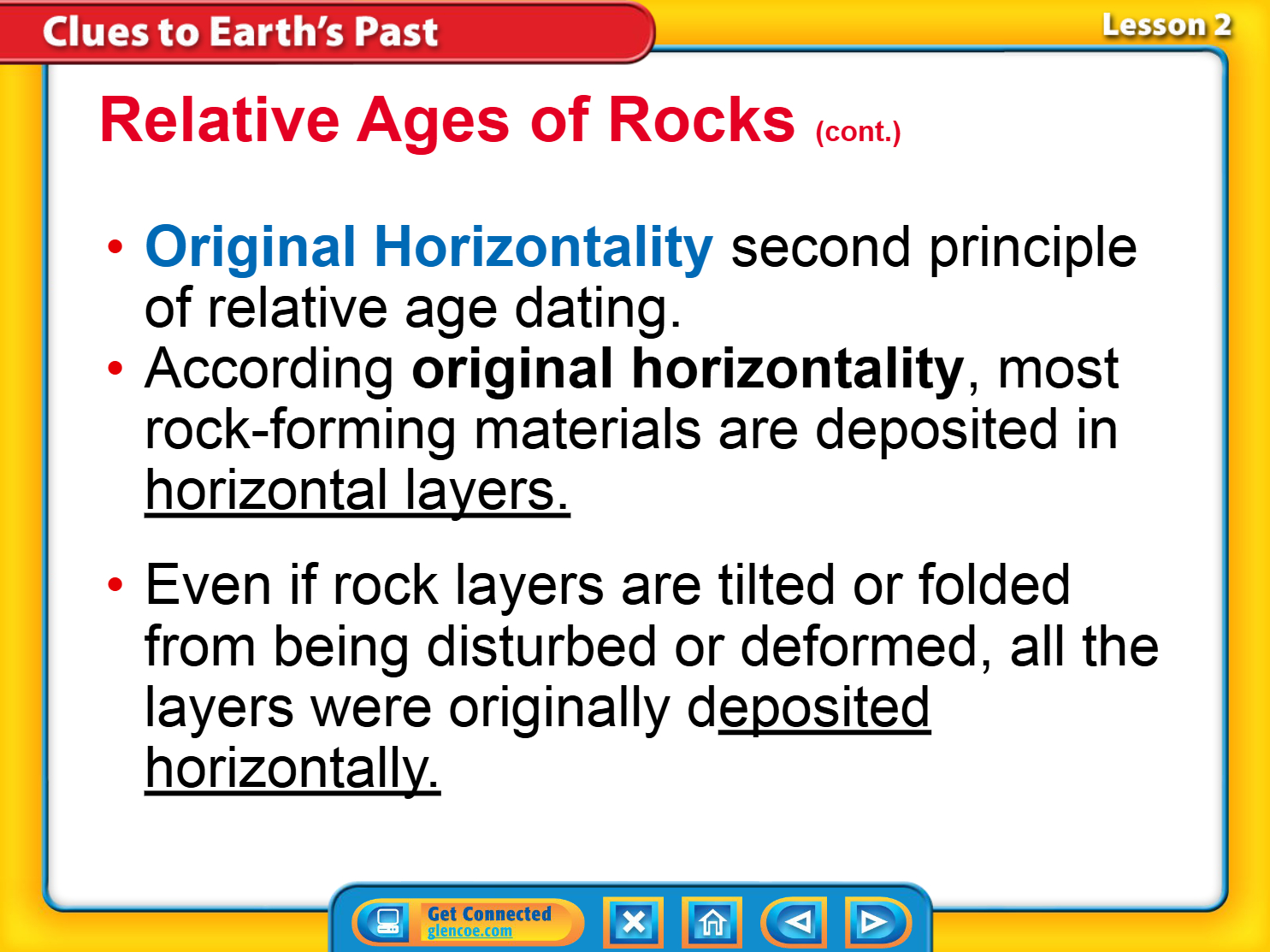
What does the principle of original horizontality state about the deposition of rock-forming materials?

1

They are always deposited vertically.

2

They are always deposited in horizontal layers.

3

They are always deposited in circular patterns.

4

They are always deposited randomly.

10

media

11

media

12

media

13

Multiple Select

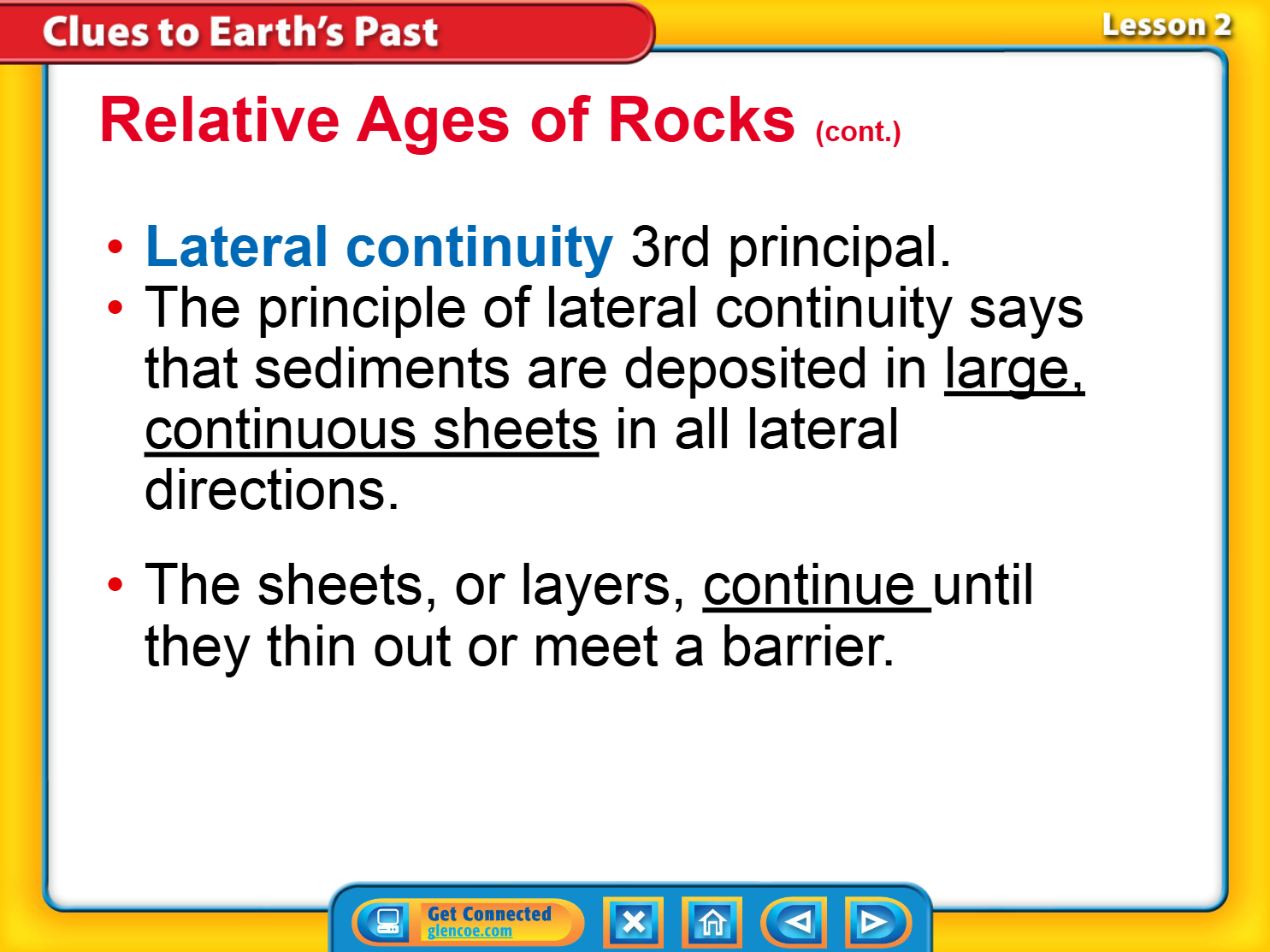
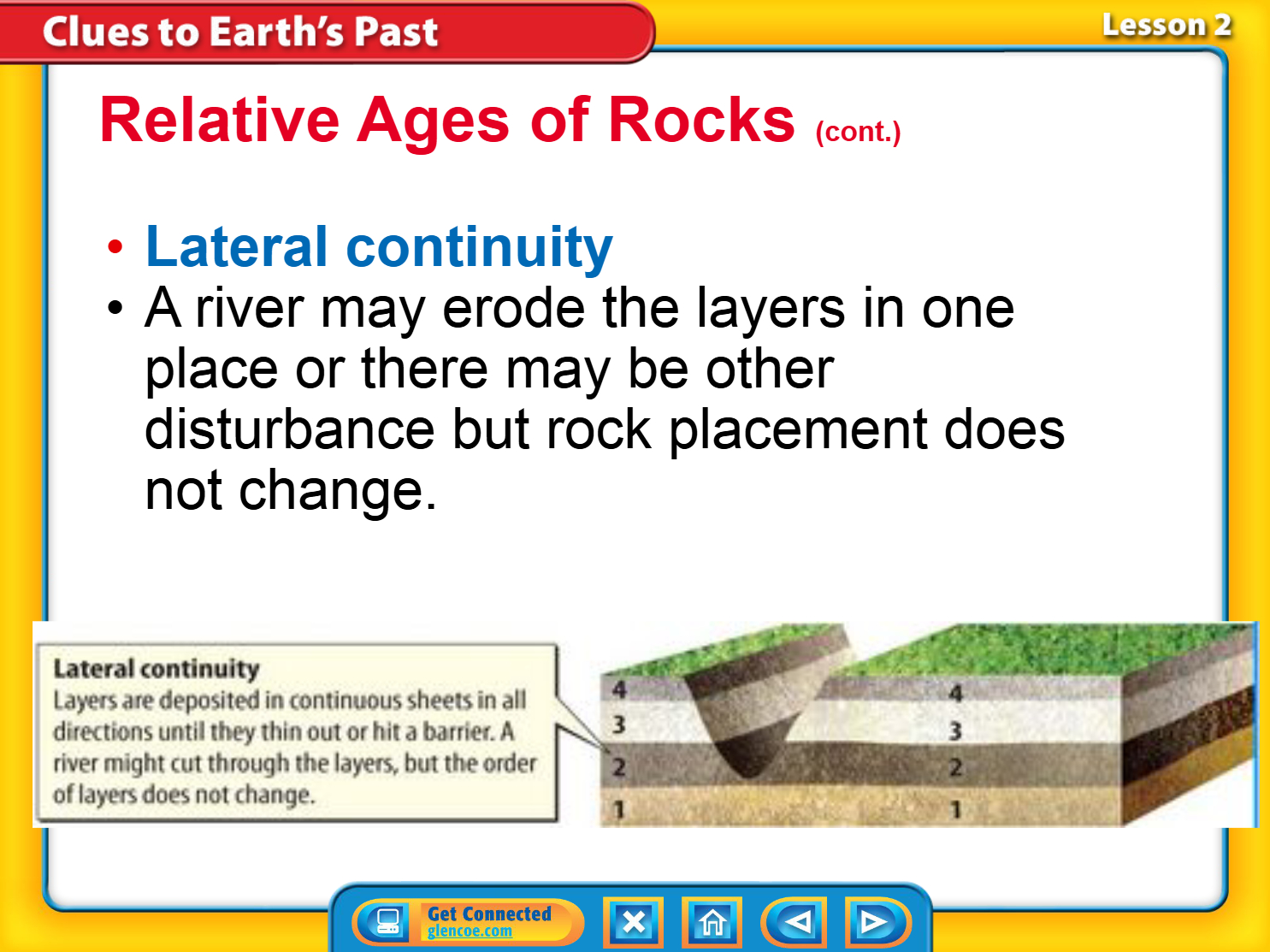
Which of the following statements are true about lateral continuity?

1

Sediments are deposited in large, continuous sheets in all lateral directions.

2

Layers continue until they thin out or meet a barrier.

3

Layers are always deposited vertically.

4

Sediments stop at the first sign of disturbance.

14

media

15

media

16

media

17

Multiple Choice

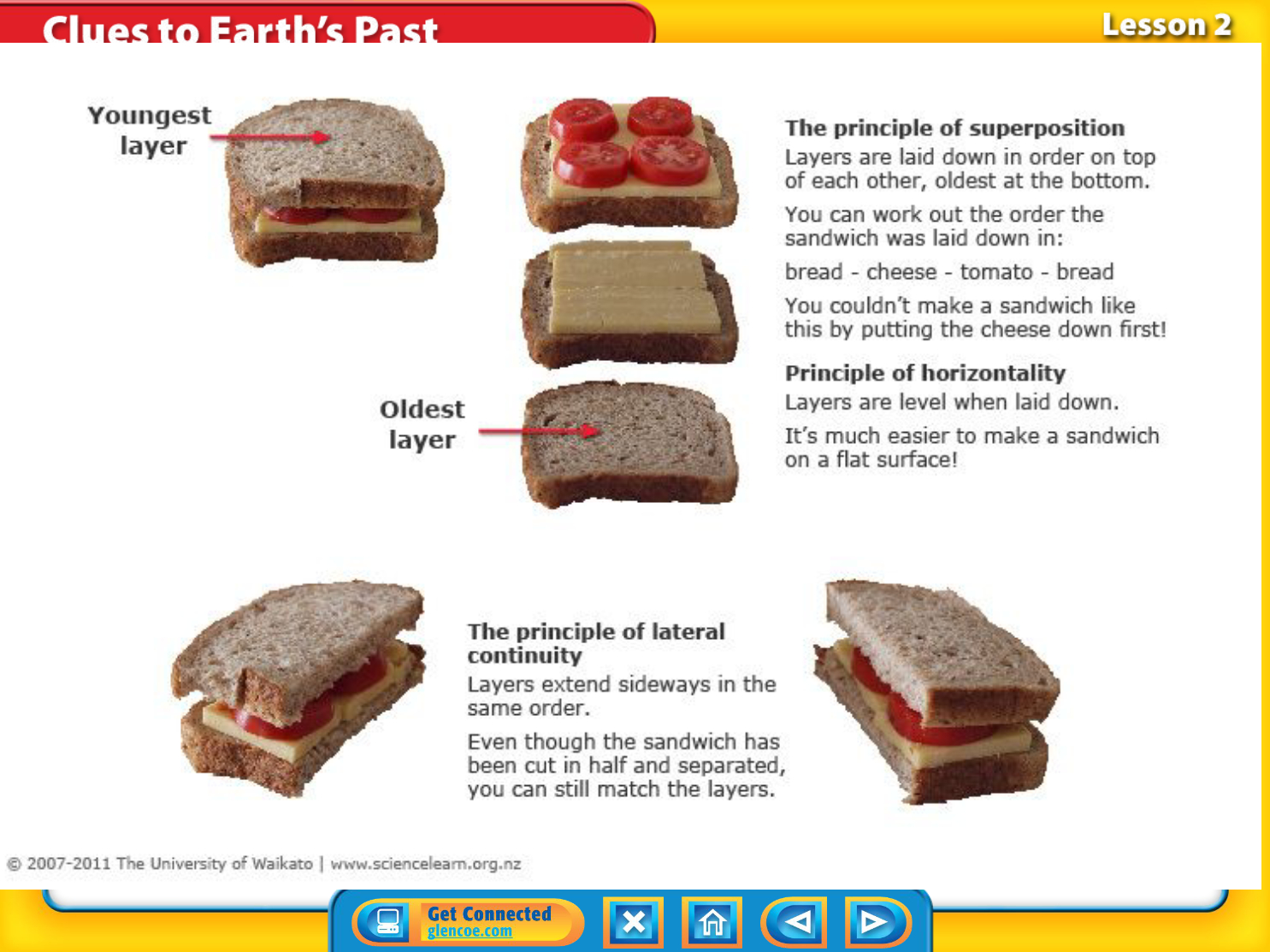
Which principle explains why the bottom layer of a sandwich is the oldest and the top layer is the youngest?

1

Principle of superposition

2

Principle of original horizontality

3

Principle of lateral continuity

4

Principle of cross-cutting

18

Multiple Choice

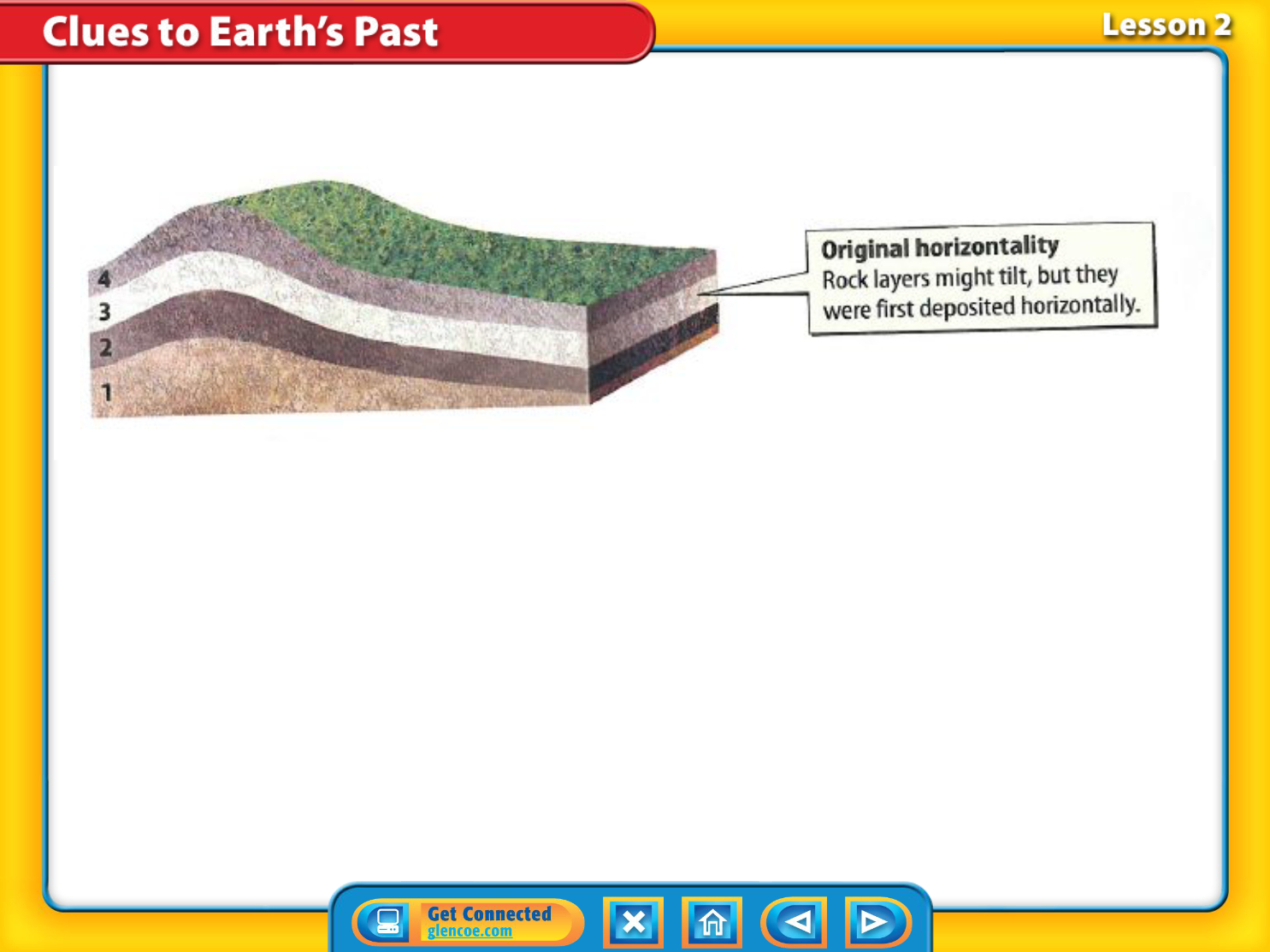
Which statement best explains the principle of original horizontality?

1

Sandwich layers are always different sizes

2

Layers are laid down flat and level when they first form

3

The bottom layer is always the oldest

4

Layers can only form if they are cut in half

19

Multiple Choice

Question image

A canyon separates matching rock layers on both sides. Which principle explains how scientists know the layers were once connected?

1

Superposition

2

Lateral continuity

3

Original horizontality

4

Principle of cross-cutting

20

Reorder

Question image

Which rock is the oldest and youngest? Put in order.

1 = OLDEST 5 = YOUNGEST

Layer D

LAYER A

LAYER E

LAYER B

LAYER C

1
2
3
4
5

21

media

22

Fill in the Blanks

23

Labelling

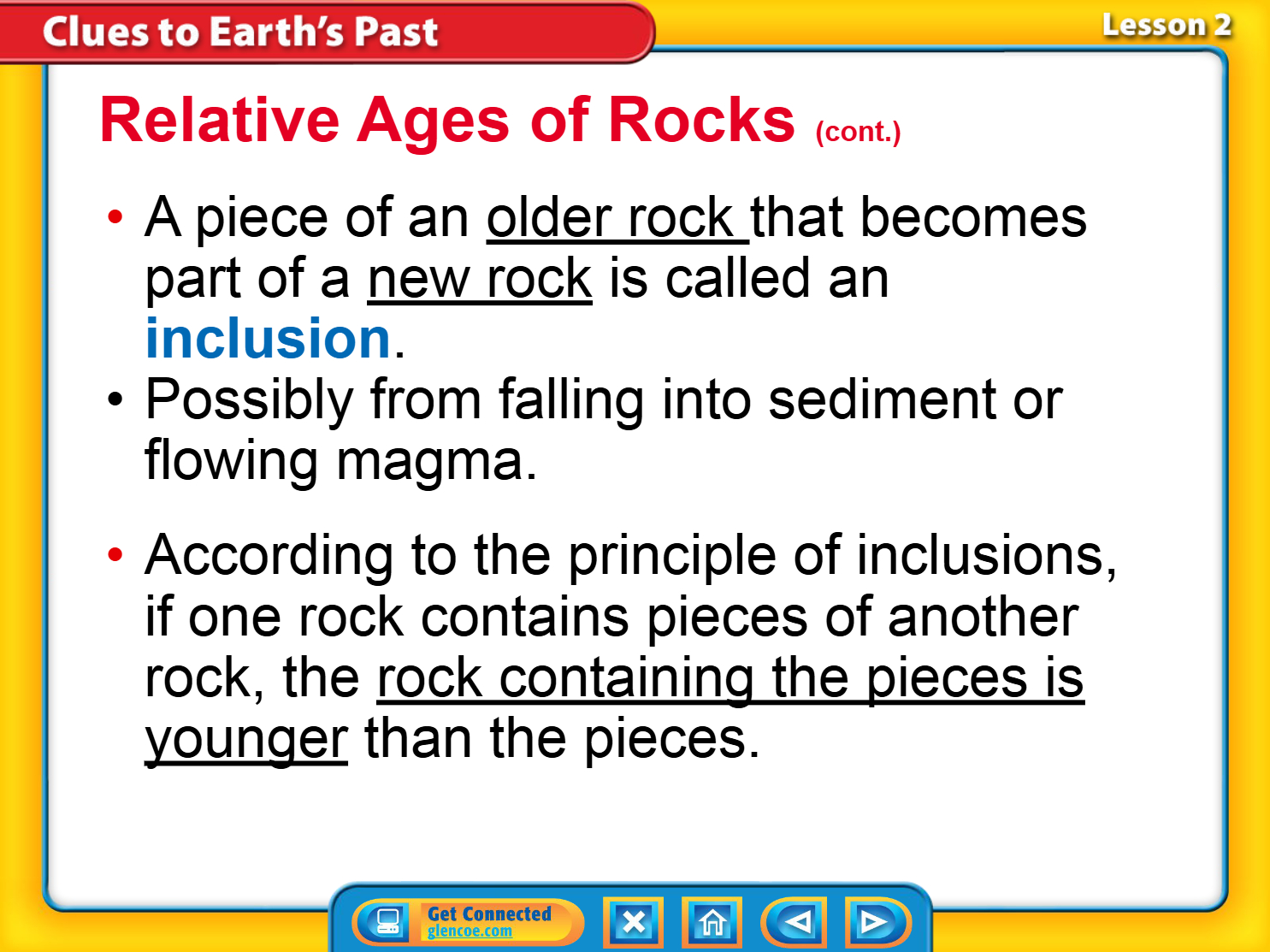
Which area is older vs younger based on the rule of inclusions

Drag labels to their correct position on the image

YOUNGER

OLDER

24

media

25

Multiple Choice

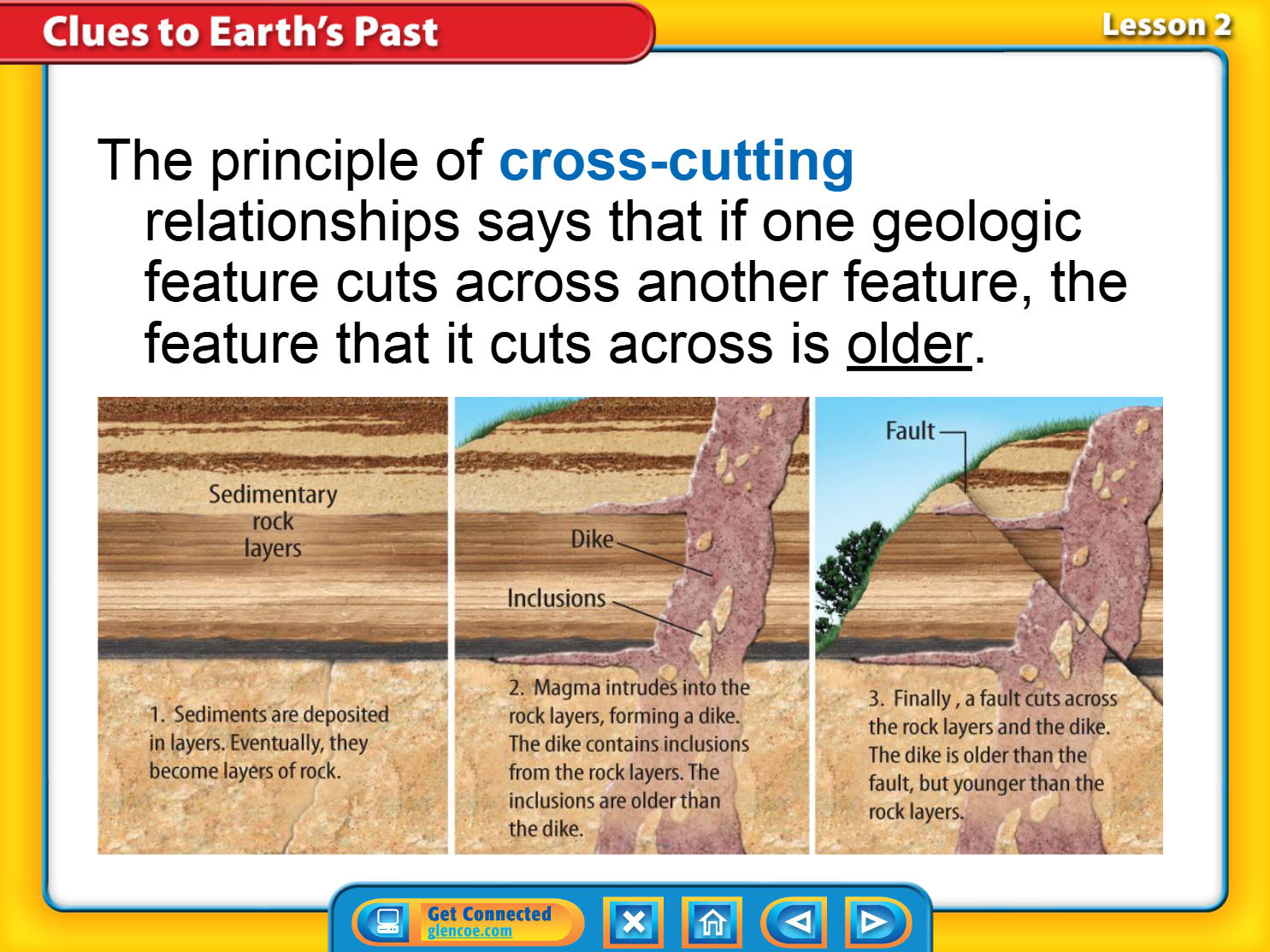
Which of the following statements about cross-cutting relationships is correct?

1

A fault is always older than the rock layers it cuts through.

2

A dike is always younger than the inclusions it contains.

3

A feature that cuts across another feature is younger than the feature it cuts.

4

Sedimentary rock layers are always the youngest features.

26

Multiple Choice

Question image

Which rock is older?

1

E

2

C

3

B

4

A

27

Multiple Choice

Question image

Which is older?

1

FAULT

2

DIKE

28

Multiple Choice

Question image

There are pieces of rock in the dike. Which is older?

1

pieces of rock

2

Dike

3

they are the same age

4

can't tell

29

media

30

Multiple Choice

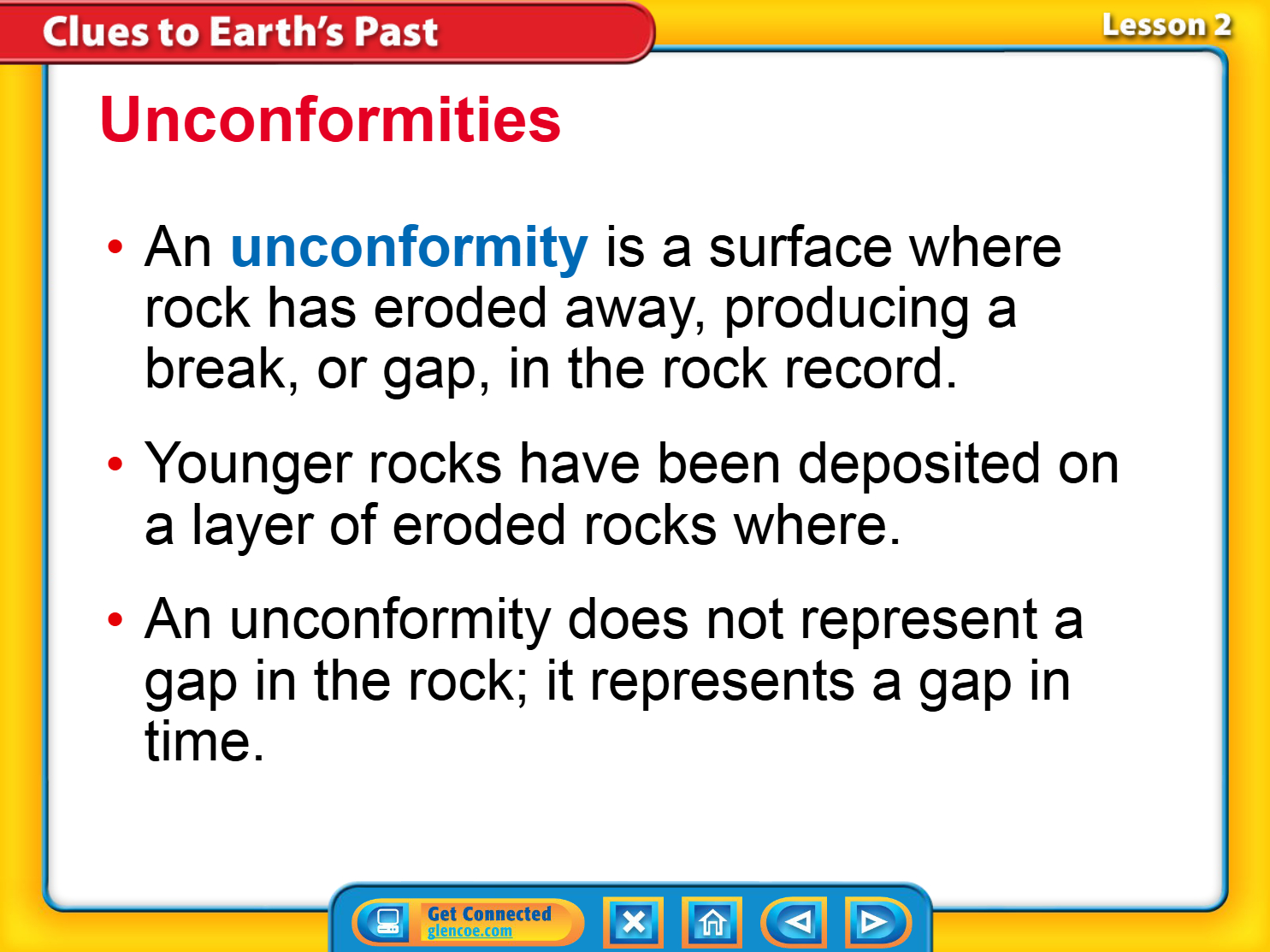
What is an unconformity and how does it differ from a gap in the rock itself?

1

An unconformity is a surface where rock has eroded away, representing a gap in time, not in the rock itself.

2

An unconformity is a crack in the rock that represents a gap in the rock itself.

3

An unconformity is a layer of rock that is younger than the rocks below it, representing a gap in the rock.

4

An unconformity is a break in the rock caused by volcanic activity, representing a gap in the rock.

31

media

32

Hotspot

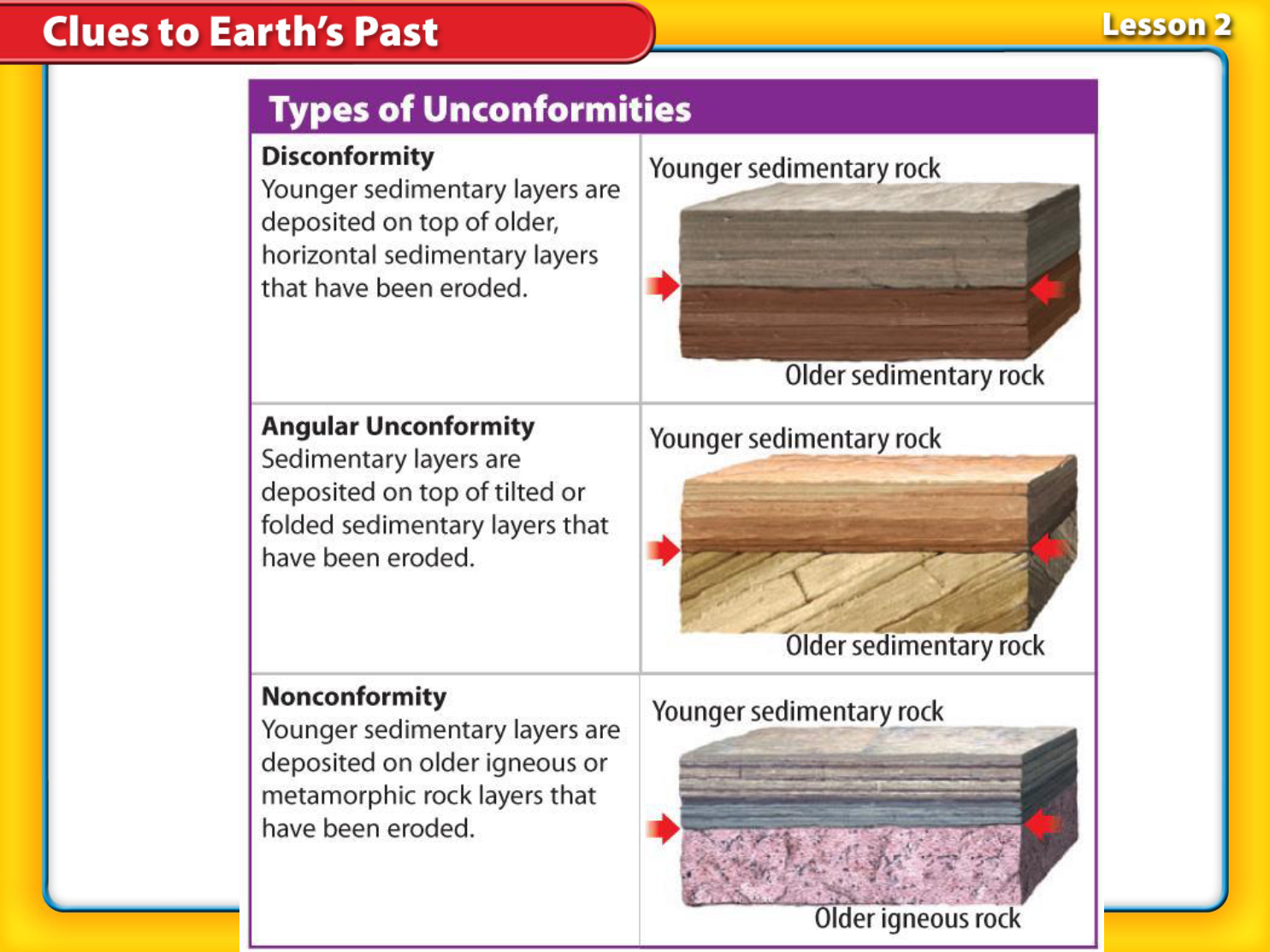
Point to the area where the unconfomity has happened and it is noticeable.

33

Open Ended

How does an unconformity represent a gap in time?

34

media

35

media

36

Multiple Choice

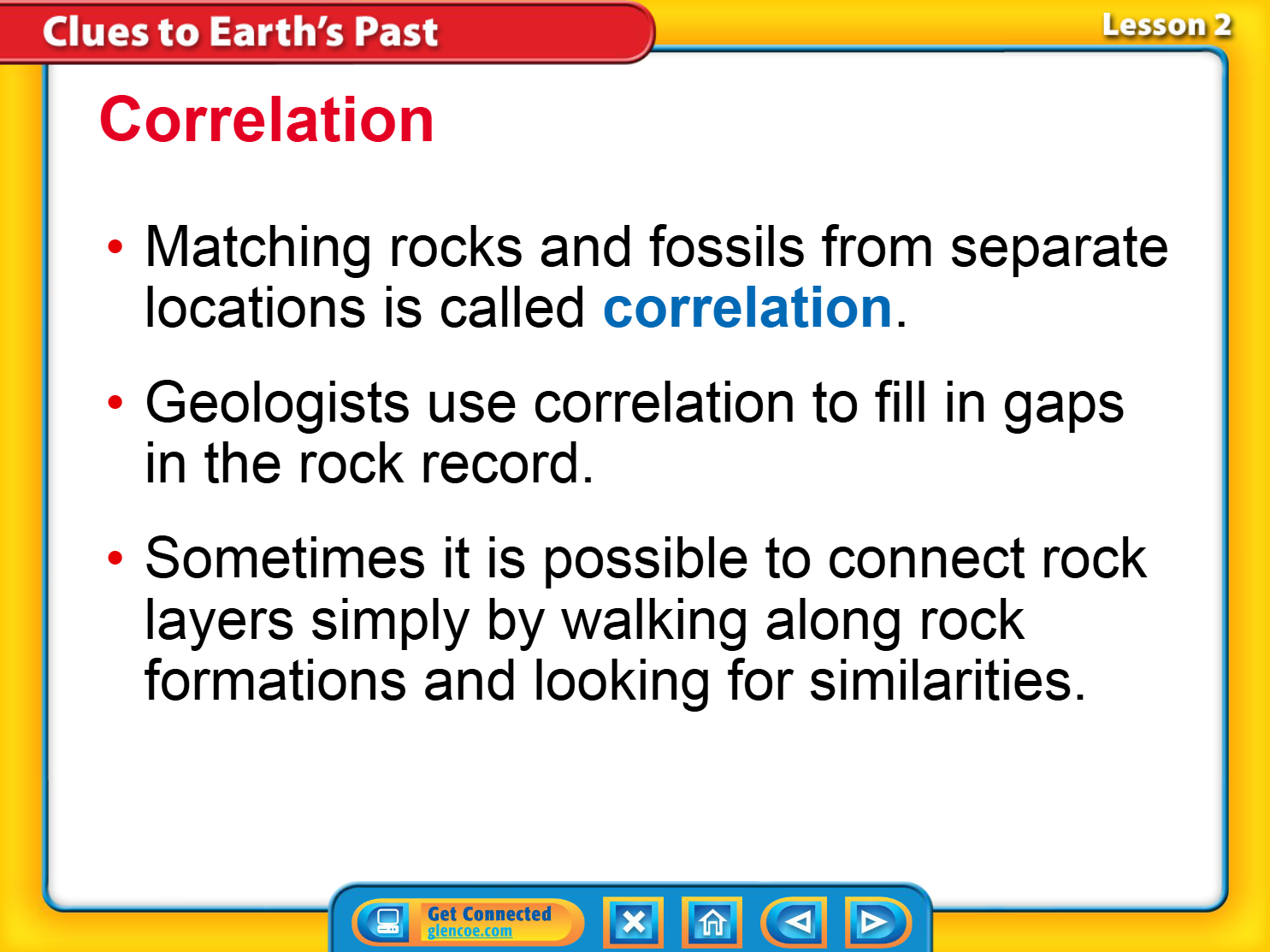
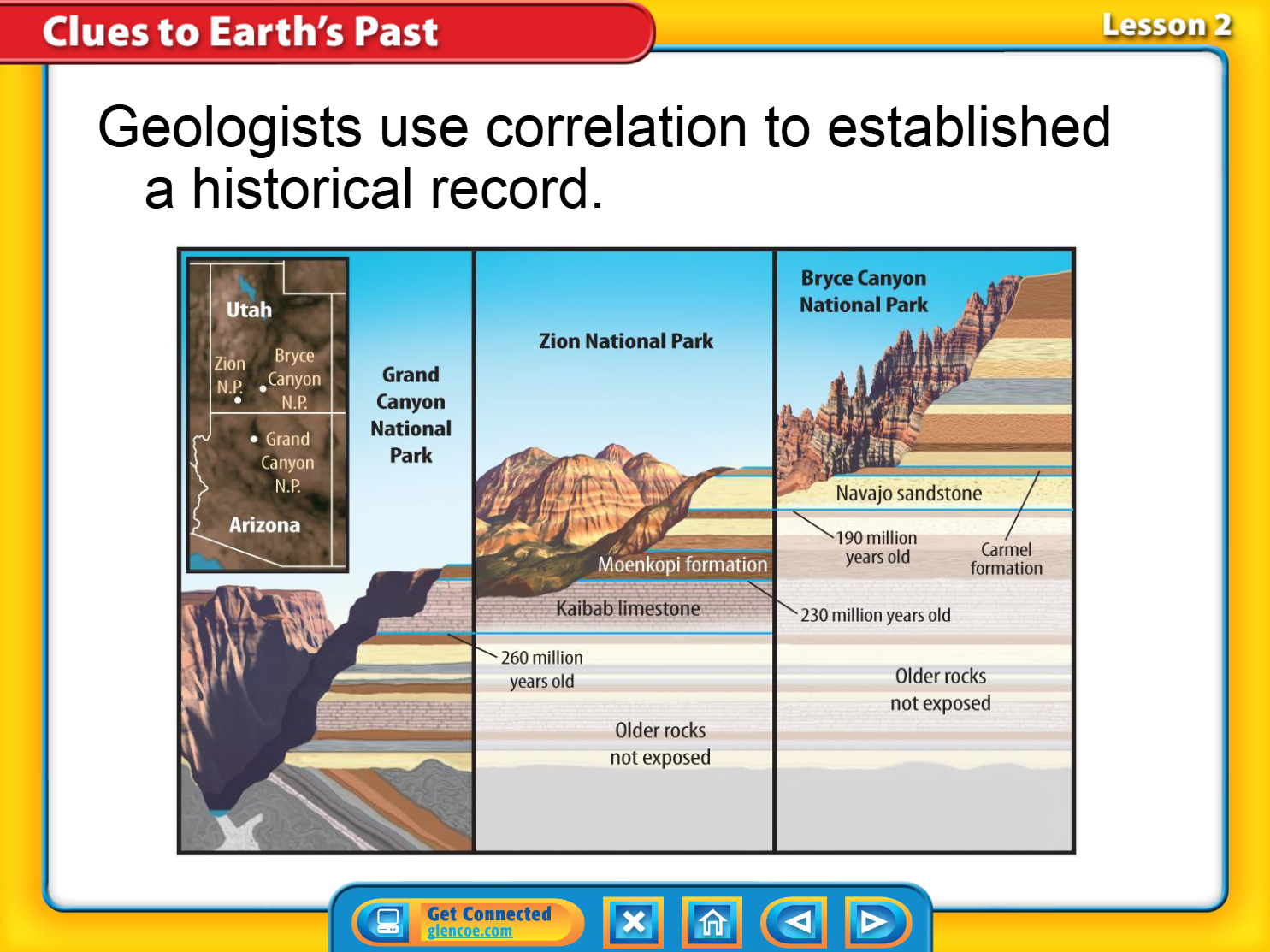
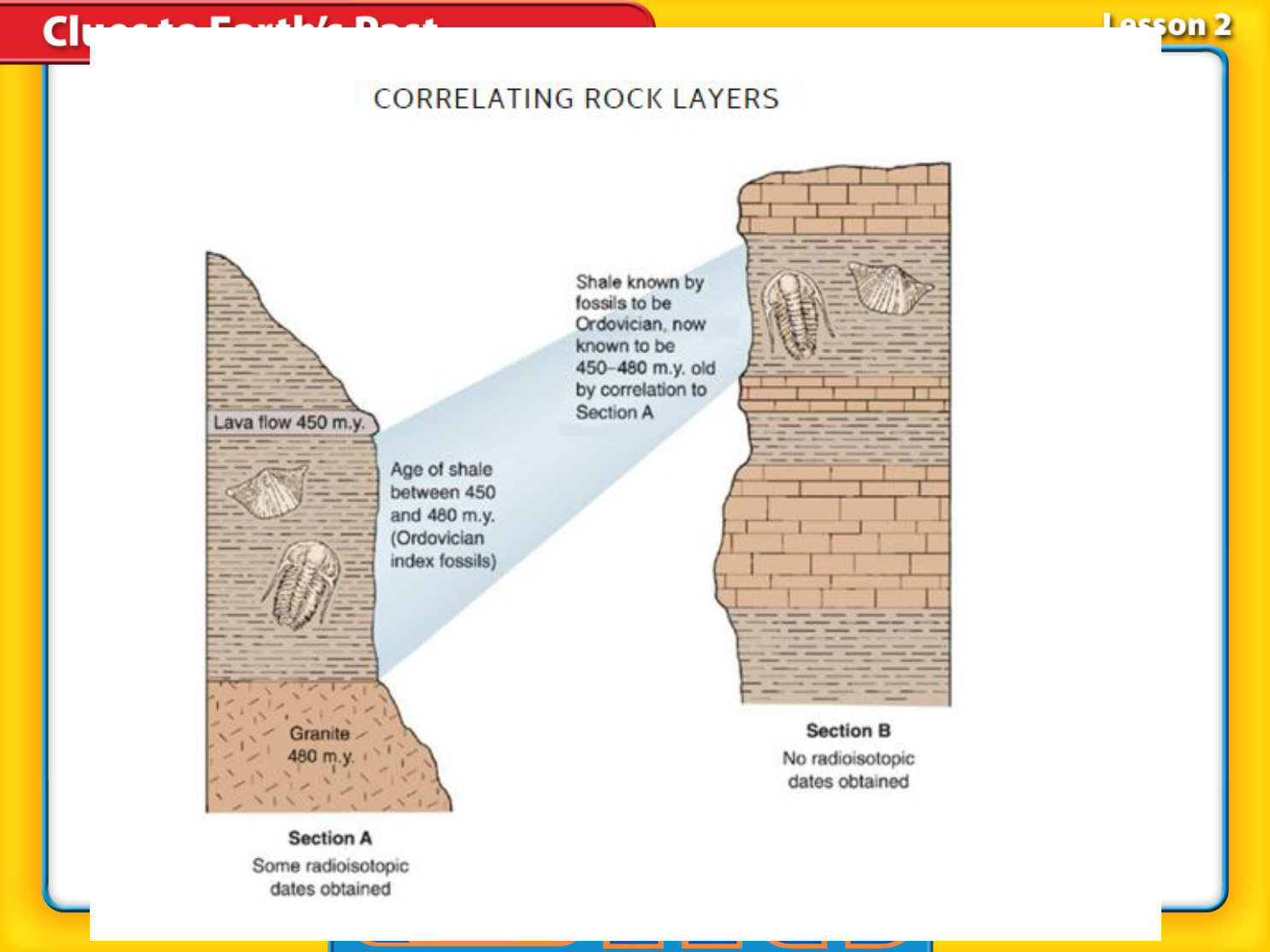
What is the process called when geologists match rocks and fossils from separate locations to fill in gaps in the rock record?

1

Correlation

2

Erosion

3

Sedimentation

4

Fossilization

37

media

38

media

39

media

40

Multiple Choice

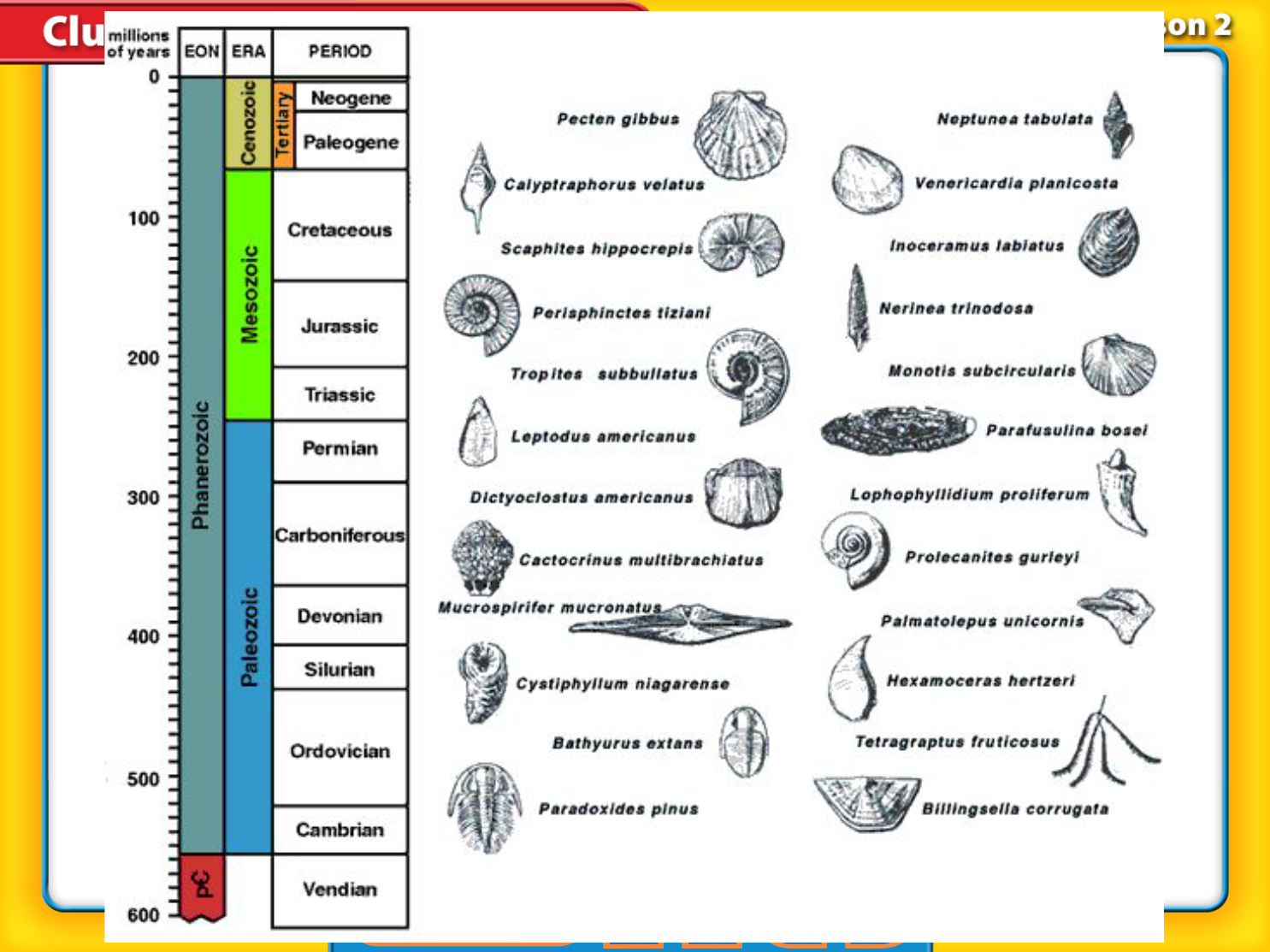
Index fossils help geologists infer that rock layers at different locations are of similar ___.

1
age
2
composition
3
color
4
texture

41

Multiple Select

Which of the following characteristics best describe index fossils?

1

Existed for a short length of time

2

Were abundant

3

Inhabited many locations

4

Formed only in volcanic rocks

5

Did not live in many places

42

Multiple Choice

Question image

Which fossil would be the best index fossil?

1
2
3
4
5

43

Multiple Choice

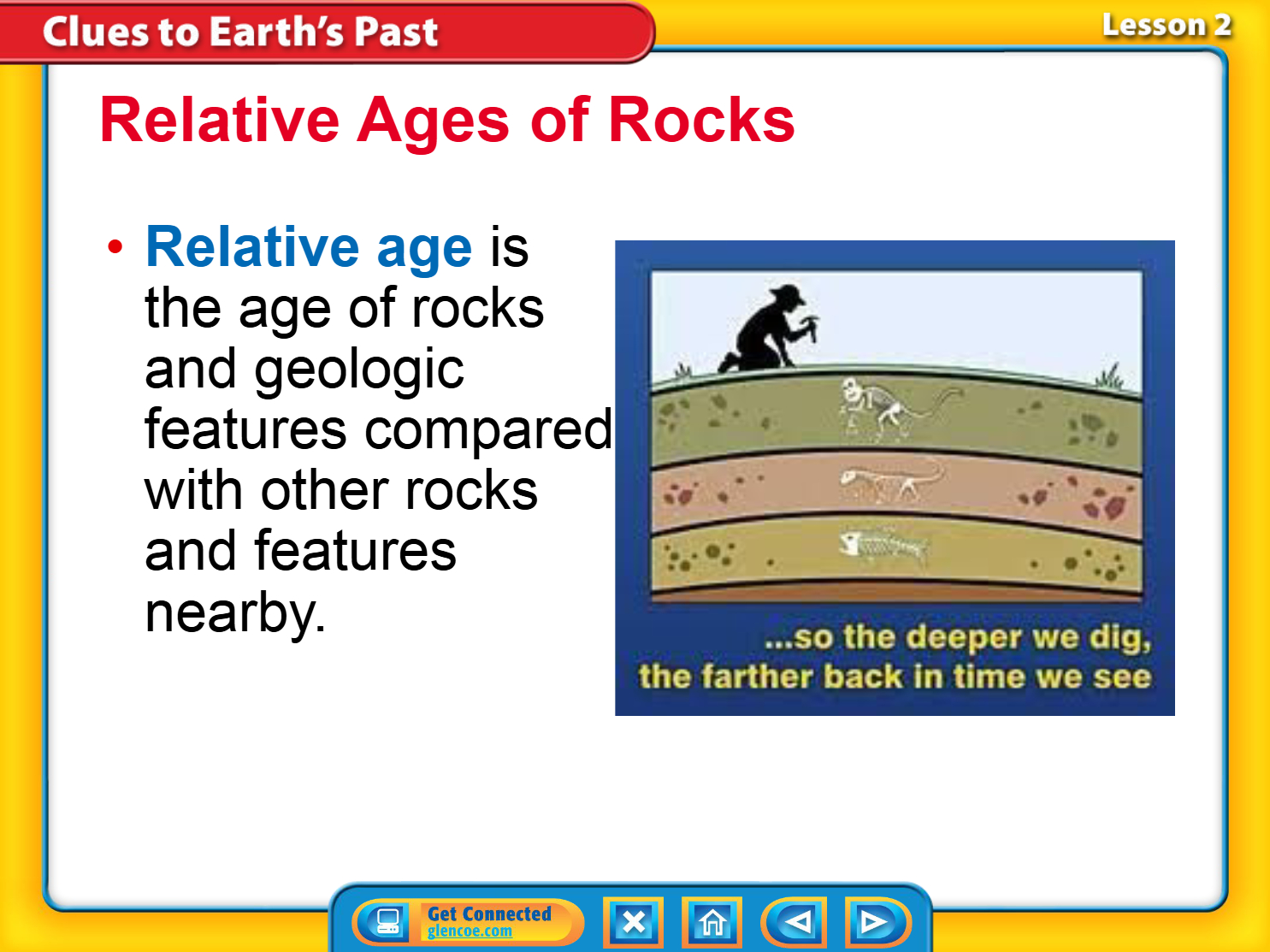
Which of these refers to the dating of rocks and geologic features by comparing them to other rock and features nearby?

1

superposition

2

relative age

3

lateral continuity

4

unconformity

44

Multiple Choice

Which object represents species that existed on Earth for a short length of time, were abundant, and inhabited many locations?

1

trace fossils

2

index fossils

3

molds

4

casts

45

Multiple Choice

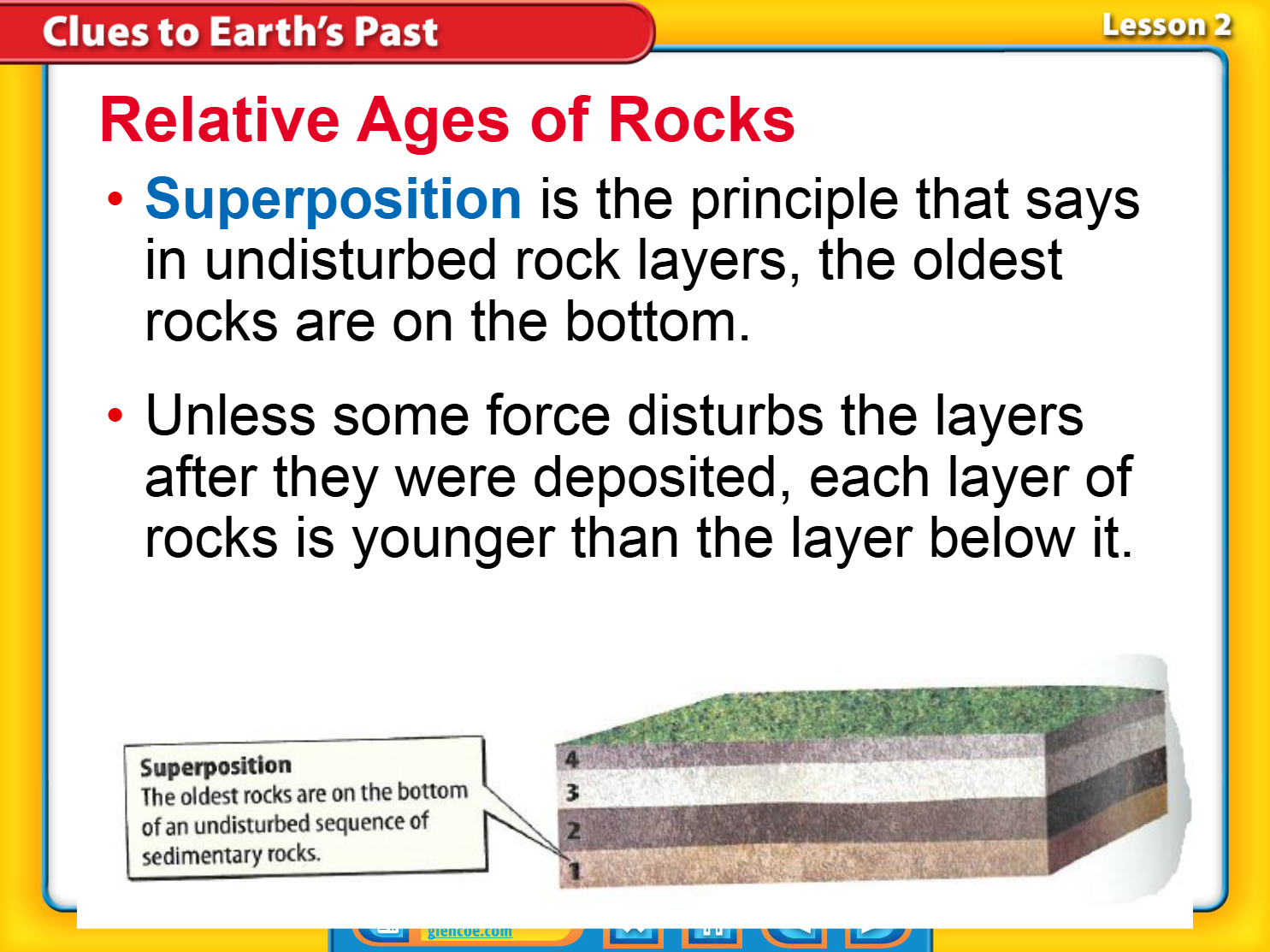
Which principle says that in undisturbed rock layers, the oldest rocks are on the bottom?

1

inclusion

2

relative age

3

unconformity

4

superposition

46

Multiple Choice

Older rocks are always located below younger rocks.

1

Agree / Ture

2

Disagree / False

3
4

47

Multiple Choice

Relative age means that scientists are relatively sure of the age.

1

True / Agree

2

False / Disagree

3
4
media

Show answer

Auto Play

Slide 1 / 47

SLIDE