Search Header Logo
U8L3: Defining Climate

U8L3: Defining Climate

Assessment

Presentation

Science

9th Grade

Practice Problem

Medium

NGSS
MS-ESS2-6, MS-ESS2-5, MS-ESS2-4

Standards-aligned

Created by

Andrea Quinn

Used 6+ times

FREE Resource

13 Slides • 7 Questions

1

media

2

Multiple Choice

Which statement best explains the differences in climate observed at the two locations during the summer?

1

Areas near the Arctic Circle receive more hours of sunlight in the summer.

2

Areas near the equator receive fewer hours of sunlight in the summer.

3

Areas near the Arctic Circle receive more direct sunlight in the summer.

4

Areas near the equator receive more direct sunlight in the summer.

3

media

4

media

5

Multiple Choice

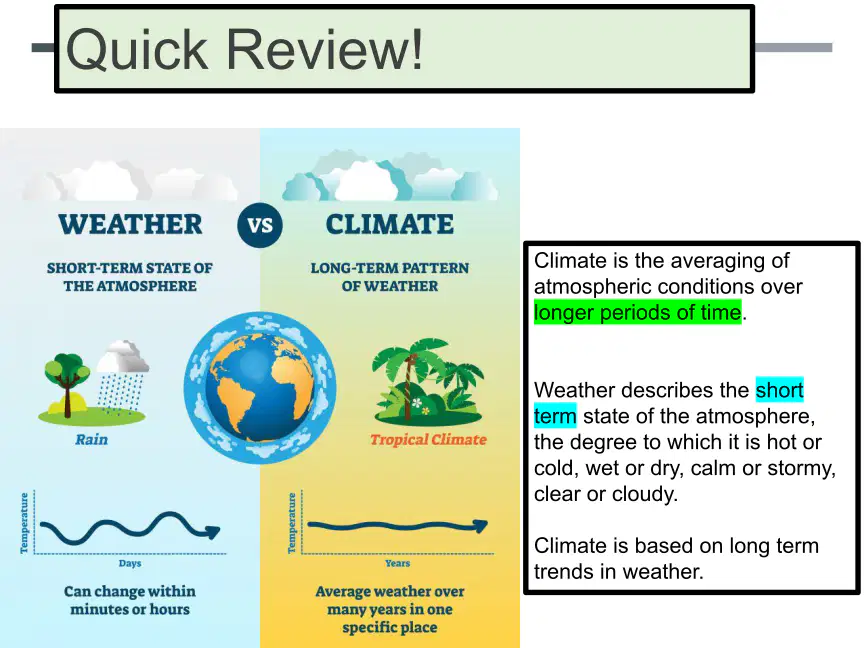
What is the main difference between weather and climate?

1

Weather is the long-term pattern of atmospheric conditions, while climate is the short-term state.

2

Weather is the short-term state of the atmosphere, while climate is the long-term pattern of weather.

3

Weather and climate are both short-term states of the atmosphere.

4

Weather and climate are both long-term patterns of atmospheric conditions.

6

media

7

Multiple Select

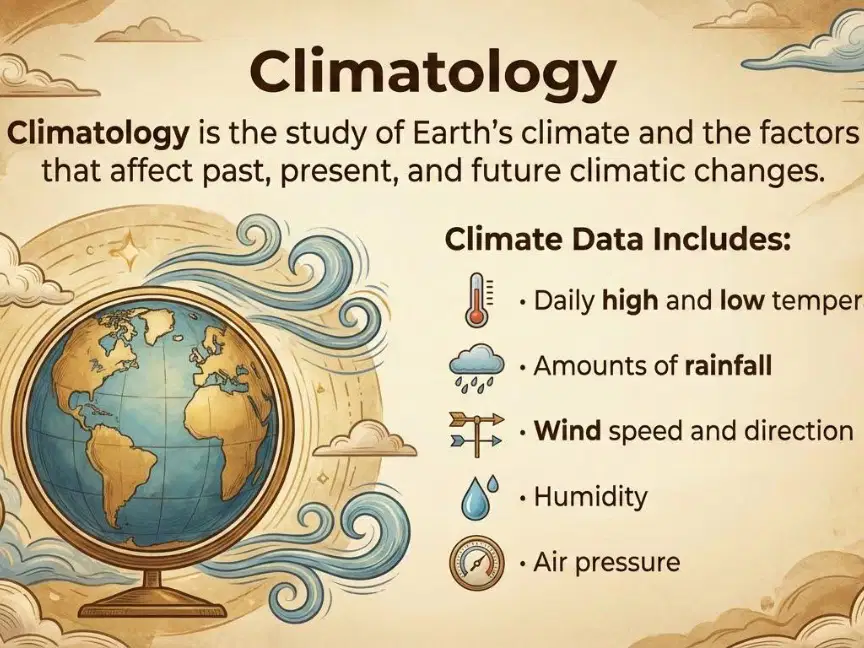
Which of the following are included in climate data?

1

Daily high and low temperature

2

Amounts of rainfall

3

Wind speed and direction

4

Air Pressure

8

media

9

media

10

media

11

media

12

media

13

Multiple Choice

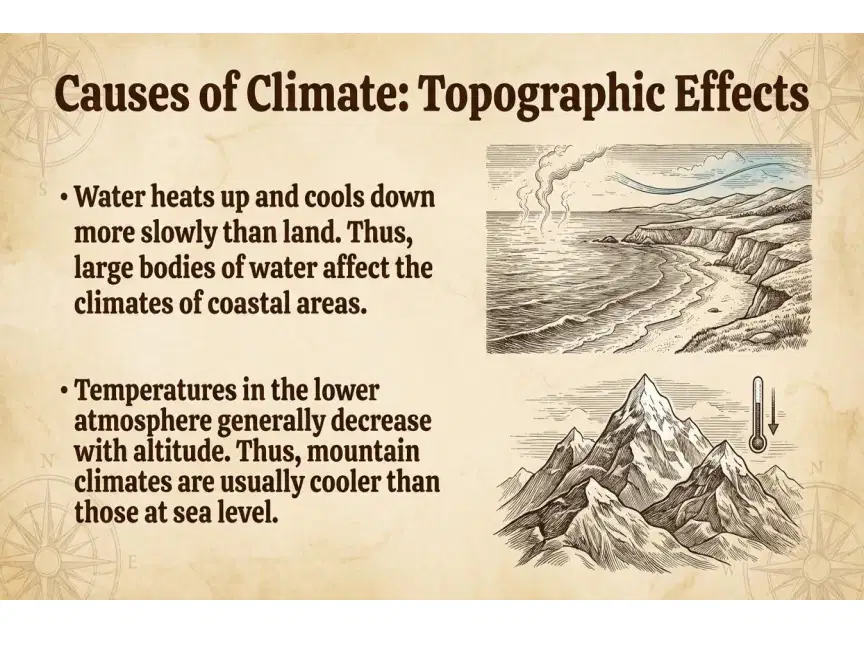
How do large bodies of water and mountain altitude influence the climate of nearby areas?

1

Large bodies of water make coastal areas warmer, and mountains make climates hotter.

2

Large bodies of water make coastal areas cooler, and mountains make climates warmer.

3

Large bodies of water moderate coastal climates, and mountains make climates cooler.

4

Large bodies of water have no effect, and mountains make climates wetter.

14

media

15

media

16

Multiple Choice

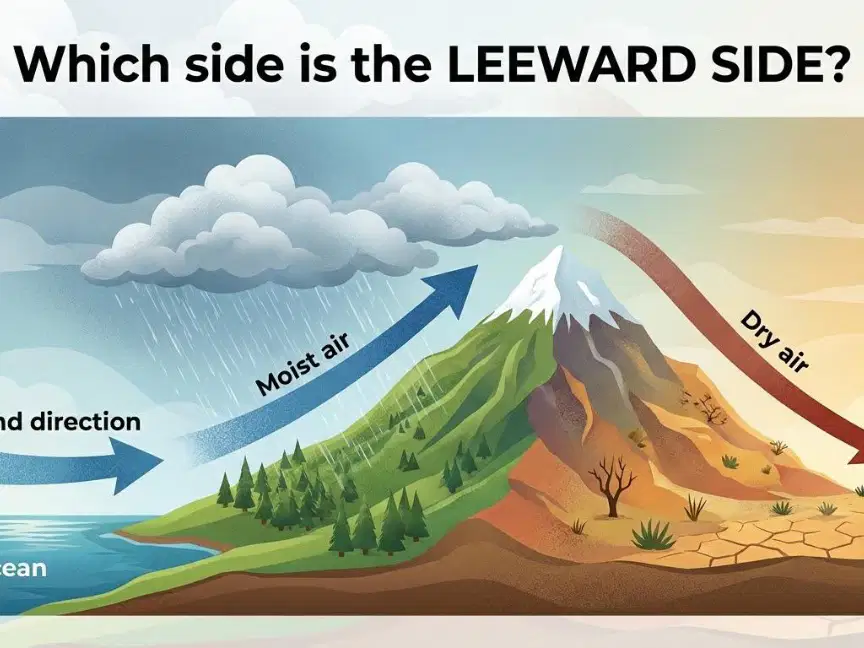
Question image

Which of the following statements about the leeward side of a mountain is correct?

1

It receives more rainfall than the windward side.

2

It is typically cooler and wetter than the windward side.

3

It is warmer and drier than the windward side.

4

It faces the ocean directly.

17

media

18

media

19

Multiple Choice

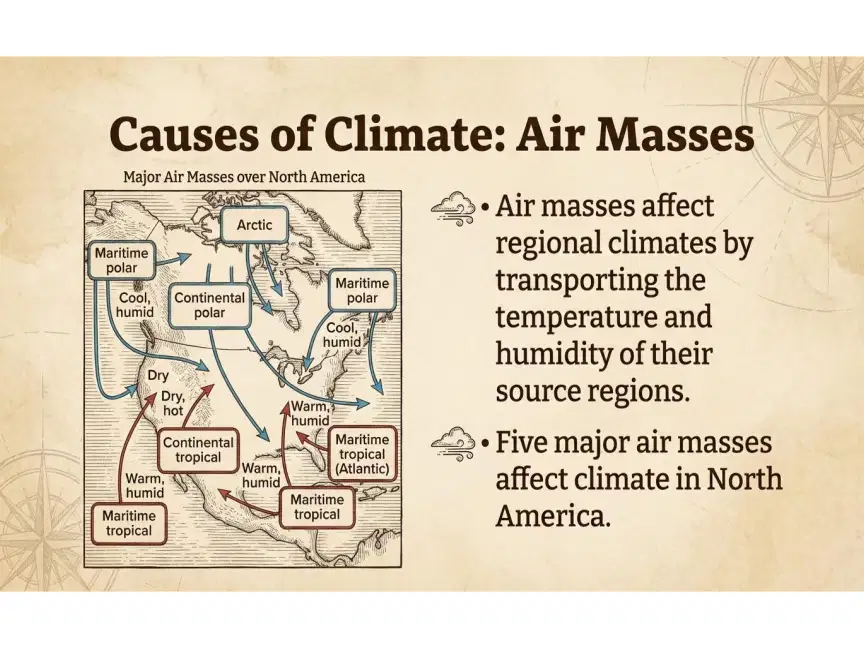
Question image

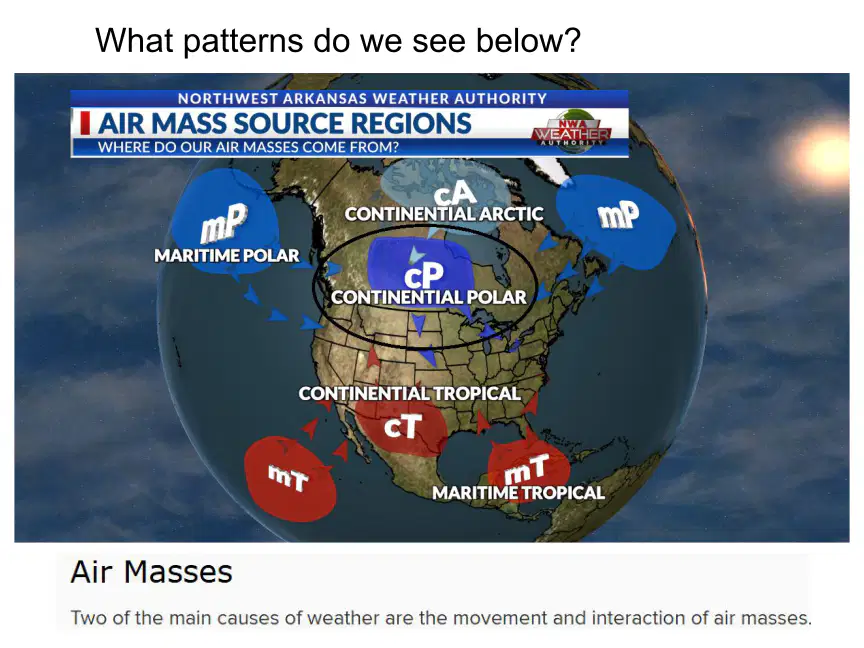
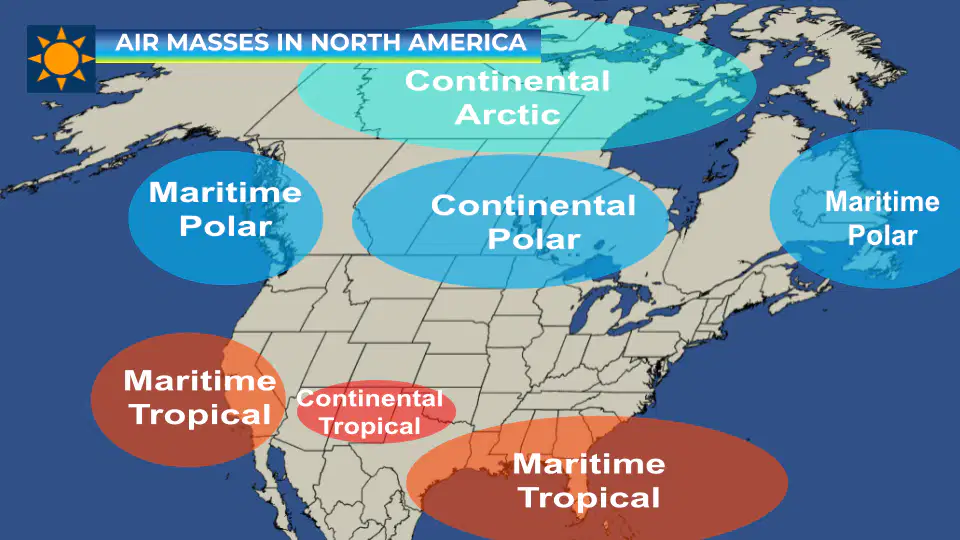
Which air masses are responsible for warm and humid conditions in North America?

1

Continental polar and Arctic

2

Maritime tropical and Continental tropical

3

Continental tropical and Maritime polar

4

Continental polar and Maritime polar

20

Open Ended

What is one question you still have about how sunlight affects climate in different zones of the Earth?

media

Show answer

Auto Play

Slide 1 / 20

SLIDE