
Mutations and Gene Regulation
Authored by Katherine Fisher
Biology
11th Grade
NGSS covered
Used 6+ times


AI Actions
Add similar questions
Adjust reading levels
Convert to real-world scenario
Translate activity
More...
Content View
Student View
35 questions
Show all answers
1.
MULTIPLE CHOICE QUESTION
30 sec • 1 pt
Most gene regulation happens at which step along the way?
2.
MULTIPLE CHOICE QUESTION
1 min • 1 pt
what does a promoter do?
3.
MULTIPLE CHOICE QUESTION
1 min • 1 pt
A protein that binds to the operator and blocks the RNA polymerase
4.
MULTIPLE CHOICE QUESTION
30 sec • 1 pt
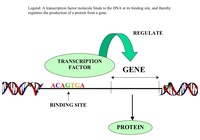
In eukaryotes, proteins that help the RNA polymerase bind to the regulatory region for transcription are called ____________.
Tags
NGSS.HS-LS1-1
5.
MULTIPLE CHOICE QUESTION
30 sec • 1 pt

What is the name given to part of a DNA molecule that codes for a protein?
Tags
NGSS.HS-LS1-1
6.
MULTIPLE CHOICE QUESTION
45 sec • 1 pt
Which of the following statements regarding mRNA is correct?
Tags
NGSS.HS-LS1-1
7.
MULTIPLE CHOICE QUESTION
30 sec • 1 pt
How can a person's muscle cells have the same exact DNA sequences as their nerve cells even though the look and perform completely different?
Tags
NGSS.HS-LS1-1
NGSS.HS-LS1-4
Access all questions and much more by creating a free account
Create resources
Host any resource
Get auto-graded reports

Continue with Google

Continue with Email

Continue with Classlink

Continue with Clever
or continue with

Microsoft
%20(1).png)
Apple

Others
Already have an account?


