
Introduction to Cell Transport
9th Grade
•20 Qs

Similar activities
DISEASE & IMMUNITY PART 2
9th - 10th Grade
•15 Qs
Succession and Vocabulary
9th Grade
•21 Qs
Exploring Nutrition Systems in Humans and Animals
7th Grade - University
•15 Qs
Storyline #1 Assessment
9th Grade
•20 Qs
SATP Review
9th - 12th Grade
•15 Qs
Ecosystems
KG - University
•17 Qs
2nd 6wks Bio Review CHS
9th - 10th Grade
•20 Qs
SEL
KG - University
•20 Qs

Introduction to Cell Transport

Quiz
•
Biology
•
9th Grade
•
Medium
Standards-aligned

Phoebe Quinn
Used 4+ times
FREE Resource

Enhance your content in a minute
20 questions
Show all answers
1.
MULTIPLE CHOICE QUESTION
45 sec • 1 pt
Which of the following is the primary component of the cell membrane?
Phospholipids
Nucleic acids
Proteins
Carbohydrates
2.
MULTIPLE CHOICE QUESTION
45 sec • 1 pt
Which of the following is true regarding active transport?
It does not use any of its own energy.
It uses some of its own energy.
It uses energy from other cells.
It moves from a high concentration to a low concentration.
3.
MULTIPLE SELECT QUESTION
45 sec • 1 pt
Which two of the following are examples of passive transport?
Nondisjunction
Osmosis
Endocytosis
Exocytosis
Diffusion
4.
MULTIPLE SELECT QUESTION
45 sec • 1 pt
Which two of the following are examples of active transport?
Nondisjunction
Osmosis
Endocytosis
Exocytosis
Diffusion
5.
MULTIPLE CHOICE QUESTION
45 sec • 1 pt
Which of the following statements is correct?
Active transport requires cellular energy, but passive transport does not.
Passive transport requires cellular energy, but active transport does not.
Both passive transport and active transport require cellular energy.
Neither passive transport nor active transport require cellular energy.
6.
MULTIPLE SELECT QUESTION
45 sec • 1 pt
Which two molecules are most likely to cross a cell's phospholipid bilayer by simple diffusion?
Sugar molecules
Water
Carbon dioxide
Potassium ions
Oxygen
7.
MULTIPLE CHOICE QUESTION
45 sec • 1 pt
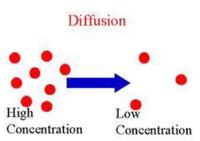
Movement of particles from high to low concentration.

Access all questions and much more by creating a free account
Create resources
Host any resource
Get auto-graded reports

Continue with Google

Continue with Email

Continue with Classlink

Continue with Clever
or continue with

Microsoft
%20(1).png)
Apple

Others
Already have an account?
Similar Resources on Wayground
17 questions
Biology Keystone Exam Vocabulary Review: Unit 1
Quiz
•
9th - 10th Grade
18 questions
DNA Structure/ Hisotry
Quiz
•
9th - 12th Grade
20 questions
Cell Membrane Structure
Quiz
•
9th - 10th Grade
16 questions
Chapter 3: Biochemistry
Quiz
•
8th - 10th Grade
20 questions
Biochemistry EOC Review
Quiz
•
9th - 10th Grade
15 questions
Global Warming Data Analysis
Quiz
•
9th - 12th Grade
20 questions
Biology Released EOC STAAR 2015 pt. 2 (20 Questions)
Quiz
•
9th - 10th Grade
20 questions
Ecology 2 - Human Impact
Quiz
•
9th - 12th Grade
Popular Resources on Wayground
8 questions
2 Step Word Problems
Quiz
•
KG - University
20 questions
Comparing Fractions
Quiz
•
4th Grade
15 questions
Fractions on a Number Line
Quiz
•
3rd Grade
20 questions
Equivalent Fractions
Quiz
•
3rd Grade
25 questions
Multiplication Facts
Quiz
•
5th Grade
10 questions
Latin Bases claus(clois,clos, clud, clus) and ped
Quiz
•
6th - 8th Grade
22 questions
fractions
Quiz
•
3rd Grade
7 questions
The Story of Books
Quiz
•
6th - 8th Grade
Discover more resources for Biology
20 questions
Cell Organelles
Quiz
•
9th Grade
20 questions
DNA & Protein Synthesis
Quiz
•
9th Grade
14 questions
Ecological Succession: Primary and Secondary
Quiz
•
9th Grade
51 questions
Weather, Climate Change, Cycles
Quiz
•
9th Grade
7 questions
Amoeba Sisters Dihybrid Cross Punnett Square

Interactive video
•
9th - 12th Grade
10 questions
Sex-Linked Traits
Quiz
•
9th - 12th Grade
14 questions
Unit 07.2 Vocabulary
Quiz
•
9th Grade
15 questions
Dihybrid Cross Practice
Quiz
•
9th Grade