
Populations (HW), Symbioses (ASY)
Authored by Benjamin Mannix
Biology
9th - 12th Grade
Used 2+ times


AI Actions
Add similar questions
Adjust reading levels
Convert to real-world scenario
Translate activity
More...
Content View
Student View
15 questions
Show all answers
1.
MULTIPLE CHOICE QUESTION
45 sec • 1 pt

Something that regulates the size of a population is called...
a limiting measure
a limiting factor
carrying capacity
biodiversity
2.
MULTIPLE CHOICE QUESTION
45 sec • 1 pt
This may cause a population to increase
increase of food supply
removal of predators
removal of disease
all of these
3.
MULTIPLE CHOICE QUESTION
45 sec • 1 pt
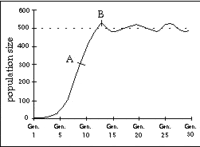
What is the carrying capacity of the graph?
around 500
more than 800
less than 300
around 700
4.
MULTIPLE CHOICE QUESTION
45 sec • 1 pt
When death rate is equal to birth rate...
population increases
population decreases
population stays the same.
population rapidly increases then becomes stable
5.
MULTIPLE CHOICE QUESTION
5 mins • 1 pt
Which of the following is a limiting factor in a population of organisms
6.
MULTIPLE CHOICE QUESTION
45 sec • 1 pt
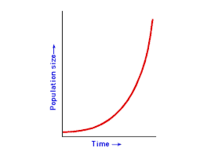
What type of growth is shown in the diagram?
7.
MULTIPLE CHOICE QUESTION
30 sec • 1 pt

What happened to the Hare population after the decrease in Lynx population in 1860?
The decrease of lynx led to an increase in the amount of hares.
The decrease of lynx led to a decrease in the hare population.
The hare population stayed the same.


Access all questions and much more by creating a free account
Create resources
Host any resource
Get auto-graded reports

Continue with Google

Continue with Email

Continue with Classlink

Continue with Clever
or continue with

Microsoft
%20(1).png)
Apple

Others
Already have an account?


