
Macros, Enzymes, and Metabolic Disorders
Authored by Nathalie D
Biology
12th Grade
Used 6+ times


AI Actions
Add similar questions
Adjust reading levels
Convert to real-world scenario
Translate activity
More...
Content View
Student View
21 questions
Show all answers
1.
MULTIPLE CHOICE QUESTION
30 sec • 1 pt
Which protein helps speed up chemical reactions?
Enzymes
Transport Protein
Antibodies
Collagen
2.
MULTIPLE CHOICE QUESTION
30 sec • 1 pt
What is created or produced in a chemical reaction is known as...
Substrate
Enzyme-Substrate Complex
Enzyme
Product
3.
MULTIPLE CHOICE QUESTION
30 sec • 1 pt
If you change the shape of an enzyme, will it work the same/properly?
Yes
No
4.
MULTIPLE CHOICE QUESTION
2 mins • 12 pts
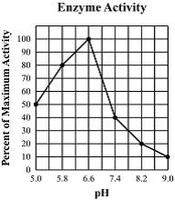
Which of the following conclusions can be drawn from this graph?
5.
MULTIPLE CHOICE QUESTION
45 sec • 1 pt
What happens when enzymes are heated to a high temperature?
6.
MULTIPLE CHOICE QUESTION
5 mins • 1 pt
This is one job proteins do NOT have in the body
7.
MULTIPLE CHOICE QUESTION
2 mins • 5 pts
Which macromolecule is used as our main source of energy?
Lipids/Fats
Nucleic Acids
Proteins
Carbohydrates


Access all questions and much more by creating a free account
Create resources
Host any resource
Get auto-graded reports

Continue with Google

Continue with Email

Continue with Classlink

Continue with Clever
or continue with

Microsoft
%20(1).png)
Apple

Others
Already have an account?

