
Insectivorous Plants and Their Mechanisms

Interactive Video
•
Biology, Science
•
6th - 10th Grade
•
Practice Problem
•
Hard

Mia Campbell
FREE Resource
Read more
10 questions
Show all answers
1.
MULTIPLE CHOICE QUESTION
30 sec • 1 pt
What is the primary mode of nutrition for insectivorous plants?
Chemosynthesis
Saprophytism
Parasitism
Photosynthesis
2.
MULTIPLE CHOICE QUESTION
30 sec • 1 pt
Why do insectivorous plants trap and consume insects?
To reproduce
To protect themselves
To get water
To obtain nitrogenous compounds
3.
MULTIPLE CHOICE QUESTION
30 sec • 1 pt
In Nepenthes, what part of the plant is modified into a pitcher?
Stem
Lamina
Root
Flower
4.
MULTIPLE CHOICE QUESTION
30 sec • 1 pt
How are insects decomposed in Sarracenia pitchers?
By the plant's roots
By bacteria in the water
By digestive enzymes
By sunlight
5.
MULTIPLE CHOICE QUESTION
30 sec • 1 pt
Where is the Australian pitcher plant, Cephalotus follicularis, primarily found?
New Zealand
South Africa
West Australia
South America
6.
MULTIPLE CHOICE QUESTION
30 sec • 1 pt
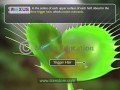
What triggers the Venus flytrap to close its leaves?
Presence of sunlight
Touching of trigger hairs
Contact with water
Change in temperature
7.
MULTIPLE CHOICE QUESTION
30 sec • 1 pt
What type of environment does the water flea trap plant grow in?
Submerged aquatic environments
Deserts
Mountainous regions
Tropical forests
Access all questions and much more by creating a free account
Create resources
Host any resource
Get auto-graded reports

Continue with Google

Continue with Email

Continue with Classlink

Continue with Clever
or continue with

Microsoft
%20(1).png)
Apple

Others
Already have an account?


