
AP Bio: 8.3-8.5 Community Ecology
Authored by MARGIE CARDENAS
Biology
9th - 12th Grade
NGSS covered
Used 16+ times


AI Actions
Add similar questions
Adjust reading levels
Convert to real-world scenario
Translate activity
More...
Content View
Student View
17 questions
Show all answers
1.
MULTIPLE SELECT QUESTION
45 sec • 1 pt
Which of the following is an environmental influence on populations? (Select all that apply)
density
distribution
age structure
Tags
NGSS.MS-LS2-4
2.
MULTIPLE CHOICE QUESTION
2 mins • 1 pt
A group of interbreeding individuals occupying the same area is best called
3.
MULTIPLE CHOICE QUESTION
30 sec • 1 pt

Organisms with low birthrates and increased care of young, would follow which of the following survivorship curves?
Type I
Type II
Type III
4.
MULTIPLE CHOICE QUESTION
30 sec • 1 pt
Predation, space/territory, disease are examples of:
density dependent limiting factors
density independent limiting factors
Tags
NGSS.MS-LS2-4
NGSS.MS-LS2-2
5.
MULTIPLE CHOICE QUESTION
30 sec • 1 pt
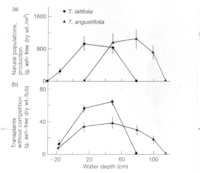
When two species of cattails are grown together, they grow at different water depths and coexist. When grown alone, they grow at similar water depths. Which of the following is best demonstrated by the data?
Tags
NGSS.MS-LS2-1
NGSS.MS-LS2-2
6.
MULTIPLE CHOICE QUESTION
2 mins • 1 pt
Starfish are probably the most important predator in the shallow ecosystem because they eat basically anything that they can come across. Their feeding activities control the whole ecosystem. This is an example of the starfish ___.
Tags
NGSS.MS-LS2-4
NGSS.MS-LS2-2
7.
MULTIPLE CHOICE QUESTION
1 min • 1 pt

Type of symbiosis: Skunks often live in burrows that have been dug and abandoned by woodchucks.
commensalism
mutualism
parasitism
predation

Access all questions and much more by creating a free account
Create resources
Host any resource
Get auto-graded reports

Continue with Google

Continue with Email

Continue with Classlink

Continue with Clever
or continue with

Microsoft
%20(1).png)
Apple

Others
Already have an account?


