
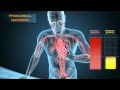
Cardiac Energy Production and Ischemia

Interactive Video
•
Biology, Science
•
10th - 12th Grade
•
Practice Problem
•
Hard

Olivia Brooks
FREE Resource
Read more
9 questions
Show all answers
1.
MULTIPLE CHOICE QUESTION
30 sec • 1 pt
How many times does the heart beat each day?
200,000 times
150,000 times
50,000 times
100,000 times
2.
MULTIPLE CHOICE QUESTION
30 sec • 1 pt
What is the primary energy molecule produced by cardiomyocytes?
Free fatty acids
Oxygen
Adenosine triphosphate (ATP)
Glucose
3.
MULTIPLE CHOICE QUESTION
30 sec • 1 pt
Which substances are transferred into cardiomyocytes for energy production?
Water and electrolytes
Proteins and carbohydrates
Glucose, free fatty acids, and oxygen
Vitamins and minerals
4.
MULTIPLE CHOICE QUESTION
30 sec • 1 pt
Which oxidation pathway is more efficient in terms of ATP production per oxygen molecule?
Protein oxidation
Lipid oxidation
Glucose oxidation
Free fatty acid oxidation
5.
MULTIPLE CHOICE QUESTION
30 sec • 1 pt
How much ATP does the heart produce daily under normal conditions?
1 to 5 kilograms
6 to 35 kilograms
40 to 50 kilograms
100 to 150 kilograms
6.
MULTIPLE CHOICE QUESTION
30 sec • 1 pt
What is the condition called when ATP production does not meet the heart's energy demand?
Arrhythmia
Myocardial ischemia
Heart failure
Cardiac arrest
7.
MULTIPLE CHOICE QUESTION
30 sec • 1 pt
What are the consequences of myocardial ischemia?
Enhanced oxygen supply
Improved blood circulation
Chest pain, contractile dysfunction, and cardiac cell death
Increased heart rate
Access all questions and much more by creating a free account
Create resources
Host any resource
Get auto-graded reports

Continue with Google

Continue with Email

Continue with Classlink

Continue with Clever
or continue with

Microsoft
%20(1).png)
Apple

Others
Already have an account?

