
Electron Configuration Practice #1
10th Grade
•13 Qs

Similar activities
Binary Ionic Nomenclature Quiz #4 - with challenges
10th - 11th Grade
•10 Qs
Ch.3 chem Q=mcT review worksheet
10th - 12th Grade
•15 Qs
Lesson 3 unit 4 - 1Sec
10th - 11th Grade
•12 Qs
PERIODIC TABLE: GROUP 18 AND 1
9th - 12th Grade
•16 Qs
Trò Chơi Hóa Học
10th Grade
•15 Qs
Class 10th Hindi Chemistry test
10th Grade
•10 Qs
CHEMICAL FORMULA & EQUATIONS QUIZ
10th - 11th Grade
•10 Qs
Unit 7: Rate of Reaction / Kadar Tindak Balas
10th Grade
•10 Qs

Electron Configuration Practice #1

Quiz
•
Chemistry
•
10th Grade
•
Medium
Standards-aligned

Barbara Janicki
Used 16+ times
FREE Resource

Enhance your content in a minute
13 questions
Show all answers
1.
MULTIPLE CHOICE QUESTION
30 sec • 1 pt
Each row on the periodic table represents:
an energy level
a sublevel
an electron
an orbital
Tags
NGSS.HS-PS1-1
2.
MULTIPLE CHOICE QUESTION
30 sec • 1 pt
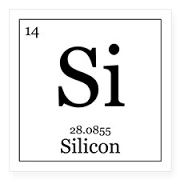
How many electrons does Si contain? (click to see image)
Tags
NGSS.HS-PS1-1
3.
MULTIPLE CHOICE QUESTION
30 sec • 1 pt
How many electrons can the first energy level hold?
4.
MULTIPLE CHOICE QUESTION
30 sec • 1 pt
The 4 orbitals are
s, p, d, f
a, b, c, d
2, 4, 6, 8
5.
MULTIPLE CHOICE QUESTION
30 sec • 1 pt
How many electrons can the d sublevel hold?
6.
MULTIPLE CHOICE QUESTION
30 sec • 1 pt

What does the sign represent with respect to electrons?
opposite spin of two electrons
different principal energy levels of two electrons
distances of two electrons from the nucleus
attraction between two electrons
Tags
NGSS.HS-PS1-2
7.
MULTIPLE CHOICE QUESTION
30 sec • 1 pt
According to the Pauli exclusion principle, when can two electrons occupy the same orbital?
only if there is no place else to put them
only if they have the same spin
only if they have opposite spins
only if they are alike in all their properties

Access all questions and much more by creating a free account
Create resources
Host any resource
Get auto-graded reports

Continue with Google

Continue with Email

Continue with Classlink

Continue with Clever
or continue with

Microsoft
%20(1).png)
Apple

Others
Already have an account?
Similar Resources on Wayground
12 questions
5.1 Revising the Atomic Model
Quiz
•
9th - 12th Grade
10 questions
Struktur Atom 3
Quiz
•
10th Grade
10 questions
Properties of Gas
Quiz
•
10th Grade
18 questions
Final Exam Review: Concepts and Calculations
Quiz
•
9th - 12th Grade
10 questions
Electron Configurations
Quiz
•
10th - 12th Grade
10 questions
ENLACES DEL CARBONO
Quiz
•
1st - 12th Grade
10 questions
MODERN PERIODIC TABLE-1
Quiz
•
10th Grade
8 questions
Wiązania chemiczne.
Quiz
•
9th - 11th Grade
Popular Resources on Wayground
8 questions
2 Step Word Problems
Quiz
•
KG - University
20 questions
Comparing Fractions
Quiz
•
4th Grade
15 questions
Fractions on a Number Line
Quiz
•
3rd Grade
20 questions
Equivalent Fractions
Quiz
•
3rd Grade
25 questions
Multiplication Facts
Quiz
•
5th Grade
10 questions
Latin Bases claus(clois,clos, clud, clus) and ped
Quiz
•
6th - 8th Grade
22 questions
fractions
Quiz
•
3rd Grade
7 questions
The Story of Books
Quiz
•
6th - 8th Grade
Discover more resources for Chemistry
20 questions
Unit 7 Chemical Reactions
Quiz
•
10th Grade
20 questions
Elements, Compounds, and Mixtures
Quiz
•
10th Grade
20 questions
Practice: E-Con, Orbital Notation, Noble Gas Notation
Quiz
•
10th Grade
20 questions
Stoichiometry Practice
Quiz
•
10th Grade
22 questions
Periodic Trends Freshman
Quiz
•
10th Grade
23 questions
Unit 7 Chemical Reactions
Quiz
•
10th Grade
20 questions
Periodic Trends
Quiz
•
10th Grade
13 questions
Mole Conversions
Quiz
•
9th - 12th Grade