
Ch. 6 Sec 1 Classical Conditioning
12th Grade
•14 Qs

Similar activities
Advantages and Disadvantages of Science and Technology
6th Grade - University
•15 Qs
integumentary
11th - 12th Grade
•19 Qs
Fundamental Animal Microgenetics
9th - 12th Grade
•10 Qs
Health Occupation EOPA
12th Grade
•10 Qs
Origins of the Universe and Syllabus
9th - 12th Grade
•11 Qs
Module 1
12th Grade
•17 Qs
The Ear and Eye!
11th - 12th Grade
•12 Qs
Biotechnology 28.3 HW (Prokaryotes)
12th Grade
•15 Qs
Ch. 6 Sec 1 Classical Conditioning

Quiz
•
Science
•
12th Grade
•
Practice Problem
•
Easy

Rizonn Hendricks
Used 1+ times
FREE Resource

Enhance your content in a minute
14 questions
Show all answers
1.
MULTIPLE CHOICE QUESTION
30 sec • 1 pt
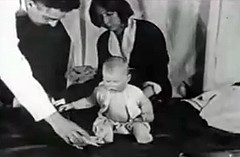
What object was Albert conditioned to fear?
A white rabbit
A black cat
A white rat
A brown dog
2.
MULTIPLE CHOICE QUESTION
30 sec • 1 pt
What was the ethical status of the experiment at the time it was conducted?
It was considered ethical.
It was not considered at all.
It was considered unethical.
It was praised for its ethics.
3.
MULTIPLE CHOICE QUESTION
30 sec • 1 pt
What was the broader implication of the Little Albert experiment?
Emotional reactions are purely genetic.
Emotional reactions can be learned.
Emotional reactions are unchangeable.
Emotional reactions are irrelevant.
4.
MULTIPLE CHOICE QUESTION
30 sec • 1 pt
How can classical conditioning help people?
By improving their memory
By helping them adapt to the environment and eliminate troubling fears
By increasing their intelligence
By enhancing their physical strength
5.
MULTIPLE CHOICE QUESTION
30 sec • 1 pt
Who is known for pioneering research in classical conditioning?
Wilhelm Wundt
Ivan Pavlov
Erik Erikson
Abraham Maslow
6.
MULTIPLE CHOICE QUESTION
30 sec • 1 pt
Ivan Pavlov was a psychologist from which country?
Germany
United States
Russia
France
7.
MULTIPLE CHOICE QUESTION
30 sec • 1 pt
The research on classical conditioning was pioneered by:
Ivan Pavlov
John Watson
B.F. Skinner
Albert Bandura
Access all questions and much more by creating a free account
Create resources
Host any resource
Get auto-graded reports

Continue with Google

Continue with Email

Continue with Classlink

Continue with Clever
or continue with

Microsoft
%20(1).png)
Apple

Others
Already have an account?
Similar Resources on Wayground
15 questions
PT 121
Quiz
•
1st Grade - Professio...
15 questions
Peppered Moth
Quiz
•
6th Grade - University
15 questions
Blood Vessels and Electrical Conduction of the heart Review
Quiz
•
9th - 12th Grade
13 questions
Quick Revision Nervous System
Quiz
•
9th Grade - University
15 questions
Amplify Science Unit 4
Quiz
•
4th Grade - University
14 questions
Introduction au processus traumatique n°2
Quiz
•
12th Grade
10 questions
Science adaptation
Quiz
•
12th Grade
9 questions
Review Animal Behaviors
Quiz
•
7th - 12th Grade
Popular Resources on Wayground
7 questions
History of Valentine's Day

Interactive video
•
4th Grade
15 questions
Fractions on a Number Line
Quiz
•
3rd Grade
20 questions
Equivalent Fractions
Quiz
•
3rd Grade
25 questions
Multiplication Facts
Quiz
•
5th Grade
22 questions
fractions
Quiz
•
3rd Grade
15 questions
Valentine's Day Trivia
Quiz
•
3rd Grade
20 questions
Main Idea and Details
Quiz
•
5th Grade
20 questions
Context Clues
Quiz
•
6th Grade
Discover more resources for Science
89 questions
Unit 1 (Ch 2 & 3) Test Review - Water/Ocean Currents
Quiz
•
9th - 12th Grade
48 questions
Review for Homeostasis & Interacting Systems Test
Quiz
•
9th - 12th Grade
12 questions
Comparing Mitosis and Meiosis

Lesson
•
9th - 12th Grade
47 questions
ServSafe Manager Review
Quiz
•
12th Grade
23 questions
Work, Simple Machines, and Mechanical Advantage
Quiz
•
12th Grade
20 questions
Nitrogen Cycle
Quiz
•
12th Grade
10 questions
Macromolecules Biomolecules
Lesson
•
9th - 12th Grade
10 questions
The Digestive System
Lesson
•
9th - 12th Grade