
Energy Flow Lesson
Authored by Lisa Thompson
Science
7th Grade
NGSS covered


AI Actions
Add similar questions
Adjust reading levels
Convert to real-world scenario
Translate activity
More...
Content View
Student View
25 questions
Show all answers
1.
MULTIPLE CHOICE QUESTION
1 min • 1 pt

In the energy pyramid, what is the bottom level composed of?
Producers
First-Level Consumers
Second-Level Consumers
Third-Level Consumers
Tags
NGSS.MS-LS2-3
2.
MULTIPLE CHOICE QUESTION
1 min • 1 pt

In the energy pyramid, what comes after the producers?
Producers
First-Level Consumers
Second-Level Consumers
Third-Level Consumers
Tags
NGSS.MS-LS2-3
3.
MULTIPLE CHOICE QUESTION
1 min • 1 pt
Producers, at the bottom of the energy pyramid, receive most of all their energy from the________.
sun
soil
air
water
Tags
NGSS.MS-LS1-6
4.
MULTIPLE CHOICE QUESTION
1 min • 1 pt
Organisms that obtain energy by feeding on other organisms
Producer
Consumer
Decomposer
Symbiosis
Tags
NGSS.MS-LS2-2
5.
MULTIPLE CHOICE QUESTION
1 min • 1 pt
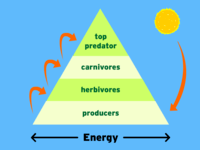
In the energy pyramid here, which organisms have the LEAST energy available?
Producers
primary consumer
secondary consumer
tertiary consumer
Tags
NGSS.MS-LS2-3
6.
MULTIPLE CHOICE QUESTION
1 min • 1 pt

Which statement provides the best explanation for the difference in biomass of organisms found at each trophic level?
Organisms at higher trophic levels have less energy available to them than organisms at lower trophic levels.
Organisms at higher trophic levels require smaller habitats than organisms at lower trophic levels.
Organisms at lower trophic levels provide less energy than organisms at higher trophic levels.
Organisms at lower trophic levels outcompete organisms at higher trophic levels.
Tags
NGSS.MS-LS2-3
7.
MULTIPLE CHOICE QUESTION
1 min • 1 pt

A Texas Gulf Coast energy pyramid is shown with representative organisms at each trophic level. Which statement best describes the flow of energy through this pyramid?
The trophic level represented by catfish and gobies receives energy directly from the producers.
The trophic level represented by shrimp and copepods receives energy directly from the tertiary consumers
The trophic level represented by redfish and flounder receives energy directly from the secondary consumers
The trophic level represented by wire grass and phytoplankton receives energy directly from the primary consumers.
Tags
NGSS.MS-LS2-3
NGSS.MS-LS1-6

Access all questions and much more by creating a free account
Create resources
Host any resource
Get auto-graded reports

Continue with Google

Continue with Email

Continue with Microsoft
or continue with

%20(1).png)
Apple

Others
By signing up, you agree to our Terms of Service & Privacy Policy
Already have an account?


