
Natural Selection
7th Grade
•15 Qs

Similar activities
Revision Test Motion & Time
7th Grade
•20 Qs
Ionic bonding
7th Grade
•10 Qs
Pollution Vocab Quiz
7th Grade
•10 Qs
Nervous System
7th Grade
•15 Qs
7C Particles - ECAM
7th - 10th Grade
•20 Qs
Grade 7 EOT practice
7th Grade
•14 Qs
2nd Periodical Quiz in Science 7
7th Grade
•15 Qs
Stages of photosythesis
7th - 11th Grade
•20 Qs
Natural Selection

Quiz
•
Science
•
7th Grade
•
Practice Problem
•
Hard
+3
Standards-aligned

Lisa Thompson
FREE Resource

Enhance your content in a minute
15 questions
Show all answers
1.
MULTIPLE CHOICE QUESTION
1 min • 1 pt
The differences among a species, like different bird beaks, are called
genes.
variations.
traits.
theories.
Tags
NGSS.MS-LS4-2
NGSS.MS-LS4-4
2.
MULTIPLE CHOICE QUESTION
1 min • 1 pt
How do you "win" at natural selection?
survive
go extinct
survive & reproduce
Tags
NGSS.MS-LS4-4
3.
MULTIPLE CHOICE QUESTION
1 min • 1 pt
Adaptations can be:
camouflage
ability to survive cold weather
hunting skills
all of the above
Tags
NGSS.MS-LS4-4
4.
MULTIPLE CHOICE QUESTION
1 min • 1 pt
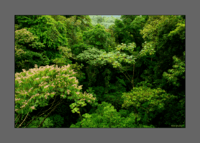
A yellow morph and green morph of an insect lives in the rainforest canopy. You would expect:
the green population to increase and the yellow to decrease
both populations should stay the same
both populations will increase
the green population to decrease and the yellow to increaseThis is a wrong answer
Tags
NGSS.MS-LS2-1
NGSS.MS-LS2-2
NGSS.MS-LS2-4
5.
MULTIPLE CHOICE QUESTION
1 min • 1 pt
Survival of the Fittest and Evolution were proposed by what scientist?
Charles Darwin
Albert Einstein
Steven Hawking
Isaac Newton
Tags
NGSS.MS-LS4-4
6.
MULTIPLE CHOICE QUESTION
1 min • 1 pt

Natural Selection is driven by a change in the environment and survival of the
Earth
Fastest
Fittest
Biggest
Tags
NGSS.MS-LS2-4
NGSS.MS-LS4-4
7.
MULTIPLE CHOICE QUESTION
1 min • 1 pt

Guppies are small fish that live in South American rivers. They can have different- sized spots on their bodies. The river bottoms are covered in rocks. Guppies with spots that are the same size as the rocks on the bottom are harder for bigger fish to see and catch. The diagram below shows a population of guppies that live in a river. At time 1, the population had the same number of guppies with small and large spots. At time 2, after many generations, there were many more guppies with small spots and fewer guppies with large spots in the population. How did the environment change between time 1 and time 2? How did the population change?
You cannot tell how the environment changed. With each generation, more guppies passed on the gene for small spots to their offspring.
The rocks became smaller. With each generation, more guppies with small spots survived long enough to pass on the gene for small spots to their offspring.
The rocks became smaller. Guppies with small spots are more likely to survive, so the guppies with large spots changed to have small spots.
The rocks became smaller. Guppies with small spots are more likely to survive, so both kinds of guppies passed on the gene for small spots to their offspring.
Tags
NGSS.MS-LS1-5
NGSS.MS-LS2-4
NGSS.MS-LS4-4

Access all questions and much more by creating a free account
Create resources
Host any resource
Get auto-graded reports

Continue with Google

Continue with Email

Continue with Classlink

Continue with Clever
or continue with

Microsoft
%20(1).png)
Apple

Others
Already have an account?
Similar Resources on Wayground
15 questions
Water Quality
Quiz
•
7th - 8th Grade
15 questions
TLE 8 - Cleaning and Sanitizing Kitchen Tools
Quiz
•
7th - 8th Grade
12 questions
Light, Shadow and Reflection
Quiz
•
5th - 10th Grade
10 questions
Ionic bonding
Quiz
•
7th Grade
11 questions
Evaluación primer parcial
Quiz
•
6th - 8th Grade
10 questions
Types of Waves Quiz
Quiz
•
7th Grade
10 questions
Plant Tropisms and Turgor Pressure
Quiz
•
7th Grade
10 questions
Nutrition in living organisms - plants
Quiz
•
7th Grade
Popular Resources on Wayground
15 questions
Fractions on a Number Line
Quiz
•
3rd Grade
20 questions
Equivalent Fractions
Quiz
•
3rd Grade
25 questions
Multiplication Facts
Quiz
•
5th Grade
54 questions
Analyzing Line Graphs & Tables
Quiz
•
4th Grade
22 questions
fractions
Quiz
•
3rd Grade
20 questions
Main Idea and Details
Quiz
•
5th Grade
20 questions
Context Clues
Quiz
•
6th Grade
15 questions
Equivalent Fractions
Quiz
•
4th Grade
Discover more resources for Science
20 questions
Cell Organelles and Functions
Quiz
•
6th - 8th Grade
33 questions
Grade 6 Quarter 3 PMA 5 Review
Quiz
•
6th - 8th Grade
12 questions
Ecological Succession
Quiz
•
7th Grade
10 questions
Exploring the Rock Cycle: Types and Formation

Interactive video
•
6th - 8th Grade
10 questions
Exploring the Layers of the Earth
Interactive video
•
6th - 10th Grade
10 questions
Exploring the Rock Cycle
Interactive video
•
6th - 8th Grade
12 questions
Photosynthesis
Quiz
•
7th Grade
10 questions
Exploring Weathering, Erosion, and Deposition Processes
Interactive video
•
6th - 10th Grade