
The Northern Renaissance and Flemish Masters
Authored by Craig Forney
Social Studies
10th Grade
Used 1+ times


AI Actions
Add similar questions
Adjust reading levels
Convert to real-world scenario
Translate activity
More...
Content View
Student View
10 questions
Show all answers
1.
MULTIPLE CHOICE QUESTION
30 sec • 1 pt
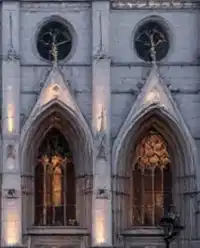
Which feature most distinguishes Northern Renaissance art from Italian Renaissance art shown here?
Use of strict mathematical perspective systems
Emphasis on classical mythology and idealized bodies
Focus on everyday life and symbolic detail
Preference for fresco murals over panel paintings
2.
MULTIPLE CHOICE QUESTION
30 sec • 1 pt
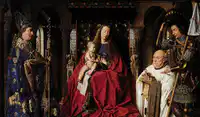
Flemish painters advanced realism primarily through which technique?
Marble carving for texture
Tempera with rapid drying
Layered translucent oil glazes
Woodcut prints for shadows
3.
MULTIPLE CHOICE QUESTION
30 sec • 1 pt
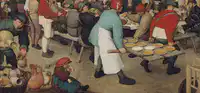
Which subject matter is typical of Pieter Bruegel the Elder’s paintings?
Abstract patterns without figures
Court portraits idealizing nobility
Heroic scenes of ancient Rome
Genre scenes of rural festivities
4.
MULTIPLE CHOICE QUESTION
30 sec • 1 pt
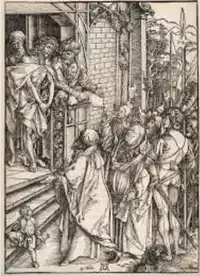
Based on the diagram titled “The Art of Engraving,” which step directly determines the darkness and character of the printed mark?
Creating multiple impressions for broad accessibility
Pressing dampened paper through the printing press
Incising lines with a burin into the metal plate
Applying ink across the entire plate surface
5.
MULTIPLE CHOICE QUESTION
30 sec • 1 pt

The heading “Albrecht Dürer: The German Leonardo” highlights which Renaissance ideal associated with Dürer?
Religious iconography in devotional art
Guild apprenticeship and workshop labor
Artist-scholar working across disciplines
Court patronage and noble sponsorship
6.
MULTIPLE CHOICE QUESTION
30 sec • 1 pt
Which idea best captures the religious aim of Northern humanists?
Blend pagan rituals into church ceremonies
Support unquestioned authority of church leaders
Purify Christianity by returning to early sources
Replace faith entirely with classical philosophy
7.
MULTIPLE CHOICE QUESTION
30 sec • 1 pt

Who wrote a satirical work that mocked church corruption and promoted education and reform?
Desiderius Erasmus, author of In Praise of Folly
Sir Thomas More, author of Utopia in 1516
William Shakespeare, playwright of English histories
François Rabelais, creator of comic giants


Access all questions and much more by creating a free account
Create resources
Host any resource
Get auto-graded reports

Continue with Google

Continue with Email

Continue with Classlink

Continue with Clever
or continue with

Microsoft
%20(1).png)
Apple

Others
Already have an account?


