
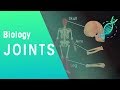
Exploring the Structure and Types of Joints

Interactive Video
•
Science
•
6th - 10th Grade
•
Practice Problem
•
Medium

Liam Anderson
Used 2+ times
FREE Resource
Read more
10 questions
Show all answers
1.
MULTIPLE CHOICE QUESTION
30 sec • 1 pt
Why are joints essential for body movement?
They provide energy to muscles.
They connect muscles to bones.
They allow bones to move in different directions.
They produce synovial fluid.
2.
MULTIPLE CHOICE QUESTION
30 sec • 1 pt
What is the primary function of tendons?
To cushion between bones.
To produce synovial fluid.
To attach muscles to bones.
To connect bones to other bones.
3.
MULTIPLE CHOICE QUESTION
30 sec • 1 pt
Which of the following connects bone to bone?
Tendons
Cartilage
Ligaments
Synovial fluid
4.
MULTIPLE CHOICE QUESTION
30 sec • 1 pt
How many joints are there approximately in the human body?
206
360
600
450
5.
MULTIPLE CHOICE QUESTION
30 sec • 1 pt
Which type of joint allows the highest amount of movement?
Fixed joints
Hinge joints
Pivot joints
Ball and socket joints
6.
MULTIPLE CHOICE QUESTION
30 sec • 1 pt
Where can you find hinge joints in the body?
Fingers and toes
Skull and spine
Elbows and knees
Shoulders and hips
7.
MULTIPLE CHOICE QUESTION
30 sec • 1 pt
What is the role of cartilage in joints?
To hold bones together
To produce synovial fluid
To cushion between bones and reduce friction
To connect muscles to bones
Access all questions and much more by creating a free account
Create resources
Host any resource
Get auto-graded reports

Continue with Google

Continue with Email

Continue with Microsoft
or continue with

%20(1).png)
Apple

Others
By signing up, you agree to our Terms of Service & Privacy Policy
Already have an account?


