
- Resource Library
- Math
- Algebra
- Direct And Inverse Variation
- Exploring Direct And Inverse Variation Concepts
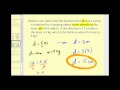
Exploring Direct and Inverse Variation Concepts

Interactive Video
•
Mathematics
•
9th - 12th Grade
•
Practice Problem
•
Hard
+4
Standards-aligned

Aiden Montgomery
FREE Resource
Standards-aligned
Read more
10 questions
Show all answers
1.
MULTIPLE CHOICE QUESTION
30 sec • 1 pt
What does it mean when we say 'Y varies directly as X'?
Y decreases as X increases
Y increases as X decreases
Y increases as X increases
Y is constant when X changes
2.
MULTIPLE CHOICE QUESTION
30 sec • 1 pt
What is the role of the constant K in the equation Y = KX?
It is the exponent to which X is raised.
It indicates the curvature of the graph.
It determines the Y-intercept of the graph.
It represents the slope of the line.
Tags
CCSS.8.EE.B.6
CCSS.8.F.A.3
3.
MULTIPLE CHOICE QUESTION
30 sec • 1 pt
What is the graphical representation of direct variation?
A hyperbola
A straight line passing through the origin
A horizontal line
A parabola through the origin
Tags
CCSS.8.EE.B.5
4.
MULTIPLE CHOICE QUESTION
30 sec • 1 pt
How do you find the constant of proportionality when given Y = 28 and X = 7?
Divide 28 by 7
Multiply 28 by 7
Add 28 to 7
Subtract 7 from 28
Tags
CCSS.7.RP.A.2B
5.
MULTIPLE CHOICE QUESTION
30 sec • 1 pt
According to Hooke's Law, if the mass is increased, what happens to the displacement?
It decreases.
It becomes zero.
It remains constant.
It increases.
Tags
CCSS.8.EE.C.7B
6.
MULTIPLE CHOICE QUESTION
30 sec • 1 pt
What is the inverse variation equation if Y = 27 when X = 1/3?
Y = 3X
Y = X / 9
Y = 9 / X
Y = 9X
7.
MULTIPLE CHOICE QUESTION
30 sec • 1 pt
In inverse variation, if X increases, what happens to Y?
Y increases.
Y decreases.
Y remains constant.
Y becomes zero.
Tags
CCSS.HSF-LE.A.1B
Access all questions and much more by creating a free account
Create resources
Host any resource
Get auto-graded reports

Continue with Google

Continue with Email

Continue with Microsoft
or continue with

%20(1).png)
Apple

Others
By signing up, you agree to our Terms of Service & Privacy Policy
Already have an account?

