
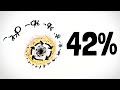
Black Holes and Energy Conversion

Interactive Video
•
Physics, Chemistry, Science
•
9th - 12th Grade
•
Practice Problem
•
Hard

Ethan Morris
Used 1+ times
FREE Resource
Read more
10 questions
Show all answers
1.
MULTIPLE CHOICE QUESTION
30 sec • 1 pt
What does the equation E=mc^2 imply about mass and energy?
Mass can be converted into energy.
Energy can be converted into mass.
Energy is always greater than mass.
Mass and energy are unrelated.
2.
MULTIPLE CHOICE QUESTION
30 sec • 1 pt
Why is antimatter not a practical energy source?
It cannot be converted into energy.
It is scarce in the universe.
It is too dangerous to handle.
It is too expensive to produce.
3.
MULTIPLE CHOICE QUESTION
30 sec • 1 pt
Which method of energy extraction is the least efficient?
Gravitational reactions
Chemical reactions
Nuclear fission
Nuclear fusion
4.
MULTIPLE CHOICE QUESTION
30 sec • 1 pt
What is the efficiency of converting mass to energy in chemical reactions?
0.00000001%
0.08%
0.7%
6%
5.
MULTIPLE CHOICE QUESTION
30 sec • 1 pt
How does the efficiency of nuclear fusion compare to chemical reactions?
It is more efficient.
It is less efficient.
It is equally efficient.
It is not used for energy conversion.
6.
MULTIPLE CHOICE QUESTION
30 sec • 1 pt
How much of its mass can a non-rotating black hole convert into energy?
42%
6%
100%
0.7%
7.
MULTIPLE CHOICE QUESTION
30 sec • 1 pt
What is the advantage of rotating black holes in energy conversion?
They are easier to find in the universe.
They can convert more mass into energy.
They are larger than non-rotating black holes.
They do not have an event horizon.
Access all questions and much more by creating a free account
Create resources
Host any resource
Get auto-graded reports

Continue with Google

Continue with Email

Continue with Microsoft
or continue with

%20(1).png)
Apple

Others
Already have an account?

