
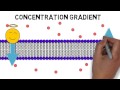
Cell Membrane Dynamics and Molecular Movement

Interactive Video
•
Biology, Science, Chemistry
•
9th - 10th Grade
•
Practice Problem
•
Easy

Patricia Brown
Used 1+ times
FREE Resource
Read more
10 questions
Show all answers
1.
MULTIPLE CHOICE QUESTION
30 sec • 1 pt
What is one of the primary roles of the cell membrane?
To provide energy to the cell
To allow exchange of molecules between both sides of the cell
To store genetic information
To produce proteins
2.
MULTIPLE CHOICE QUESTION
30 sec • 1 pt
How is the cell membrane similar to the walls of an apartment?
It is impermeable to all substances
It keeps things out and allows specific items to move in and out
It only allows entry but not exit
It is rigid and unchanging
3.
MULTIPLE CHOICE QUESTION
30 sec • 1 pt
What characteristic of the cell membrane allows it to be flexible?
The presence of proteins
The presence of carbohydrates
Its rigid structure
The dynamic and fluid nature of the phospholipid bilayer
4.
MULTIPLE CHOICE QUESTION
30 sec • 1 pt
Which factor primarily determines if a molecule can pass through the cell membrane?
The molecule's color
The molecule's shape
The molecule's size
The molecule's temperature
5.
MULTIPLE CHOICE QUESTION
30 sec • 1 pt
Why do small molecules find it easier to pass through the cell membrane?
They are attracted to the cell membrane
They can slip through the tiny gaps between phospholipid molecules
They are repelled by the cell membrane
They dissolve in the cell membrane
6.
MULTIPLE CHOICE QUESTION
30 sec • 1 pt
What happens to a molecule when it moves from a region of higher concentration to lower concentration?
It becomes inactive
It follows the laws of diffusion
It moves against the concentration gradient
It requires energy
7.
MULTIPLE CHOICE QUESTION
30 sec • 1 pt
What is required for a molecule to move against its concentration gradient?
It happens spontaneously
It requires energy, like pushing a heavy load up a slope
It is a natural process
No energy is required
Access all questions and much more by creating a free account
Create resources
Host any resource
Get auto-graded reports

Continue with Google

Continue with Email

Continue with Classlink

Continue with Clever
or continue with

Microsoft
%20(1).png)
Apple

Others
Already have an account?


