
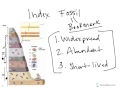
Index Fossils: Markers of Geologic Time and Their Significance

Interactive Video
•
Science, Biology, Geology
•
9th - 10th Grade
•
Practice Problem
•
Hard

Patricia Brown
FREE Resource
Read more
10 questions
Show all answers
1.
MULTIPLE CHOICE QUESTION
30 sec • 1 pt
What is the primary purpose of an index fossil in geology?
To identify the species of the fossil
To determine the age of the rock layer
To find the location of the fossil
To measure the size of the fossil
2.
MULTIPLE CHOICE QUESTION
30 sec • 1 pt
Which of the following is NOT a criterion for a fossil to be considered an index fossil?
It must be abundant
It must be widespread
It must be colorful
It must be short-lived
3.
MULTIPLE CHOICE QUESTION
30 sec • 1 pt
Why is it important for an index fossil to be widespread?
So it can be found in multiple rock layers
So it can be easily identified
So it can be preserved for a long time
So it can be found on all continents
4.
MULTIPLE CHOICE QUESTION
30 sec • 1 pt
What does it mean for an index fossil to be abundant?
It is found in various colors
It is found in a specific location
It is found in large quantities
It is found in different sizes
5.
MULTIPLE CHOICE QUESTION
30 sec • 1 pt
How does the short-lived nature of an index fossil help in determining geologic time?
It shows the fossil's age
It indicates a specific time period
It reveals the fossil's origin
It helps in identifying the fossil's species
6.
MULTIPLE CHOICE QUESTION
30 sec • 1 pt
What does the presence of Fossil D in a single unit suggest?
It was colorful
It was short-lived
It was abundant
It was widespread
7.
MULTIPLE CHOICE QUESTION
30 sec • 1 pt
How can Fossil D be used to determine the age of a rock layer?
By using it as a bookmark for a specific time period
By comparing it to other fossils
By identifying its species
By measuring its size
Access all questions and much more by creating a free account
Create resources
Host any resource
Get auto-graded reports

Continue with Google

Continue with Email

Continue with Microsoft
or continue with

%20(1).png)
Apple

Others
Already have an account?


