
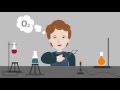
Electrons in Motion: Unraveling Redox Reactions in Chemistry and Physics

Interactive Video
•
Chemistry, Science, Physics
•
9th - 10th Grade
•
Practice Problem
•
Hard

Patricia Brown
FREE Resource
Read more
10 questions
Show all answers
1.
MULTIPLE CHOICE QUESTION
30 sec • 1 pt
What happens to magnesium atoms when they form magnesium oxide?
They lose protons and become negatively charged.
They gain electrons and become negatively charged.
They lose electrons and become positively charged.
They gain protons and become positively charged.
2.
MULTIPLE CHOICE QUESTION
30 sec • 1 pt
What is the charge on oxide ions in magnesium oxide?
+2
-2
+1
-1
3.
MULTIPLE CHOICE QUESTION
30 sec • 1 pt
Why were early oxidation reactions named after oxygen?
Because they always involved hydrogen.
Because they were the only reactions known to involve oxygen.
Because they were the first reactions discovered.
Because they always produced water.
4.
MULTIPLE CHOICE QUESTION
30 sec • 1 pt
In the reaction between zinc and lead nitrate, what happens to zinc atoms?
They gain electrons and become neutral.
They lose electrons and become positive ions.
They gain protons and become positive ions.
They lose protons and become neutral.
5.
MULTIPLE CHOICE QUESTION
30 sec • 1 pt
What is formed when lead ions gain electrons in the reaction with zinc?
Zinc atoms
Zinc ions
Lead atoms
Lead ions
6.
MULTIPLE CHOICE QUESTION
30 sec • 1 pt
What is the term used to describe the gain of electrons?
Oxidation
Reduction
Ionization
Neutralization
7.
MULTIPLE CHOICE QUESTION
30 sec • 1 pt
What is the relationship between oxidation and reduction?
They occur independently of each other.
They are the same process.
They are opposite processes that occur simultaneously.
They are unrelated processes.
Access all questions and much more by creating a free account
Create resources
Host any resource
Get auto-graded reports

Continue with Google

Continue with Email

Continue with Microsoft
or continue with

%20(1).png)
Apple

Others
Already have an account?


