
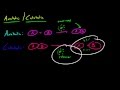
Catabolic and Anabolic Reactions Overview

Interactive Video
•
Biology, Chemistry, Science
•
9th - 10th Grade
•
Practice Problem
•
Hard

Patricia Brown
FREE Resource
Read more
10 questions
Show all answers
1.
MULTIPLE CHOICE QUESTION
30 sec • 1 pt
What are the two main types of chemical reactions discussed in the video?
Photosynthesis and Respiration
Hydrolysis and Dehydration
Anabolic and Catabolic
Oxidation and Reduction
2.
MULTIPLE CHOICE QUESTION
30 sec • 1 pt
In an anabolic reaction, what happens to smaller molecules?
They release energy in the form of heat.
They remain unchanged.
They combine to form larger molecules.
They are broken down into even smaller molecules.
3.
MULTIPLE CHOICE QUESTION
30 sec • 1 pt
What is required for anabolic reactions to occur?
A catalyst
The presence of water
A decrease in temperature
Energy input
4.
MULTIPLE CHOICE QUESTION
30 sec • 1 pt
What happens to larger molecules during a catabolic reaction?
They are combined to form even larger molecules.
They remain stable and unchanged.
They are broken down into smaller molecules.
They absorb energy from the environment.
5.
MULTIPLE CHOICE QUESTION
30 sec • 1 pt
What is a common result of catabolic reactions?
Molecules are synthesized.
Molecules are oxidized.
Energy is consumed.
Energy is released.
6.
MULTIPLE CHOICE QUESTION
30 sec • 1 pt
How is energy typically released during catabolic reactions?
As electricity
As heat
As sound
As light
7.
MULTIPLE CHOICE QUESTION
30 sec • 1 pt
Why is energy important in anabolic reactions?
It is used to cool down the reaction.
It is not required at all.
It helps in breaking down molecules.
It is used to bond molecules together.
Access all questions and much more by creating a free account
Create resources
Host any resource
Get auto-graded reports

Continue with Google

Continue with Email

Continue with Classlink

Continue with Clever
or continue with

Microsoft
%20(1).png)
Apple

Others
Already have an account?

